Ants on Lemongrass: Causes, Checks & Fixes
Quick answer
Ants on lemongrass usually signal aphids, mealybugs, or soft scale feeding on tender regrowth and producing honeydew. First fix: track the trail to the sap-sucking colony, treat that colony first, and clean sticky residue before deciding whether ant bait is still needed.
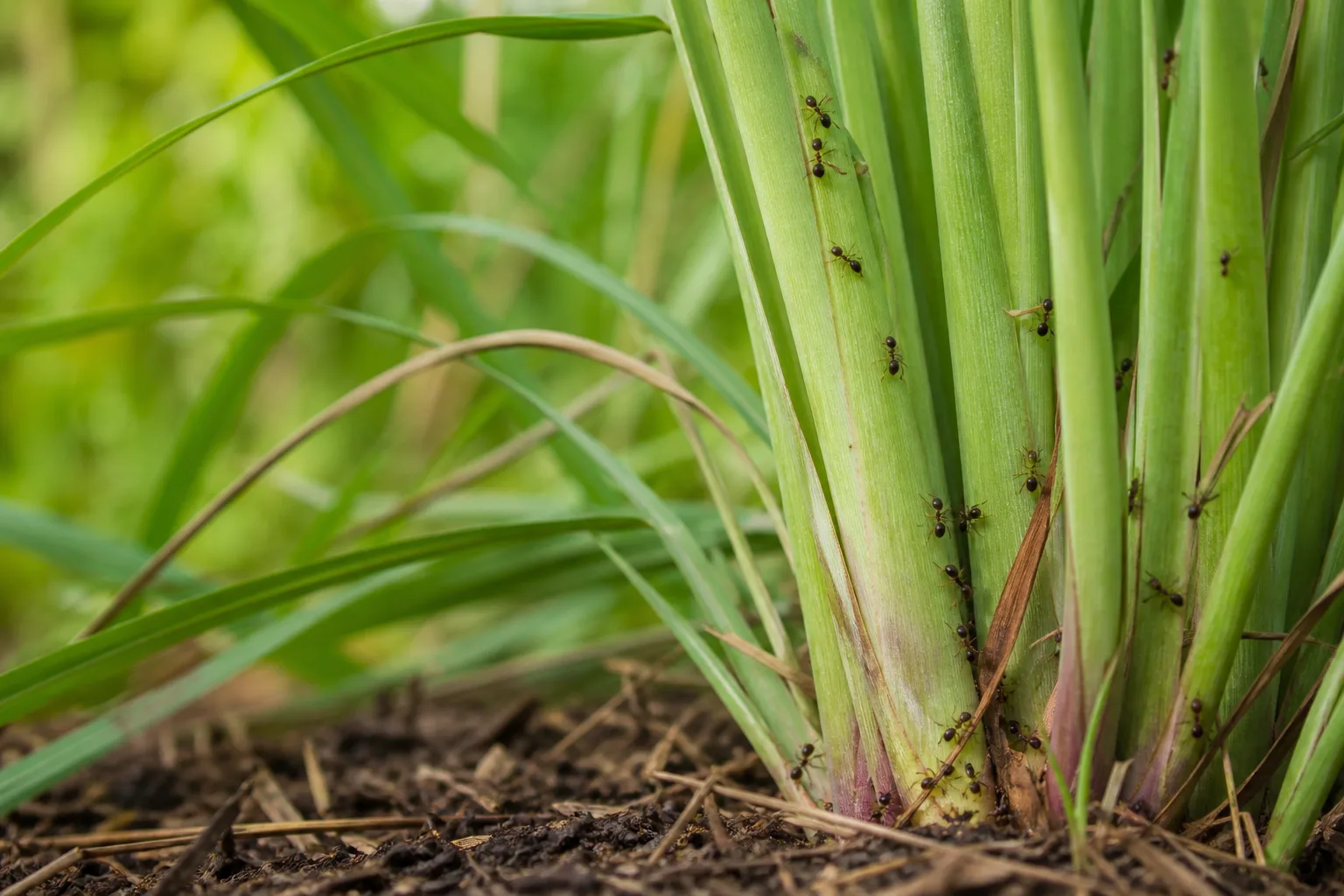
Ants on Lemongrass: Causes, Checks & Fixes
This guide covers ants on plant on Lemongrass. See also the general Ants on Plant guide, watering, and light pages for this plant.
Ants on Lemongrass: Causes, Checks & Fixes
Quick answer
If ants are climbing lemongrass blades, assume a hidden honeydew producer until you rule it out. On Lemongrass overview, the usual cause is aphids, mealybugs, or soft scale feeding on tender regrowth, with ants protecting those colonies while collecting sugary honeydew (UC IPM aphids, UC IPM ant management, UC IPM mealybugs).
First fix: follow the most active ant line to the exact sap-feeder colony on fresh shoots or inner blade bases, knock that colony down, then wipe honeydew. Ant traffic usually drops when honeydew production drops.
Why lemongrass gets ants
Lemongrass is a warm-season grass that grows quickly and sends up soft new tissue after harvest. That new tissue is easier for sap feeders to pierce than hardened older leaves, so repeated kitchen cuts can accidentally create recurring pest entry points during active growth (UF/IFAS Nassau fact sheet, UF/IFAS Gardening Solutions).
The plant also grows as a dense clump. Aphids can gather on tender inner folds, mealybugs can hide in protected leaf axils, and soft scale can blend into lower stems. Ant trails often reveal these hidden pockets before the insects are easy to spot.
What ants on lemongrass looks like
Typical pattern:
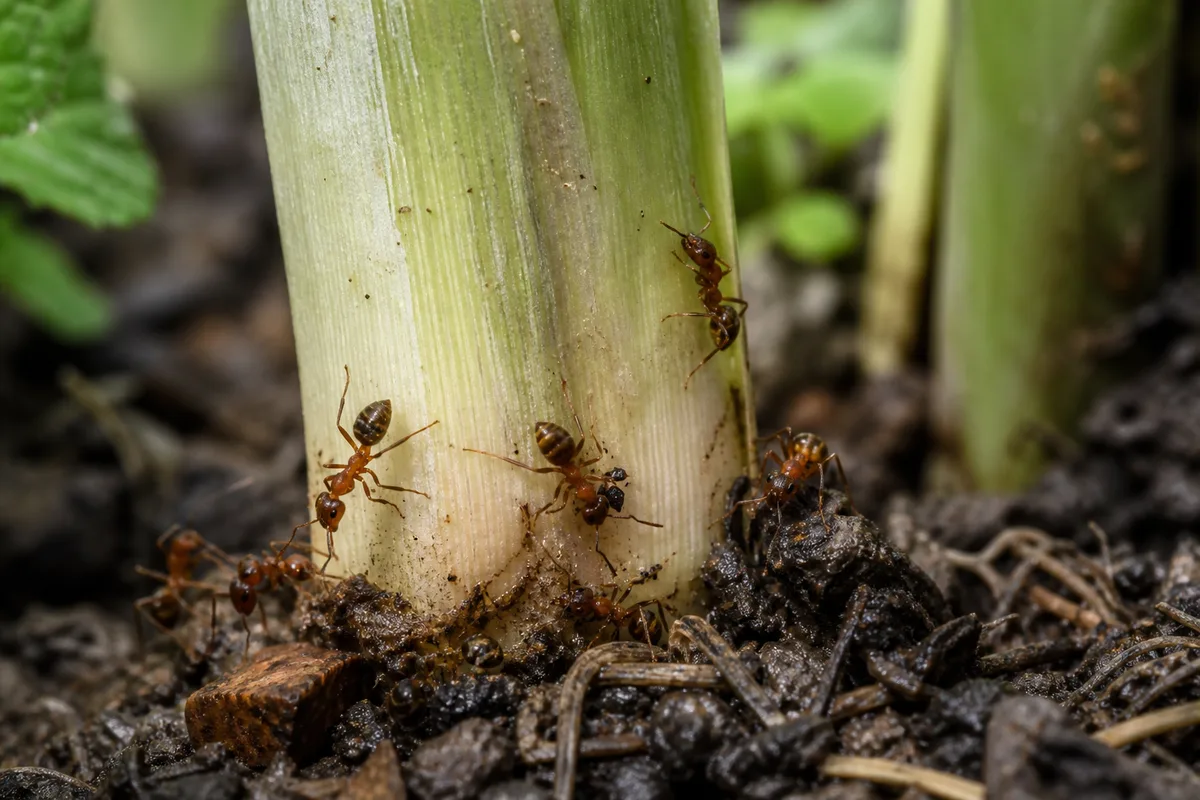
Ants on Plant symptoms on Lemongrass - compare with healthy tissue on the same plant.
- Ant lines running up pot rims, stalk bases, and newest shoots
- Sticky or glossy residue on leaves and blade bases (honeydew)
- Black film on sticky areas from sooty mold growing on honeydew (University of Maryland Extension)
- Visible sap feeders: aphids on soft regrowth, cottony mealybugs in hidden joins, or scale bumps on stems (Iowa State Yard and Garden, RHS mealybug)
If you only see ants on the pot exterior and never on foliage, that is less likely to be a honeydew problem and more likely to be foraging or nesting behavior.
How to confirm the cause (inspection order)
Use this exact order so you do not miss hidden colonies in the clump:
- Newest inner shoots after the last cut: check for curled tips, sticky shine, and clustered insects first.
- Inner blade bases near the crown: open dense leaves and inspect for mealybug wax or scale bumps.
- Undersides of tender leaves: aphids often concentrate on younger tissue (Clemson HGIC aphid IPM).
- Pot rim and saucer: confirm whether ants are commuting to foliage or just nesting in media.
- Nearby herbs/plants: ants may bridge from one infested pot to another.
If no honeydew producer is visible, repeat inspection in 24 to 48 hours at dawn or dusk, when trails are usually clearer.
Lookalikes to rule out
Not every ant sighting means a honeydew outbreak:
- Scouting ants: low, irregular traffic; no sticky film; no sap feeders found.
- Nest in potting mix: ants emerge from drainage holes or media; foliage stays clean.
- Honeydew farming: sustained trails to tender tissue plus sticky leaves and visible sap feeders.
- Dew or splash confusion: moisture appears early and dries clean; honeydew stays sticky and may darken with sooty mold.
The third pattern is the one that usually reduces vigor and harvest quality.
First fix to try
Treat the sap feeder first, not the ants.
- Isolate the pot or clump if practical so ants cannot bridge easily to nearby herbs.
- Rinse infested shoots with a firm water stream to knock down soft-bodied pests.
- Apply insecticidal soap labeled for your use case, contacting pests directly; soap sprays are contact tools and often require repeat coverage (Clemson HGIC insecticidal soaps).
- Wipe honeydew from leaves and blade bases so ants lose the food signal.
Only after pest pressure drops should you decide whether ant bait is still needed. For edible herbs, keep every product choice label-led, not guess-led (EPA pesticide labels).
Step-by-step recovery if pests persist
If ants or honeydew return quickly:
- Repeat contact treatment at the label interval; do not assume one spray cycle is enough.
- Remove badly coated or heavily infested blades that are unlikely to clean up well.
- Reduce crowding and improve airflow; dense, shaded clumps hide pests longer (Missouri Botanical Garden Plant Finder).
- Recheck inner bases weekly until two consecutive checks show no fresh honeydew and no active sap feeders.
For indoor overwintered pots, increase monitoring frequency. Mealybugs can persist in protected indoor conditions and keep producing honeydew without outdoor predator pressure (Colorado State Extension houseplant pests).
When to worry
Escalate quickly when any of these happen:
- Ant trails cover most new shoots within a day of cleanup.
- Sooty mold spreads across harvestable blades.
- The same colony reappears after two correctly timed contact rounds.
- Ants appear to nest in the container and activity continues even when foliage pests drop.
At that point, reassess both plant and surroundings: nearby infested herbs, pot placement, and hidden crown pockets often explain repeat failures.
Recovery timeline
Use these practical expectations:
- 3 to 7 days: ant lines often thin after honeydew production drops.
- 7 to 14 days: new growth should emerge cleaner if treatment coverage is good.
- 2 to 3 weeks: stubborn mixed infestations may need multiple passes.
Damaged or sooty old leaves may stay unattractive; judge success by clean new growth and reduced sticky residue, not by perfect recovery of old tissue.
What not to do
- Do not spray ants alone while sap feeders remain.
- Do not apply soaps or oils in high heat; burn risk rises, especially near or above 90 F (Clemson HGIC aphid IPM).
- Do not place broad ant bait directly in culinary pots unless the label explicitly allows that use.
- Do not harvest stalks with visible residue before rinsing and label-compliant intervals.
- Do not repot immediately unless there is clear root-zone or nest-related need; most cases improve first with better pest targeting.
How to prevent ants next time
Prevention on lemongrass is mostly about early pest interruption:
- Inspect fresh regrowth after every harvest cut, not just outer blades.
- Keep plants vigorous in sun and moisture-balanced, well-drained conditions (UF/IFAS Gardening Solutions).
- Quarantine new divisions or nursery herbs before placing them near established clumps.
- Wash early honeydew deposits before ant trails intensify.
- Preserve beneficial insect activity outdoors by avoiding unnecessary broad-spectrum sprays (UC IPM aphids).
Related lemongrass problems
If your ant issue came from sap feeders, these guides are the next step:
/plants/lemongrass/plant-problems/aphids//plants/lemongrass/plant-problems/mealybugs//plants/lemongrass/lemongrass-watering//plants/lemongrass/
Conclusion
Ants on lemongrass are usually a clue, not the root issue. Follow the trail to hidden sap feeders on fresh regrowth, treat that colony first, clear honeydew, and judge progress by cleaner new shoots that are safe to harvest.
When to use this page vs other Lemongrass guides
- Lemongrass watering guide - Use for routine moisture checks before assuming ants on plant is the main issue.
- Lemongrass problems hub - Browse all 52 common issues on this species.