Brown Tips on Lemongrass: Causes, Checks & Fixes
Quick answer
Brown tips on lemongrass usually come from low humidity, underwatering, or salt build-up in soil. First step: probe moisture at 3–4 cm depth, water thoroughly if dry, and move the pot away from heating vents while blades rehydrate.
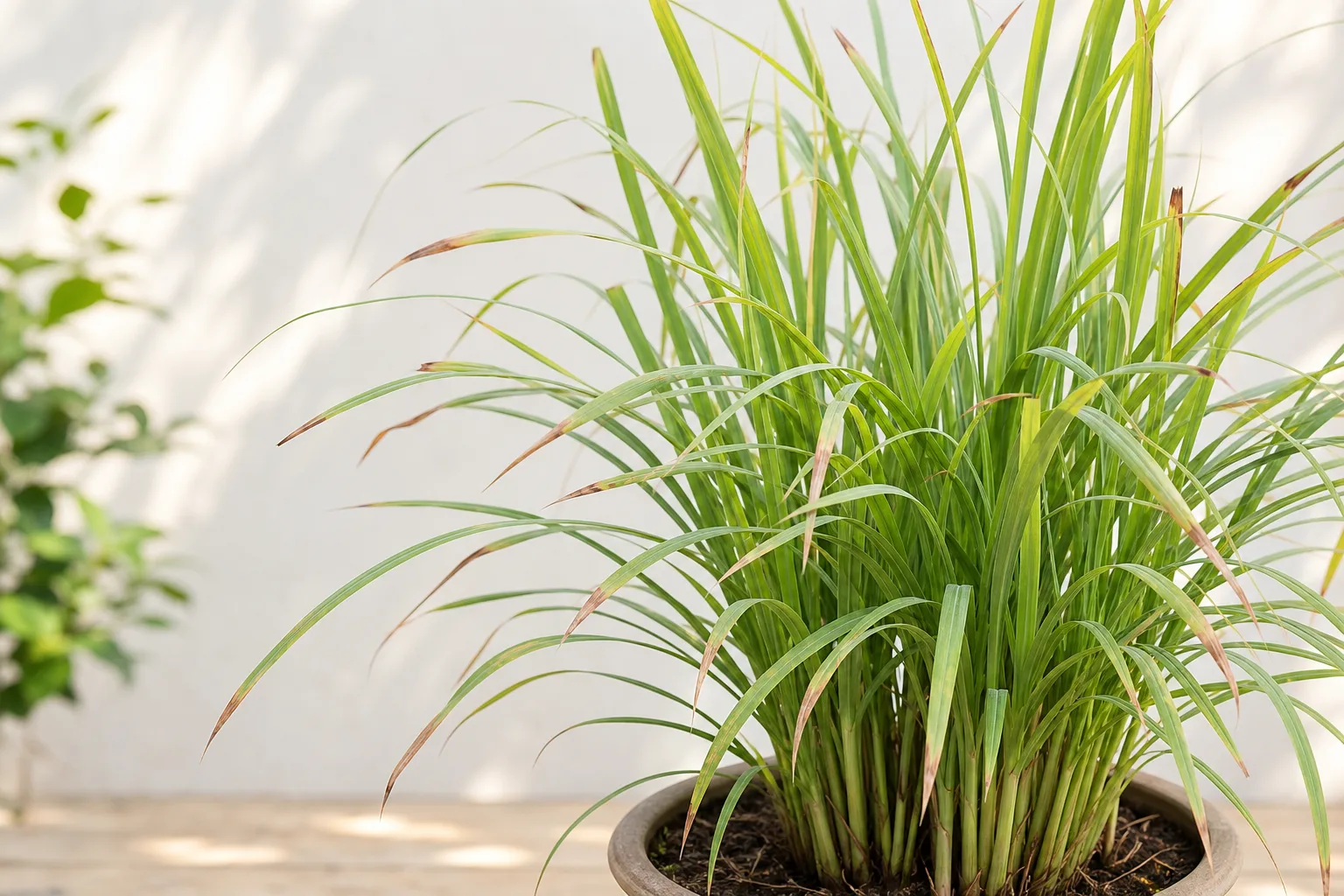
Brown Tips on Lemongrass: Causes, Checks & Fixes
This guide covers brown tips on Lemongrass. See also the general Brown Tips guide, watering, and light pages for this plant.
Brown Tips on Lemongrass: Causes, Checks & Fixes
Quick answer
Brown tips on lemongrass (Cymbopogon citratus) usually trace to low humidity, underwatering, or salt buildup in container mix-not a mystery disease on this fast-growing tropical grass. Your first move: probe moisture at 3–4 cm depth. If the mix is dry and the pot feels light, water thoroughly until a little drains and empty the saucer. If soil is still moderately moist but tips are crisp, suspect dry indoor air or a heating vent blasting the blades-relocate the pot and raise humidity around the canopy before you add more water.
Long arching blades-up to 3 feet on mature plants-lose moisture from the tip inward faster than short herbs. Container clumps on hot balconies and overwintering pots near radiators are the most common setups where tips brown while the crown still feels firm. For the full seasonal watering rhythm that prevents boom-and-bust dry-downs, see the lemongrass watering guide.
What brown tips look like on lemongrass
Live-blade tip burn vs. harvest-cut brown ends
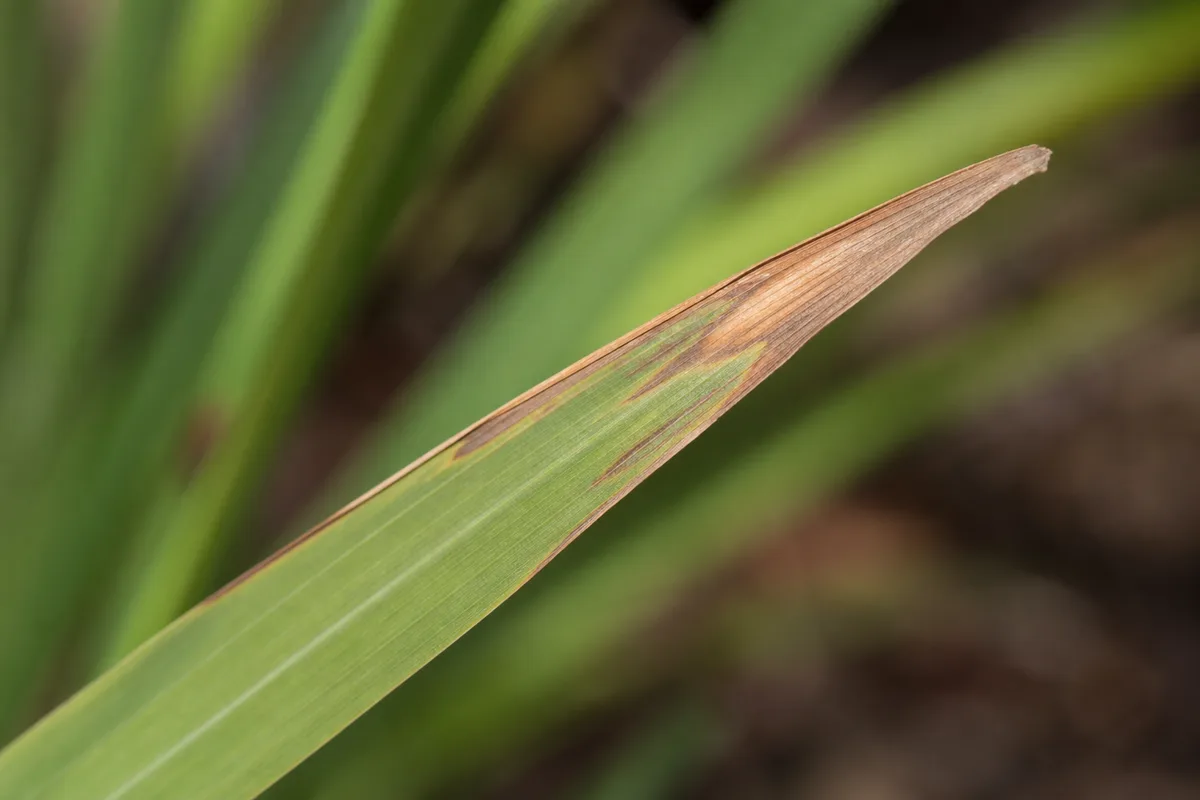
Brown Tips symptoms on Lemongrass - compare with healthy tissue on the same plant.
Live-blade tip burn shows as tan or brown crispy margins on the uncut tips of arching blades, sometimes with parallel streaking along the leaf. Damage often appears on several blades at once, especially the longest outer leaves that transpire hardest.
Harvest wear looks different: after you cut stalks at the base for cooking, the remaining cut ends are naturally brown and fibrous. That is normal post-harvest anatomy-not a stress signal-unless new uncut blade tips are also crisping. When in doubt, compare blades you never trimmed against blades you harvested last week.
Tip burn vs. mite stippling vs. salt crust
- Drought or heat tip burn - Uniform tan tips, pot feels light, top 3–4 cm crumbly and dry
- Humidity burn - Crispy tips and margins while mix at depth is still moderately moist; common above heating vents indoors
- Salt or fertilizer burn - White crust on soil surface or pot rim; browning after recent feeding on dry mix
- Spider mite damage - Fine stippling on blade undersides, webbing in severe cases-not uniform tip crispness alone (spider mites on lemongrass)
- Heat or light shock - Sun-facing tips scorch after a sudden move to harsher sun (heat stress, sunburn)
Underwatering also produces thin, pale stalks and a pot that feels noticeably light. Salt burn often pairs with a recently fertilized clump in hot weather.
Why lemongrass gets brown tips
Underwatering and fast blade transpiration
Lemongrass is a tropical grass, not a drought-tolerant succulent. It requires plenty of moisture in warm sun, and container plants should not dry out during active growth. Long blades transpire heavily-on a windy balcony in July, a small pot can go from moist to dangerously dry in 24 hours while the crown still looks upright. Tips die first because they are farthest from the root zone and last to receive water.
Repeated deep dry-downs between drinks stress blades from the tip inward even when the clump survives. That pattern overlaps with underwatering on lemongrass when the whole pot is light and dry top-to-bottom-not just edge burn on moderately moist soil.
Low humidity during overwintering indoors
When pots move indoors for winter, three things collide: forced-air heat, lower humidity, and reduced watering as growth slows. Blade margins lose moisture to dry room air while you correctly cut back on soil moisture. The result is brown tips on firm stalks with soil that still feels moderately moist at 3–4 cm-classic humidity burn, not root failure.
Lemongrass is native to tropical climates and prefers regular rainfall and more humid conditions. In Utah’s dry climate, USU Extension advises misting and regularly watering container plants so pots do not dry out. Indoors above a heat vent, the same species needs localized humidity around blades even when winter watering frequency drops. Persistent dry-air tip burn without vent correction often escalates to low humidity stress and spider mite pressure.
Salt and fertilizer buildup in containers
Container fertilizing without occasional flushing leaves soluble salts that damage sensitive leaf margins on grasses in small pots. White residue on the soil surface or pot rim supports salt toxicity over simple drought. UF/IFAS recommends feeding weekly at half strength in summer-a sound rhythm that still needs periodic leaching because frequent watering washes nutrients through the mix and can concentrate salts at the root zone if saucers hold runoff.
Hard tap water minerals can add a secondary crust distinct from fertilizer salts. If crust appears without recent feeding, flush with clear water and consider rainwater or filtered water for a few cycles.
Heat and light shock on sun-facing tips
Sudden repositioning-moving a pot from part shade to blazing afternoon sun, or from a dim windowsill to a south-facing glass door-can scorch exposed blade tips before roots adjust. Sun-facing tips brown while shaded sides stay greener. This is not the same as slow drought burn across all blade tips.
Pair scorch with a recent move or heat wave. Rehydrate a drought-stressed clump before placing it in harsh midday sun. For full escalation when whole blades bleach and collapse, see heat stress and sunburn on lemongrass.
How to confirm the cause
Run this checklist before you stack fixes:
- Probe moisture at 3–4 cm - Crumbly and light confirms drought; wet and heavy points away from simple tip burn toward overwatering or root rot.
- Lift the pot - Light weight plus dry probe supports underwatering; heavy pot with crispy tips supports humidity or salt burn.
- Map heat and draft exposure - Heating vents, radiators, and hot window zones within 1 m of the clump explain indoor winter tips on moist soil.
- Check for white crust - Salt or mineral buildup on soil surface or pot rim; note recent fertilizer dates.
- Inspect blade undersides - Stippling, tiny moving dots, or webbing suggest mites, not uniform tip crispness alone.
- Review recent moves - Sudden sun increase or balcony repositioning after a cloudy week supports heat/light shock on sun-facing tips.
- Separate harvest wear - Confirm whether browned tissue is on uncut live tips or only on cut stalk ends from recent harvest.
Confirmation decision table
| If you find… | Likely cause | First action |
|---|---|---|
| Dry 3–4 cm, light pot, tan tips on many blades | Underwatering / drought | Deep soak; see underwatering |
| Moist 3–4 cm, firm crown, crispy tips near vent | Low humidity / heat draft | Relocate; pebble tray or humidifier; low humidity |
| White crust, browning after feed on dry soil | Salt / fertilizer burn | Leach soil 2–3 times; hold fertilizer |
| Sun-facing tips only, recent move to harsh sun | Heat / light shock | Shade briefly; rehydrate; heat stress |
| Stippling + webbing on undersides | Spider mites | Rinse; isolate; spider mites |
| Brown only on cut harvest ends | Harvest wear | No rescue-normal anatomy |
When wet soil and soft stalk bases align, stop tip-burn fixes and switch to water stress triage-soggy roots are a different problem.
The first fix to try
Probe the top 3–4 cm. If dry, water thoroughly until a little drains, then empty the saucer.
That single step addresses the most common container failure-surface-dry clumps that crash between balcony waterings-without drowning a plant that only needs humidity correction. If the probe reads moist and the pot still feels moderately heavy, do not add more water. Instead, move the pot away from heating vents and dry forced-air paths, then stabilize humidity around the blades for several days.
If white crust suggests salts, leach the soil by watering slowly until excess drains freely two or three times in one session with plain water before resuming fertilizer. Trim only fully dead tip tissue for appearance; harvest whole stalks at the base if bases are still firm and green-otherwise let new shoots replace damaged blades.
Step-by-step recovery by cause
Drought tip burn
- Soak until water exits drainage holes; empty saucer within 30 minutes.
- Move out of harsh midday sun until turgor returns, then return to full sun gradually.
- Check moisture daily on hot balconies until tips on new blades stay clean.
- Expect new clean blades in one to two weeks; old brown tips stay crisp.
Humidity burn (especially overwintering indoors)
- Relocate at least 1 m from heating vents, radiators, and forced-air returns.
- Set a pebble tray or run a humidifier near canopy height-not just across the room.
- Light misting can help blade edges briefly; sustained fix is stable room humidity plus correct winter watering, not mist alone.
- Rinse undersides once to knock off dust and early mites.
- Match winter drinks to the watering guide dry-down rhythm-moist but not saturated in cool dim rooms. UC Master Gardeners note lemongrass is susceptible to root rot from overwatering when indoor growers maintain summer frequency through winter.
Salt or fertilizer burn
- Stop fertilizer immediately.
- Leach slowly with plain water until roughly twice normal volume runs through-repeat two to three times in one session.
- Hold feed until new blades emerge without edge burn (typically two to three weeks).
- Resume weekly half-strength summer feeding only after flush and recovery.
- Do not harvest for cooking until flush completes if white crust was present-stressed tissue and salt-loaded soil are poor kitchen inputs.
Heat or light shock
- Move to bright indirect light or morning sun only for three to five days.
- Confirm soil moisture before reintroducing full afternoon sun.
- Trim fully dead scorched tips; leave partially green blades to photosynthesize.
- Escalate to sunburn guidance if whole blades bleach and collapse.
Do not repot, heavily prune, and fertilize on the same day-that makes it impossible to see which change helped. Avoid pesticide sprays near edible harvest windows unless product labels explicitly allow culinary herbs.
Recovery timeline
Existing brown tips remain crisp-they do not re-green. New blades should emerge without edge burn within one to two weeks once moisture, humidity, and salt load stabilize. Humidity-only corrections indoors may take two to three weeks in deep heating season because room air stays dry overnight.
Signs recovery is working: firm green stalk bases, new shoots unfurling with clean margins, stable pot weight between scheduled drinks.
Signs the problem is worsening: brown creeping down blades toward the base, whole-stalk collapse, wilt that persists after a proper soak on dry mix, or sour smell from wet soil. The last two point to severe drought or rot-not cosmetic tips.
Causes to rule out
- Spider mites - Stippling and webbing on undersides; mites build fast in warm dry indoor air (spider mites).
- Fertilizer burn from heavy feed - Full-strength doses on dry soil scorch tips; stick to half strength in summer per UF/IFAS.
- Normal harvest wear - Cut stalk bases naturally leave brown ends; distinguish from live-blade tip burn.
- Whole-blade crisping - May overlap crispy leaves when drought or heat affects more than margins.
- Chronic underwatering - Thin stalks, very light pot, dry throughout; see underwatering for full rescue.
What not to do
Do not respond to brown tips by keeping soil constantly saturated-that invites rot in cool indoor weather when growth is slow. UC Marin Master Gardeners warn that excess moisture causes root rot on lemongrass. Do not apply more fertilizer on dry, salt-stressed roots. Do not place a drought-stressed clump in direct midday sun without rehydrating first. Do not confuse harvest-cut brown ends with live-blade stress and overwater a firm clump sitting in moist mix.
How to prevent brown tips next time
Maintain medium water needs in full sun during active growth per the seasonal watering schedule. On hot balconies, check moisture daily when the top 3–4 cm dries-sometimes every one to two days in small pots above 32°C (90°F). Indoors in winter, reduce frequency but do not neglect dry-down entirely; pair reduced drinks with humidity at blade height.
Flush pots seasonally to prevent salt buildup. Match pot size to clump so roots do not bake between drinks. Group containers to raise local humidity. After heavy harvest, check moisture the same day-regrowth pulls water aggressively.
Terracotta dries faster than plastic; adjust checks accordingly rather than copying a neighbor’s calendar. Missouri Botanical Garden flags spider mites as an indoor risk on lemongrass-dry air prevention doubles as mite prevention.
When to worry
Treat as urgent in extreme heat when the whole clump collapses, soil has been bone-dry for days, and blades feel papery-rehydrate immediately and move out of harsh midday sun until turgor returns. Switch to underwatering escalation if collapse follows prolonged drought.
Contact your local extension office if tips keep browning on new growth after two weeks of corrected moisture and humidity, or if brown spreads down blades with wilting on wet soil-that suggests rot, not edge burn.
Cosmetic tips on a firm clump with clean new shoots after a single dry spell are lower urgency.
Conclusion
Brown tips on lemongrass are usually a moisture and air-humidity signal on long tropical grass blades-not a disease mystery. Run the 3–4 cm probe, read pot weight, and separate live-blade burn from harvest-cut ends before you change culture. Soak when dry, relocate away from vents when moist, and leach when crust appears. Judge success by clean new blades at the clump center. For the full seasonal rhythm that keeps container clumps from cycling between drought and salt stress, continue with the lemongrass watering guide.
When to use this page vs other Lemongrass guides
- Lemongrass watering guide - Use for routine moisture checks before assuming brown tips is the main issue.
- Lemongrass problems hub - Browse all 52 common issues on this species.
- Low Humidity on Lemongrass - Different entry point when symptoms overlap with brown tips.
- Underwatering on Lemongrass - Different entry point when symptoms overlap with brown tips.
- Overwatering on Lemongrass - Different entry point when symptoms overlap with brown tips.