Crispy Leaves on Lemongrass: Causes, Checks & Fixes
Quick answer
Crispy leaves on lemongrass usually mean dry roots, dry air, or salt-burned tips-not total plant failure. First step: weigh the pot and probe soil at 3–4 cm depth, then water deeply or flush salts if the mix has dried out.
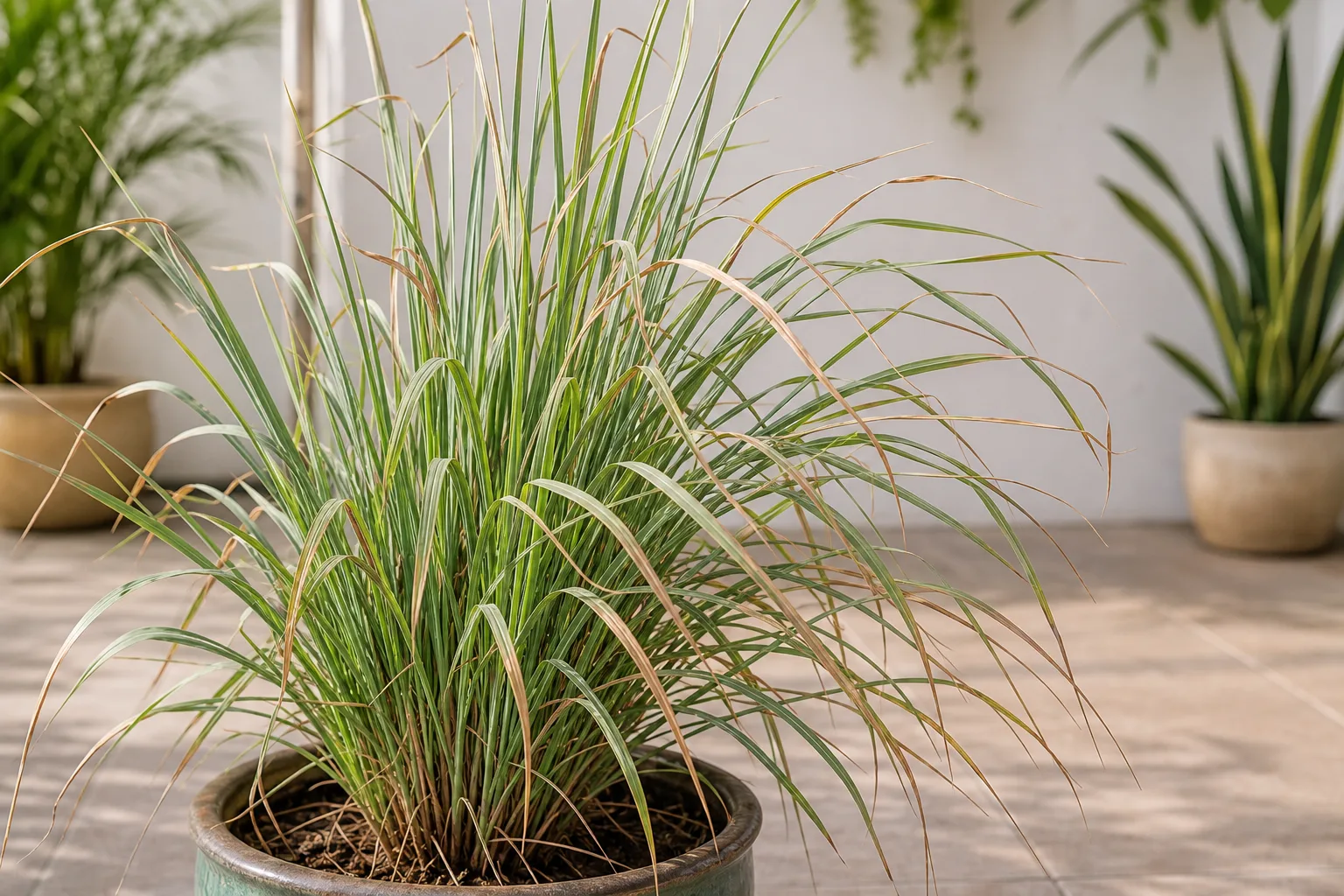
Crispy Leaves on Lemongrass: Causes, Checks & Fixes
This guide covers crispy leaves on Lemongrass. See also the general Crispy Leaves guide, watering, and light pages for this plant.
Crispy Leaves on Lemongrass: Causes, Checks & Fixes
Quick answer
Crispy leaves on lemongrass usually mean dry roots, dry air, or salt-burned tips-not total plant failure. Your first move: weigh the pot and probe soil at 3–4 cm depth, then water deeply if dry or flush salts if fertilizer crust is present.
Long arching blades-up to 3 feet on mature plants-lose water fast in full sun. Lemongrass expects regular moisture during active growth; when roots or room air dry out, edges crisp hours before the crown wilts. If only the very tip is tan and the blade still flexes, start with the brown tips guide instead.
Crispy leaves vs brown tips vs underwatering on lemongrass
These three lemongrass problem pages overlap because drought, humidity, and salt stress all show on long grass blades first. Use this router before you change watering, humidity, or harvest habits.
| What you see | Best page to start | Why |
|---|---|---|
| Brittle margins that crumble; whole sections feel papery | This page (crispy leaves) | Multi-cause brittle tissue-drought, dry air, salt, or heat combo |
| Tan or brown tips only; blade still mostly flexible | Brown tips | Cosmetic edge burn, often humidity or salt on tips alone |
| Light pot, dry soil top-to-bottom, thin pale new shoots | Underwatering | Root zone has baked dry; clump needs deep rehydration rhythm |
| Moist soil indoors but crispy margins | Low humidity | Dry heated air stripping blade edges while roots are still wet |
| Uniform scorch after heat spike on a crowded pot | Heat stress or root-bound | Crowded roots plus sun can crisp blades even when you water |
Crispy leaves is the overview when you are not sure which moisture pattern fits-or when more than one cause is active at once.
Why lemongrass gets crispy leaves
Lemongrass is a tropical clumping grass with high leaf surface area relative to its fibrous root mass. In full sun and warm conditions, long blades transpire heavily. Container clumps on hot patios can need water when the top 3–4 cm dries-not on a fixed weekly calendar.
Why tips crisp before the crown wilts: Water moves through grass blades from root to tip. On blades that can reach 3 feet, the outer margins and tips are the last cells supplied and the first to lose turgor when transpiration outpaces uptake. In full sun, a patio clump can show brittle tip tissue within hours while stalk bases at the soil line still feel firm-that is blade desiccation, not crown failure.
Underwatering in harvest season is the most common outdoor trigger. Pots that dry in a day during active cutting lose tip moisture before the crown fails.
Low indoor humidity during overwintering browns margins while soil moisture looks normal. Heated winter rooms often sit below 40% relative humidity at blade height-a range where spider mites also build faster. Misting helps indoor overwintering clumps in dry heated rooms; outdoor rain-fed patio pots rarely need misting.
Salt buildup from repeated fertilizer without flushing burns tips evenly across older blades. Soluble salts concentrate as water evaporates and pull moisture from root tips, mimicking drought on leaf edges. In fed containers, UMD Extension recommends leaching with at least three times the pot volume of clear water every four to six months-that volume displaces concentrated salts from the root zone rather than just wetting the surface.
Heat stress on root-bound clumps combines drought and crowding: a small pot cannot hold enough moisture between waterings when a dense clump fills it in midsummer. See root-bound guidance when the pot dries within hours of watering despite deep drinks.
What crispy leaves look like on lemongrass
Typical patterns:
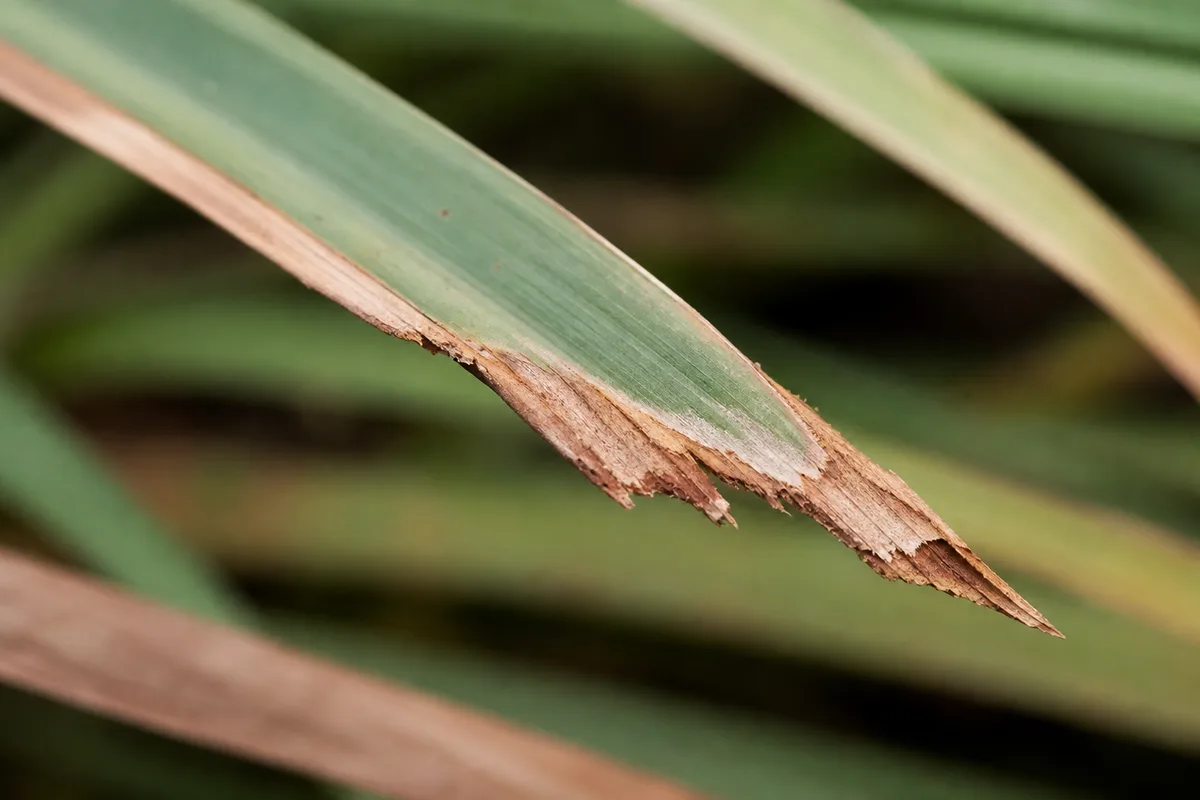
Crispy Leaves symptoms on Lemongrass - compare with healthy tissue on the same plant.
- Brittle brown tips and margins that crumble when bent-not just tan discoloration
- Gray-green dull color on affected blades while stalk bases stay firm
- Light pot and dry soil with underwatering; white crust on rim with salt burn on older blades first
- Moist soil with crispy indoor margins when dry air is the lead cause
Stalk bases often stay firm-this distinguishes air or tip stress from crown rot where bases soften and smell sour.
Normal old-blade senescence: outer woody stems naturally brown at tips after many harvest cycles. That wear is static, not spreading week to week. Active stress adds new crispy tissue on recently green blades.
How to confirm the cause
Run this sequence before stacking fixes:
- Weigh the pot. Light weight plus dry soil throughout confirms drought. If the pot is light but soil feels hydrophobic and water runs off the surface, see underwatering for rewetting dry mix.
- Probe at 3–4 cm. Crumbly and dry supports underwatering; evenly moist with crispy tips indoors points to low humidity.
- Map heat and drafts. Heating vents, radiators, and hot window zones strip moisture from blade edges. Use a hygrometer at blade height overnight-readings persistently below 40% support a humidity fix.
- Check for salt crust. White deposits on the pot rim or soil surface after heavy feeding suggest leaching salts before more fertilizer.
- Inspect undersides for mites. Stippling or fine webbing after tip burn means treat spider mites alongside humidity correction-dry stressed clumps attract mites quickly.
Wilting with wet heavy soil is not crisp drought-inspect roots for rot before watering more.
Quick confirmation: drought vs humidity vs salt vs rot
| Check | Drought | Low humidity | Salt buildup | Crown rot |
|---|---|---|---|---|
| Pot weight | Light | Normal to heavy | Normal to heavy | Heavy |
| Soil at 3–4 cm | Dry, crumbly | Moist | Moist; white crust possible | Wet, sour smell |
| Blade feel | Brittle tips; bases firm | Crispy margins; bases firm | Even tip burn on older blades | Soft bases; yellowing at crown |
| First fix | Deep water; empty saucer | Raise humidity; move off vents | Flush 2–3× pot volume; hold fertilizer | Stop watering; inspect roots |
Spider mites and crispy tips together
Dry indoor air that crisps blade margins also favors two-spotted spider mites on overwintering lemongrass. Tip burn alone does not confirm mites-you need stippling on blade undersides, a positive paper-tap test, or fine silk at stalk joints near the crown.
When both appear, do not mist your way out of mites. First isolate the pot and rinse every blade surface-including undersides and stalk bases-with lukewarm water. Raise humidity at canopy height with a humidifier or pebble tray, then follow the spider mites on lemongrass protocol for repeat soap or oil treatments on a 5–7 day cycle until new shoots stay clean. Misting without rinsing leaves mite colonies intact on protected inner blades.
First fix for lemongrass
If the pot is dry: water deeply until a small amount drains, then empty the saucer.
If salts are suspected, flush with clear water at least twice the pot volume in one session and discard all runoff. For fed containers with visible crust, use three times the pot volume so concentrated salts wash through the mix instead of redepositing near the surface. Do not fertilize until new blades emerge clean.
For indoor overwintering with moist soil but crispy margins, move the pot away from heating vents and raise humidity at canopy height-a humidifier is more reliable than occasional misting when room air stays dry all day.
Trim worst crispy tips at harvest height (base cut) or remove damaged outer blades at the base to redirect energy to new growth. Do not harvest heavily while the clump recovers from severe drought.
Step-by-step recovery
Days 1–3
- Probe soil at 3–4 cm; water thoroughly if dry.
- Empty saucers after every drink in active growth.
- Relocate away from heating vents and direct AC drafts indoors.
- Rinse blade undersides once if air is very dry or mites are suspected.
Days 4–10
- Flush container mix if white crust or fertilizer burn is present.
- Group pots or run a humidifier for persistent indoor dry air-outdoor clumps rely on rain and deep watering instead.
- Repot into a larger container only if the clump is root-bound and dries out within hours of watering.
Days 10–14
- Watch for new blades without tip burn.
- If stippling persists, follow the spider mites protocol rather than only misting.
Recovery timeline
New clean shoots typically appear within one to two weeks once moisture rhythm and humidity stabilize in warm active growth. Old crispy tissue remains until cut-it does not re-green.
Severe drought collapse in peak heat may need division of any firm outer shoots if the center desiccated. Judge success by new tillers, not by old blade recovery.
Causes to rule out
- Root rot - Wet heavy pot, sour smell, mushy roots; not dry crisp tips alone (root rot guide)
- Cold damage - Overnight frost collapse, not gradual tip browning (cold damage guide)
- Chemical burn - Sudden bleach streaks after spray events (chemical damage guide)
- Spider mites - Stippling and webbing with dry air; crisp tips alone do not confirm mites until you inspect undersides
- Normal old blade senescence - Outer woody stems brown at tips after many harvest cycles without spreading to new growth
What not to do
Do not fix crispy tips by keeping soil constantly wet in cool indoor light-that invites rot. Do not ignore stippling after tip burn-mites exploit dry stressed clumps. Do not harvest heavily while the clump is recovering from severe drought. Do not apply more fertilizer on salt-stressed roots before flushing.
How to prevent crispy leaves
Match watering to season per the lemongrass watering guide: keep containers from baking dry in summer; reduce frequency in cool dormancy without letting active outdoor clumps go bone-dry in heat.
For indoor overwintering, monitor humidity at blade height and keep plants in bright light away from direct heating airflow. Flush salts every four to six months in fed containers. Upsize pots before clumps become root-bound and dry out between daily waterings on hot balconies.
When to worry
Escalate when the whole clump wilts with a very light pot in peak heat-rehydrate immediately before fibrous roots desiccate. Crisp tips with heavy mite webbing need rinse, humidity correction, and direct mite treatment the same week. Wet soil with crisp tips indoors still points to air dryness first, not rot-unless bases soften or smell sour.
Related lemongrass guides
- Lemongrass overview
- Lemongrass watering
- Brown tips on lemongrass
- Underwatering on lemongrass
- Low humidity on lemongrass
- Spider mites on lemongrass
- Heat stress on lemongrass
- Root-bound on lemongrass
Related tool
Use the Plant Problem Diagnosis Tool to narrow causes for crispy leaves on this plant before changing multiple variables at once.