Low Humidity on Lemongrass: Causes, Checks & Fixes
Quick answer
Low humidity stress on lemongrass usually shows up as brown, crispy blade tips while the clump base stays firm. First fix: move the pot away from dry heat airflow and raise room humidity around the plant, then keep soil evenly moist but not soggy.
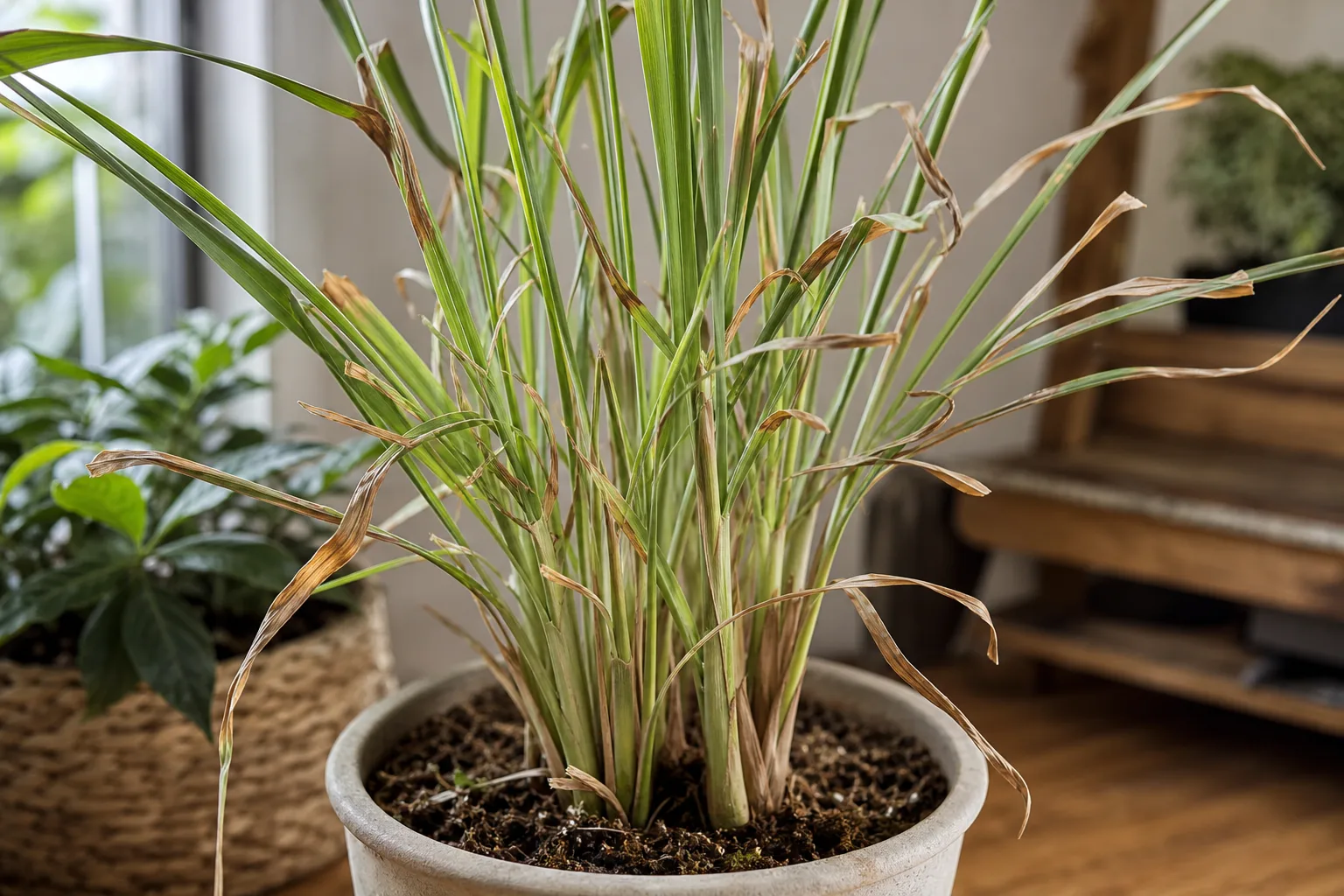
Low Humidity on Lemongrass: Causes, Checks & Fixes
This guide covers low humidity on Lemongrass. See also the general Low Humidity guide, watering, and light pages for this plant.
Low Humidity on Lemongrass: Causes, Checks & Fixes
Quick answer
Low humidity stress on lemongrass usually starts as brown, crispy tips and margins on older blades while the clump base still feels firm. Your first move is simple: relocate the pot away from direct dry heat (vent, radiator, or strong forced-air path), then stabilize humidity around the canopy. Lemongrass is a tropical grass that performs best with warmth, humidity, and consistent moisture UF/IFAS.
Dry indoor air also increases spider mite pressure. Mites reproduce faster in warm, dry conditions and often appear where air is hot and dry, including around indoor heating sources OSU Extension UConn IPM.
What low humidity looks like on Lemongrass
Common signs include:
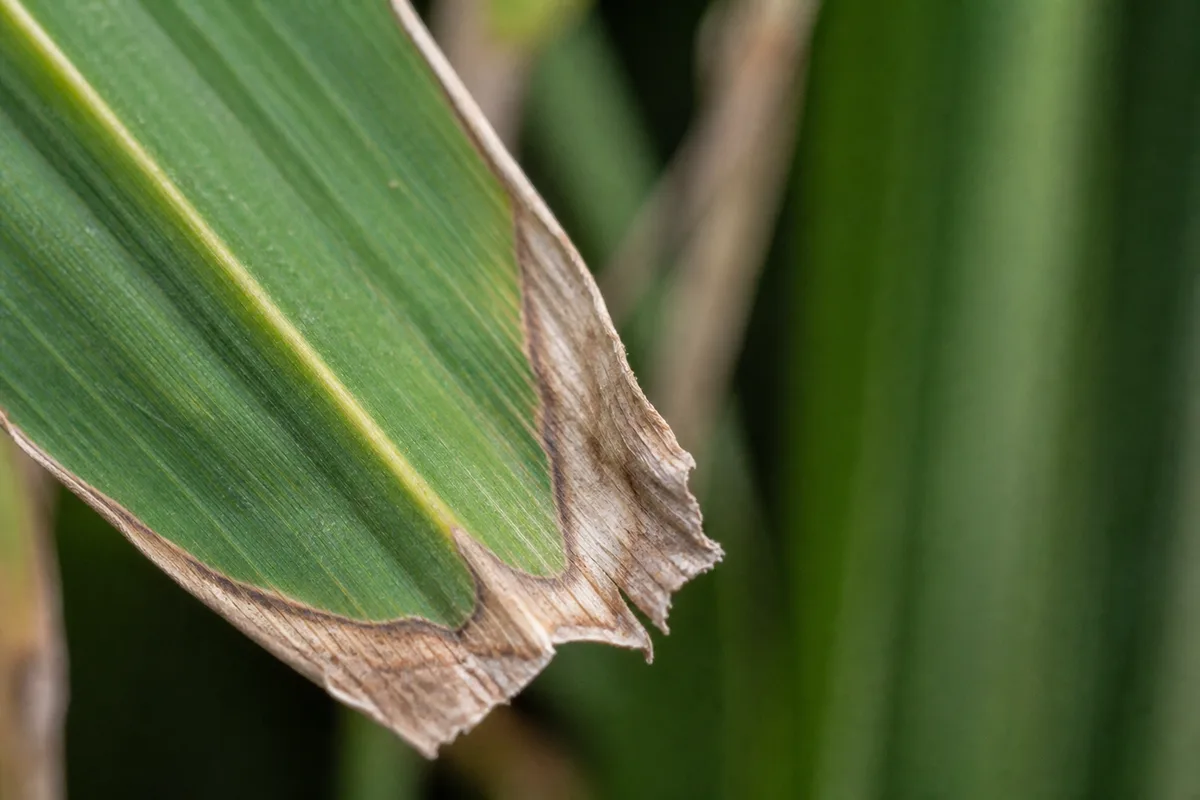
Low Humidity symptoms on Lemongrass - compare with healthy tissue on the same plant.
- brown, papery tips that spread along the margins
- rough or curled blade edges
- duller leaves without whole-stalk collapse
- stippling or fine webbing if mites are also active
With humidity stress, damage usually starts at leaf tips first while the base remains firm. In true drought stress, the whole container tends to feel very light and dry top-to-bottom.
Why Lemongrass suffers in dry air
Lemongrass has long, narrow blades with high exposed surface area, so edge tissue dries quickly in heated indoor air. Winter indoor conditions can damage blade margins even when soil moisture is not yet critically low.
Spider mites are a second reason this problem escalates on indoor lemongrass. Missouri Botanical Garden specifically flags spider mites as an indoor risk for lemongrass Missouri Botanical Garden, and extension/IPM guidance shows mites building rapidly in warm, dry conditions OSU Extension UConn IPM.
The first fix to try
First, move the pot out of direct dry airflow (heating vent, radiator blast, or constant hot draft). This removes the trigger that is stripping moisture from blade edges.
After relocating, keep conditions stable for a few days:
- keep soil evenly moist, never waterlogged
- rinse leaf undersides once to reduce dust and early mites
- monitor humidity near canopy height, not across the room
UF/IFAS guidance for container lemongrass is to water regularly so pots do not dry out in dry conditions UF/IFAS.
How to confirm the cause
Before making extra changes, run this check sequence:
- Measure humidity where leaves sit. Use a hygrometer at blade height for 24 hours, including overnight.
- Check heat/draft exposure. Map vents, radiators, and hot window zones near the clump.
- Check moisture in the root zone. If the top few centimeters are still moderately moist while tips crisp, humidity stress is likely contributing.
- Inspect undersides for mites. Stippling, tiny moving dots, and fine webbing suggest active mites UMN Extension.
- Check for mineral crust. White crust on pot rim or soil surface suggests salt buildup can be part of the tip burn pattern.
Step-by-step recovery
Days 1-3
- Relocate away from vented heat and dry drafts.
- Rinse leaves once with lukewarm water, including undersides.
- Trim only fully dead tip tissue for appearance; do not heavily prune stressed foliage.
Days 4-10
- Keep humidity and watering consistent; avoid care swings.
- Re-check undersides every 2-3 days for mite activity.
- If mites persist, repeat rinsing and use a labeled insecticidal soap or horticultural oil per label guidance UMN Extension.
Days 10-21
- Track recovery by the quality of new blades.
- Watch for slower spread of edge burn and less stippling.
- Keep conditions stable rather than changing multiple variables at once.
Recovery timeline and expectations
Judge recovery by new growth quality, not repair of old tissue. Brown tips do not turn green again. In most indoor setups, cleaner new blades appear within one to three weeks after humidity and watering stabilize. If damage continues spreading past that window, reassess for mites, root stress, or salt buildup.
Lookalike symptoms to rule out
| Symptom pattern | More likely low humidity | More likely another issue |
|---|---|---|
| Tips brown but stalk base stays firm | Common | - |
| Pot is very light and dry top-to-bottom | Sometimes | Underwatering likely |
| White crust on soil/pot rim | Possible overlap | Salt/mineral buildup likely |
| Stippling plus webbing | Common dry-air companion | Spider mites need direct control |
| Mushy base or sour soil smell | Uncommon | Overwatering/root rot likely |
Mistakes to avoid
- Do not keep soil constantly wet to compensate for dry air; that can cause root decline.
- Do not rely on misting alone if room air is very dry all day.
- Do not ignore early stippling or webbing; mites can multiply quickly in warm, dry conditions OSU Extension.
- Do not fertilize heavily while the plant is actively stressed.
How to prevent low humidity stress on Lemongrass
For indoor overwintering and dry seasons:
- keep plants in bright light and away from direct heating airflow Missouri Botanical Garden
- use a humidifier for persistent dry-room conditions; grouping and trays help but are often secondary tools
- water before pots become bone-dry, while keeping drainage free UF/IFAS
- rinse foliage periodically and check for early mite stippling
If pets can reach indoor pots, position the plant out of chewing range. ASPCA lists Cymbopogon citratus as toxic to dogs, cats, and horses ASPCA.
When to worry
Escalate quickly if you see heavy webbing, fast decline across the clump, or no improvement after two to three weeks of corrected humidity and consistent watering. At that point, isolate the plant and run a full mite-control protocol to protect nearby plants.
Related lemongrass guides
- Lemongrass overview
- Lemongrass watering
- Brown tips on lemongrass
- Spider mites on lemongrass
- Underwatering on lemongrass
- Crispy leaves on lemongrass
Conclusion
Low humidity on lemongrass is usually recoverable when you remove dry heat exposure early and stabilize both humidity and watering. Use a quick diagnostic check to separate dry-air stress from drought, salt buildup, and mites, then measure progress by cleaner new blades rather than old tip recovery.