Underwatering on Lemongrass: Causes, Checks & Fixes
Quick answer
Underwatered lemongrass shows brown blade tips, thin pale stalks, and a light pot with dry mix 3–4 cm down. First step: water slowly until drainage runs from the bottom, then empty the saucer-do not sprinkle the surface or fertilize before the root ball rehydrates.
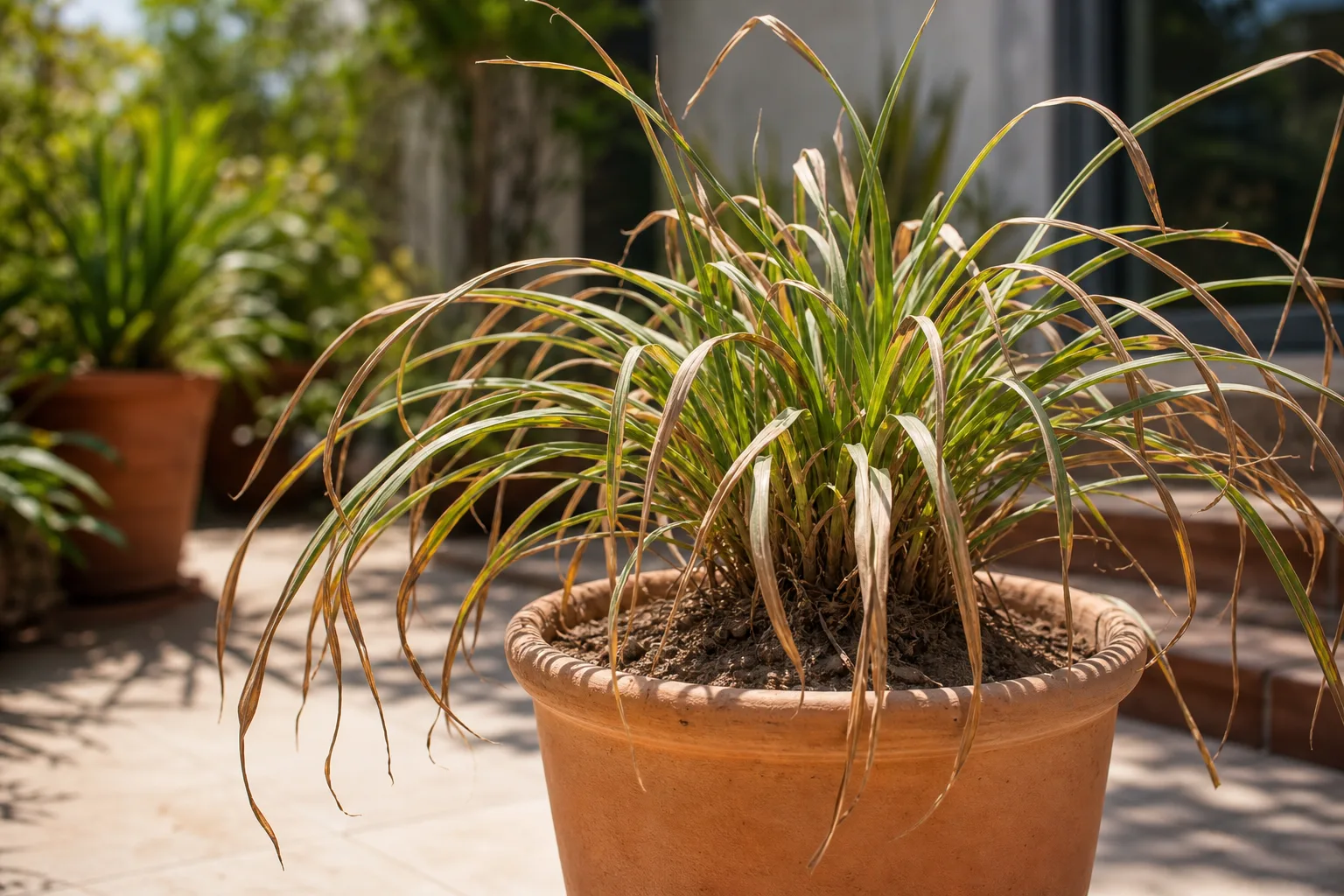
Underwatering on Lemongrass: Causes, Checks & Fixes
This guide covers underwatering on Lemongrass. See also the general Underwatering guide, watering, and light pages for this plant.
Underwatering on Lemongrass: Causes, Checks & Fixes
Quick answer
Underwatered lemongrass (Cymbopogon citratus) shows brown blade tips, thin pale stalks, drooping outer leaves, and stalled regrowth after harvest. The pot feels light, soil is dry 3–4 cm down, and roots stay firm-not mushy.
First step: give one slow, thorough watering until water runs from the drainage holes, then empty the saucer. Do not sprinkle the surface, repot, or fertilize before you confirm the root ball was actually dry.
Lemongrass is a tropical grass, not a drought-tolerant succulent. It requires plenty of moisture in warm sun, and container plants should not dry out during active growth. For the full seasonal rhythm-summer moisture versus winter dry-down-see the lemongrass watering guide. If wet soil and sour roots are your problem instead, start with overwatering on lemongrass or root rot.
What underwatering looks like on Lemongrass
Lemongrass moves water fast through long arching blades. When the root zone runs dry, symptoms show on foliage before roots die-especially in small pots on a hot terrace.
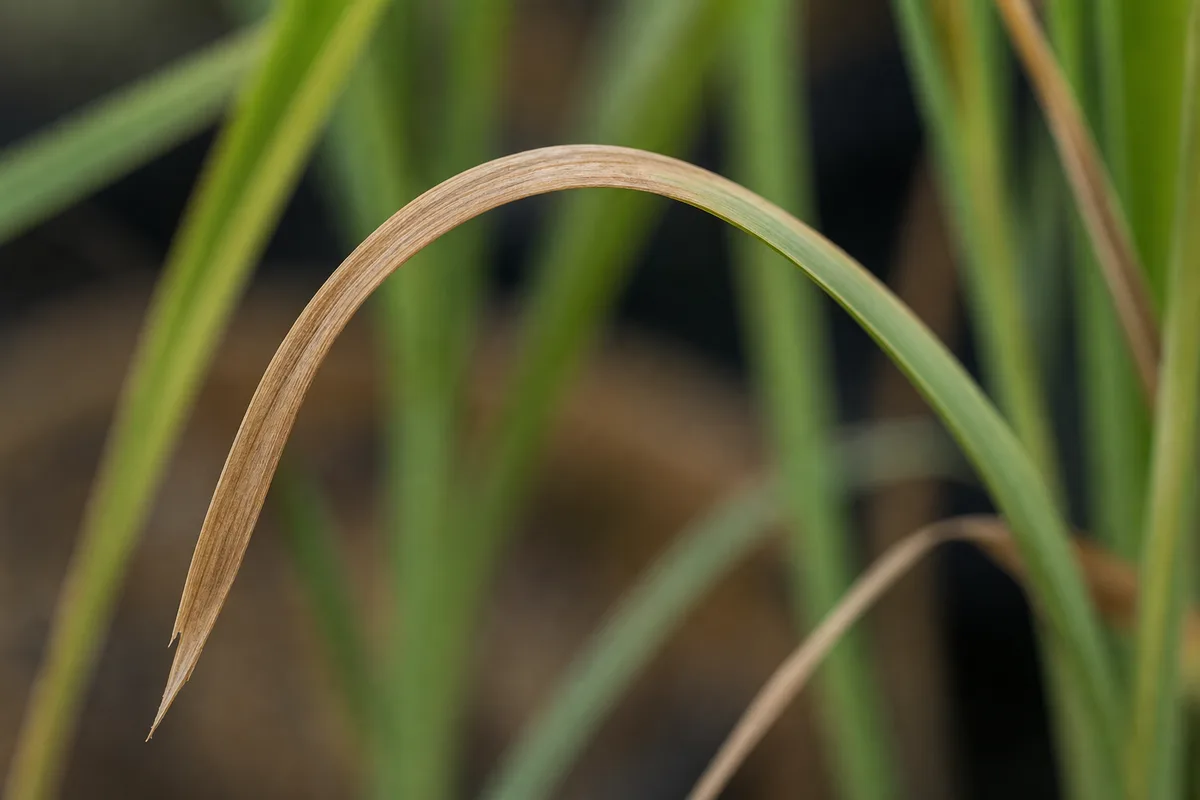
Underwatering symptoms on Lemongrass - compare with healthy tissue on the same plant.
Blade and stalk signals
- Crispy brown tips on outer or lower blades-often the first visible sign
- Drooping or limp arching leaves that feel thin rather than turgid
- Pale, skinny new stalks instead of thick harvestable shoots
- Slow or stalled regrowth after you cut stalks for the kitchen
- Soil pulling away from the inside of the pot rim
Brown tips alone can also come from low humidity or heat stress. Pair tip burn with dry mix at depth and a light pot before you call it simple underwatering.
Soil and pot clues
- Top 3–4 cm (1–1.5 inches) crumbly and dusty when probed
- Pot noticeably lighter than right after your last deep soak
- Hydrophobic dry mix-water beads on the surface or channels down the pot wall while the center stays dry
- In extreme drought, mix may shrink and gap from the rim
What underwatering does not look like
Underwatering is dry soil plus firm roots. It is not:
- Yellowing stalk bases on wet soil-that pattern fits overwatering or rot instead
- Wilting that persists overnight when mix is damp at depth-see water stress on lemongrass and wilting for uptake failure on wet roots
- Sour smell or black mushy crown tissue-switch to root rot protocol, not more water
Why Lemongrass gets underwatered
Lemongrass is native to tropical climates with regular rainfall and humid air. In dry climates it should be misted and regularly watered, and pots must not dry out during the growing season. That biology clashes with how many growers treat it-as if grass meant drought-proof.
Long blades and fast summer growth move a lot of water. A clump in full sun on a balcony can go from moist to bone-dry in a single hot day when the pot is small.
Containers dry faster than garden beds. Limited soil volume, wind, and reflected heat from paving all accelerate dry-down. A schedule that worked in spring may leave a midsummer pot dangerously dry by afternoon.
Root-bound clumps create a confusing cycle: water runs through in seconds, the surface may look briefly damp, and inner roots still thirst-or the opposite, where the outer ring wets while a dense root mat in the center stays dry. See root bound lemongrass when the pot goes light within hours of every soak.
Calendar watering fails. Checking once a week ignores heat waves, vacation gaps, and the shift to slower winter growth indoors. Lemongrass needs you to read the pot, not the clock.
Fear of rot after overwatering pushes some growers into chronic summer drought. Lemongrass rots in waterlogged soil-but withholding water until the mix is dust-dry in active heat produces wilt and thin stalks just as reliably.
Heavy harvest without adjusting water. Cutting many stalks on a dry day can leave the clump visibly limp within hours even though roots are still healthy-temporary thirst, not disease.
Summer terrace versus indoor winter
On a hot balcony or patio, expect to check moisture every one to three days when the top 3–4 cm dries-sometimes daily in small pots above 32°C (90°F). Indoors in winter slowdown, growth and evaporation drop; the mix may need water only every 7–14 days, but it can still dry completely if you forget because the plant looks semi-dormant. Do not run a summer frequency through a cool windowsill-yet do not assume winter means “no water for a month” if the heater dries the room. The watering guide breaks this by season.
How to confirm underwatering vs. overwatering and root rot
Work through these checks in order before you treat:
- Soil moisture at 3–4 cm - Push a finger into the mix near the pot wall. Dry and crumbly supports underwatering. Cool, damp, or wet at depth points to overwatering, poor drainage, or root damage instead.
- Pot weight - Lift the pot. Very light compared to right after watering means the root zone is dry. Train yourself: lift after every soak for two weeks until “heavy” and “light” feel obvious.
- Root firmness - Tip the clump partly out if needed. Firm, pale roots on dry mix fit drought. Mushy, dark, or sour-smelling roots mean rot-not more water.
- Blade response test - One thorough soak is diagnostic. Perked blades within several hours strongly confirm drought on healthy roots.
- Stem base feel - Firm, slightly swollen shoot bases at the soil line fit a thirsty grass. Soft, yellowing bases on wet soil do not.
- Heat context - Midday limpness in extreme heat with moist soil at depth may be temporary heat stress alone. Overnight limpness with dry soil fits underwatering.
- Drainage check - Confirm holes are open and the plant is not sitting in stale saucer water-that causes the opposite problem.
If soil stays wet, stems soften at the base, or the plant fails to perk after a proper soak on dry mix with firm roots, switch diagnosis to overwatering or root rot-not another flood.
Symptom lookalike comparison
| What you see | Soil at 3–4 cm | Roots | Likely cause | First move |
|---|---|---|---|---|
| Crispy tips, limp blades | Dry, light pot | Firm | Underwatering | One deep soak |
| Whole clump limp | Dry | Firm | Severe drought | Deep soak; shade briefly in extreme heat |
| Wilting, yellow base | Wet | Mushy or sour | Overwatering / rot | Stop watering; inspect roots |
| Midday droop only | Moist | Firm | Heat stress | Check again evening; soak only if dry |
| Thin stalks, fast dry-down | Briefly wet surface | Circling mat | Root bound | Divide and repot |
| Tips only, firm clump | Moist | Firm | Low humidity / salt | Mist; see brown tips |
First fix for Lemongrass
Give one slow, thorough watering.
Place the pot in a sink or outdoors. Water slowly at the base until it runs freely from the drainage holes, then stop and let excess drain. Empty saucers so the crown is not sitting in stale water.
For hydrophobic dry mix-water channels through without wetting the center-repeat the soak once in the same session, or set the pot in a tray of water for 20–30 minutes so the mix wicks upward, then drain fully.
Mist blades if indoor air is very dry during active growth; UF/IFAS recommends misting in dry climates alongside regular watering.
Repot only if root-bound-when water passes through in seconds and roots circle the pot. Divide the clump, refresh mix, and use a wider container. That is a day-two fix if the first deep soak fails to hold moisture; do not repot on day one unless binding is obvious.
Do not:
- Sprinkle lightly every day without soaking the root ball
- Water again the same day if mix is still damp at depth
- Fertilize a drought-stressed clump before it rehydrates
- Confuse drought wilt with rot and withhold water when soil is dry and roots are firm
Recovery timeline and harvest expectations
Mildly underwatered lemongrass often perks within a few hours to one day after a proper soak, especially if wilting was recent. Brown tips on old blades will not green up-trim them or harvest those stalks. Judge recovery by firm new shoot bases and thick tillers emerging at the clump center, not by old crispy foliage.
New thick stalks typically take one to two weeks in warm sun after the root zone stays evenly moist again. A clump that was severely dry for many days may keep thin woody outer stalks even after recovery-cut those back and let fresh tillers replace them.
Signs recovery is working:
- Blades stiffen and hold their arch within 24–48 hours
- New shoots unfold at the clump center
- Pot weight stays moderate for a day or two after watering
Signs the problem is worsening or misdiagnosed:
- Continued wilt after mix is evenly moist
- Yellowing spread at the base on wet soil
- Soft, dark tissue at the crown
- No new growth for more than two weeks in warm, bright conditions
How to prevent underwatering without causing rot
Build a routine around soil moisture and pot weight, not guesswork:
- Water when the top 3–4 cm dries during active summer growth-see the full seasonal watering schedule
- Lift the pot regularly so light weight triggers a check
- In summer sun on a balcony, expect daily to every-other-day checks for small containers
- Indoors in winter, slow down when growth pauses-wet cool soil invites rot
- Repot or divide before clumps burst pots and dry unpredictably-root bound guidance covers timing
- Group containers to raise humidity around blades and slow edge drying
- After heavy harvest, check moisture the same day
Lemongrass wants medium water needs matched to season: steady moisture in heat, reduced but not neglected drinks indoors. Consistent moisture during harvest windows keeps stalks tender; boom-and-bust drought cycles produce woody, thin regrowth.
When to escalate
Contact your local extension office if a clump fails to perk after a confirmed deep soak on dry mix with firm roots, or if symptoms cycle between drought and soggy soil every few days-that often signals binding, poor mix, or early rot.
Treat as urgent in extreme heat when the whole clump collapses, soil has been dry for days, and blades feel papery. Rehydrate immediately and move the pot out of harsh midday sun until turgor returns-then return to full sun gradually.
If most stalks are crispy, bases are soft, or no new shoots appear after two weeks of corrected watering in warm conditions, the clump may not be worth nursing. Lemongrass divisions root easily; replacing exhausted stock is often faster than fighting a dead center.
Related lemongrass care
- Lemongrass overview - placement, light, and culture basics
- Lemongrass watering - seasonal schedules and winter dry-down rules
- Water stress on lemongrass - canonical hub when wet-vs-dry diagnosis is unclear
- Overwatering on lemongrass - yellow bases and wet-soil wilt
- Root rot on lemongrass - mushy roots and sour mix
- Root bound lemongrass - fast dry-down after every soak
- Wilting on lemongrass - whole-clump collapse and uptake failure
- Brown tips on lemongrass - tip burn without full drought
When to use this page vs other Lemongrass guides
- Lemongrass watering guide - Use for routine moisture checks before assuming underwatering is the main issue.
- Lemongrass problems hub - Browse all 52 common issues on this species.
- Wilting on Lemongrass - Different entry point when symptoms overlap with underwatering.
- Brown Tips on Lemongrass - Different entry point when symptoms overlap with underwatering.
- Yellow Leaves on Lemongrass - Different entry point when symptoms overlap with underwatering.