Yellow Leaves on Lemongrass: Causes, Checks & Fixes
Quick answer
Yellow lemongrass blades on container clumps usually mean harvest-driven nitrogen drain or wet-soil root stress-not a mystery disease. First step: probe soil moisture 3–4 cm down and lift the pot; only feed half-strength balanced liquid when roots are firm and mix is drying normally.
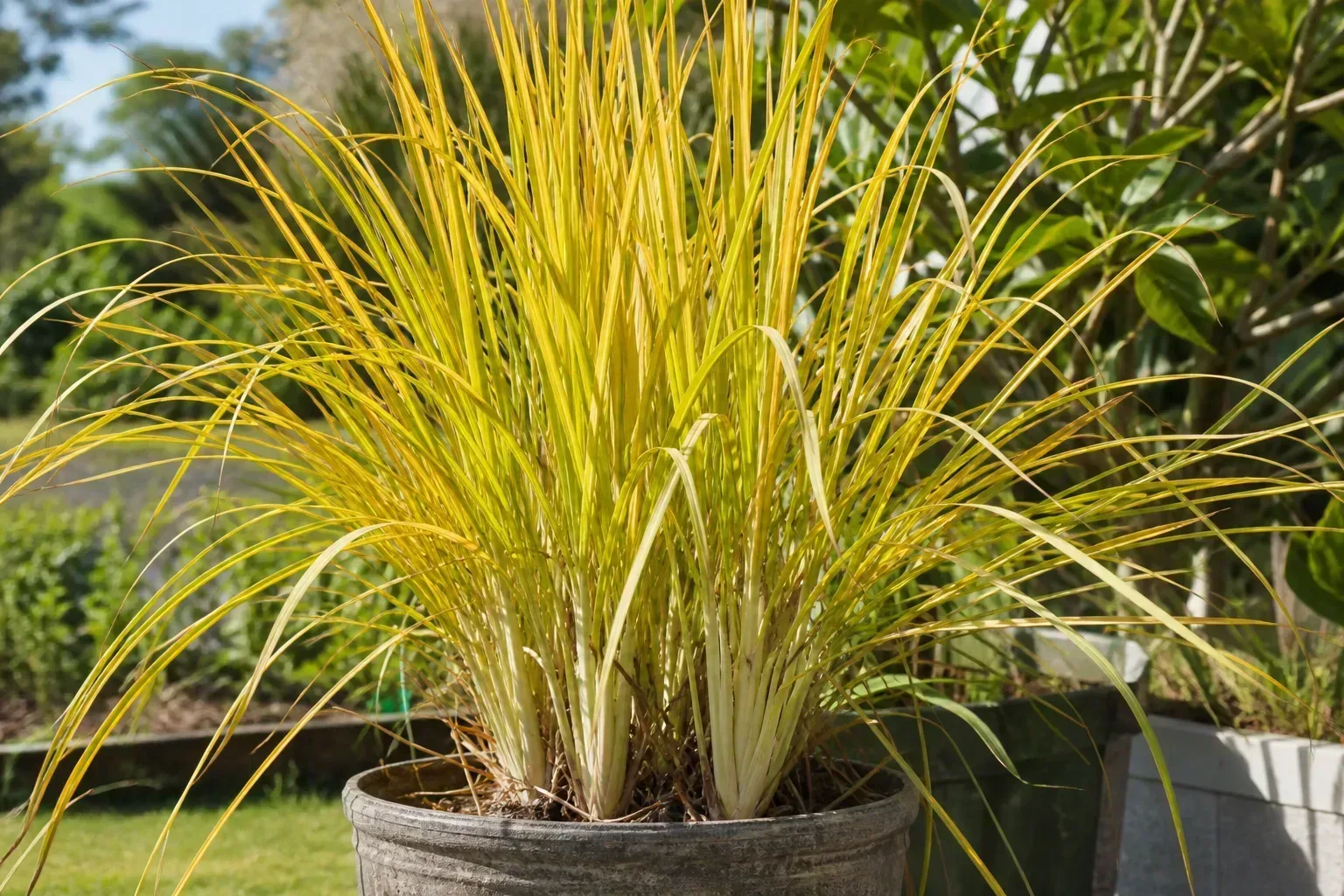
Yellow Leaves on Lemongrass: Causes, Checks & Fixes
This guide covers yellow leaves on Lemongrass. See also the general Yellow Leaves guide, watering, and light pages for this plant.
Yellow Leaves on Lemongrass: Causes, Checks & Fixes
Quick answer
Yellow leaves on lemongrass (Cymbopogon citratus) on container clumps usually trace to harvest-driven nitrogen drain or wet-soil root stress-not a random disease. In-ground plants in warm zones rarely yellow from pot-scale hunger alone; drought, rust, or seasonal outer-stem aging are more common there.
First step: probe soil moisture 3–4 cm down and lift the pot. A light, drying pot with firm roots and pale new shoots after heavy summer cutting points to feed need. A heavy, wet pot with sour smell or soft bases points to overwatering or root rot-fix water before any fertilizer.
This page is the canonical guide for bright yellow blades on potted lemongrass. If blades look dull gray-green rather than crisp yellow, start with faded leaves on lemongrass instead. For species context, see the lemongrass overview.
Because lemongrass is harvested by cutting stalk bases, repeated summer clipping drains nitrogen from small pots fast-yet root rots from constantly wet soil block uptake, so blades yellow even when you watered faithfully.
What yellow leaves look like on Lemongrass
Yellowing on this grass reads differently than on broad-leaf houseplants. Use these labeled patterns before you change care.
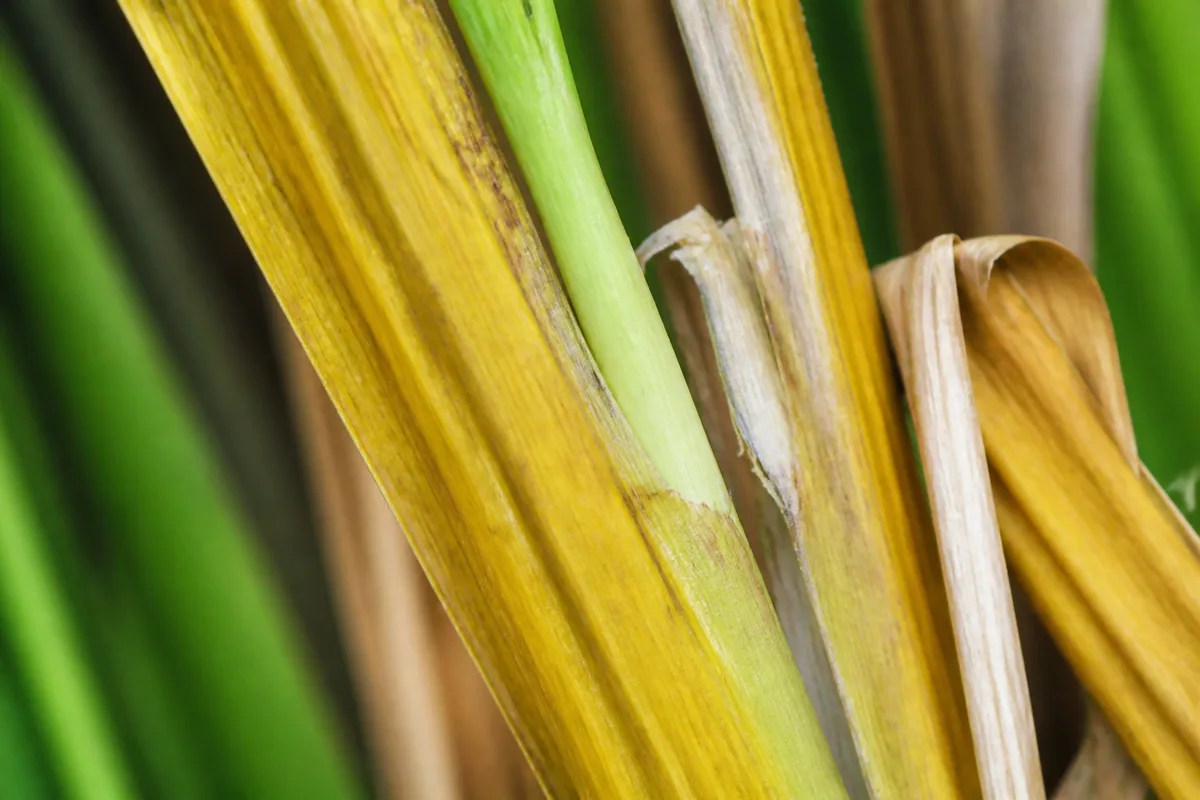
Yellow Leaves symptoms on Lemongrass - compare with healthy tissue on the same plant.
Blade patterns to compare
- Outer woody yellow blades, inner pale-green shoots - Often normal aging of lignified harvest stems plus harvest hunger on the same clump; inner tillers may stay thin but green while outer wood fades bright yellow.
- Uniform pale yellow on lower blades in full summer sun - Nitrogen shortage or exhausted container mix after repeated harvests; new shoots may look pale lime rather than deep green.
- Yellow at stalk bases with wet, heavy soil - Soft tissue, possible wilt on wet mix, sour smell-root trouble, not simple hunger. See overwatering.
- Bronze or yellow speckling with fine webbing - Spider mites on indoor lemongrass; stippling is patchy, not uniform fade. Route to spider mites.
- Orange or rust-brown pustules on blade undersides - Rust on lemongrass; not the same as uniform age yellow on outer stems.
Seasonal context
- Active summer harvest - Fast growth plus cutting drains small pots; yellow often follows a heavy harvest week in full sun.
- Cool indoor overwintering - Growth slows; wet soil on a dim windowsill yellows bases while crowns stay firm-classic cool-dormancy overwatering.
- In-ground warm zones - Yellow more often from drought stress, rust pressure, or outer stem senescence than from container-scale nitrogen drain.
Why Lemongrass gets yellow leaves
Lemongrass requires lots of nitrogen during the summer and should be fed weekly with diluted balanced fertiliser from June through September on container plants. Clumps outgrow their nutrients quickly, especially after repeated harvests that remove green tissue without replacing feed.
At the same time, overwatering in cool or dim conditions keeps mix saturated while growth slows. Overwatering can cause yellowing leaves because damaged roots cannot deliver nutrients or water evenly. Low light indoors reduces photosynthesis, making older blades fade first on an overwintering division-overlap with not enough light when new shoots stay thin and pale in shade.
Bring potted plants indoors when temperatures cool in fall; the seasonal shift plus reduced light changes how fast soil dries. That is when faithful winter watering becomes the main yellowing trigger. Full rhythm detail lives on the lemongrass watering guide.
Hunger vs. wet soil vs. mites vs. rust
Most container yellowing fits one row. Use this before you feed, repot, or spray.
| Pattern | Soil & pot | Blade look | First action |
|---|---|---|---|
| Harvest hunger | Light, drying pot; firm roots; warm sun | Uniform lower yellow; pale new shoots after heavy cut | Half-strength feed once - fertilizer guide |
| Wet-soil stress | Wet 3–4 cm down; heavy pot; sour smell | Yellow bases; possible wilt on wet mix | Stop watering; inspect roots - overwatering, root rot |
| Spider mites | Often dry; indoor heat | Bronze speckles + webbing at bases | Rinse, isolate - spider mites |
| Rust | Often humid; overhead wet leaves | Orange pustules on undersides | Remove affected blades; improve airflow; water at soil level |
| Normal aging | Normal dry-down; firm crown | Only outer woody stems yellow; inner shoots green | Trim on harvest schedule - pruning guide |
Feeding when the table points to wet soil or mites wastes time and can worsen damage. Nutrient lockout is a separate case-firm roots, faithful feeding, and still-pale new growth in full sun.
How to confirm the cause
Work through these checks in order. Moisture depth is referenced here once; later sections assume you already probed 3–4 cm down.
- Season and harvest history - Did yellow follow a heavy summer cut on a small pot? Cool indoor month with slow growth? Calendar and harvest log narrow hunger vs. dormancy overwatering first.
- Pot weight and soil moisture - Lift the pot. Light and dry with firm roots suggests underwatering or hunger; heavy and wet suggests rot risk. Full technique on the watering page.
- Root firmness and smell - Tip the clump out if soil stayed wet. Mushy, sour roots mean root rot-not a feed problem.
- New shoot color and thickness - Pale thin tillers in dim placement point to light before feed. Green new blades with only outer yellow often fits normal woody stem aging.
- Blade pattern scan - Uniform lower yellow vs. speckling with webbing vs. orange pustules (see table above).
- Feeding history - When did you last fertilize during warm active months? Salt-crusted mix or lockout can mimic hunger-see nutrient lockout.
- Light level - Fewer than six hours of direct sun outdoors, or a dim winter window without supplemental light, weakens color on overwintering clumps.
First fix for Lemongrass
If drainage is good, roots are firm, and soil is drying normally in warm active growth, apply one half-strength liquid fertilizer application, then wait two weeks before judging new shoots.
That single conditional feed is the hunger-path first fix-not an automatic response to every yellow blade.
If soil stays wet, skip feed and fix water first-fertilizing stressed, waterlogged lemongrass makes yellowing worse. Cut back the worst yellow outer stems at the base to redirect energy to firm inner shoots; leave enough green tissue for recovery. Harvest technique detail is on the pruning guide.
For mite stippling or rust pustules, route to the relevant problem page before you feed.
Recovery timeline
Old yellow blades will not re-green. Recovery means the problem stops spreading and new crown shoots deepen toward medium green.
New harvestable stalks often look deeper green within 10–14 days once the correct stressor is removed and full sun returns. That range reflects common grower observation-not a published extension recovery benchmark.
Documented recovery pattern (container harvest)
A typical zone-9 container clump heavily harvested in late July-half-strength balanced feed applied once after confirming firm roots and dry-down at 3–4 cm, with watering reduced to match summer evaporation rather than daily drench-often shows deeper green new crown shoots within 10–14 days at a south-facing patio. Old yellow woody blades remain until cut at the next harvest; judge success by fresh tillers, not lignified outer stems.
Signs recovery is working:
- Newest crown blades shift from pale lime toward saturated green
- Yellowing stops climbing from stalk bases on corrected watering
- New tillers thicken in warm months
Signs the problem is worsening:
- Several stalks collapse at once on wet soil
- Yellow climbs from bases with sour smell
- No new shoot color change after three weeks with corrected light, water, and conditional feed
Season × care quick reference
| Phase | Watering | Feed | Yellow risk |
|---|---|---|---|
| Active summer harvest | When top 3–4 cm dries; pots dry faster in sun | Weekly half-strength June–September per UF/IFAS summer guidance | Harvest hunger on small pots |
| Fall slowdown | Reduce as growth slows | Taper feed | Overwatering on cooling mix |
| Indoor overwinter | Sparingly; firm crowns, not soggy mix | Skip until warm active growth | Wet soil + dim light yellowing |
Causes to rule out
- Normal aging - Outer woody stems naturally fade; inner shoots stay green. Trim on schedule - pruning.
- Underwatering - Very dry pot, brown tips, firm roots - underwatering.
- Cool dormancy indoors - Slow growth with reduced feeding needs; do not overwater waiting for color.
- Rust - Rust can be problematic on lemongrass; orange pustules, not uniform yellow-improve airflow and water at soil level.
- Dull gray-green fade - Wrong symptom page; see faded leaves.
What not to do
Do not fertilize a clump whose roots smell sour. Do not assume every yellow blade needs more water-wilting on wet soil is a rot clue. Do not strip every stalk at once; leave enough green tissue for recovery. Do not stack repot, feed, and pesticide on the same stressed day.
How to prevent yellow leaves on Lemongrass
Give full sun and feed container clumps lightly during warm months per UF/IFAS guidance on regular fertilisation in summer. Keep drainage open, match watering to how fast the pot dries on the watering guide, and replace tired woody clumps by division rather than nursing exhausted stems indefinitely.
Container harvest culture is the primary risk context on this page-in-ground clumps in warm zones with deep soil rarely yellow from pot-scale hunger alone.
Lemongrass care cross-check
Before you repot, feed, and relocate on the same day, run the yellow decision path:
- Bright yellow after heavy summer harvest on light dry pot? → Conditional half-strength feed - fertilizer.
- Yellow bases on wet cool indoor soil? → Water correction first - overwatering.
- Speckling with webbing? → Mites, not feed - spider mites.
- Only outer wood yellow, inner shoots green? → Normal lignification; trim on harvest schedule.
Align watering with season, confirm six or more hours of direct sun when outdoors, and inspect roots before stacking interventions.
Related lemongrass care
- Lemongrass overview - species hub and seasonal culture
- Lemongrass fertilizer - nitrogen during harvest months
- Lemongrass watering - active growth vs. winter dry-down
- Lemongrass light - sun hours and overwinter placement
- Lemongrass pruning - harvest cuts and spring trim
- Lemongrass propagation - divide tired clumps
- Faded leaves on lemongrass - dull gray-green scope boundary
- Overwatering on lemongrass - wet-soil overlap
- Root rot on lemongrass - mushy roots escalation
- Nutrient lockout on lemongrass - feed without uptake
- Spider mites on lemongrass - stippling treatment
- Underwatering on lemongrass - dry-pot differential
- Not enough light on lemongrass - pale shoots in shade
Conclusion
Yellow lemongrass blades on container clumps usually split into wet-soil root stress or harvest hunger on firm roots-confirm moisture and root health first, then feed only during warm active growth in adequate sun. Judge recovery by new green crown shoots, not old yellow blades.
When to use this page vs other Lemongrass guides
- Lemongrass watering guide - Use for routine moisture checks before assuming yellow leaves is the main issue.
- Lemongrass problems hub - Browse all 52 common issues on this species.
- Overwatering on Lemongrass - Different entry point when symptoms overlap with yellow leaves.
- Underwatering on Lemongrass - Different entry point when symptoms overlap with yellow leaves.
- Not Enough Light on Lemongrass - Different entry point when symptoms overlap with yellow leaves.