Nutrient Lockout on Lemongrass: Causes, Checks & Fixes
Quick answer
Nutrient lockout on lemongrass shows as pale stunted tillers despite feeding-often from salt buildup after legitimate summer nitrogen doses, wrong pH, or fertilizer applied while growth is slow indoors. First step: stop feed, flush container mix with plain water until roughly twice the pot volume drains, and confirm pH near 6.0–7.5 before resuming half-strength feed in warm active growth.
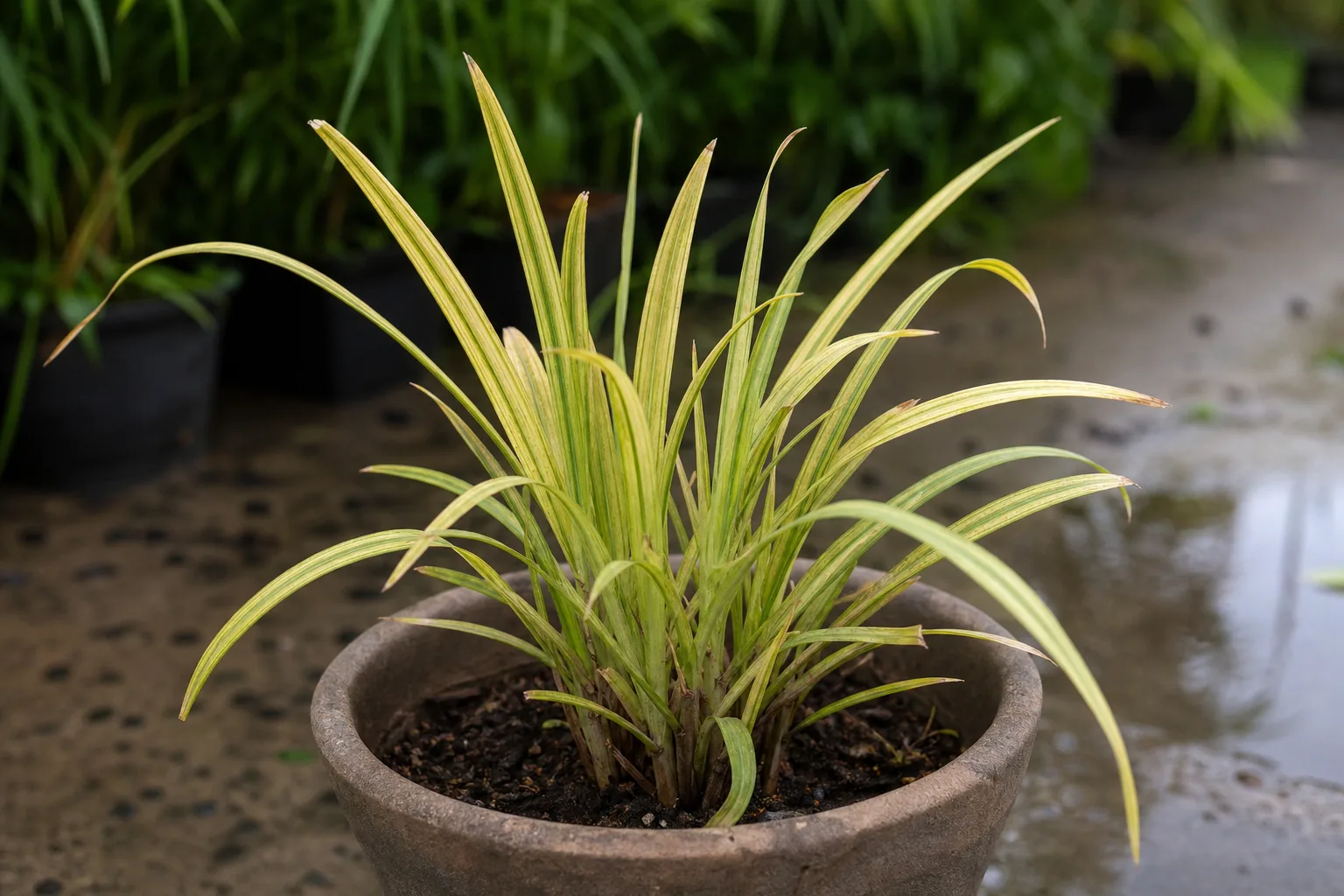
Nutrient Lockout on Lemongrass: Causes, Checks & Fixes
This guide covers nutrient lockout on Lemongrass. See also the general Nutrient Lockout guide, watering, and light pages for this plant.
Nutrient Lockout on Lemongrass: Causes, Checks & Fixes
Quick answer
Nutrient lockout on lemongrass (Cymbopogon citratus) means roots cannot absorb minerals already in the mix or fertilizer-the clump looks hungry even though you feed on schedule. On this fast-growing culinary grass, lockout is usually salt buildup after legitimate summer nitrogen, pH drift, or fertilizer applied while indoor growth has slowed-not a mystery missing element.
First step: stop all fertilizer and flush the container with plain room-temperature water until roughly twice the pot’s volume drains freely. Empty the saucer. Confirm soil pH near 6.0–7.5 before resuming half-strength balanced feed only during warm active growth.
This page is the lockout diagnostic hub for pale tillers, salt crust, and stalled regrowth after harvest. For feeding schedules, NPK ratios, and routine summer nitrogen, use the lemongrass fertilizer guide as the companion-not a substitute for the checks below.
What nutrient lockout looks like on lemongrass
Lockout on a grass grown for harvestable stalks and tillers shows up at the crown first-not always on every old blade.
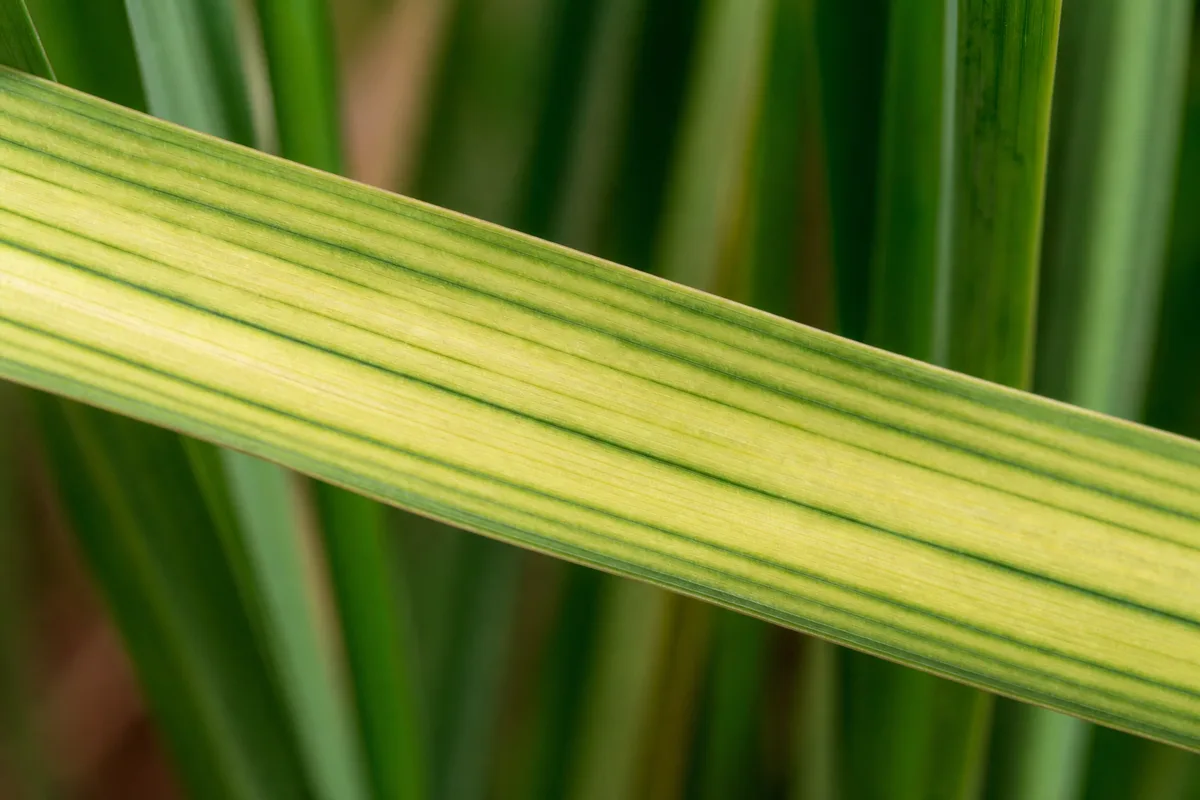
Nutrient Lockout symptoms on Lemongrass - compare with healthy tissue on the same plant.
Typical signs:
- Pale yellow-green thin tillers during warm active season despite regular feeding
- Stunted regrowth after a harvest cut while you keep dosing fertilizer
- White or chalky crust on the soil surface, inner pot rim, or drainage holes
- Crispy brown blade edges after repeated liquid feed-salt burn overlapping lockout
- Fertilizer that “does nothing”-half-strength balanced liquid produces no greener tillers within two weeks
- Water running straight through a dry, compacted root ball without wetting the mass
- Wilting on moist soil when salt levels stress roots
What lockout does not look like:
- Only lower outer blades yellowing while new center tillers stay deep green-that is often normal aging before harvest
- Leggy pale stretch toward a dim window with no crust and no feeding history-see not enough light
- Soft mushy base, sour smell, wet heavy pot-overwatering or root rot before nutrients
- Crispy tips within days of one heavy feed on dry soil-acute burn more than chronic lockout
Judge recovery on new tillers after flush, not on woody outer blades that were pale before treatment-those stay discolored until you cut them at the next harvest.
Why lemongrass gets nutrient lockout
Lemongrass is a nitrogen-hungry warm-season grass in the Poaceae family. UF/IFAS Extension recommends weekly half-strength balanced soluble fertilizer from June through September for outdoor container plants to maximize summer growth. That schedule is legitimate feeding, not gardener error-but small patio pots have nowhere for residues to go. Each dose leaves soluble salts behind. Without periodic leaching, the root zone becomes chemically hostile even when you follow extension guidance.
Salt buildup without flushing is the primary container lockout pathway on lemongrass. Fast summer growth in full sun depletes water quickly; evaporation concentrates minerals at the surface. A clump fed every 7–10 days through August can show white rim crust and pale tillers by late season-not because you “overfed by mistake,” but because aggressive correct feeding without leaching stacked salts.
pH drift locks out iron and other micronutrients. Lemongrass tolerates organically rich, well-drained loam in full sun with pH roughly 6.0–7.5 in home culture. When pH climbs above about 7.5 from hard tap water or alkaline amendments, iron may exist in the mix but roots cannot absorb it-interveinal yellowing on newest tillers with green veins while fertilizer sits unused.
Feeding during dormant or slow indoor growth stacks another problem. Overwintered clumps on cool windowsills push little new tissue from late fall through winter. Nitrogen applied on a July schedule in January concentrates as salts while roots absorb slowly-pale spring tillers despite your care. UF/IFAS notes to water and feed regularly from June through September and bring pots indoors when temperatures cool-implicitly pausing the summer feed rhythm.
Compacted, aged mix impairs uptake. Perlite-enhanced blend that was perfect at repotting can become a brick after one to two seasons. Water channels around the root ball; roots cannot access nutrients or flush salts effectively. See compacted soil and repotting when crust returns quickly after flushing.
In-ground clumps leach more naturally with rain and have larger soil volume-lockout is less common outdoors than in containers, though heavy repeated synthetic feed without rain leaching can still crust the surface.
Lookalike symptoms to rule out
| Pattern | Likely cause | Key differentiator |
|---|---|---|
| Pale new tillers + white pot rim crust + regular feeding | Nutrient lockout / salt stress | Feed “does nothing”; flush improves next tillers |
| Interveinal yellow on newest tillers, green veins, high pH | Iron chlorosis / alkaline lockout | pH above 7.5; crust may be light |
| Uniform yellow older blades first, firm roots, no crust | True nitrogen hunger | Responds to feed if uptake works; often zero feed history |
| Pale stretch, weak thin blades, dim window, no crust | Low light | Brighten placement before blaming nutrients |
| Yellowing + wilt + wet soggy mix + mushy roots | Overwatering / root rot | Sour smell; fix drainage first |
| Pale slow growth indoors in winter, no feeding, no crust | Semi-dormant rest | Normal until spring surge fails to green |
For overlapping pale foliage without a clear salt story, read yellow leaves after you rule out moisture and light.
How to confirm the cause
Work through these checks in order before repotting or stacking supplements:
- Feeding response - Have you fed regularly for six or more weeks with no greening on new tillers? Did another half-dose worsen tip burn within days? Poor response despite nutrients present suggests lockout.
- Salt crust - White or yellowish deposits on mix surface, pot rim, or saucer support salt-related lockout. Drought stress alone rarely leaves crust.
- Soil pH - Test with a meter or kit. Target 6.0–7.5 for lemongrass. Above 7.5 with chlorotic new tillers fits alkaline micronutrient lockout.
- Feeding history vs. season - Weekly summer container feed per UF/IFAS without periodic flush raises lockout odds. Winter doses on an indoor clump with slow growth raise salt load.
- Moisture and drainage - Probe 3–5 cm deep. Mix wet for days after one drink, heavy pot, or sour smell suggests root stress mimicking lockout. Perpetual sogginess needs overwatering fixes before fertilizer helps.
- Root firmness - Tip the plant out gently. Firm pale roots with crusty mix need flushing and pH correction. Brown mushy roots with odor mean rot-rescue roots before any feed.
- Tiller pattern - Lockout hits new crown tillers in warm sun. Only aging lower outers yellowing on an otherwise green clump fits normal turnover, not lockout.
- Light check - Outdoor and summer patio clumps need full sun. Pale leggy growth in shade is often light starvation.
Confirmed lockout requires blocked uptake-salts, pH outside range, or impaired roots-not pale blades alone on a clump you never feed.
First fix for lemongrass
Stop all fertilizer immediately. Flush the container with plain water-no fertilizer, Epsom salt, or vinegar mixed in.
Move the pot to a sink, tub, or outdoor spot where drainage will not damage floors. Water slowly until water runs freely from the bottom. Wait ten minutes, then water again. Repeat until you have passed roughly twice the pot’s volume through the mix-about two full saturating passes for a typical container. Let the pot drain completely and empty the saucer.
This leaching step washes accumulated fertilizer and mineral salts from the root zone and gives you a clean baseline to test pH and watch new tillers.
Do not double fertilizer on pale plants. Do not repot on day one unless roots smell sour, crust returns within a week after two flushes, or the mix is years old and brick-hard.
Step-by-step recovery
After the initial flush, follow this order:
- Scrape visible crust - Remove white granules from the mix surface with a spoon before the second flush. Do not mix deposits deeper into the root zone.
- Test pH once mix is evenly moist - Above 7.5: plan repot into fresh neutral perlite-enhanced mix rather than only foliar iron. Below 5.5: repot into standard blend; avoid acidifying blindly without data.
- Repeat flush in seven to ten days if symptoms were severe - Widespread pale tillers or heavy crust may need two or three leach cycles across a week.
- Repot if mix is compacted or two-plus years old - After flushing, move into fresh well-drained blend with added perlite. Do not jump to an oversized wet pot. Hold feed on repot day.
- Pause all fertilizer three to four weeks - Hold every feed until new tillers open with normal green color. Stressed grass rebuilds from stored energy; more salts interrupt that process.
- Place in warm bright sun - Active recovery needs temperatures and light that support grass growth. Indoor overwintered clumps may need the brightest window or return outdoors after frost risk passes.
- Resume half-strength balanced liquid on moist soil - When firm green tillers emerge during active growth, restart at half label strength every 7–14 days for containers-aligned with the fertilizer guide summer schedule. Never apply to bone-dry roots.
Recovery timeline
First week: Salt-stressed tillers may stabilize after flushing. Slight improvement is not permission to feed again.
10–14 days: New green tillers often appear in warm sun after flush and repot if needed. Old pale woody blades do not re-green-they remain until your next harvest cut.
Three to four weeks: A moderately locked-out container clump with firm roots should push harvestable green stalks if pH is in range and you paused feed appropriately.
Worsening signs: Continued tiller collapse after two flushes, base softness, or sour-smelling mix suggest root rot layered on salt stress-unpot and inspect rather than flush a third time blindly.
What not to do
Do not double fertilizer doses on pale tillers-that deepens salt lockout. Do not feed dormant winter clumps when growth has slowed indoors. Do not apply fertilizer to bone-dry soil or stack slow-release granules with full-strength liquid the same week.
Skip random iron, Epsom salt, or calcium supplements without pH data and a clear deficiency pattern-lockout often mimics multiple deficiencies at once.
Do not harvest salt-burned stalks for cooking until new green tillers confirm recovery. Do not ignore compacted root balls that channel water around the mass.
When handling crusty mix, wash hands after work. Lemongrass is toxic to dogs, cats, and horses if ingested in quantity-relevant for kitchen growers with pets near patio pots.
How to prevent nutrient lockout on lemongrass
Match feeding to active warm growth only. Outdoor containers benefit from half-strength balanced liquid every 7–14 days from late spring through early fall; in-ground clumps in compost-amended beds often need only monthly feed. Pause when growth slows in fall and through typical indoor winter rest.
Flush periodically. If you follow a weekly or biweekly liquid schedule, run plain water through the pot until it drains freely every two to three months during the active season-leaching prevents salt accumulation before it blocks uptake.
Maintain pH in range with standard well-drained mix near 6.0–7.5. Avoid limestone gravel or alkaline garden soil in containers.
Repot on schedule-every one to two years for fast-growing container clumps, or when roots circle and mix becomes compacted. Refresh perlite-enhanced soil before the root ball becomes a salt-loaded brick.
Water before you feed on moist-not waterlogged-soil so roots absorb nitrogen without salt shock.
When to worry
Escalate if the clump stays pale across new tillers after two thorough flushes and pH correction-repot into fresh mix rather than a third fertilizer dose.
Act the same week if most harvestable shoots fail to green through a full warm season despite flush and correct summer feed-inspect for root rot before feeding again.
Repot immediately if roots at inspection are mostly brown and mushy (rot, not simple lockout) or if salt burn crisps blade edges across most foliage after recent heavy feeding-flush first, then reassess salvage divisions.
Cosmetic pale lower outers on an otherwise recovering clump after one corrected flush can wait-judge the next harvest flush, not every old blade.
Lemongrass care cross-check
| Factor | Lockout-prone habit | Healthier habit |
|---|---|---|
| Summer feed | Weekly liquid, never flush | UF-style half-strength + periodic leach |
| Winter indoor | Same feed rate as July | Pause feed; bright cool rest |
| Container mix | Same pot 3+ years, compacted | Repot every 1–2 years with perlite |
| Watering | Saucer always full | Moist not soggy; drain after feed |
| Harvest | Cut salt-burned stalks for cooking | Wait for green recovery tillers |
| Diagnosis | More fertilizer on pale tillers | Flush, test pH, fix roots first |
Related lemongrass problems
- Lemongrass fertilizer guide - summer nitrogen schedule and routine flush protocol
- Yellow leaves - pale foliage with overlapping causes
- Overwatering and root rot - wet-soil lookalikes
- Not enough light - winter pale tillers without crust
- Repotting, soil, and compacted soil - mix refresh after salt load
- Lemongrass overview - full species hub
Conclusion
Nutrient lockout on lemongrass is a root-zone chemistry problem on a nitrogen-hungry summer grass-not a call for more fertilizer on pale tillers. Confirm poor feeding response, salt crust, pH outside 6.0–7.5, or impaired roots. Flush with plain water first, pause feed for three to four weeks, repot compacted mix if needed, then resume half-strength balanced liquid only during warm active growth. The clump forgives a missed month of feed far more willingly than another dose poured onto a blocked, salty root zone-and the next green tiller flush, not pale woody outers, is how you know recovery worked.
When to use this page vs other Lemongrass guides
- Lemongrass watering guide - Use for routine moisture checks before assuming nutrient lockout is the main issue.
- Lemongrass problems hub - Browse all 52 common issues on this species.