Compacted Soil on Lemongrass: Causes, Checks & Fixes
Quick answer
Compacted soil on Lemongrass chokes fibrous roots and traps stale moisture at the crown. First step: Unpot, loosen or replace dense mix, and repot with perlite, compost, and coarse sand for aerated drainage.
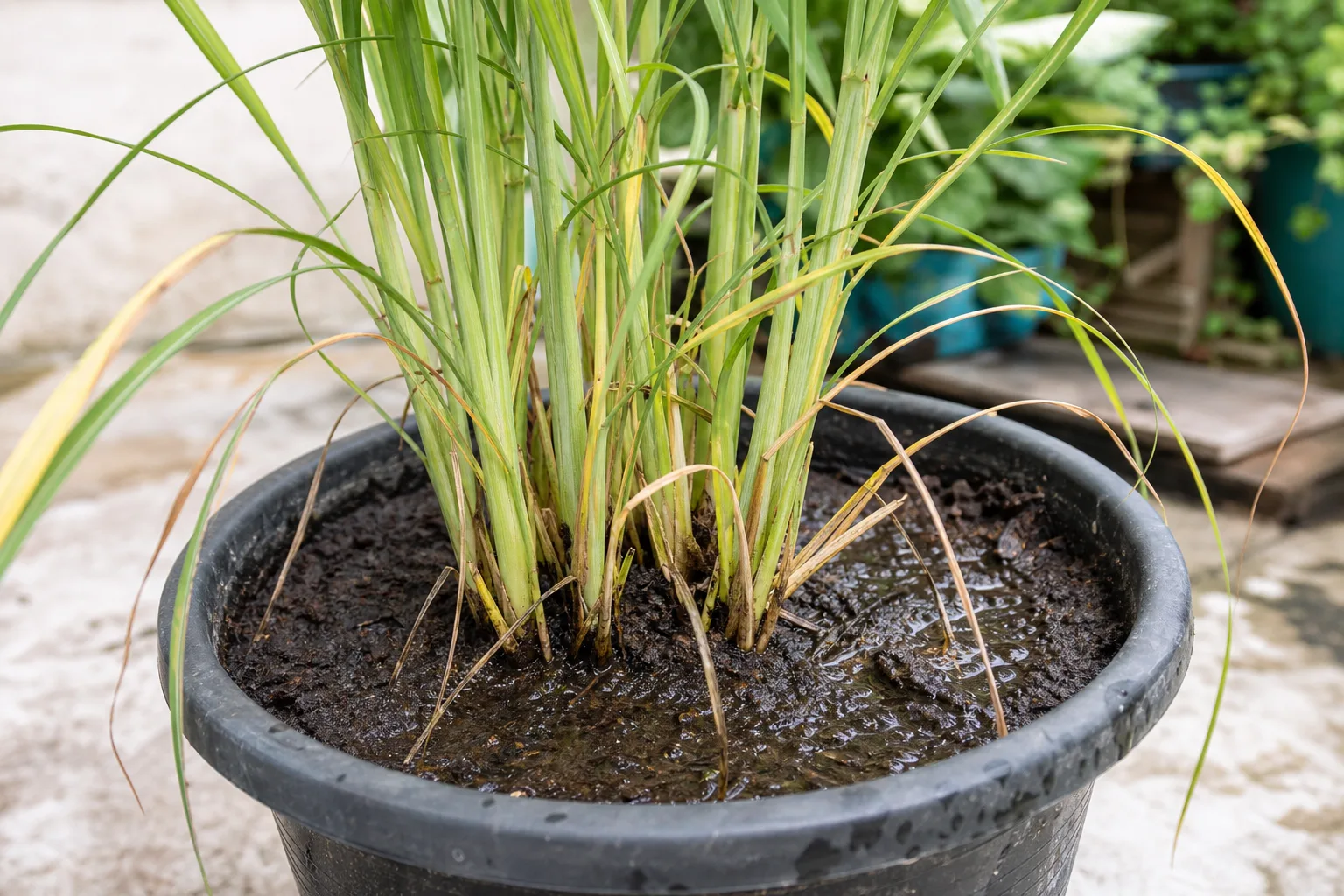
Compacted Soil on Lemongrass: Causes, Checks & Fixes
This guide covers compacted soil on Lemongrass. See also the general Compacted Soil guide, watering, and light pages for this plant.
Compacted Soil on Lemongrass: Causes, Checks & Fixes
Quick answer
West Indian lemongrass (Cymbopogon citratus) stalls when compacted mix chokes its shallow fibrous roots and traps stale moisture at the crown. The clump drinks heavily in summer sun but cannot use water trapped in an oxygen-starved core-so new shoots stop while the pot center stays wet for days.
First fix: unpot, discard exhausted dense mix, tease circling outer roots, and repot into fresh aerated media-roughly equal parts potting mix, compost, and perlite or coarse sand by volume. For full mix chemistry and pH targets, see the lemongrass soil guide. For spring division timing, see lemongrass repotting.
This page covers substrate collapse and poor water penetration in holed containers and compacted garden rows. If your mix was wrong from day one-not merely aged-compare wrong soil mix before repotting. If roots tore during a rough unpot, route to damaged roots after structural fixes.
Compaction vs root-bound vs root rot on Lemongrass
Lemongrass fills pots faster than many culinary herbs because it forms a dense clump that can reach 3 to 6 feet tall when water, fertilizer, and sun are optimal. Once summer heat arrives, clumps increase in size dramatically-and fibrous roots press fine peat particles together long before the plant looks obviously root-bound at the drain hole.
| Pattern | Compacted soil | Root-bound | Root rot (advanced) |
|---|---|---|---|
| Pot weight | Heavy for days after one watering | Moderate; dries in hours | Heavy; chronic wet |
| Water behavior | Pools on surface; channels down walls | Drains fast; little retention | Slow drain; sour smell |
| Root ball | Rigid brick shape; mix cemented | Dense circling mat; firm roots | Mushy brown roots; soft crown |
| New growth | Stalled shoots despite warm sun | Thin tillers; frequent dry-down | Wilting on wet mix |
| Urgency | Repot within days if stalled 3+ weeks | Repot or divide this season | Same-day unpot-see root rot |
| First fix | Fresh perlite-rich mix; same or one size up | Divide clump; tease circling roots | Trim rot; gritty repot; cut water |
Use this table before stacking fixes. Overwatering in loose fresh mix may correct with schedule change only-compacted peat never does without a mix refresh. Poor drainage from blocked holes or wrong pot choice overlaps with compaction; confirm holes flow freely before blaming mix alone.
What compacted soil looks like on Lemongrass
The hallmark is stalled harvest clumps on wet centers: outer blades look tired, yellow lower stalks appear at the base, and new crown shoots stop lengthening-even though you watered on schedule during warm months.
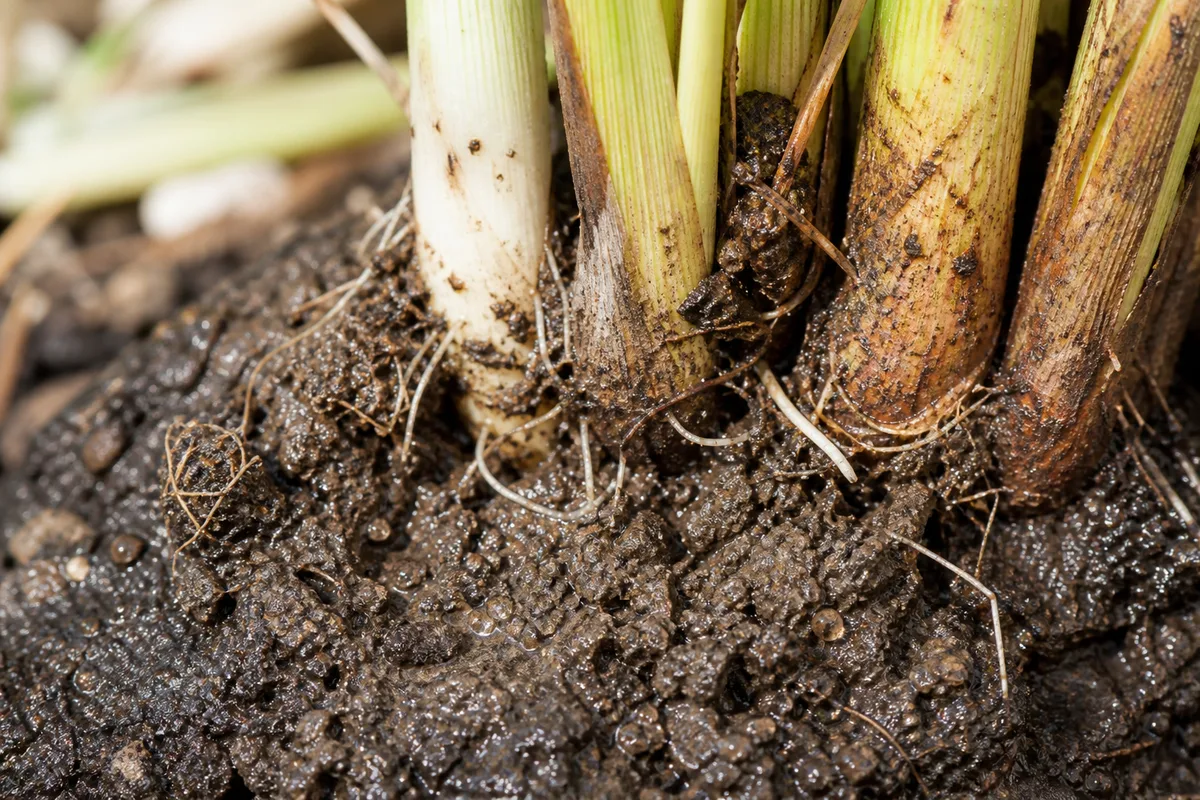
Compacted Soil symptoms on Lemongrass - compare with healthy tissue on the same plant.
Typical patterns on container lemongrass:
- Water beads on the surface or runs down the inside wall without wetting the root ball center
- Top mix feels rock-hard when dry and sour when wet
- Pot stays heavy for many days after a single thorough watering
- Unpotting reveals a rigid cylindrical root brick that holds its shape when lifted
- Thin weak new blades on an otherwise large clump suggest roots cannot access nutrients through cement-like mix
Photo callout - surface channeling: Picture a 30 cm patio pot after a normal top watering: water sits on the dark peat crust for twenty seconds, then a thin stream exits the drain hole while the outer rim of mix still looks dusty. Three days later the pot feels brick-heavy and the center smells faintly sour when you lift it-classic compacted core with dry edges.
Photo callout - rigid root ball: Slide the clump out and the root mass holds a perfect pot-shaped cylinder, like a paving stone wrapped in circling white roots. Healthy lemongrass in fresh mix should crumble slightly at the outer edge when you tap the ball-compacted media stays fused to roots.
Firm stalk bases with completely loose, fast-draining mix point away from compaction. A light pot with water running straight through in seconds and stalks staying thin may mean root-bound exhaustion or poor drainage from an undersized hole-not structural collapse alone.
Why Lemongrass gets compacted soil
Lemongrass evolved in tropical climates with regular rainfall and full sun. In a pot, its fibrous roots expand aggressively through one to two growing seasons, pressing fine peat particles together until macropores-the air channels roots breathe through-disappear.
Fast summer transpiration makes anaerobic cores dangerous early. A clump in July can require a great deal of water and move moisture through blades quickly while the compacted center never dries. That trapped moisture breeds anaerobic breakdown before you notice circling roots at the drain hole-unlike slow-growing succulents where compaction signals slowly.
Common triggers on lemongrass:
- Overgrown clumps left two or more years in the same peat-heavy mix without division
- Garden soil or heavy clay in containers-garden soil is too heavy and compacts in pots, destroying pore space roots need
- Repeated top watering without occasional deep flushes that collapse surface peat and salt crust
- Heavy-handed tamping at repotting-potting mix should not be so compacted that it restricts water and air movement
- Foot traffic on in-ground rows that compresses the shallow root zone where fibrous mats spread
Lemongrass wants organically rich loams with good drainage in full sun. Dense waterlogged mix contradicts both needs-and summer heat accelerates crown stress when oxygen drops at the base.
How to confirm the cause
Work through these seven checks in order:
- Water penetration - Pour slowly; water should soak the center within seconds, not pool for minutes or channel only down walls.
- Probe resistance - A chopstick or finger meets a hard plug at 3–4 cm depth when dry, or a wet cement-like core when recently watered.
- Pot weight rhythm - Compare weight before and after watering. Compacted pots stay heavy for days; healthy aerated mix lightens on schedule in full sun.
- Root ball rigidity - Unpot and lift the mass. Compacted mix holds a rigid shape with minimal crumbling; healthy mix falls apart when shaken gently.
- Root color and smell - Pale firm roots with mild earthy smell favor compaction over rot. Dark mushy roots with sour odor escalate to root rot workflow.
- Growth pattern - Stalled new shoots despite warm weather and feeding, with yellow lower stalks on wet center mix, strongly suggests structural failure-not simple hunger.
- Mix age and composition - Same peat substrate two or more seasons, or garden soil used in a closed pot, is high risk even before visible root-bound symptoms.
If roots are white and firm in loose mix but growth still stalls, check light and pests before blaming compaction alone. Compaction plus circling roots often occur together on vigorous lemongrass-address both at repot.
Mix ratio and drainage test
Target roughly one part potting mix, one part compost, and one part perlite or coarse sand by volume for container lemongrass. Clemson Extension notes that container medium needs porosity because roots require both air and water-perlite improves that structure without turning the mix sterile.
| Ingredient | Volume share | Role on lemongrass |
|---|---|---|
| Quality potting mix | 1 part | Base structure and starter nutrients |
| Compost or aged organic matter | 1 part | Moisture retention without brick-like peat collapse |
| Perlite or coarse builder’s sand | 1 part | Macropores for fibrous root breathing |
Simple drainage test after repot: Soak until water runs from holes. In a 20–25 cm pot, the column should absorb within seconds and the pot should feel noticeably lighter within a week on a sunny patio. Pooling on the surface after repot means the batch was too peat-heavy-add perlite before planting.
First fix for Lemongrass
Repot into fresh aerated mix - discard exhausted compacted soil entirely; do not stir old brick-like substrate back in. Tease apart or slice circling outer roots lightly. Choose a pot one size larger only if the clump truly needs it; oversized pots stay wet longer and invite repeat compaction.
Water thoroughly once after repotting, then resume watering when the top 3–4 cm dries during active growth. Hold fertilizer one week, then feed lightly as new shoots emerge per the lemongrass fertilizer rhythm.
Do not poke holes in the surface and keep watering-compaction extends through the ball. Do not repot into pure garden clay or heavy peat without amendment.
Step-by-step recovery
Mild compaction - firm crown, pale roots
When stalk bases are firm, roots show white tips, and smell is neutral:
- Unpot and discard dense surface crust and exhausted mix.
- Tease outer circling roots without aggressive crown damage.
- Repot at the same depth into fresh perlite-amended mix with open drain holes.
- Water until a small amount drains; empty saucers within 30 minutes.
- Place in full sun and watch for new crown shoots within 10–14 days.
Moderate compaction - rigid root brick, stalled growth
When the ball holds a cylinder shape but crowns remain firm:
- Follow mild steps 1–3, but score the root ball vertically in three or four places if circling is severe.
- Divide overcrowded clumps in spring if the pot is packed solid-each division needs fresh mix, not reused brick.
- Size the pot to the root mass, not the blade height. See lemongrass repotting.
- Hold feed one week; resume half-strength balanced soluble fertilizer during active summer growth only.
Severe compaction - sour smell, yellow bases on wet mix
When anaerobic breakdown has started:
- Unpot same day - do not wait for a weekend repot window.
- Trim black mushy roots with sterile scissors; keep firm pale tissue only.
- Repot into a smaller pot if much root mass was removed.
- If the center crown is gone but outer shoots are firm, divide salvageable sections per root rot division guidance-or root grocery-store stalks with bulbous bases in water or moist mix if rescue fails.
Spring division vs peak-summer repot
Lemongrass recovers fastest from structural work when roots are actively growing in warmth-not when a patio clump is mid-harvest peak.
Best window: Early spring after last frost, when you move pots outdoors and new tillers are just lengthening. Divide and refresh mix before summer heat drives maximum transpiration through a still-compacted core.
Risky window: Mid-summer on a large harvest clump in full sun. The plant can wilt sharply even with correct technique because roots cannot keep pace with blade water loss until they re-establish. If you must repot in July, shade lightly for three to five days, keep mix evenly moist-not soggy-and skip harvest until new shoots firm up.
Indoor overwinter pots: Refresh compacted mix in late winter or early spring before moving back to bright outdoor sun-not during dim indoor months when roots are slow.
Recovery timeline
Repotted clumps with firm roots typically push new blades within one to two weeks in warm sun. Harvest pauses briefly while roots re-establish. Judge recovery by new crown shoots, not greening of old yellowed stalk bases-already-stressed blade tissue rarely reverts.
Signs recovery is working: Firm stalk bases, faster shoot elongation after harvest, pot weight cycling normally between waterings, and normal lemon scent when blades are bruised.
Signs the problem is worsening: Sour smell persisting after repot, softening at the crown, wilting on wet mix, or stalled growth three or more weeks despite fresh media-escalate immediately to root rot rescue.
Lookalike symptoms
| What you see | Likely cause | How it differs from compaction |
|---|---|---|
| Water channels down walls; rigid pot-shaped root ball | Compacted soil | Mix cemented to roots; center stays wet for days |
| Light pot; water runs through in seconds; circling roots at holes | Root-bound | Mix may still crumble; dryness dominates |
| Mushy brown roots; sour smell; wilting on wet mix | Root rot | Texture and smell override structure alone |
| New pot with heavy garden soil; immediate poor drain | Wrong soil mix | Present from day one-see wrong soil mix |
| Light pot throughout; mix crumbles easily | underwatering on Lemongrass | No rock-hard plug at 3–4 cm depth |
In-ground lemongrass on compacted beds
Compaction in garden rows differs from pots but starves the same shallow fibrous mat. Foot traffic, repeated shallow hoeing, and clay subsoil within reach of roots compress the zone where lemongrass spreads.
Before planting, amend soils with 2 to 4 inches of compost worked 4 to 6 inches deep. On existing compacted rows, fork-aerate between clumps in spring-insert a broadfork or garden fork and rock gently to lift without slicing roots, then top-dress with compost. Avoid stepping on the root zone during harvest. Space divisions about 3 feet apart so mature clumps do not crush their own soil footprint.
In-ground culture and mound builds are covered on lemongrass soil.
Causes to rule out
- Root rot alone - Mushy roots on wet mix; may follow compaction but confirm texture before repotting delays.
- Nutrient deficiency - Pale growth in loose fresh mix points to feed, not structure.
- Low light - Leggy pale blades indoors; roots may be fine when inspected.
- Underwatering - Light pot, dry throughout; mix crumbles easily, not rock-hard.
- Wrong mix from day one - Heavy peat or garden soil in a new pot; see wrong soil mix.
What not to do
Do not poke holes in the surface and keep watering-compaction extends through the ball. Do not repot into pure garden clay or heavy peat without amendment. Do not fertilize heavily on roots still in stale anaerobic mix without repotting first. Do not reuse exhausted compacted substrate stirred with a little fresh mix on top. Do not fist-compact mix around the crown at repot-settle with a gentle shake only.
How to prevent compacted soil
Repot or divide every one to two years as clumps fill pots during vigorous growth. Refresh mix at spring division before summer harvest peaks-not mid-winter on a dim windowsill when roots are slow.
Use well-drained container media with perlite from the start; most container plants prefer moist, not soggy, soil, which compacted cores violate by staying saturated at the center. Flush containers occasionally with clear water to reduce salt crust. Never reuse exhausted peat without refreshing structure.
Confirm instant absorption after every repot. Avoid heavy tamping-settle mix with a gentle shake, not fist pressure on the crown zone.
When to worry - crown rot escalation
Escalate same day when:
- Yellow stalk bases persist on wet compacted mix despite three or more weeks of stalled growth
- Water never penetrates the root ball and the center smells sour
- Stalk bases soften while mix stays heavy
- More than one-third of roots are mushy after unpotting
Escalation summary: routine compaction → unpot, fresh perlite mix, tease circling roots (this page). Sour smell plus soft crown on wet brick → same-day root rot protocol-trim mushy tissue, downsize pot if needed, hold water until firm new shoots appear. Center crown dead with firm outer shoots → divide salvageable sections or restart from grocery-store stalks with bulbous bases rooted in water.
Do not increase fertilizer or water harder into a brick-like surface-that deepens anaerobic cores in summer heat when lemongrass transpires fastest.
FAQs
How can I confirm compacted soil on my lemongrass?
Confirm when water pools on the surface or runs down the pot sides, the top feels rock-hard when dry, roots circle in a tight mat, and new shoots stall despite regular feeding. Sour smell after watering suggests anaerobic compacted mix-not simple underwatering.
What should I check first on lemongrass with compacted soil?
Probe whether the top 3–4 cm is impenetrable when dry, drain holes are blocked by roots, and the pot dries unevenly-wet center, dry edges. Compare pot weight before and after watering for poor absorption before you change fertilizer or light.
Will lemongrass recover from compacted soil?
Yes after repotting into fresh aerated mix. Trim circling roots lightly, divide overcrowded clumps, and expect new shoots within one to two weeks in warm sun with consistent moisture. Already-yellowed lower stalks may not re-green-watch new crown growth instead.
When is compacted soil urgent on lemongrass?
Urgent when stalk bases yellow while soil stays wet in the center, growth has stalled for three or more weeks, or water never penetrates the root ball. Anaerobic compacted mix leads quickly to crown rot in fast-drinking summer heat-repot immediately rather than waiting for the next harvest cycle.
Can I fix compaction without repotting?
Surface scarifying and a single deep flush may help mild upper crust only. Structural compaction through the root ball requires full repot with discarded mix-poking holes or top-dressing fresh peat on a brick core does not restore air pockets lemongrass roots need.
Related lemongrass problems
- Root rot - mushy roots when compacted cores stayed anaerobic too long; same-day unpot when sour smell appears
- Poor drainage - structure failure vs. watering frequency
- Root-bound - circling mat that often pairs with compaction
- Overwatering - wet center on dense mix
- Wrong soil mix - heavy peat or garden soil from day one
- Damaged roots - torn roots after rough unpot or division
Lemongrass care guides
- Soil - perlite-rich mix chemistry and drainage tests
- Repotting - spring division rhythm
- Watering - even moisture after repot
- Overview - full culture hub
When to use this page vs other Lemongrass guides
- Lemongrass watering guide - Use for routine moisture checks before assuming compacted soil is the main issue.
- Lemongrass problems hub - Browse all 52 common issues on this species.