Poor Drainage on Lemongrass: Causes, Checks & Fixes
Quick answer
Poor drainage on lemongrass keeps roots anaerobic in containers-especially indoors in cool months when water use drops. First step: Clear drain holes, stop saucer standing water, and repot into perlite-rich mix if the top stays wet for days.
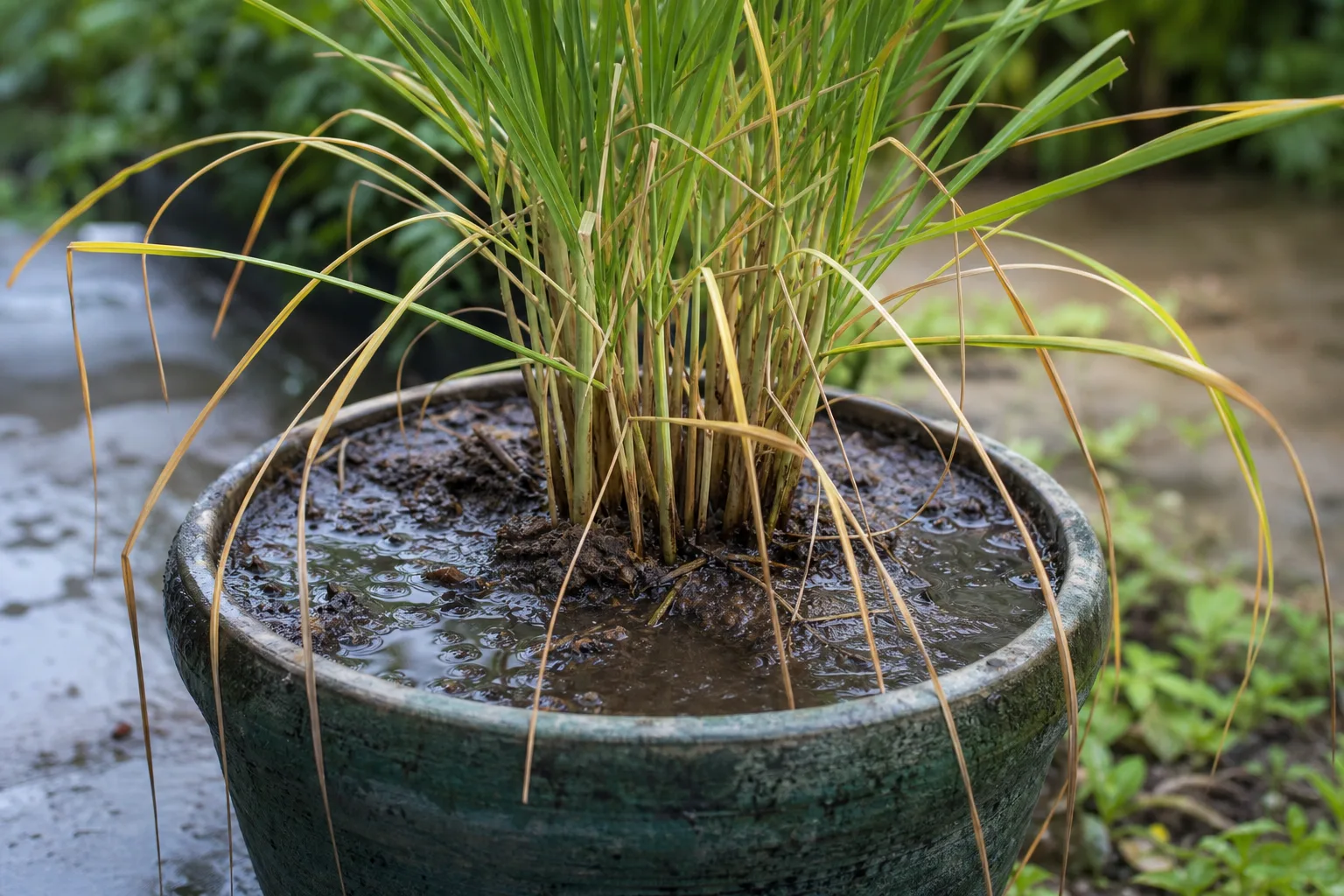
Poor Drainage on Lemongrass: Causes, Checks & Fixes
This guide covers poor drainage on Lemongrass. See also the general Poor Drainage guide, watering, and light pages for this plant.
Poor Drainage on Lemongrass: Causes, Checks & Fixes
Quick answer
Poor drainage on lemongrass keeps roots anaerobic in containers-especially indoors in cool months when water use drops. First step: clear drain holes, stop saucer standing water, and repot into perlite-rich mix if the top stays wet for days.
Lemongrass is easily grown in average, medium, well-drained soils in full sun-the emphasis is on well-drained. In pots, moist, not soggy, soil is the target; poor drainage turns summer-friendly moisture into winter root suffocation.
What poor drainage looks like on Lemongrass
Above-ground clues:
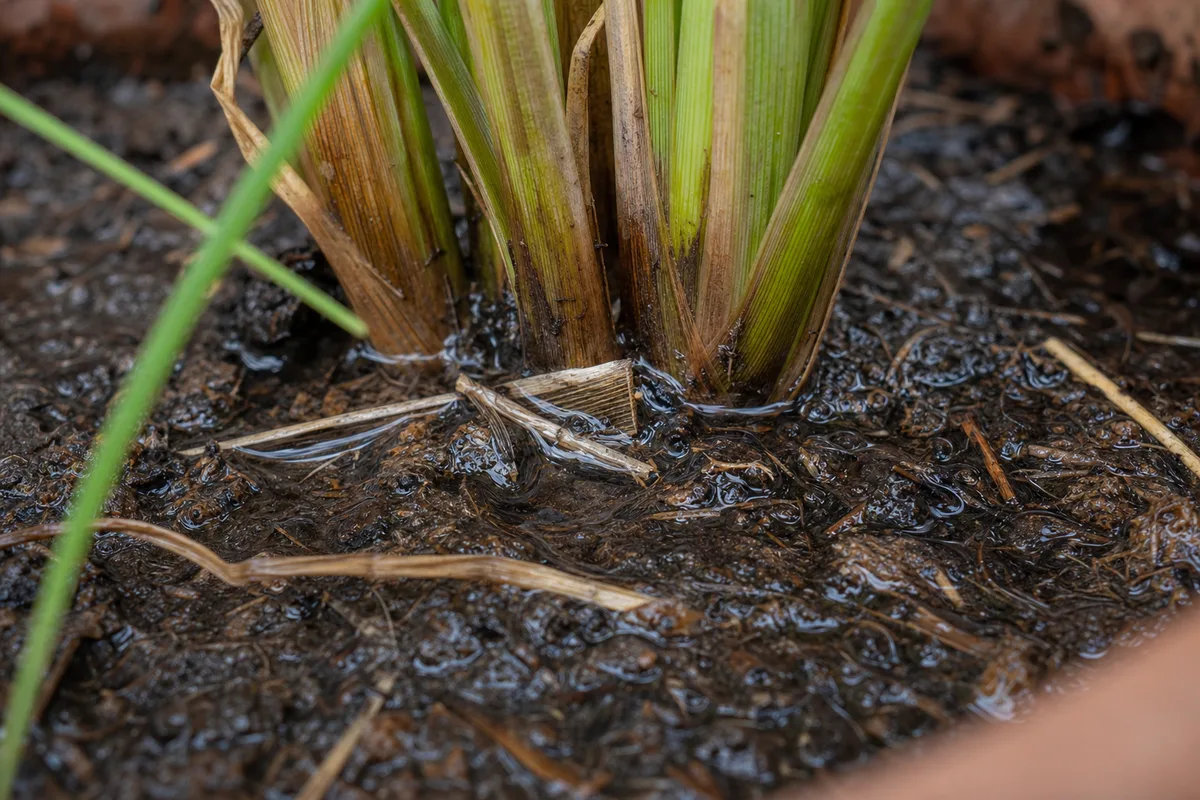
Poor Drainage symptoms on Lemongrass - compare with healthy tissue on the same plant.
- Yellow lower stalks while soil surface stays dark and damp.
- Wilting despite wet mix - damaged roots cannot move water up long blades.
- Slow dry-down - Top 3–4 cm wet for five or more days indoors.
- Musty or sour odor from drain holes or saucers.
- Heavy pot weight long after watering.
- Algae or mold on soil surface in dim humid corners.
Below ground, roots turn brown and mushy when drainage fails chronically-often after bringing pots indoors when temperatures cool without reducing water.
Why Lemongrass suffers from poor drainage
Container physics - Even a drought-tolerant-looking grass needs oxygen at roots. Dense peat mix, missing holes, and cachepots hold water longer than in-ground plantings.
Season mismatch - Active summer growth drinks heavily in full sunlight and plenty of moisture; winter indoor growth slows while the same drainage-challenged mix stays saturated.
Root-bound blockage - Mature clumps circle drain holes and compact mix into a wet brick.
Saucer habit - Runoff sits in contact with the root zone; empty saucers after watering.
Heavy garden soil in pots - Clay or garden loam alone collapses air spaces; lemongrass wants organically rich loams with good drainage in containers.
How to confirm the cause
- Dry-down test - Water once; count days until top 3–4 cm dries indoors at current light.
- Drain flow - Water should exit holes within seconds, not pool on surface.
- Saucer check - Standing water 30 minutes after watering?
- Root rinse - Mushy brown roots confirm consequence; firm roots with slow dry-down still mean drainage risk.
- Mix inspection - Peat-heavy, perlite-absent, or compacted old mix?
- Season - Fall/winter indoor pattern increases odds.
First fix for Lemongrass
Immediate: Empty saucers; elevate pots on feet; clear blocked holes.
Structural: Repot into fresh potting mix with 20–30% perlite, same or slightly smaller pot if roots were reduced. Trim mushy roots with sterilized scissors before replanting at the same depth.
Water rhythm: After repot, let the top 3–4 cm dry before the next drink while healing. Reduce watering significantly during winter dormancy indoors once drainage is fixed.
Do not add fertilizer until new blades unfurl in warm bright conditions.
Step-by-step recovery
- Unpot and discard saturated old mix.
- Trim rotted roots; keep firm rhizome sections.
- Select a pot with multiple holes sized to root mass.
- Fill with perlite-enhanced mix; plant at original depth.
- Water until slight drainage; empty saucer completely.
- Place in brightest spot; hold feed until regrowth.
- Resume active-season watering only when top 3–4 cm dries appropriately for season.
Recovery timeline
Mild drainage fixes show firm new center shoots within 10–14 days in warm sun. Severe rot may require saving outer divisions only. Recurrence is common if saucers refill or summer watering continues unchanged indoors.
Causes to rule out
- underwatering on Lemongrass - Light pot, dry depth, firm white roots.
- Heat wilt - Midday droop with dry soil; recovers overnight after one drink.
- Spider mites indoors - Stippling with firm roots and normal dry-down.
What not to do
Do not drill one hole in an oversized pot and fill with garden soil. Do not water on a calendar without checking depth. Do not assume “tropical grass” means constant saturation year-round.
How to prevent poor drainage next time
Start with well-drained soil in full sun, multiple holes, and perlite in every container repot. Repot vigorous clumps every one to two years before roots block flow. Match watering to season and light-not to summer memory alone.
Conclusion
Poor drainage on lemongrass is a container and season problem as much as a watering problem. Confirm slow dry-down and sour roots, clear holes and saucers, repot into airy mix, and cut winter watering when growth slows. Healthy drainage means the top 3–4 cm cycles properly-not that the pot stays wet for convenience.
When to use this page vs other Lemongrass guides
- Lemongrass watering guide - Use for routine moisture checks before assuming poor drainage is the main issue.
- Lemongrass problems hub - Browse all 52 common issues on this species.