Damaged Roots on Lemongrass: Causes, Checks & Fixes
Quick answer
Damaged lemongrass roots often follow spring division, a root-bound repot, or wet compacted mix-not just rot. First step: unpot, rinse the root ball, and compare firm pale tissue against mushy rot, clean white breaks, or a rigid circling mat before you water again.
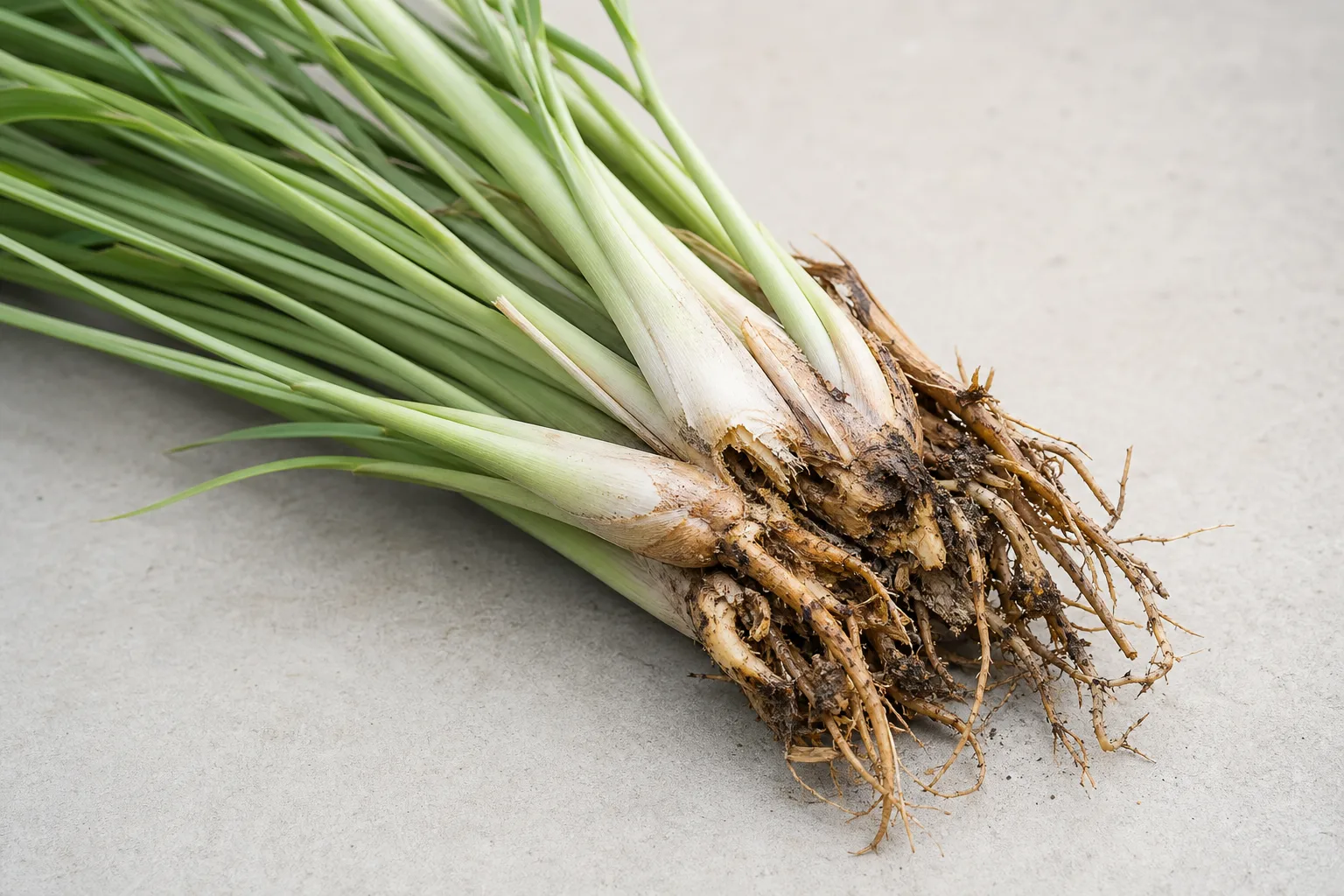
Damaged Roots on Lemongrass: Causes, Checks & Fixes
This guide covers damaged roots on Lemongrass. See also the general Damaged Roots guide, watering, and light pages for this plant.
Damaged Roots on Lemongrass: Causes, Checks & Fixes
Quick answer
Damaged roots on lemongrass (Cymbopogon citratus) usually trace to one of four paths: compaction in an old pot, rough spring division, repot or transplant trauma, or wet anaerobic mix that crosses into rot. Above ground you may see stalled shoots after repotting, wilting on heavy wet soil, or yellow stalk bases-but the diagnosis lives below the soil line.
First step: unpot, rinse the root ball, and sort texture before you add water. Firm pale fibrous roots with a few clean white breaks point to mechanical injury. A rigid circling mat with a stale center smells compaction. Brown mush on wet mix is rot-see root rot on lemongrass for the full cool-dormancy rescue path.
Lemongrass spreads through a dense fibrous root network that supports long blades in full sun. Container culture concentrates compaction and division risk; in-ground clumps in warm zones rarely show the circling-root problems this page covers.
Why Lemongrass gets damaged roots
This URL is the hub for mechanical injury, compaction, and repot trauma on container lemongrass. Rot from cool-season overwatering is real-but the deep dive lives on root rot. Start here when symptoms follow division, a skipped repot year, or a rough transplant.
Compaction and root-bound decline
Lemongrass fills pots aggressively in summer. After one to two years without division, roots circle the container wall in a rigid mat. Water channels down the pot sides while the stale center stays anaerobic-outer roots may look white while inner tissue dies back. See root bound lemongrass when water runs through in seconds or roots emerge from drain holes.
Old peat-heavy mix that was never refreshed also compacts. Container plants need porous mix that holds moisture without staying soggy-dense, airless cores suffocate the shallow system this grass uses for rapid summer growth.
Rough division and repot trauma
UF/IFAS recommends dividing last year’s clumps in spring rather than tearing apart woody centers with dull tools. Harsh division rips rhizomes and severs fibrous roots without clean cuts. Repotting into an oversized pot filled with heavy garden soil shocks the same network-garden soil compacts in containers and stays wet at the crown.
Oversized pots and standing saucer water
A pot dramatically larger than the root mass holds excess wet mix around a small root zone. Lemongrass crowns stay vulnerable when the base sits in saturated substrate. Saucers that hold runoff through cool indoor weeks keep the root ball anaerobic even when you “water correctly” on schedule.
When wet mix crosses into rot
Overwatering during indoor fall storage with reduced growth is the leading rot trigger-but that pattern is covered step-by-step on root rot and overwatering. On this page, treat rot as one branch in the cause matrix below, not the whole story.
What damaged roots look like on Lemongrass
Above-ground signals
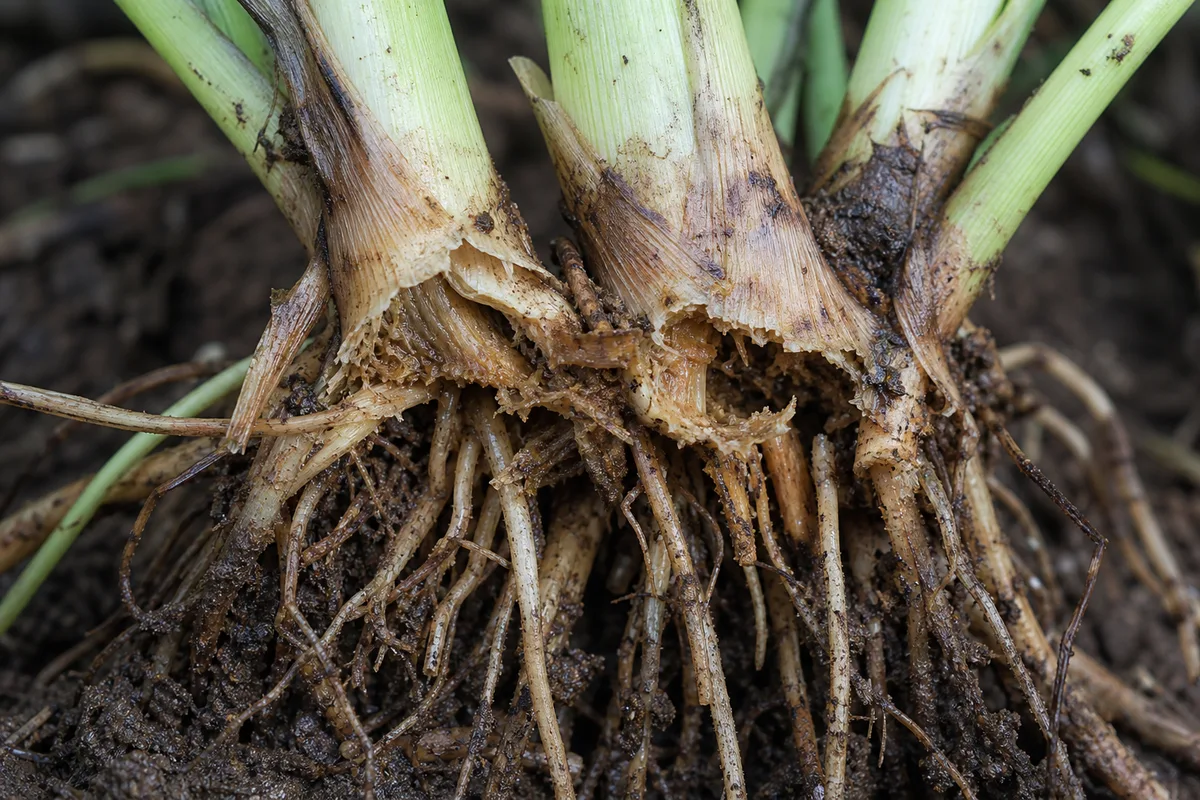
Damaged Roots symptoms on Lemongrass - compare with healthy tissue on the same plant.
- Stalled new shoots for days after repotting or spring division
- Drooping blades with a heavy wet pot (uptake failure) or after rough handling (transplant shock)
- Yellow lower stalks when rot or anaerobic mix is involved-not always present after clean mechanical tears
- Wilting that does not match a light dry pot-roots cannot move water even though the surface looks damp
Below-ground texture vocabulary
| What you feel after rinsing | Likely cause | Urgency |
|---|---|---|
| Firm pale roots; a few clean white breaks | Mechanical division or repot injury | Low to moderate |
| Rigid circling mat; stale center smell | Compaction / root-bound | Moderate |
| Brown, translucent, or mushy tissue | Rot / anaerobic decay | High - see root rot |
| Firm roots throughout; pot was just divided gently | Transplant shock | Low - hold water, wait |
Healthy lemongrass roots are pale and firm. Advanced rot shows soft dark tissue at the soil line and sour odor from the drain hole.
Spider mites can stress indoor lemongrass, but wilting on constantly wet soil with a swampy smell points to roots first-not mites alone.
How to confirm the cause
Work through this checklist in order. Stop when one branch fits clearly.
- Recent history - Did you divide, repot, or skip repotting for more than two years? Did summer watering continue into fall indoor storage?
- Pot weight vs. blade turgor - Heavy wet pot with limp blades suggests uptake failure on damaged or rotted roots, not simple drought.
- Drainage check - Are holes blocked by circling roots? Does a cachepot hold standing water?
- Root-ball rigidity - Does the mass hold a pot shape when rinsed? Rigid circling points to compaction.
- Texture comparison - Mushy brown tissue (rot) vs. clean breaks on firm white roots (mechanical) vs. dead inner core with live outer ring (root-bound).
- Stalk base - Soft, dark tissue at the soil line indicates advanced crown involvement.
- Smell - Sour or swampy odor supports rot or anaerobic compaction; neutral smell with clean breaks supports mechanical injury.
If steps 5–7 point to widespread mush on wet mix, switch to root rot on lemongrass-not another soak on this page.
Damaged roots vs. root rot vs. overwatering
| Pattern | Root appearance | Soil | Best page |
|---|---|---|---|
| Post-division wilt, firm roots, clean breaks | White breaks, firm tissue | Moist, not swampy | This page - mechanical branch |
| Water runs through; circling rigid ball | Outer white, dead center | Channels fast | This page - compaction; also root bound |
| Yellow bases, wilt on wet soil, sour smell | Brown mush | Saturated days | Root rot |
| Summer schedule on dormant indoor clump | Mush developing | Wet, cool, dim | Overwatering + root rot |
First fix for Lemongrass
Unpot, rinse the root ball, remove only dead or mushy tissue, and repot in fresh draining mix sized to the remaining roots.
Cut away soft brown roots with sterilized scissors until only firm tissue remains. For mechanical tears only, trim just clearly dead ends-do not strip half the mass when fewer than one-third of roots show clean breaks and stalk bases stay firm.
Compaction recovery: Tease outer circling roots outward; break up only the stale-smelling center. Repot into fresh well-drained organically rich mix with perlite-see the lemongrass soil guide for ratios.
If more than half the root mass is gone, divide healthy outer shoots with attached roots per the propagation guide rather than saving a collapsed center.
After repotting, water once until a small amount drains, then empty saucers. Most container plants prefer moist, not soggy, soil-while healing, let the top 3–4 cm dry before the next drink unless you are in peak summer active growth (full dry-down rules live on the watering guide).
Step-by-step recovery
- Unpot and rinse away old wet or compacted soil.
- Classify damage-mechanical, compaction, or rot-using the checklist above.
- Trim only mushy, brown, or clearly dead roots; tease circling mats outward.
- Choose a pot sized to remaining roots-not dramatically larger.
- Repot in fresh perlite-enhanced mix at the same planting depth; crowns should not sit buried.
- Water once until drainage runs; empty saucers completely.
- Hold fertilizer until new blades unfurl.
- Resume active-season watering when the top 3–4 cm dries; indoors in recovery, err slightly dry rather than wet.
For division technique and timing, see lemongrass repotting.
Recovery timeline by cause type
Recovery speed depends on how much living root mass remains and which branch caused the damage. These ranges are practitioner observations from container rescue-not extension mandates.
| Cause type | Typical recovery signal | Notes |
|---|---|---|
| Mild mechanical tear | New shoot firmness in 7–10 days in warm sun | Few clean breaks; stalk bases stayed firm |
| Compaction repot | New blades in 10–14 days after tease-out and fresh mix | Harvest pauses during healing |
| Moderate rot (after trim) | 10–14 days for first firm tillers | Full rot protocol on root rot |
| Severe crown involvement | Center may not recover | Divide outer tillers or restart from grocery stalks via propagation |
Judge success by firm new shoot bases and unfolding blades-not immediate stalk thickness. Mechanical injury on a few roots often heals without trimming half the mass when drainage and light are corrected.
Causes to rule out
- Underwatering - Light pot, crispy tips, roots white and firm. See underwatering on lemongrass.
- Transplant shock - Temporary wilt after gentle repot; roots intact when checked.
- Heat collapse - Midday wilt with dry soil; recovers overnight. See heat stress.
- Nutrient deficiency - Pale growth with healthy roots in loose mix.
- Pure cool-dormancy rot - Wet indoor clump, sour mix, widespread mush. Route to root rot for numbered checklist and grocery-stalk salvage.
What not to do
Do not water wilting plants automatically-inspect roots first. Do not repot into pure garden clay or oversized pots that stay wet. Do not fertilize stressed roots immediately after trimming. Do not ignore blocked drain holes after repotting. Do not tear apart woody clump centers with dull tools during spring division.
How to prevent root damage
- Repot or divide every one to two years before extreme compaction-repotting guide
- Divide in spring with sharp sterilized tools; keep several tillers and firm roots per section
- Match watering to growth: water regularly in active summer sun; reduce watering during winter dormancy indoors
- Use well-drained organically rich mix in full sun-not heavy garden soil in pots
- Empty saucers after every drink; confirm drain holes stay open
- Size pots to the clump-not dramatically oversized “to grow into”
Lemongrass care cross-check
Root health on this grass tracks season-adjusted watering and repot cadence more than mix brand alone. A summer daily habit on a dormant indoor clump damages roots before leaves tell the full story. After any rescue, pair the watering guide with full sun placement so mix cycles moisture instead of staying saturated in dim corners.
When to worry
Escalate when more than half the root mass is mushy or stalk bases blacken upward-divide firm outer shoots immediately or follow root rot escalation. Wilting on wet soil with sour odor needs same-day unpotting.
Lower urgency: Mechanical tear damage on a few roots after gentle division with firm stalk bases-hold consistent moisture in bright light and avoid repotting again for several weeks.
Total root loss on a single overwintering division may be faster to replace from a fresh grocery-store stalk than repeated rescue-see propagation.
Related lemongrass care
- Lemongrass overview - placement, light, and culture basics
- Lemongrass watering - seasonal schedules and winter dry-down rules
- Lemongrass repotting - division timing and compaction prevention
- Lemongrass propagation - division salvage and stalk restart
- Lemongrass soil - perlite mix and drainage
- Lemongrass light - full sun for post-rescue dry-down
- Root rot on lemongrass - canonical cool-dormancy rot deep dive
- Root bound lemongrass - circling mats and fast dry-down
- Overwatering on lemongrass - wet-soil symptoms without repot trauma
- Wilting on lemongrass - uptake failure and differential diagnosis
- Compacted soil on lemongrass - mix failure overlapping compaction
Conclusion
Damaged lemongrass roots in containers usually come from compaction, rough division, repot trauma, or wet anaerobic mix-not mysterious wilt alone. Unpot and read root texture before you water again: clean breaks and circling mats route through this page; widespread mush routes to root rot. Repot fresh, size the pot correctly, and match drinks to the season.
When to use this page vs other Lemongrass guides
- Lemongrass watering guide - Use for routine moisture checks before assuming damaged roots is the main issue.
- Lemongrass problems hub - Browse all 52 common issues on this species.