Lemongrass Pruning Guide: Harvest, Cutback, and Recovery
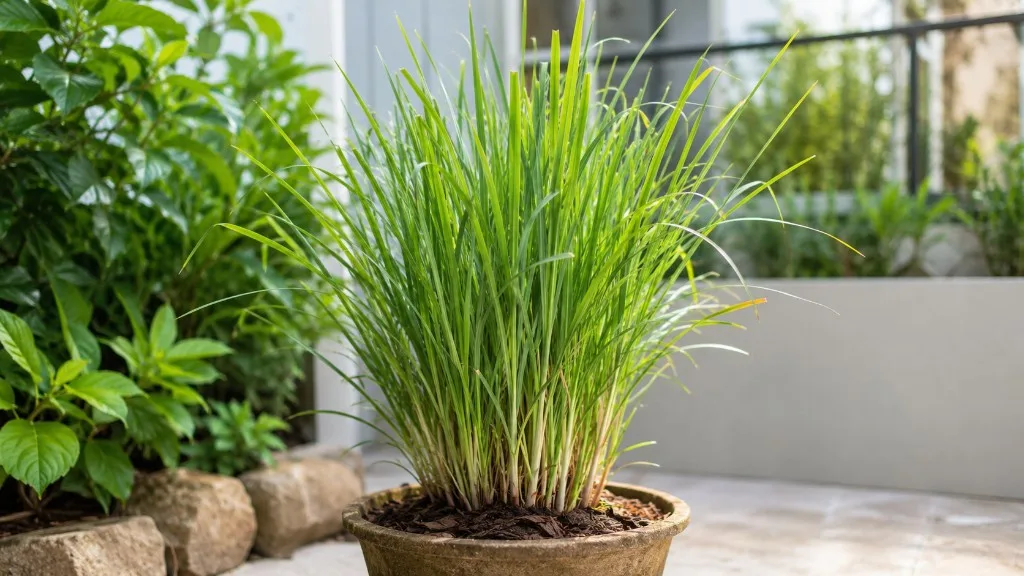
Lemongrass Pruning Guide: Harvest, Cutback, and Recovery
Lemongrass Pruning Guide: Harvest, Cutback, and Recovery
Quick Answer - Your First Base-Level Inspection
First action: Put on gloves, kneel beside the clump, and pull out any dead brown outer stalks and leaf sheaths at soil level-they should release with a firm tug if they are truly spent. That single cleanup reveals which green stalks are active before you harvest for the kitchen or schedule a spring rejuvenation cut.
Do not start by shearing the top leaf tips. Lemongrass regrows from rhizomes at the base, and productive cuts happen at or below soil level on mature outer stalks-not halfway up the blades.
What Lemongrass Pruning Actually Means
With lemongrass (Cymbopogon citratus), most gardeners juggle two jobs that share the same tools but follow different rules.
Harvesting removes individual mature outer stalks for cooking while the clump keeps producing through warm months. You cut or twist stalks off at the ground, peel the swollen base, and leave inner shoots to size up. Rejuvenation pruning is the once-a-season hard cutback-lowering the entire leaf mass in late winter or early spring to clear dead material and refresh growth before the next harvest cycle.
If you only harvest, dead brown sheaths still pile up at the crown and the clump gets harder to work around. If you only hard-prune in spring but never harvest during summer, you end up with tall, leaf-heavy plants and fewer tender bases-the part that actually flavors curry paste and soup stock. The best routine combines regular outer-stalk harvests during active growth with one annual base cutback timed to your climate.
How Lemongrass Grows: Clumps, Rhizomes, and Outer Stalks
Each stalk is a grass culm with a fleshy, citral-rich base and long, narrow leaves. Stalks emerge from rhizomes-horizontal underground stems-so a single plant widens into a dense clump over two or three seasons. New shoots typically appear at the outer edge first, while the center holds older, tougher stems. That is why experienced growers harvest from the outside inward, taking the thickest outer stalks and leaving younger inner shoots.
West Indian lemongrass (C. citratus) produces the thick culinary bases used in Thai and Vietnamese cooking. East Indian lemongrass (C. flexuosus) is more common in essential-oil production and often yields thinner stalks in short northern summers. Grocery-store starts are almost always C. citratus. Do not confuse either species with citronella grass (C. nardus), which looks similar but is grown for repellent oils, not the kitchen.
What to Check Before You Cut
Scan the clump in good light before any session:
- Base thickness on outer stalks-squeeze above the soil line; usable stalks feel at least ½ inch (13 mm) across, per UF/IFAS Extension.
- Color at the crown-brown, papery sheaths pull away easily; green inner shoots should stay put.
- Season and frost-in cold regions, finish major harvests before hard frost or move pots indoors while stalks are still green.
- Plant size-a young container plant with only six to eight stalks cannot tolerate the same volume as an established in-ground clump.
- Tool sharpness-dull blades crush grass tissue and slow recovery at the cut surface.
Plan one job per visit: either a light harvest round or a heavy spring cutback-not both at full volume on the same day for a small plant.
When to Prune or Harvest Lemongrass
Timing splits into two calendars: the harvest calendar through warm months and the rejuvenation calendar in late winter or early spring.
Growing-Season Outer-Stalk Harvests
Harvest individual stalks anytime during active growth once the base reaches usable thickness-generally at least ½ inch in diameter and roughly 12 inches tall, according to UF/IFAS Extension and RHS guidance. In temperate gardens that usually means late spring through early fall, with peak flavor often arriving in late summer when heat concentrates the essential oils.
Take a few outer stalks at a time rather than clearing the clump. RHS notes stems can be harvested from about May through September in the UK-adjust to your local frost-free window.
Spring and Dormant Cutbacks
Perform the main rejuvenation cut when the plant is dormant or just waking-typically late February through April in mild climates, or early spring when fresh green shoots appear after overwintering indoors or under mulch. The RHS recommends cutting all leaves down to 5–10 cm (2–4 inches) from the base, either in autumn before bringing plants inside if space is tight, or in early spring when new growth starts.
In USDA zones 9–11, where lemongrass stays outdoors year-round, a hard cutback to roughly 6–12 inches (15–30 cm) above the white base after the coldest weeks pass refreshes an overgrown clump dramatically once warmth and water return.
Do not perform heavy rejuvenation cuts in mid-summer on a healthy plant unless you are salvaging frost damage or severe pest injury-you lose weeks of harvest and stress a clump already working hard in heat.
How to Know a Stalk Is Ready
Readiness is about base diameter, not leaf height alone. A stalk can arch three feet tall while still being pencil-thin at the bottom. The benchmark across extension sources is ½-inch thickness at the base, with a swollen, pale green to whitish zone where leaf sheaths wrap tightly-that is where flavor concentrates.
Outer stalks ripen before inner ones. Grasp an outer leaf sheath low and feel for a firm, substantial base. If it feels hollow or wispy, give it a few more weeks of sun and steady moisture. Wisconsin Horticulture Extension notes clumps grow slowly until summer heat arrives, then expand quickly-patience early in the season prevents harvesting too soon.
Avoid harvesting only leaf tips. The blades work well for tea infusions, but they are fibrous in cooking and do not trigger productive replacement growth the way base removal does.
The First Cut: Removing Dead Outer Material
After your base-level inspection, the first physical cut is usually cleanup, not kitchen harvest. With gloved hands, tug dead brown outer stalks and crumbling leaf sheaths away from the crown. Rake loose debris from under the clump-moist, packed litter invites slug habitat and holds water against the rhizome in wet winters.
Only once the dead layer is gone should you choose an outer green stalk for harvest or proceed to a uniform spring chop. Leaving decaying material pressed against live shoots is one of the fastest ways to make an otherwise vigorous clump look stalled and smell musty.
How to Harvest Lemongrass Stalks Step by Step
Two reliable methods both remove the stalk at or below soil level. Pick based on whether you want a clean kitchen base or a fast twist in a large row.
Soil-Level Knife Cut
Step 1: Identify an outer stalk with a base at least ½ inch thick. Step 2: Pull surrounding blades aside and locate where the stalk meets the soil. Step 3: Slice horizontally with a sharp knife or pruners as close to the ground as practical, keeping the cut flat. Step 4: Lift the stalk and peel away woody outer sheaths until you expose the pale, tender core-similar to a leek heart. Step 5: Trim upper green leaves for compost or tea, and rinse the base before slicing for the kitchen.
This method is precise, works well in containers, and minimizes tearing of neighboring shoots. UF/IFAS Gardening Solutions describes harvesting stalks at ground level and removing tough outer leaves before use.
Twist-and-Pull Method
Step 1: Grasp a mature outer stalk low, near the base, with a gloved hand. Step 2: Pull slightly outward, then twist and pull downward in one steady motion so the stalk separates at the rhizome with the bulb base intact. Step 3: Peel and prep as above.
UF/IFAS Extension notes that harvesting older outer stalks first promotes new stalk growth-a standard field technique. Twist-and-pull is faster in large in-ground clumps and often yields a fuller bulb. If a stalk resists hard, switch to a knife rather than forcing it and tearing nearby rhizomes.
How Much You Can Safely Remove
Even vigorous lemongrass stalls if you strip too much at once from a small or newly rooted plant. UC ANR guidance recommends harvesting no more than one-third of a clump in a single session. For a young container plant with only six to eight stalks, two outer stems may be the practical maximum.
Space repeat harvests two to three weeks apart during peak summer so replacements can thicken. If you need a large quantity for batch cooking or freezing, plan a late-season bulk harvest before frost rather than repeatedly scalping the clump in June. Older outer stalks should always go first-UF/IFAS Extension is explicit that taking mature outer stems promotes new stalk growth.
Where to Cut - and What to Leave Alone
Cut at or below soil level on individual outer stalks during harvest. For rejuvenation, cut the entire leaf mass uniformly, leaving 5–10 cm (2–4 inches) of stubble per RHS in cooler climates, or 6–12 inches above the white base in frost-free zones where regrowth is faster.
Leave inner, thinner green shoots intact during harvest-they are next month’s kitchen supply. Do not cut through the center heart of a small plant repeatedly in one season. Do not shear leaf tips on healthy stalks you plan to keep; that removes no woody base, wastes flavor, and leaves sharp edges that are harder to work around.
The usable culinary portion after cutting is the lower 4–6 inches (10–15 cm) of peeled base-RHS suggests retaining roughly the lower 10 cm (4 inches) for direct use in curries and sauces. Upper green portions suit stock and tea; UF/IFAS Extension notes leaves can be dried like bay leaves and stalks frozen up to six months.
Tools, Gloves, and Handling Safety
Lemongrass leaf edges are finely serrated-Wisconsin Horticulture Extension warns they are rough enough to cut skin. Long sleeves and nitrile or garden gloves are essential. A sharp knife, hand pruners, or heavy kitchen shears handle individual stalks; hedge shears help when lowering an entire clump’s leaf mass in spring.
Disinfect blades with rubbing alcohol between clumps if you saw pest damage or disease. Keep a bucket nearby for trimmings. The ASPCA lists lemongrass (Cymbopogon citratus) as toxic to cats, dogs, and horses-store harvested stalks and compost debris out of pet reach. This is general safety information, not veterinary advice.
Hard Cutback for Overgrown Clumps
When a clump becomes a dense tangle of waist-high leaves and old brown sheaths, wait until hard frost danger has passed-or until fresh green shoots appear at the base in spring. Rake away accumulated dead material first.
Using hedge shears or a knife, cut straight across the leaf mass, lowering the plant to the rejuvenation height for your climate. Remove all brown, dead outer stalks-they pull away easily once the green layer is exposed. Leave inner green shoots where possible; those are the plant’s head start.
Lemongrass tolerates a blunt, uniform chop because regrowth comes from the base, not from branching along cut leaf tips. Within a few weeks of warm weather and steady moisture, fresh blades arch up-often denser than before.
Aftercare and Recovery Timeline
After a heavy harvest or spring cutback, lemongrass needs Lemongrass light guide, consistent moisture without waterlogging, and warm soil. Hold off on heavy nitrogen fertilizer for a week or two immediately after a large cut so the plant is not pushed into weak, floppy leaf growth before roots recover; resume a light balanced feed once new shoots are clearly expanding.
In warm, bright conditions, individual stalk replacements often appear within two to three weeks. A full clump refill after a hard spring cutback typically takes four to six weeks once overnight temperatures stay above 13°C (55°F), the minimum growth threshold the RHS cites for outdoor placement.
Signs Pruning Worked vs Too Aggressive
Pruning worked when new green shoots push up from the crown, outer replacements thicken to the ½-inch benchmark, and the clump looks cleaner at the base without yellowing of all remaining foliage.
Too aggressive or badly timed shows up as ** stalled regrowth for more than a month in warm weather**, ** widespread yellowing** of inner shoots after a heavy harvest, or ** mushy crown tissue** when dead material was left packed against the rhizome. If recovery is slow, check root crowding, low light, and cool, wet soil before assuming disease-lemongrass sits idle until warmth returns. UF/IFAS Extension notes indoor plants yield fewer stalks until returned to full sun outdoors.
Seasonal Adjustments by Climate
Your latitude changes the calendar more than the technique. Cut placement stays at the base; the season shifts.
In USDA zones 9–11, lemongrass often stays partially green through mild winters. Perform the main cutback in late winter to early spring, then harvest individual stalks from late spring through fall. Divide crowded clumps every two to three years in spring-older clumps otherwise produce thinner stems even with good care. Watch for uncontrolled spread without rhizome barriers.
In zones 8 and below, treat in-ground plants as warm-season annuals or grow in containers moved indoors before overnight temperatures drop below 7°C (45°F), per RHS guidance. Harvest heavily before frost or bring pots inside while stalks are still green. If indoor space is limited, cut foliage back in autumn to fit a bright windowsill; if space allows, a spring cutback after overwintering works equally well.
Dividing Crowded Clumps
Division is the long-term productivity tool pruning alone cannot replace. Every two to three years in spring, lift the clump, split rhizome sections with a knife, and replant divisions with at least one live stalk and healthy roots each. The RHS treats division as the standard propagation path because lemongrass is rarely grown from seed at home. Water divisions well and hold harvest pressure until new outer stalks reach usable thickness.
Mistakes to Avoid
Harvesting too early gives weak flavor and forces the plant to replace thin stalks before reserves build. Wait for the ½-inch base benchmark.
Cutting only leaf tips leaves woody bases in the ground and does not trigger productive rhizome response. You get a shaggy plant and a disappointing kitchen yield.
Stripping too many stalks at once from a young or indoor plant causes slow recovery or yellowing. Respect the one-third guideline on small clumps.
Skipping spring cleanup lets dead material pack against the crown, holding moisture and inviting rot in wet winters.
Using dull tools crushes stems and increases dieback at the cut surface.
Pruning heavily in late fall on unprotected in-ground plants removes foliage that could buffer the crown. In cold regions, harvest and mulch, dig and pot up, or accept annual replacement rather than mid-autumn shearing outdoors.
Confusing species leads to frustration when C. flexuosus never produces thick culinary bases in a short northern summer, or when citronella grass lands in the soup pot.
When Not to Prune
Delay heavy cuts when the plant is waterlogged, root-bound, or recently moved-fix the growing condition first, then trim. Skip rejuvenation pruning during active mid-summer heat on healthy clumps unless you are rescuing frost or pest damage. Do not harvest from a clump that has not reached minimum base thickness-let inner shoots size up instead.
If overnight temperatures are heading toward frost and you cannot move a container indoors, take a final harvest and prepare for dormancy rather than stimulating soft new growth that will blacken in the cold.
Conclusion
Lemongrass pruning comes down to cutting in the right place, at the right season, and in the right volume. Start by clearing dead outer material at the base, then harvest outer, half-inch-thick stalks at soil level through the warm months, and cut the whole clump back once per year in late winter or early spring to refresh growth. Peel bases for the kitchen, use leaves for tea, and leave at least two-thirds of a small plant intact between sessions so rhizomes keep sending up replacements.
Match expectations to your climate and container size: outdoor clumps in zones 9–11 produce the heaviest harvests, while indoor winter plants mainly survive until they return to full sun. Divide every few years when stalks thin out, wear gloves against sharp leaf edges, and keep trimmings away from pets. With those habits in place, lemongrass stays tidy after spring, productive through summer, and ready whenever the base reaches half an inch thick.
When to use this page vs other Lemongrass guides
- Lemongrass overview - Start here for whole-plant context before deep-diving this topic.
- Lemongrass problems hub - Jump to symptom-specific fix guides when this care topic does not resolve the issue.
- Plant Leaning on Lemongrass - Escalate here when pruning adjustments are not enough.
- Slow Growth on Lemongrass - Escalate here when pruning adjustments are not enough.
- Brown Tips on Lemongrass - Escalate here when pruning adjustments are not enough.