Plant Leaning on Lemongrass: Causes, Checks & Fixes
Quick answer
Lemongrass leans when light pulls one side, roots lose grip in a small pot, a heavy harvest leaves the clump top-heavy, or wind catches tall blades. First step: rotate a quarter turn toward brighter even light, then test for root-bound wobble at the soil line before repotting or staking.
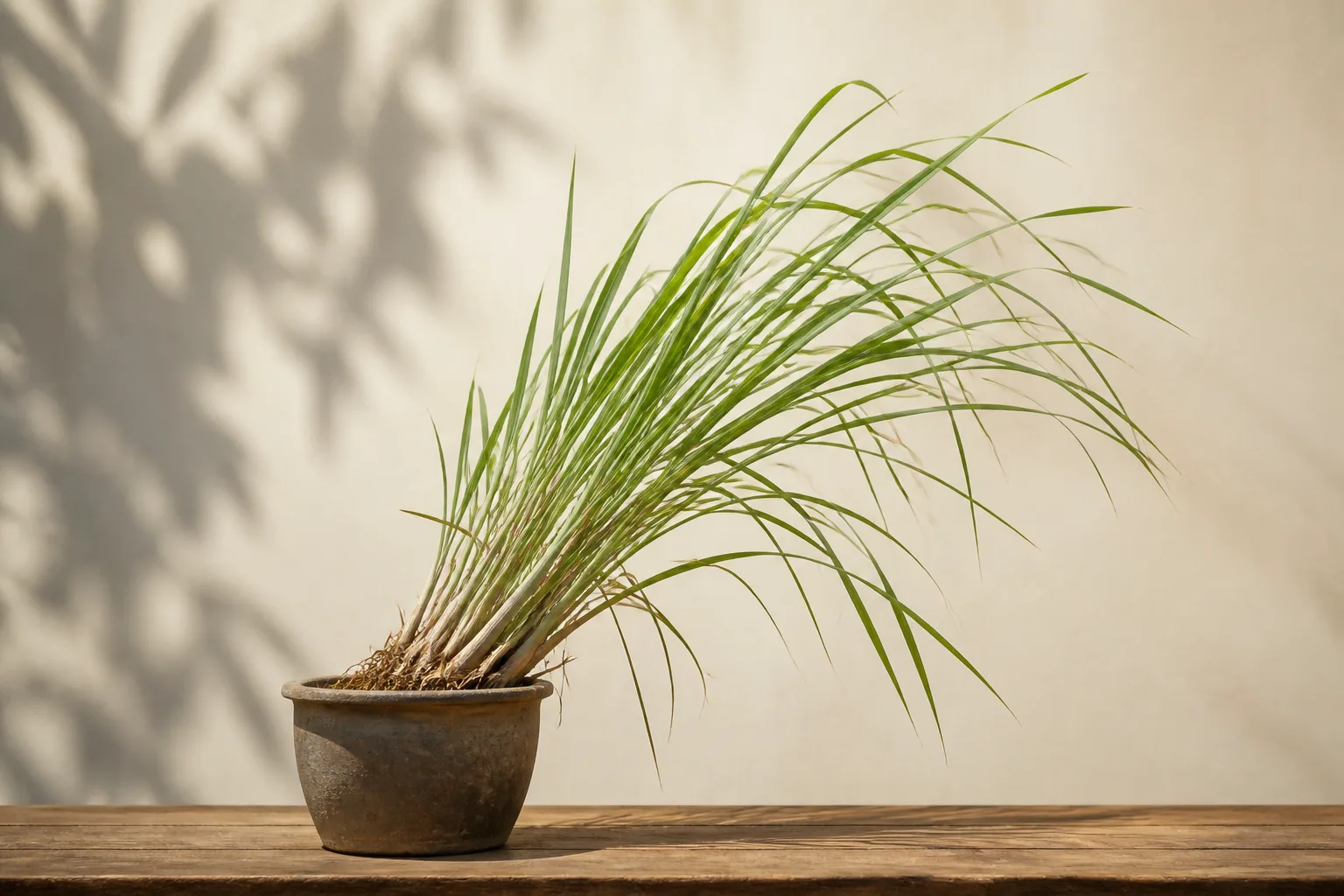
Plant Leaning on Lemongrass: Causes, Checks & Fixes
This guide covers plant leaning on Lemongrass. See also the general Plant Leaning guide, watering, and light pages for this plant.
Plant Leaning on Lemongrass: Causes, Checks & Fixes
Quick answer
Lemongrass (Cymbopogon citratus) leans when light pulls one side, roots lose grip in a too-small pot, a one-sided harvest leaves the clump top-heavy, or wind catches tall blades like sails. First step: rotate the pot a quarter turn toward brighter, more even light, then push gently at the soil line-if the whole root ball wobbles, repot or divide before you stake.
Individual arching blade tips are normal on this clumping tropical grass. Soil-line tilt of the whole clump is the problem focus-not graceful droop at the leaf ends.
For culture basics-sun, water, and container size-start with the lemongrass overview. If wet soil and mushy bases accompany the lean, switch to root rot on lemongrass rather than staking a failing crown.
What leaning looks like on lemongrass
Lemongrass forms dense clumps of long strap-like blades that can reach three feet on mature outdoor plants. That blade mass catches light unevenly indoors and wind outdoors. Patterns to distinguish:
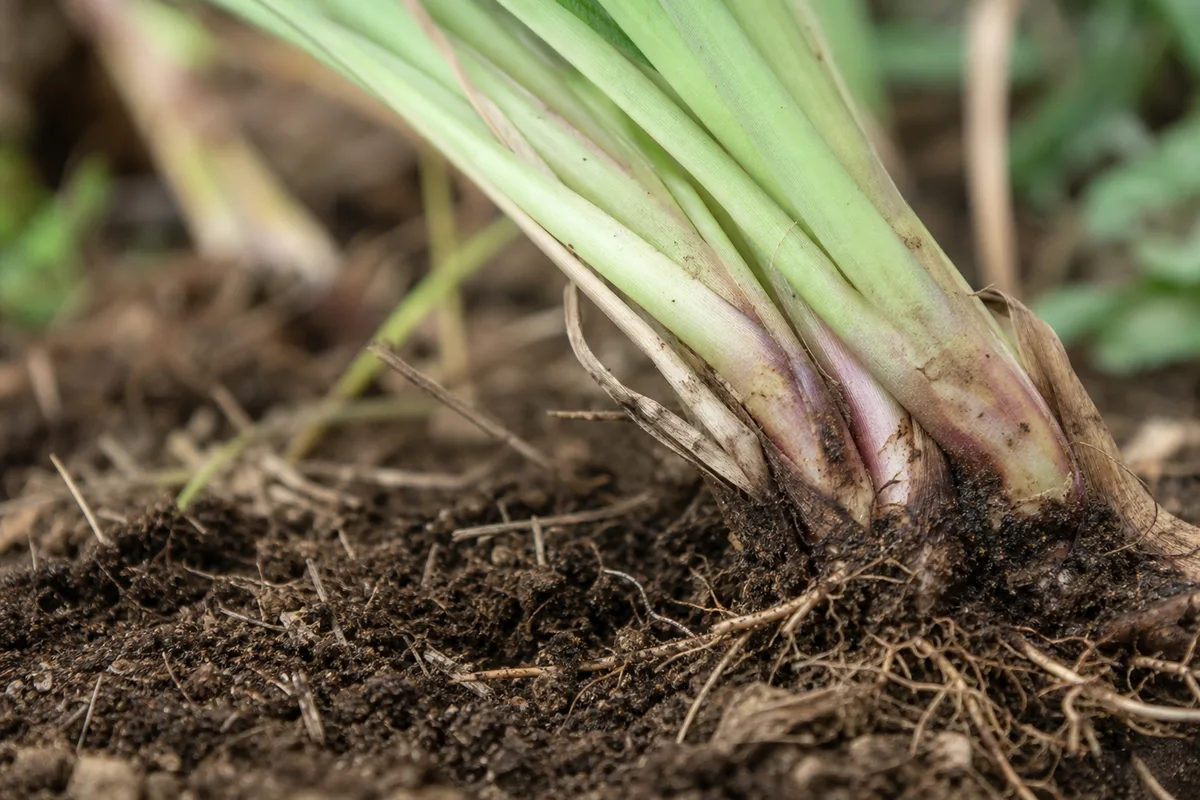
Plant Leaning symptoms on Lemongrass - compare with healthy tissue on the same plant.
- Directional phototropic lean - Entire clump angles toward the brightest window or south-facing patio edge; longer, greener blades on the sun side, thinner back-side growth.
- Wobble at soil line - Clump shifts when brushed; circling roots visible at drain holes in a plastic nursery pot.
- Post-harvest imbalance - Heavy cuts from one outer edge; remaining blades pull the mass over like an unbalanced load.
- Wind flop on tall outdoor clumps - Sudden lean or tipped pot after gusts on an exposed rail-overlaps with wind damage on lemongrass when blades shred or the container lies on its side.
- Rot-related collapse - Lean plus soft stalk bases, sour soil, and wilt despite moisture-not firm directional stretch.
What leaning is not: normal tip arch with the crown centered in the pot, or gradual pale stretch from chronic low light-that broader weakness is covered on not enough light and leggy growth.
Why lemongrass leans
Uneven light indoors - Single-window growing produces stronger growth on the sun side. Weak back-side tissue cannot support upright balance; the clump slowly tips toward the glass. Lemongrass wants full sun for maximum growth-partial one-sided light is the most common indoor lean cause.
Root-bound containers - Fibrous grass roots spread horizontally and fill pots within a warm season. Dense circling roots hold little soil mass; tall blade canopies act like sails. Lightweight plastic nursery pots are the primary indoor wobble failure point when clump width exceeds pot width.
One-sided harvest - Kitchen cuts from the same convenient front edge remove support blades unevenly. Culinary lemongrass recovers fast in summer sun, but repeated asymmetric harvest keeps the clump top-heavy through the season. See lemongrass pruning for even-cut patterns around the clump perimeter.
Top-heavy juvenile divisions - Supermarket stalks with long leaves and minimal root mass tip easily in the first windy week-the root-to-canopy ratio is too narrow until roots anchor. Shallow planting of divided sections worsens wobble until new roots grip the mix.
Wind on exposed patios - In-ground clumps anchor through spreading roots; elevated containers face higher effective wind speed. Tall summer growth after active moisture and feed builds height quickly. When gusts-not windows-are the trigger, read wind damage on lemongrass for righting tipped pots and leeward shelter.
How to confirm the cause
Run these checks in order before you repot, stake, and feed all at once:
- Light map - Which direction does the clump lean toward? Slow window-side stretch over weeks points to phototropism.
- Pot test - Gentle push at the base; does the whole root ball shift? Wobble with circling roots at drain holes confirms root-bound lemongrass.
- Harvest history - Recent asymmetric cuts from one side only?
- Stalk base firmness - Soft bases on wet soil mean rot, not lean mechanics-see root rot.
- Storm context - Sudden post-gust tilt on an exposed balcony? Cross-check wind-damage signs.
- Repot threshold - When clump width visibly exceeds pot rim or roots circle heavily, schedule repot before the next lean cycle-details in lemongrass repotting.
Lean types compared
| Lean type | Speed | Direction pattern | Stalk bases | Pot evidence | First fix |
|---|---|---|---|---|---|
| Phototropic (light) | Weeks | Toward brightest window | Firm, green | Stable in pot | Weekly rotation; brighter even light |
| Root-bound wobble | Gradual | Any direction when touched | Firm | Shifts at soil line; circling roots | Repot or divide into wider heavier pot |
| Harvest imbalance | After cutting | Toward uncut heavy side | Firm | Stable unless also root-bound | Even harvest; temporary outer-blade tie |
| Wind flop | Hours (post-storm) | Downwind flattening; may shred tips | Usually firm if no rot | Tipped or shifted container | Right pot; leeward shelter; see wind-damage guide |
| Rot collapse | Days | General collapse, not one-sided stretch | Soft, mushy | Wet heavy soil | Stop water; inspect roots-rot protocol |
Use the table to pick one leading cause before stacking fixes.
First fix for lemongrass
For light lean: Rotate the pot a quarter turn weekly and move to brighter even exposure-or supplement with a grow light on the weak side indoors. Do not leave a one-sided window plant unmoved all winter.
For root-bound wobble: Repot or divide into a wider, heavier pot with fresh well-drained organically rich mix, planting divisions at the same depth. Match container weight to terrace wind if the clump is tall outdoors.
For harvest imbalance: Cut evenly around the clump on the next harvest; temporarily tie loose outer blades upright with soft twine until regrowth balances mass-do not constrict emerging center shoots.
For wind flop: Right the pot the same day, move to leeward shelter that still gets full sun, and use a ring stake around the container exterior-not stakes through edible stalk bases.
Fix one cause first before combining repot, stake, and heavy feed.
Step-by-step recovery
Phototropic lean (firm bases, stable pot)
- Note which side has longer blades-that is your light target.
- Rotate a quarter turn weekly so all sides get equal sun over a month.
- Move to a brighter south or west window, or add supplemental light on the weak side.
- Judge success by new upright center shoots within one to two weeks in warm active growth.
Root-bound wobble
- Slide the clump out and confirm circling dense roots with little soil in the center.
- Tease or trim the outer root mat; divide if the clump exceeds a manageable width.
- Repot into a container at least one-third wider than the clump with drainage holes and a heavier base (ceramic or terracotta on windy sites).
- Water thoroughly once; hold fertilizer until new center shoots firm the clump-usually seven to ten days.
- Full repot workflow: lemongrass repotting.
Post-harvest imbalance
- Stop cutting from the same outer edge only.
- Loosely gather tall outer blades with soft twine if they pull the clump over-leave the crown open.
- On the next cut, harvest stalks from all sides of the perimeter.
- Remove twine once new growth evens canopy weight-typically one harvest cycle.
Wind-related tilt
- Right the container immediately; firm any lifted root edge without burying the crown deeper.
- Move to leeward shelter behind a wall or railing-not deep shade.
- Trim fully shredded outer blades at the base; stabilize with a heavier pot or exterior ring stake.
- Escalation path: wind damage on lemongrass.
Recovery timeline
Rotation and light fixes: more upright new blades within one to two weeks in warm sun.
Repotted divisions: may sit still for seven to ten days before firm new center shoots anchor the clump.
Harvest rebalancing: symmetry returns after the next even cut around the clump-often two to three weeks in active summer growth.
Wind-staked outdoor clumps: stabilize after the next balanced harvest reduces sail area.
Tilted blade tissue does not straighten in place; recovery means new upright shoots from the crown, not re-erecting old arching leaves.
Causes to rule out
- Root rot collapse - Wilting, sour soil, mushy bases-not firm directional lean. Start root rot protocol.
- Leggy weak growth - Thin pale blades everywhere from chronic low light; related but broader than lean alone-see not enough light and leggy growth.
- Normal blade arch - Tips curve down; base stays centered in pot.
- Wind-only injury - Ragged torn tips and storm timing without slow window stretch-wind damage.
What not to do
Do not pack wet soil on exposed roots to “prop” a rotting clump-inspect roots first. Do not stake through stalk bases you plan to harvest. Do not harvest only the convenient front edge repeatedly if lean persists. Do not repot on day one when the only issue is mild window lean with a stable root ball-rotation and light come first.
How to prevent leaning next time
Grow in full sun with steady active-season moisture, repot before roots circle heavily and clump width exceeds pot width, rotate indoor pots weekly, harvest evenly around the perimeter, and choose pot weight suited to terrace wind. Divide oversized clumps in early spring so each section matches its container. On windy decks, favor wide heavy ceramic pots over tall narrow plastic.
When to worry
Escalate when the clump partially uproots with roots drying in sun, when lean follows soft bases on wet soil, or when wobble worsens after each gust despite repotting-those patterns need root inspection, not another stake. Pure directional lean with firm bases is cosmetic until the next harvest or storm.
Contact your local extension office if lean cycles with chronic wet soil and repeated collapse after repot-binding, poor drainage, or advancing rot may need hands-on diagnosis.
Related lemongrass problems
- Lemongrass overview - placement, light, and culture basics
- Lemongrass repotting - when and how to divide root-bound clumps
- Lemongrass pruning - even harvest patterns around the clump
- Wind damage on lemongrass - storm flattening, tipped pots, and leeward shelter
- Root bound lemongrass - circling roots and wobble at the soil line
- Root rot on lemongrass - mushy bases and sour soil with collapse
- Not enough light on lemongrass - weak stretch that worsens lean
- Leggy growth on lemongrass - thin pale blades from chronic shade
When to use this page vs other Lemongrass guides
- Lemongrass watering guide - Use for routine moisture checks before assuming plant leaning is the main issue.
- Lemongrass problems hub - Browse all 52 common issues on this species.