Chemical Damage on Lemongrass: Causes, Checks & Fixes
Quick answer
Chemical damage on lemongrass shows as sudden bleached, twisted, or scorched blades after spray drift or harsh product contact. First step: rinse blades and stalk bases with clean water, stop all sprays, and protect the crown while new shoots emerge-do not cook with damaged tissue.
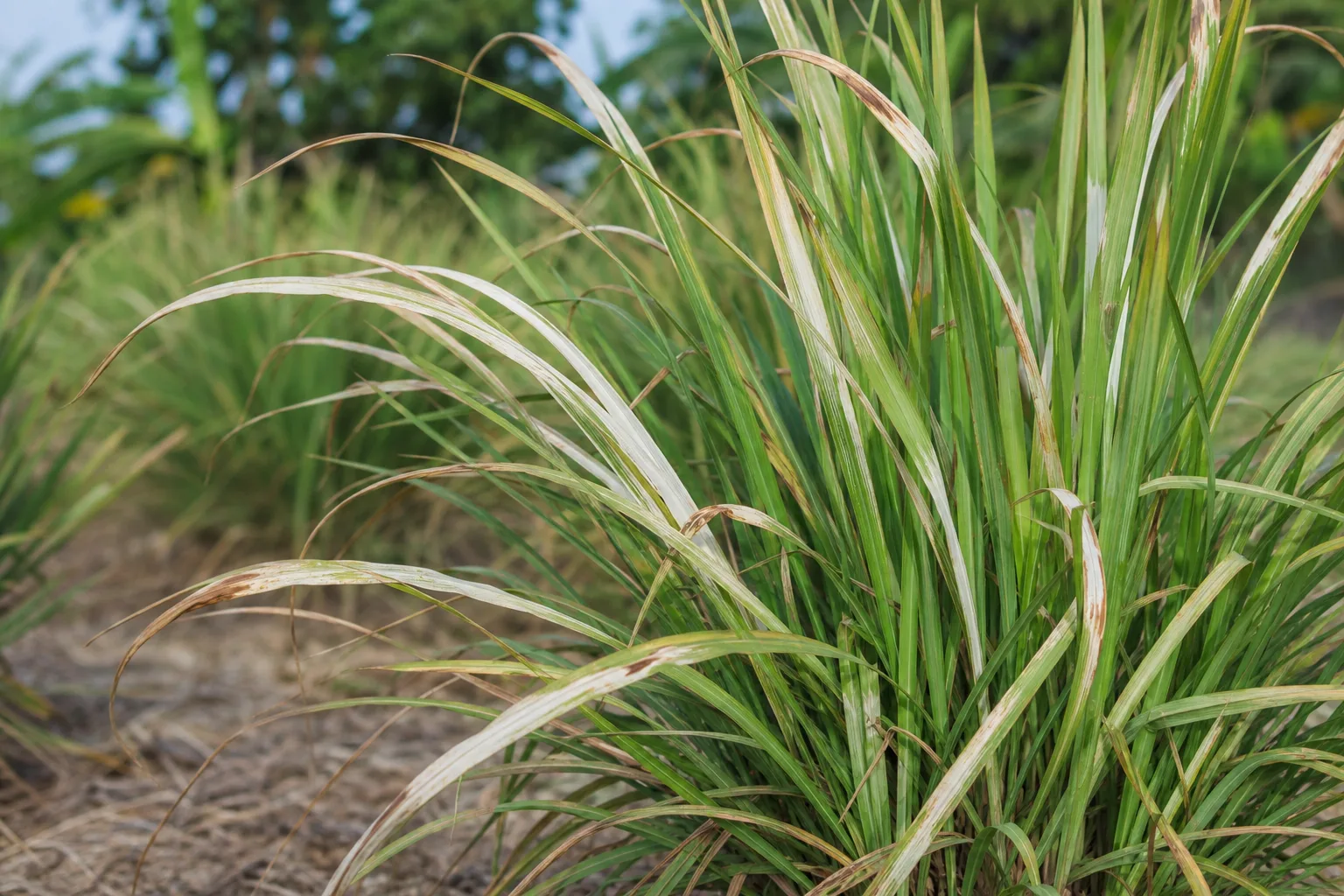
Chemical Damage on Lemongrass: Causes, Checks & Fixes
This guide covers chemical damage on Lemongrass. See also the general Chemical Damage guide, watering, and light pages for this plant.
Chemical Damage on Lemongrass: Causes, Checks & Fixes
Quick answer
You walked onto the balcony Saturday morning and found your culinary lemongrass clump with sudden white streaks on windward blades-while the neighbor’s lawn still smelled like fresh herbicide from yesterday’s calm-morning spray. That pattern is chemical damage on lemongrass (Cymbopogon citratus): contact or drift injury on a grass you harvest for cooking, not gradual drought tip browning.
First step: rinse blades and stalk bases with clean running water for several minutes, stop all foliar sprays nearby, and protect the firm crown while new shoots emerge. Do not harvest bleached or scorched blades for cooking.
This page is the acute post-exposure rescue guide after herbicide drift, pesticide overspray, or harsh cleaner contact. For year-round pest sprays, pet safety, and general care rhythm, see the lemongrass overview.
What chemical damage looks like on lemongrass
Sudden bleach and scorch after a spray event
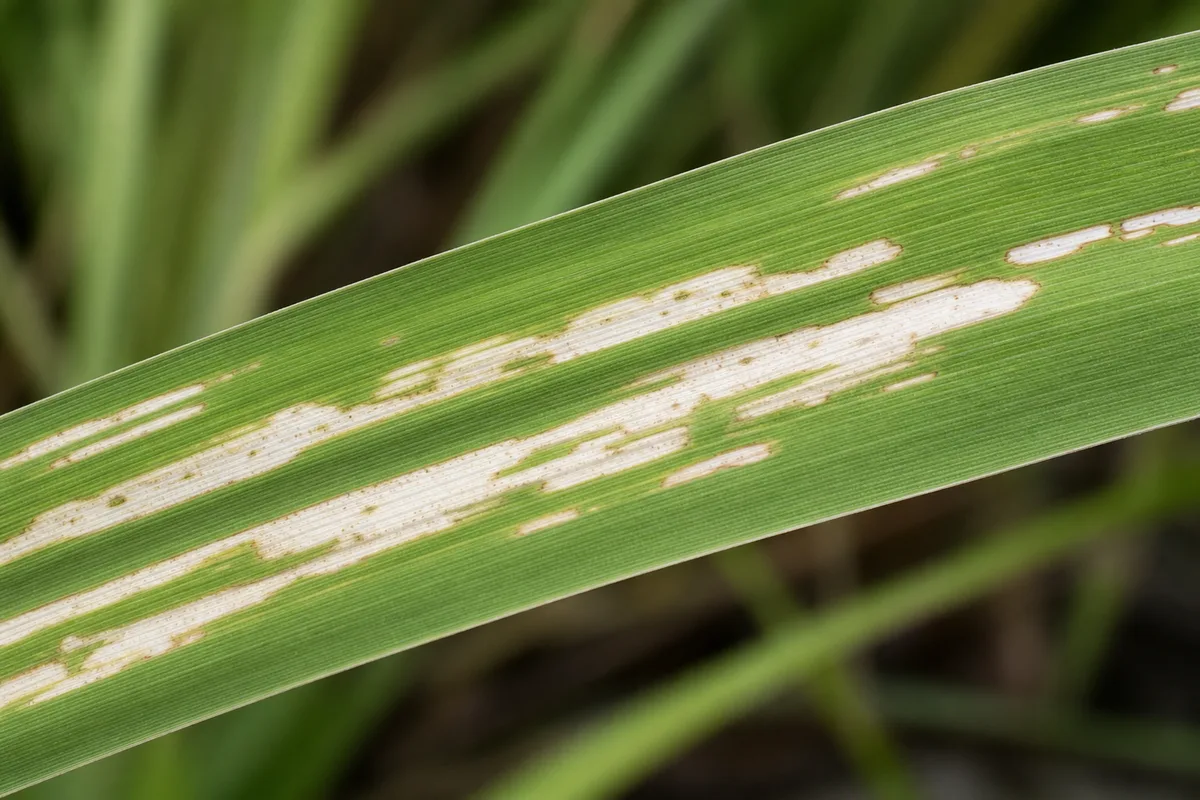
Chemical Damage symptoms on Lemongrass - compare with healthy tissue on the same plant.
Yellow-to-white streaks or entire blade sections bleached within 24–72 hours of an application event nearby. Twisted or crinkled new shoots after direct contact. Tip scorch in patterns matching spray direction-often one side of the clump if wind carried drift. Unlike drought stress, damage appears fast and event-linked.
Heavy oil or soap burns leave greasy-looking patches that will not recover. Systemic herbicide contact may yellow blades from tips inward before the crown collapses.
Drift patterns vs. direct overspray
| Pattern | What you see | Likely exposure |
|---|---|---|
| Windward drift | Bleach streaks on blades facing the spray source; sheltered side greener | Neighbor lawn treatment, path herbicide, balcony-height drift |
| Direct overspray | Uniform wetting across the clump; droplet-shaped burns | Accidental hose-end sprayer pass, misaimed foliar feed, patio cleaner splash |
| Indoor localized burn | Only blades nearest a diffuser, aerosol, or cleaning zone | Essential-oil diffuser, bleach cleaner on counters, indoor pest spray |
Container clumps on balconies sit at drift height from adjacent lawn treatments-exactly where glyphosate and contact herbicides land when wind is wrong.
What still looks normal (gradual drought or salt tips)
Gradual tip browning on oldest blades over weeks without a spray event is brown tips on lemongrass-often low humidity or underwatering on Lemongrass, not chemical injury. White crust on the pot rim with browning after repeated feeding points to nutrient lockout or salt buildup-a slow salt story, not overnight bleach.
Why lemongrass is vulnerable to chemical contact
Lemongrass blades are long arching straps that expose a large foliar surface area to drift from lawn herbicides, neighbor sprays, or over-concentrated insecticidal soaps and oils. Because you harvest stalks for the kitchen, accidental contact matters more than on purely ornamental grasses-a bleached outer blade is both a growth setback and a food-safety decision.
Lemongrass wants full sun and steady moisture during active growth, so stressed clumps on hot patios show injury fast once tissue is compromised. The plant regrows from the crown at soil level-protect firm base tissue even when outer blades look hopeless.
Herbicide and product types that injure lemongrass
Different chemicals injure grasses in different ways. Matching the product class to your symptom pattern helps you set realistic recovery expectations.
| Product type | Examples | How injury usually shows on lemongrass | Recovery outlook |
|---|---|---|---|
| Non-selective systemic | Glyphosate (Roundup and generics) | Chlorotic or bleached new growth within days; twisted strap-like blades; crown may collapse after heavy dose | Crown-dependent-mild drift may regrow; heavy systemic dose can kill the clump |
| Contact burn-down | Pelargonic acid, horticultural soap/oil overuse, bleach cleaners | Greasy or water-soaked patches on contacted tissue within hours; no soil carryover from soaps | Contacted blades die; crown often survives if bases stayed firm |
| Broadleaf phenoxy | 2,4-D, dicamba, triclopyr | Grasses are usually tolerant at drift doses-injury more common on broadleaf neighbors; heavy misapplication can still distort grass | Often mild on grass at true drift rates; verify product and dose |
| Foliar feed or oil in hot sun | Liquid fertilizer, neem, horticultural oil at midday | Scorched patches on sun-facing blades; event linked to your own application | Trim burned blades; crown usually firm if rinse was prompt |
| Indoor volatiles | Aerosol cleaners, essential-oil diffusers near pots | Localized burn on nearest blades only | Move source; trim damaged tissue |
Glyphosate drift on grasses often produces a chlorotic band across blades that were exposed when drift landed-new growth may look yellow or white before tissue necroses. Because glyphosate is systemic and translocated, crown collapse after a heavy dose can be irreversible even after rinsing.
Contact herbicides including over-strong insecticidal soaps and oils damage only tissue they touch-they do not move through the plant the way glyphosate does.
Confirm chemical damage: step-by-step checks
Work through these in order before you fertilize, repot, or assume drought instead. Chemical injury is defined by a spray or splash event in the last 48–72 hours-document what was applied nearby before you adjust water or feed.
- Spray event timeline (24–72 hours) - Match symptom onset to a lawn treatment, patio cleaning, foliar feed, or indoor aerosol use. No event points to drought, salt, frost, or pests instead.
- Pattern and wind direction - Drift affects the windward side; direct spray hits uniformly. Underwatering browns tips gradually from oldest blades outward.
- Crown firmness at soil line - Press stalk bases where blades meet soil. Firm pale-green tissue supports regrowth; soft, hollow bases after systemic herbicide suggest crown failure.
- Smell check (when it helps) - A sharp chemical or solvent odor on blades right after a known overspray can confirm direct contact-you are smelling product residue, not diagnosing from odor alone. Sour swamp smell at the crown on wet soil points to rot, not chemical burn.
- Soil moisture and rot - Chemical burn on rinsed foliage often pairs with normal or moist soil. Root rot on lemongrass wilts with sour mix and mushy bases-roots should stay firm after rinse-only chemical injury.
- Rule out frost, drought, mites, and salt - See comparison table below; link to sibling guides when another problem fits better.
Chemical damage vs. drought vs. frost vs. mites vs. salt burn
| Chemical damage | Drought | Frost | Spider mites | Salt / fertilizer burn | |
|---|---|---|---|---|---|
| Onset | Hours–3 days after spray event | Days on dry soil | Hours after cold night | Weeks of stippling | Days–weeks after feeding |
| Blade look | Sudden bleach, twist, greasy patches | Crispy tips; limp on dry pot | Water-soaked then black | Stippling, webbing | Tip burn; white soil crust |
| Pattern | Drift side or uniform spray | Whole clump in heat | Weather-linked collapse | Underside stippling | After recent fertilizer |
| Event link | Yes (spray log) | Dry spell | Frost record | No spray | Feed history |
| Crown | Firm unless systemic herbicide | Firm | Firm unless hard freeze | Firm | Firm |
| First action | Rinse; stop sprays | Deep soak | Move indoors; trim mush | Rinse; confirm pests | Flush; stop feed |
For chronic tip injury without a spray event, use brown tips. For pale tillers and crust after feeding, see nutrient lockout and the fertilizer guide. For overnight collapse after cold, see cold damage.
The first fix to try
Rinse blades and stalk bases with clean running water immediately after contact or suspected drift. Hold off all foliar products until new growth appears clean. Trim severely distorted or melted blades at the base to reduce stress. Move container clumps away from spray zones and shield them during adjacent lawn treatments.
Provide regular water during active recovery in warm sun but avoid fertilizing burned clumps until new shoots unfurl. Lemongrass regrows from the crown-protect the base even when outer blades look hopeless.
Pet note: Lemongrass is toxic to cats, dogs, and horses per the ASPCA-essential oils and cyanogenic glycosides are the toxic principles. Trimming damaged blades and using indoor aerosols or diffusers near pots increases pet exposure; keep clumps and debris out of reach of chewers.
Step-by-step recovery
- Rinse the entire clump with clean running water for several minutes-include stalk bases where droplets collected.
- Stop all sprays, foliar feeds, and nearby lawn treatments until recovery is clear.
- Trim melted or heavily bleached blades at soil level with clean scissors.
- Move pots away from drift paths, cleaning zones, and essential-oil diffusers.
- Keep soil consistently moist in warm active growth without saturating cool dormant pots.
- Resume light balanced feeding only after clean new shoots appear-follow the fertilizer guide rhythm, not rescue doses.
- If the center collapses but outer shoots stay firm, divide salvageable sections per the propagation guide.
Recovery timeline: what improvement looks like
Mild bleach patterns on outer blades - New green shoots often emerge from a firm crown within 14–21 days in warm sun with steady moisture. Old bleached tissue will not re-green; judge by fresh tillers at the base.
Severe crown collapse after systemic herbicide - Stalk bases that soften within days rarely recover. Divide any firm peripheral shoots immediately or restart from supermarket stalks rather than waiting on a collapsed center.
Documented pattern (balcony container, drift event): Neighbor lawn glyphosate application on a calm Saturday morning → windward blades showed bleach streaks by Monday → rinse Monday afternoon, trim worst blades, pot moved to sheltered corner → first clean green tiller at day 18 in warm May sun. Bleached outer blades never recovered; new shoots carried the clump.
Harvest safety and label withholding
Because lemongrass is an edible herb, harvest decisions after any pesticide contact are non-negotiable:
- Do not cook with bleached, scorched, or sprayed blades-discard damaged tissue.
- Read the product label for the specific pre-harvest interval (PHI)-the legal waiting period between application and harvest. PHI varies by product and crop; there is no universal number for all herbs.
- Confirm the plant is listed on the label before any future treatment. The label is the law-using a pesticide on an unlisted crop or harvesting too early is unsafe and illegal.
- Wait for clean new growth before your first post-incident harvest, even after the PHI passes, if tissue still shows burn patterns.
- Do not compost chemically injured blades for kitchen-garden mulch unless the product label allows-some residues persist on plant tissue.
If you treated with a product not labeled for edible herbs, discard affected growth and treat the clump as off-limits for cooking until you have documented clean regrowth and compliant future sprays.
Mistakes to avoid after chemical contact
- Do not reapply the same product hoping to “fix” the issue.
- Do not harvest bleached blades for cooking.
- Do not fertilize heavily on stressed crowns.
- Do not assume the clump is dead before checking for firm crown shoots at the base.
- Do not spray foliar oils or soaps in hot midday sun on culinary clumps-phytotoxicity risk rises sharply.
- Do not run essential-oil diffusers or aerosol cleaners within reach of indoor lemongrass pots.
Prevent chemical damage on balcony and garden-edge clumps
Shield culinary clumps when spraying lawns-use cardboard or fabric barriers on calm mornings, not windy afternoons when drift particles travel farther. Use labeled rates for edible herbs and apply foliar treatments in cool morning hours. Store cleaning products away from balcony herb pots. Register sensitive plantings on drift-awareness maps if your region uses them, and talk to neighbors before shared fence-line herbicide passes.
For routine pest sprays that avoid this page entirely, start from the lemongrass overview pest section-prevention beats rescue.
When to worry - and when to divide backup shoots
Escalate when:
- Stalk bases soften within days of herbicide contact-systemic damage may have reached the crown and may not reverse after rinse.
- The entire clump collapsed rapidly after a known glyphosate or heavy contact-herbicide event.
- No green tiller activity two weeks after warm placement on a once-firm crown.
- You used a product not labeled for edible herbs and cannot verify a safe withholding interval.
Not urgent: windward bleach on outer blades only with a firm crown; greasy contact patches on a few blades after soap overspray with prompt rinse; localized indoor burn on nearest blades after moving the diffuser.
If the center is lost but side shoots feel hard, divide immediately using the propagation guide rather than nursing bleached foliage.
Related lemongrass problems
Use this page when post-spray rescue and harvest safety are the main question. Related guides:
- Lemongrass overview - pest spray context, pet toxicity, and seasonal care
- Brown tips on lemongrass - gradual tip browning without a spray event
- Nutrient lockout on lemongrass - salt crust and fertilizer burn overlap
- Lemongrass propagation - divide firm outer shoots after crown loss
- Cold damage on lemongrass - overnight frost collapse without spray history
When to use this page vs other Lemongrass guides
- Lemongrass watering guide - Use for routine moisture checks before assuming chemical damage is the main issue.
- Lemongrass problems hub - Browse all 52 common issues on this species.