Cold Damage on Lemongrass: Causes, Checks & Fixes
Quick answer
Cold damage on lemongrass appears when frost or extended chill ruptures tropical blade cells-often overnight on a balcony pot left out too long. First step: move survivors indoors to bright light, trim mushy blades, and protect the firm crown until warm weather returns.
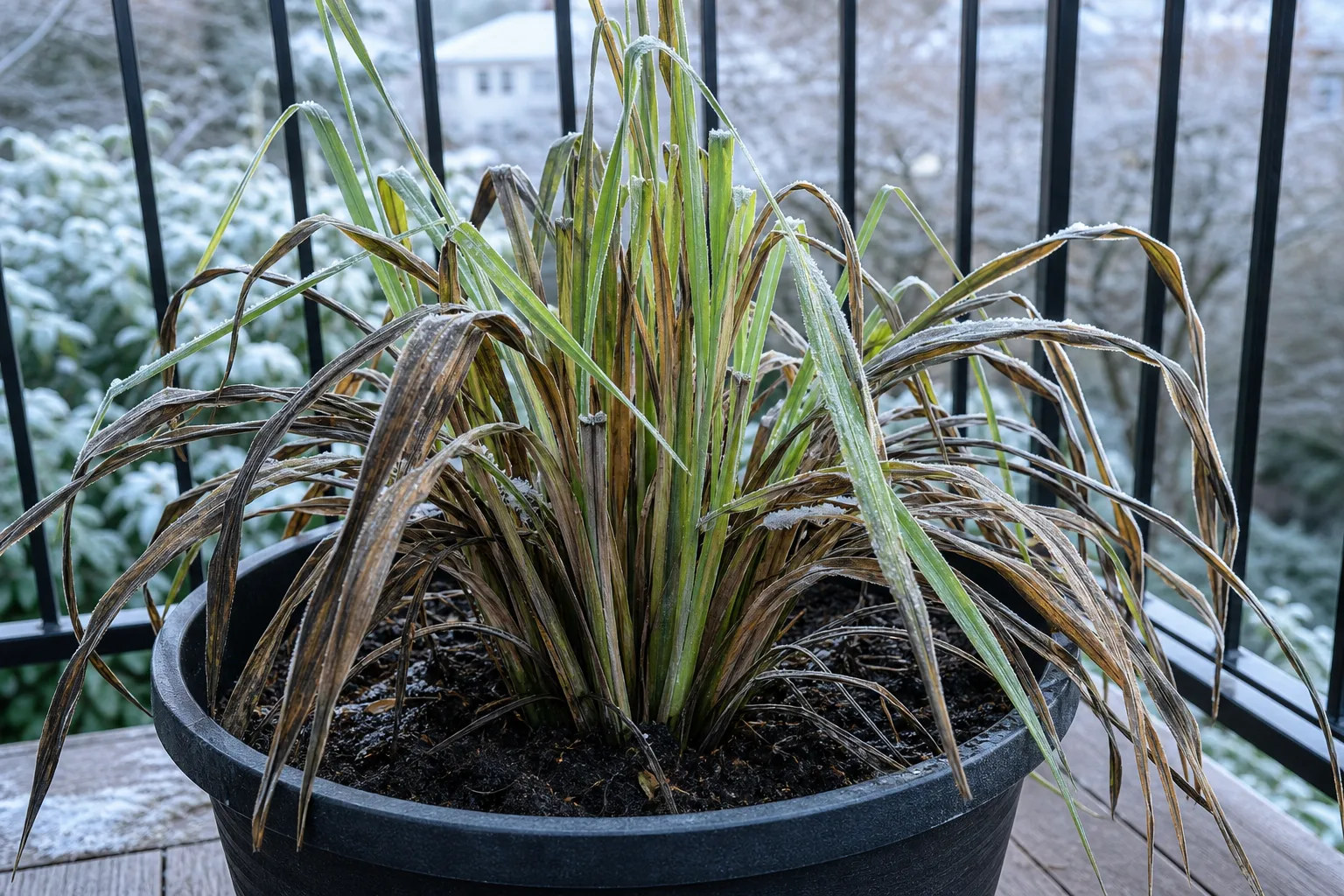
Cold Damage on Lemongrass: Causes, Checks & Fixes
This guide covers cold damage on Lemongrass. See also the general Cold Damage guide, watering, and light pages for this plant.
Cold Damage on Lemongrass: Causes, Checks & Fixes
Quick answer
You checked the balcony lemongrass the morning after an unexpected cold snap and found limp, water-soaked blades collapsed overnight-while the pot still feels heavy and the stalk bases may be firm. That pattern is cold damage on lemongrass (Cymbopogon citratus), a frost-tender tropical grass that cannot tolerate freezing air the way hardy ornamental grasses can.
First step: move surviving pots to the brightest indoor spot, trim collapsed mushy blades at the base, and protect the crown until warm weather returns. Do not harvest damaged tissue for cooking.
This page is the acute post-frost rescue guide-what to do tonight and through spring regrowth. For year-round frost limits, overwintering rhythm, and division strategy, see the lemongrass overview.
What cold damage looks like on lemongrass
Overnight frost collapse
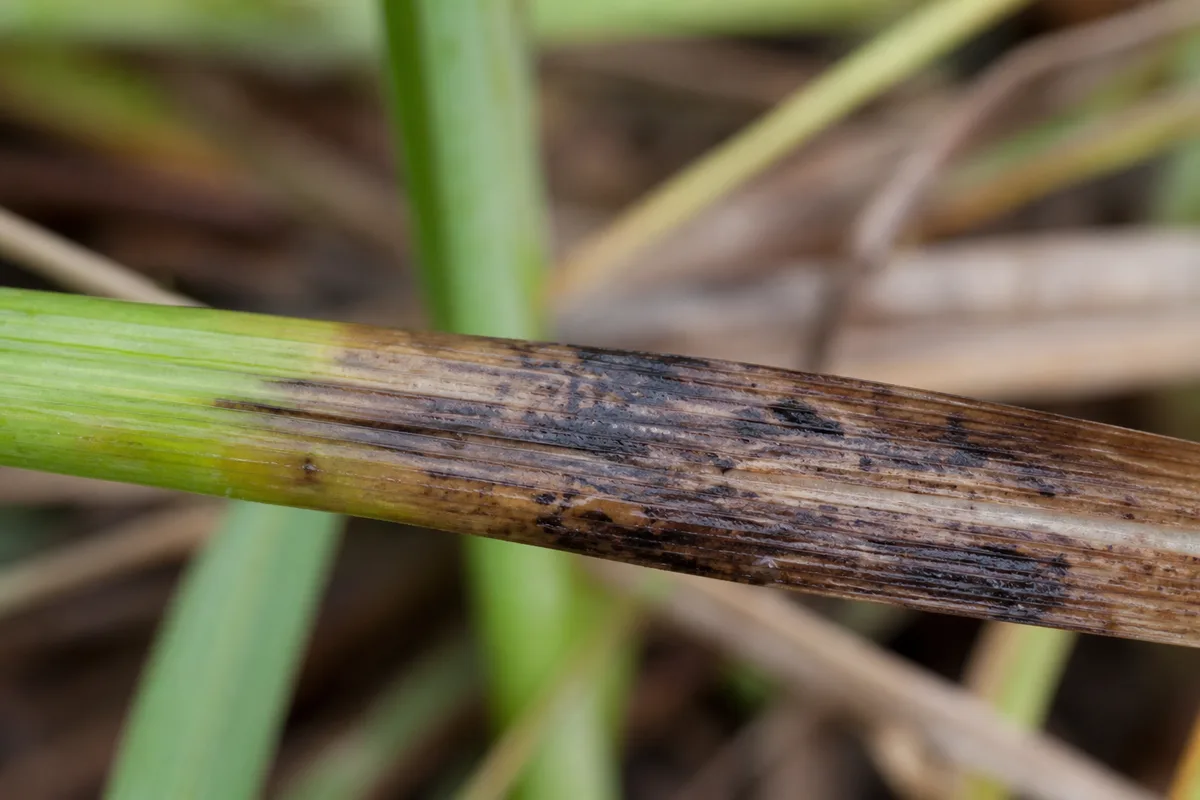
Cold Damage symptoms on Lemongrass - compare with healthy tissue on the same plant.
Water-soaked, limp blades turning brown or black within hours of a frost or hard freeze. Entire outer leaf sheaths collapse while inner crown shoots may stay green briefly. Unlike drought, the pot may still be moist and heavy-cold killed tissue, not dry roots. Ice crystals rupture long blade cells; damage is sudden and weather-linked.
Chronic chill stress (near-freezing nights)
Repeated nights in the 35–45°F (2–7°C) band without a hard freeze can produce a slower decline: pale blades, reduced vigor, and weakened crowns that fail weeks later when wet soil and dim indoor light compound the stress. The clump looks “off” for two to three weeks before obvious collapse-easy to misread as underwatering on Lemongrass. The RHS advises bringing lemon grass indoors before overnight temperatures fall below 7°C (45°F); growth on the lemongrass overview slows sharply below about 50°F (10°C) even before frost.
What still looks normal (low-light winter fade)
Prolonged cool indoor storage without enough light produces gradual pale, faded blades over weeks-that is not enough light on lemongrass, not acute frost injury. Frost damage is sudden and tied to outdoor temperature records; winter fade creeps in on a plant that never left the windowsill.
Why lemongrass is vulnerable to cold
Lemongrass is a clumping tropical grass from warm, humid Asia-not a cold-hardy lawn species. Missouri Botanical Garden lists winter hardiness to USDA Zones 10–11 where plants are evergreen, with roots sometimes surviving to Zone 8b in protected microclimates. Everywhere frost occurs, aboveground tissue dies when air hits freezing; sustained chill below about 40°F (4°C) can brown blade tips even without a full frost-well above the 45°F (7°C) move-indoors threshold the RHS recommends.
Container plants on patios and balconies cool faster than in-ground clumps and have no soil insulation around the root ball. Indoor drafts near single-pane windows in winter can chill blades without full frost-especially when pots sit on cold sills while heating cycles dry the air.
Confirm cold damage: step-by-step checks
Work through these in order before you repot, fertilize, or assume the clump is dead.
- Weather timeline (48 hours) - Pull overnight low records. Frost damage follows sub-freezing or several consecutive nights near 45°F outdoors. No cold event points to rot, drought, or low light instead.
- Crown firmness at soil line - Press stalk bases where blades meet soil. Firm pale-green tissue supports spring regrowth; soft, hollow, or blackening bases suggest crown failure.
- Soil moisture and rot smell - Cold-damaged blades are limp then dry-brown; root rot on lemongrass smells sour with mushy stalk bases on wet soil rescued indoors. Wet-cold rescue is a common failure mode-chilled roots in saturated mix rot faster than firm crowns in lightly moist soil.
- Blade tissue progression - Water-soaked → brown/black overnight = frost. Gradual uniform paleness indoors = light. Crispy tips on a light pot = drought.
- New shoot test after warming - After two weeks indoors in bright light with sparse water, firm crowns should show green tiller buds at the base when temperatures rise. No activity on a soft crown means restart from division or supermarket stalk propagation.
Cold damage vs. low-light fade vs. root rot vs. drought
| Cold damage | Low-light fade | Root rot | Drought | |
|---|---|---|---|---|
| Onset | Hours after frost or chill nights | Weeks indoors in dim light | Days–weeks on wet cool soil | Hours–days on dry soil |
| Blade look | Water-soaked, blackened, collapsed | Gradual pale, thin new shoots | Limp on wet soil; yellow bases | Crispy tips; limp on dry pot |
| Pot weight | Often heavy (cold ≠ dry) | Normal | Heavy, wet | Light |
| Smell | Neutral | Neutral | Sour, swampy | Neutral |
| Crown | Firm unless hard freeze | Firm | Soft, mushy | Firm |
| Weather link | Yes | No (indoor placement) | Often after indoor rescue | Heat/dry spell |
| First action | Move to bright light; trim mush | Increase light | Stop water; inspect roots | Deep soak |
USDA zones: outdoor survival vs. indoor rescue
Use this table for prevention next fall-not as a guarantee after damage has already happened. Microclimate, mulch depth, and container vs. in-ground placement all shift outcomes.
| Zone range | Typical outdoor fate | Fall action before chill |
|---|---|---|
| 4–8 | Aboveground tissue dies with frost; roots not reliably perennial outdoors | Bring potted lemongrass indoors when temperatures cool in fall-before nights near 45–50°F. USU Extension recommends saving 6-inch bulbous sections with roots before first fall frost for indoor starts. |
| 9 | Foliage dies back with frost; roots may survive mild winters with heavy mulch in sheltered beds-not on exposed balconies | Mulch in-ground crowns if you accept die-back regrowth; still move containers indoors. Track forecast two weeks before average first frost. |
| 10–11 | Evergreen outdoors in frost-free climates | Harvest and divide as needed; frost is rare but watch cold snaps in microclimates. |
Move-indoors trigger: Plan on 45°F (7°C) overnight lows as the practical cutoff (RHS winter protection guidance), not the first 32°F frost. Blade tip browning can begin near 40°F (4°C) on exposed pots; sustained chill below 50°F (10°C) stalls growth per the overview.
The first fix to try
Move surviving pots to the brightest indoor spot and trim collapsed mushy blades at the base. Do not harvest damaged tissue for cooking. Hold fertilizer until new green shoots appear in spring warmth.
If the crown is firm, keep soil lightly moist-not saturated-in bright overwintering conditions. Reduce watering significantly during winter dormancy indoors after rescue to avoid compounding cold stress with wet roots. Do not place a frost-shocked clump directly against a hot radiator-rapid heat on chilled tissue adds stress; bright ambient room temperature is enough.
Pet note: Lemongrass is toxic to cats and dogs per the ASPCA. Trimming collapsed blades and moving pots indoors increases pet access-keep rescued clumps out of reach of chewers.
Step-by-step recovery
- Move containers indoors before additional cold nights-bright window or grow light, not a cold garage unless temperatures stay above about 45°F.
- Trim blackened or mushy outer blades at soil level with clean scissors; sterilize blades between cuts if any rot smell is present.
- Place in the brightest available window or under grow lights 12–14 hours daily.
- Water sparingly while growth is dormant-let the top 3–4 cm dry between drinks. If soil stayed saturated outdoors, tip the pot on its side to drain and hold water longer.
- Watch the crown weekly for firm new green shoots when temperatures rise-see timeline below.
- Divide and repot crowded survivors in spring if regrowth is uneven, per the propagation guide.
Recovery timeline: what improvement looks like
Mild tip frost or outer-blade kill - New blades often emerge from a firm crown within 2–4 weeks once indoor warmth and bright light return. Old blackened tissue will not re-green; judge by fresh tillers at the base.
Hard crown damage - Stalk bases that stay soft after two weeks indoors rarely recover. Divide any firm peripheral shoots or restart from water-rooted supermarket stalks rather than waiting on a collapsed center.
Documented pattern (container, Zone 7 balcony): Overnight low 38°F (3°C) with wet soil after a missed fall move → outer sheaths water-soaked by morning, crown firm on squeeze → trimmed black blades, bright kitchen window, watered only when top 3 cm dried → first green tiller visible at week 3 indoors at about 62°F (17°C). Crispy frost-killed tips on those outer blades never recovered; new shoots carried the clump.
Mistakes to avoid after a frost event
- Do not leave frost-hit clumps outdoors through additional freezes.
- Do not water heavily on cold dormant crowns in dim light-escalate to root rot protocol if soil sours.
- Do not fertilize until active warm-season growth resumes.
- Do not assume the whole clump is dead before checking firm tissue at the crown.
- Do not cook with frost-damaged blades-cell rupture and rot risk make them unsuitable for the kitchen.
- Do not blast chilled plants with radiator heat or cold window contact on the same night.
Prevent cold damage next fall
Bring potted lemongrass indoors before frost each fall-track local frost dates and move balcony pots when nights approach 45–50°F, not after blade collapse. Indoors, avoid cold window contact and heating vents that desiccate blades while roots stay cold.
Harvest-and-divide workflow before first frost: USU Extension recommends harvesting or saving 6-inch sections of bulbous shoot base with attached roots just before the first fall frost-freeze stalks for cooking or pot divisions for bright-window overwintering. That gives you backup starts if an outdoor clump dies back completely.
In Zone 9 in-ground plantings, a 3-inch mulch layer around crowns may protect roots through mild winters-but foliage still dies with frost, and container pots on patios need indoor rescue regardless.
When to worry - and when to restart from division
Escalate when:
- Stalk bases soften and blacken upward after a hard freeze-the crown may not recover. Inspect for wet-cold rot per root rot on lemongrass.
- The entire container froze solid outdoors-division from any firm peripheral shoot is faster than waiting on a collapsed center.
- No green tiller activity two weeks after warm indoor placement on a once-firm crown.
- Blackening spreads upward from the soil line while the mix stays wet and sour.
Not urgent: outer blade collapse only with a firm crown; tip browning after one night near 40°F with recovery shoots already forming; gradual indoor paleness without a frost event (not enough light instead).
If the center is lost but side shoots feel hard, divide immediately using the propagation guide rather than nursing blackened foliage.
Related lemongrass problems
Use this page when post-frost rescue and crown assessment are the main question. Related guides:
- Lemongrass overview - frost limits, overwintering, and seasonal rhythm
- Lemongrass propagation - division and supermarket-stalk restart after crown loss
- Root rot on lemongrass - wet-cold rescue on saturated soil
- Not enough light on lemongrass - winter fade vs. frost blackening
- Lemongrass watering - reduced winter dry-down indoors
- Faded leaves on lemongrass - gradual paleness without frost
When to use this page vs other Lemongrass guides
- Lemongrass watering guide - Use for routine moisture checks before assuming cold damage is the main issue.
- Lemongrass problems hub - Browse all 52 common issues on this species.
- Leaf Drop on Lemongrass - Different entry point when symptoms overlap with cold damage.
- Drooping Leaves on Lemongrass - Different entry point when symptoms overlap with cold damage.