White Spots on Lemongrass: Causes, Checks & Fixes
Quick answer
White spots on lemongrass usually mean powdery mildew, mealybug wax, hard-water residue, or sun bleach-not one disease. First step: wipe one spot with a damp finger; powder rubs off, mealybug wax feels cottony with insects underneath, and mineral crust flakes flat.
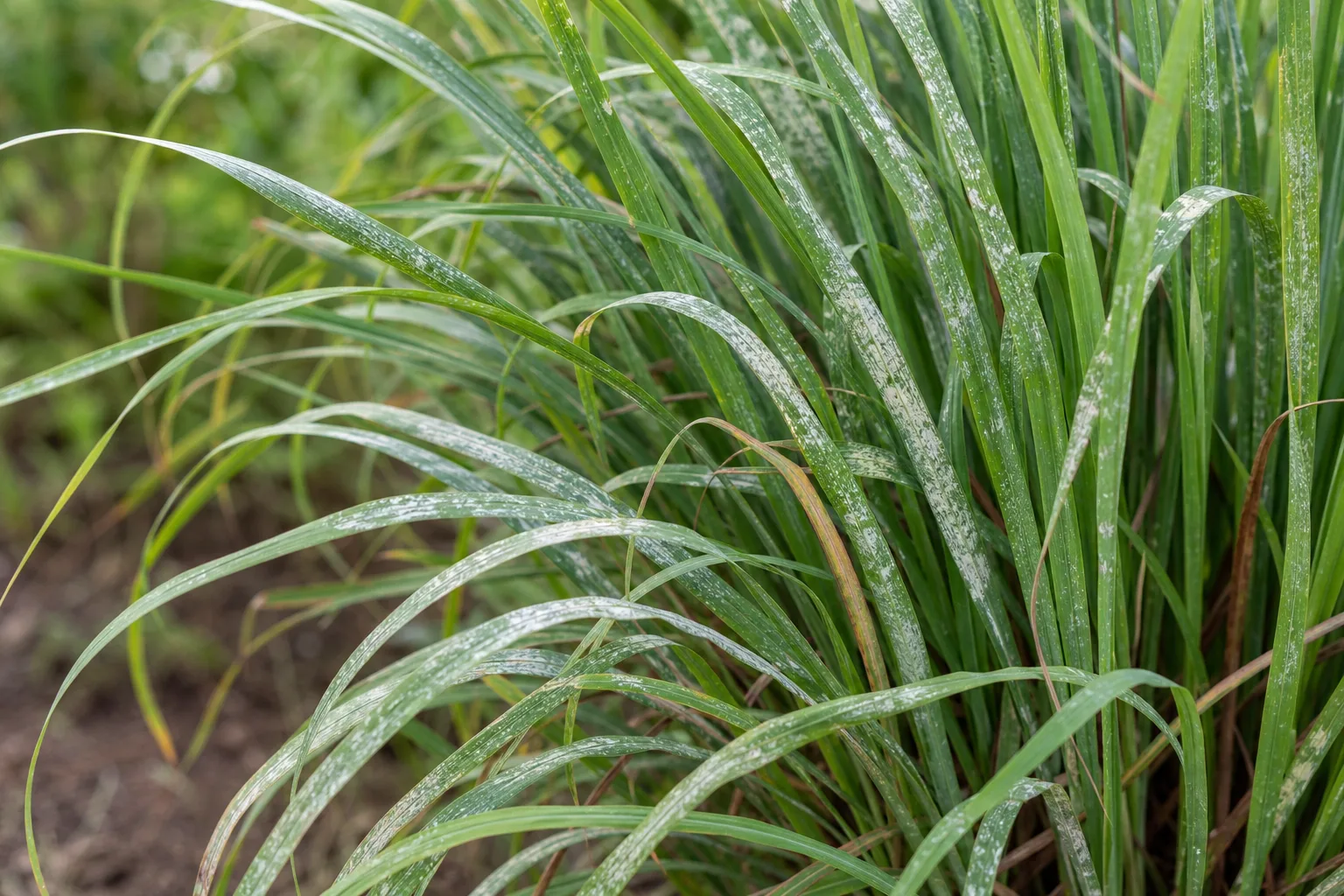
White Spots on Lemongrass: Causes, Checks & Fixes
This guide covers white spots on Lemongrass. See also the general White Spots guide, watering, and light pages for this plant.
White Spots on Lemongrass: Causes, Checks & Fixes
Quick answer
White spots on lemongrass blades fall into four common categories: powdery mildew, mealybug wax, hard-water mineral crust, and sun bleach on exposed tissue. They are not interchangeable, and treating all white spots the same way wastes time or damages harvest-quality blades.
First step: wipe one spotted blade with a damp finger or cloth. Powdery mildew leaves a fine white smear that rubs off easily. Mealybug wax feels cottony and often reveals slow-moving insects when you part the tuft. Mineral deposits wipe away as flat chalk without spreading. Sun bleach stays fixed in the tissue and does not rub off at all.
Because lemongrass is grown for cooking, confirm the cause before you harvest coated blades or spray anything you plan to eat soon.
Why Lemongrass gets white spots
Lemongrass (Cymbopogon citratus) grows as a dense, fast-spreading clump of narrow blades on stiff stalks. That growth habit creates conditions where several white-spot causes overlap.
Powdery mildew favors humid air around crowded foliage without free water on the leaf surface. Dense lemongrass clumps-especially in pots moved to sheltered porches or indoors for winter-trap humidity between overlapping blades. Cool nights and warm days accelerate spore spread on grass-family foliage the same way they do on turf and other ornamental grasses.
Mealybugs often appear when outdoor pots come inside for cool weather. The insects hide in leaf sheaths and at the crown where blades meet the stalk base, leaving cottony white wax that reads as random white spots from a distance. Lemongrass grown in weak light indoors is more vulnerable to sap-feeding pests than plants in Lemongrass light guide outdoors.
Hard-water residue builds when overhead watering or foliar sprays dry on blade surfaces. Lemongrass blades are long and arching, so splash and spray leave visible white specks after evaporation-especially with hard tap water or concentrated fertilizer foliar feeds.
Sun bleach or scorch shows as pale white-to-tan patches on the sun-facing side of blades after a sudden move from shade to intense afternoon sun. Lemongrass wants full sun, but newly hardened-off plants can still bleach when exposure changes abruptly in hot weather.
What white spots look like on Lemongrass
Powdery mildew:
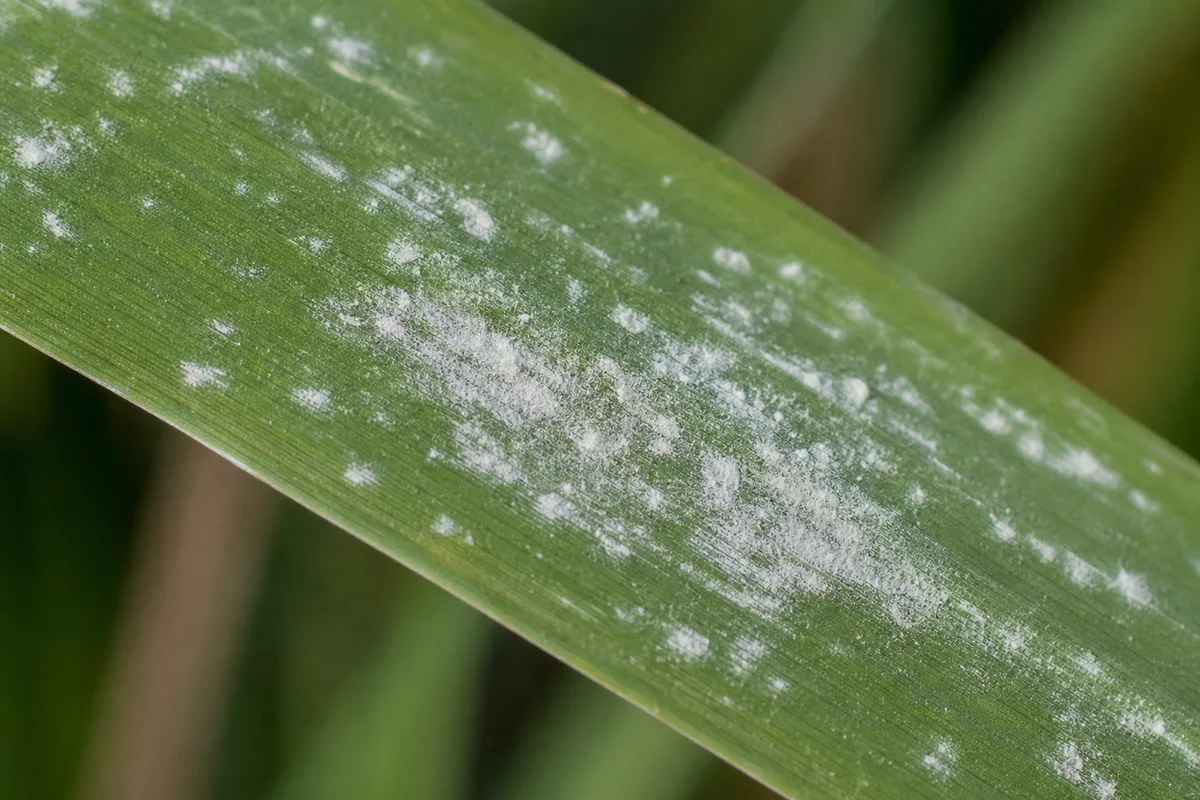
White Spots symptoms on Lemongrass - compare with healthy tissue on the same plant.
- Talc-like white or gray dust on upper blade surfaces
- Spots enlarge and merge into powdery patches
- May appear first on lower, older blades in a dense clump
- Rubs off as fine powder; no insects underneath
- Blades may curl or look dull before the white coating is obvious
Mealybug wax:
- Cottony white tufts at stalk bases, leaf sheaths, and crown
- Spots feel soft and fibrous, not dusty
- Pink, gray, or yellowish insects visible when wax is pulled apart
- Honeydew stickiness or sooty mold may appear on lower blades
- Often worse on plants recently moved indoors
Hard-water mineral deposits:
- Flat chalky white dots or streaks, often aligned with spray or splash direction
- Wipe away cleanly with a damp cloth
- Return on new blades only if overhead hard water continues
- No spread pattern across the clump like mildew
Sun bleach:
- Pale white or tan patches fixed in blade tissue
- Usually on the side facing the strongest sun
- Does not rub off; tissue feels papery or thin
- Follows a recent move to brighter exposure or reflected heat
Spider mite stippling (lookalike):
- Tiny yellow-white speckles across blades, not powdery patches
- Fine webbing in severe cases, especially on indoor plants in dry air
- Different texture from mildew dust or mealybug cotton
How to confirm the cause
Work through these checks in order:
- Wipe test - Rub one spot firmly with a damp finger. Powder smears; mineral crust flakes; mealybug wax pulls away in tufts; bleach and mite stippling stay in the tissue.
- Location pattern - Upper-surface dust that spreads blade to blade suggests mildew. Crown and sheath clusters suggest mealybugs. Spots aligned with watering direction suggest minerals.
- Crown inspection - Part the base of the clump and look into sheaths with a hand lens. Mealybugs cluster where blades wrap the stalk.
- Recent care history - Overhead watering, foliar feed, or a move indoors/outdoors narrows the list quickly.
- Spread speed - Mildew and mealybugs expand over days. Mineral spots appear after watering events and do not creep across unrelated blades.
- Underside check - Downy mildew and some rust diseases show fuzzy or colored growth on undersides with yellowing-not the dry top-surface powder of powdery mildew.
If the wipe test shows powder without insects and spots spread in humid stagnant air, treat for mildew. If cottony tufts with insects appear at the crown, treat for mealybugs. If spots wipe off and match your watering pattern, adjust water method before spraying fungicides or insecticides.
First fix for Lemongrass
Cut out the worst affected outer blades at the base and improve airflow around the remaining clump.
This single step removes a large share of mildew spores and mealybug harbor sites while opening the clump so blades dry faster. Use clean, sharp scissors and cut individual blades at soil level or stalk base-do not shave the whole crown unless most of the clump is coated.
Hold the trimmed material in a bag if mealybugs are present so insects do not drop onto neighboring pots. Do not compost heavily infested or mildew-coated clippings near outdoor lemongrass beds.
After trimming, step back and run the wipe test on any remaining spots before choosing a spray. Trimming alone often clears mild mineral dust once you switch to base watering. It also buys time to confirm whether you need pest or fungal treatment on what is left.
Step-by-step recovery
Once you have trimmed and confirmed the cause:
For powdery mildew:
- Space or divide overcrowded clumps so blades are not stacked tightly.
- Water at the base only; keep foliage dry between waterings.
- Apply horticultural oil or neem oil to remaining affected blades if spread continues after trimming-cover both sides lightly and follow label intervals.
- Repeat scouting every three to five days until new blades emerge clean.
For mealybugs:
- Dab visible insects and wax tufts with a cotton swab dipped in 70% isopropyl alcohol.
- Follow with insecticidal soap sprayed into sheaths and crown crevices where swabs cannot reach.
- Isolate indoor pots until live insects are gone for at least one week.
- Re-check the crown after seven to ten days; mealybugs hide in new sheath folds.
For hard-water deposits:
- Wipe blades with a damp cloth.
- Switch to base watering or use filtered/rainwater if crust returns on new growth.
- Flush container soil periodically if fertilizer salts also crust the pot rim.
For sun bleach:
- Move the pot gradually into full sun over several days rather than one jump.
- Keep soil evenly moist while the clump hardens off- drought-stressed blades bleach faster.
- Cut badly bleached blades at harvest height; new tillers should emerge normally colored.
Do not harvest blades for cooking until sprays have dried and you have rinsed tissue thoroughly if pesticides or soaps were used. Lemongrass regrows quickly from the crown once conditions improve.
Recovery timeline
Trimming plus airflow often shows cleaner new blades within one to two weeks for mild mildew or light mealybug pressure. A full soap or oil course may take two to three weeks with label-interval repeats until new tillers stay spot-free.
Mineral spots clear immediately when wiped but return on the next overhead hard-water event if you do not change method. Sun-bleached tissue does not revert; judge recovery by normal green new blades, not by old pale patches.
Signs you are winning: new tillers emerge without white dust, wipe tests stay clean on young blades, and crown inspection finds no live mealybugs. Signs the problem is worsening: powder coats most new shoots within days, insects reappear in sheaths after treatment, or blades curl and brown while spots spread.
Lookalike symptoms to rule out
Downy mildew produces grayish fuzzy growth on undersides with yellow patches-not dry talc on upper blade surfaces. It follows prolonged wet foliage and poor airflow.
Rust fungi on grasses show orange-brown pustules, not white powder. Lemongrass can develop rust in humid conditions; scrape test shows colored spores, not white dust.
Spider mites cause fine stippling and webbing rather than white powder patches. Tap a blade over white paper-mites look like moving dust specks.
Normal leaf aging turns outer blades tan or straw-colored at tips before the clump replaces them. That uniform senescence differs from spotty white disease or pest wax.
Foliar fertilizer burn can leave pale dried patches where concentrated spray dried on hot blades. Pattern matches spray timing, not infectious spread.
Mistakes to avoid
Do not harvest white-coated blades for tea or cooking without identifying the cause and rinsing thoroughly. Mildew, mealybugs, and spray residues are not ingredients you want in the kitchen.
Do not overhead mist dense lemongrass clumps in humid weather-that keeps blades wet overnight and favors mildew.
Do not treat every white spot with fungicide before the wipe test. Mineral crust and sun bleach need cultural fixes, not chemicals.
Do not ignore the crown when you see distant white specks. Mealybugs often start at the base while upper blades look only lightly dusted.
Do not compost infested trimmings next to garden lemongrass or other grasses.
Do not move indoor lemongrass straight into harsh afternoon sun to “fix” pale growth-gradual hardening prevents bleach patches.
How to prevent white spots next time
Harvest and thin outer blades regularly during active growth. Lemongrass is meant to be cut back; thinning reduces the humid microclimate inside a dense clump.
Water at soil level with consistent moisture rather than spraying blades. Base watering matches how lemongrass prefers steady root moisture without leaving mineral film on foliage.
Give outdoor plants full sun and good spacing. Indoor overwintering pots need the brightest window you have and regular crown checks for mealybugs before populations coat new spring growth.
Use filtered or rainwater if hard tap water leaves recurring crust. If you foliar-feed, dilute correctly and rinse blades if residue dries white.
When moving pots indoors for cool weather, quarantine them for a week and inspect sheaths before placing them near other herbs.
Divide root-bound clumps every one to two years so airflow stays reasonable as the plant fills its pot.
When to worry
Treat as urgent before kitchen use if mealybugs or mildew coat most new shoots-you need control and rinsing before those blades enter food. Fast-spreading white powder across an entire indoor clump in humid stagnant air also warrants immediate trimming, airflow correction, and targeted treatment.
Sun bleach and mineral spots are cosmetic on otherwise healthy clumps-not emergencies unless they cover every new tiller and growth has stalled.
Replace or heavily divide clumps that stay coated after two full treatment cycles while conditions remain humid and crowded. Lemongrass is fast to restart from division or fresh stalk rooting; nursing a persistently diseased clump often costs more effort than clean replacement.
Conclusion
White spots on lemongrass reward a simple diagnostic habit: wipe one blade, inspect the crown, and note how you water. Powdery mildew, mealybugs, mineral crust, and sun bleach each need a different fix, but all respond well when you trim affected blades, improve airflow, and match treatment to the confirmed cause. Judge success by clean new tillers from the crown-not by old spotted blades-and you will keep harvests usable without unnecessary sprays.
When to use this page vs other Lemongrass guides
- Lemongrass watering guide - Use for routine moisture checks before assuming white spots is the main issue.
- Lemongrass problems hub - Browse all 52 common issues on this species.
- Powdery Mildew on Lemongrass - Different entry point when symptoms overlap with white spots.
- Black Spots on Lemongrass - Different entry point when symptoms overlap with white spots.