Powdery Mildew on Lemongrass: Causes, Checks & Fixes
Quick answer
Powdery mildew on lemongrass shows as dry white dust on the upper blade surfaces of dense clumps in humid, stagnant air. First step: cut affected blades at the base and thin the clump so sun and airflow can reach the crown.
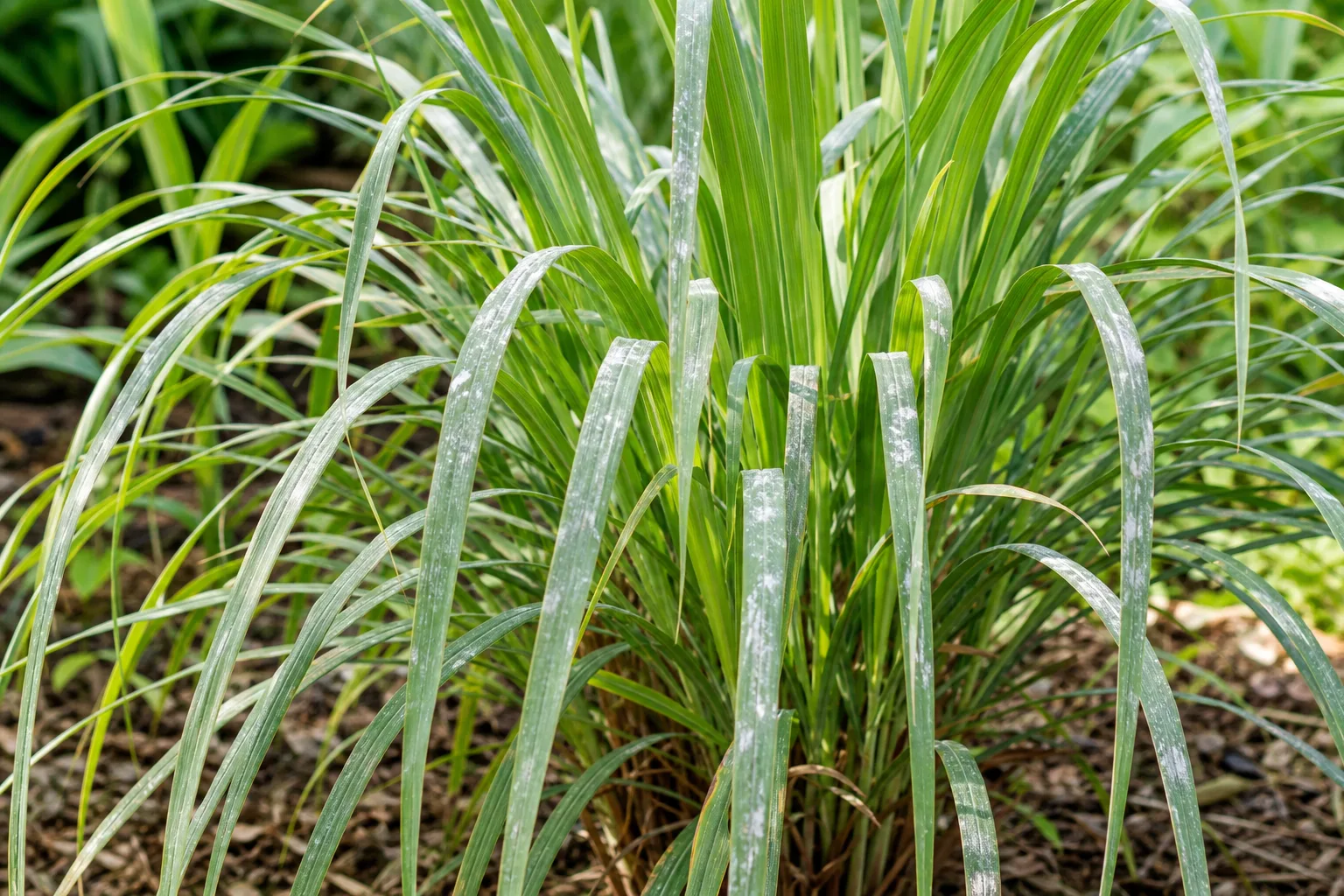
Powdery Mildew on Lemongrass: Causes, Checks & Fixes
This guide covers powdery mildew on Lemongrass. See also the general Powdery Mildew guide, watering, and light pages for this plant.
Powdery Mildew on Lemongrass: Causes, Checks & Fixes
Quick answer
Powdery mildew on lemongrass (Cymbopogon citratus) appears as dry white dust on the upper surfaces of narrow grass blades, most often on the outer leaves of a dense, fast-growing clump. It thrives where blades stay crowded and air stays still-exactly the microclimate a harvest clump creates when you keep adding height without opening the center.
First step: cut affected blades at the base and thin the clump. Remove coated outer foliage, harvest enough stalks to let light into the crown, and shift to base watering so blades dry the same day. Reserve fungicide sprays for outdoor clumps where powder keeps spreading after cultural fixes-and only use products labeled for edible herbs with harvest restrictions you can follow.
What powdery mildew looks like on Lemongrass
Lemongrass grows as stiff, blade-like leaves on upright tillers from a shared crown. Powdery mildew does not start deep inside healthy tissue; it shows on surfaces you can see without unrolling the clump.
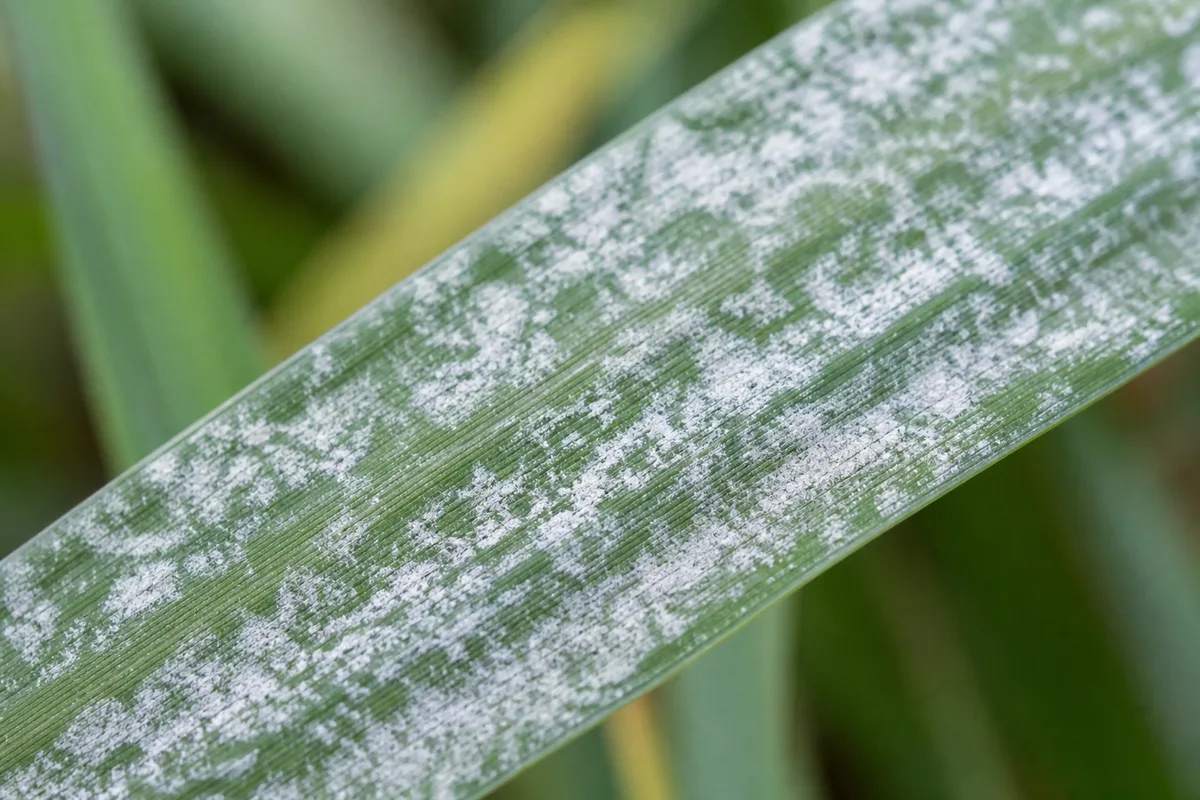
Powdery Mildew symptoms on Lemongrass - compare with healthy tissue on the same plant.
Typical signs on lemongrass:
- White to gray talc-like patches on the upper side of blades, often on outer leaves first
- Powder that rubs off when you wipe a finger across the coating
- Patches that merge across several blades in a crowded section of the clump
- Yellowing or browning on heavily coated blades as the fungus drains leaf vigor
- Distorted or stunted new blades when infection hits tender tillers during active summer growth
The disease rarely looks like a uniform plant-wide wilt. You usually see it on one side of a dense pot or on lower outer blades that stay shaded by newer harvest growth above.
Powdery mildew fungi grow on the leaf surface-they do not need free water on the blade to infect. That is why lemongrass can show white dust even when you water carefully at the soil line, as long as nights are humid and the clump traps stale air around foliage.
Why Lemongrass gets powdery mildew
Lemongrass wants Lemongrass light guide, warm temperatures, and steady moisture at the roots-not wet blades and stagnant air around a packed crown. When culture drifts from that pattern, powdery mildew finds an opening.
Dense clumps from fast summer growth. Lemongrass fills pots quickly and produces tillers all season when heat, water, and nitrogen align. Growers often harvest outer stalks but leave the center thick. That living wall holds humidity after evening watering or dew and blocks sun from drying inner blades.
Overhead watering and leaf misting. Lemongrass tolerates high humidity, but repeatedly wetting foliage-especially late in the day-raises relative humidity in the canopy without giving blades time to dry before night. Extension guidance for lemongrass recommends flood or hand watering at soil level rather than sprinklers that soak leaves.
Indoor overwinter placement. Pots moved inside for frost protection often sit on sunny windowsills with foliage pressed against glass. Warm daytime leaf temperatures plus cool glass and limited airflow mimic the cool-night, humid conditions powdery mildew favors.
Partial shade or sheltered patios. Lemongrass grown in less than full sun dries more slowly and pushes softer, more succulent blade tissue-exactly the tissue powdery mildews prefer. A pot tucked under an eave or between taller plants gets less wind and more humidity pooling at the crown.
Late-season nitrogen without thinning. Heavy feeding after midsummer can push tender new blades into an already crowded clump. Succulent new growth is more susceptible to surface fungal infection when airflow is poor.
Lemongrass is generally pest-free when grown correctly, but crowding plus humidity turns a vigorous culinary clump into a mildew incubator faster than a single missed watering would.
How to confirm the cause
Work through these checks before you spray anything edible:
- Surface location - Powdery mildew sits on the upper blade surface as dry powder. Gray-purple fuzzy growth on the underside, often with yellow patches on top, suggests downy mildew-a different pathogen and management path.
- Wipe test - Powdery mildew rubs off; rust pustules and downy fuzz do not behave like talc.
- Clump density - Can you see the crown, or are outer blades layered three deep? Mildew clusters where air cannot move.
- Watering habit - Overhead sprays, evening hose-downs, or frequent misting on leaves point toward surface disease pressure even if roots are fine.
- Light and placement - Full sun all day, or partial shade / indoor glass contact? Weak drying conditions support mildew.
- Rust cross-check - Lemongrass rust shows yellow spots, brown streaks, and dark pustules on leaf undersides, not a uniform white dust coat on tops. Rust is common on lemongrass in humid regions and needs different treatment timing.
- Salt or hard-water crust - White mineral deposits on pot rims or blade tips feel gritty and do not spread leaf to leaf like fungal powder.
If topside powder rubs off, clump density is high, and no underside fuzz is present, powdery mildew is the working diagnosis. Treat downy mildew and rust as separate problems if their patterns appear instead.
First fix for Lemongrass
Cut every visibly coated blade at the base and thin the clump until light reaches the crown.
Use clean, sharp scissors or a knife. Pull or slice affected outer blades at soil level-not a mid-blade trim that leaves dead tips hanging. Harvest additional healthy outer stalks if needed to open the center; lemongrass regrows quickly from the base when heat and sun return.
After removal:
- Water at soil level and avoid wetting remaining foliage.
- Move the pot to the sunniest, breeziest spot you have-full direct sun if possible.
- Space pots so neighboring plants are not touching blades.
Do not harvest trimmed-off coated blades for tea or cooking. Do not apply fungicide on day one if removal and airflow might stop spread-many mild cases clear once the clump opens and blades dry.
Step-by-step recovery
If powder persists after the initial thin-out:
- Repeat harvest thinning weekly until new tillers emerge clean. Lemongrass replaces outer growth fast in warm weather when roots stay moist and fed.
- Rinse remaining blades once with plain water in early morning on a sunny day if soot or dust mixed with the powder-let foliage dry completely before evening.
- Apply horticultural oil or sulfur on outdoor clumps only if white patches spread to new blades within a week of thinning. Choose products labeled for powdery mildew on herbs or edible plants and follow harvest withholding intervals strictly.
- Skip oil and sulfur during peak heat above about 90°F or on drought-stressed plants-labels warn of leaf burn under those conditions.
- Hold extra nitrogen until new growth looks clean; late flush of soft tissue into a still-damp clump can re-trigger infection.
- Bag and trash heavily coated blade clippings. Do not compost infected foliage indoors where spores can survive mild pile temperatures.
Indoor clumps that reinfect after thinning usually need more airflow and less leaf wetting, not stronger chemicals in a kitchen-adjacent room.
Recovery timeline
Expect clean new tillers in two to three weeks during active summer growth when sun, water, and thinning align. Old powdery blades will not turn green again-judge progress by fresh base shoots, not by bleaching coated leaves.
Outdoor clumps in full warm sun often outgrow mild infections faster than indoor overwinter pots under short-day light.
Signs recovery is working:
- New blades open without white dust
- Spread stops at the clump edge you opened
- Crown feels firm; roots stay white when you spot-check moisture at depth
Signs you need escalation:
- White coating reaches most of the clump within days despite thinning
- New tillers emerge already dusted
- Blades yellow and collapse while humidity stays high indoors
Lookalike symptoms to rule out
Downy mildew - Yellow or brown patches on upper blades with gray, purple, or fuzzy white growth on undersides. Downy mildews favor wet foliage and are not the same dry surface powder you can wipe off the top.
Lemongrass rust (Puccinia species) - Yellow spots, brown streaks along veins, and dark brown pustules on undersides. Rust is a documented lemongrass problem in humid climates; it does not present as uniform talc on upper surfaces alone.
Aphid or whitefly residue - Sticky shiny patches with visible insects on blade bases or undersides, sometimes with ants. Powdery mildew is dry and talc-like, not tacky.
Mineral or fertilizer splash - Static white crust on tips or pot edges without spreading patterns across living blade surfaces.
Normal leaf age - Older outer blades brown and dry at tips from age or underwatering on Lemongrass; they do not acquire a spreading white fungal mat.
Mistakes to avoid
Do not overhead mist dense lemongrass clumps hoping to raise humidity-the plant already prefers moist air, and wet blades overnight invite surface disease.
Do not harvest coated blades for soup or tea without cleaning the plant and confirming any spray label allows kitchen use.
Do not confuse powdery and downy mildew treatments; fungicides effective on one group may miss the other.
Do not apply sulfur or horticultural oil during the hottest midday window or within two weeks of the other product unless the label allows it-burn risk is real on narrow grass blades.
Do not leave infected clippings on soil around the crown; spores overwinter on debris and reinfect spring tillers.
Do not keep an overcrowded indoor clump next to a humidifier or kitchen steam source without a fan-stagnant humid air is the main indoor trigger.
Lemongrass care cross-check
Powdery mildew is usually a placement and density problem on an otherwise tough herb. Before you treat repeatedly, confirm basics:
- Light: Six or more hours of direct sun daily during the growing season. Indoor pots need the brightest window or supplemental light after thinning.
- Water: Moist roots, dry blades-water when the top few centimeters of mix dry, but deliver water to soil, not over foliage.
- Spacing: Divide or repot when the clump bursts the pot rim; lemongrass divisions perform best with room between plants.
- Harvest rhythm: Regular outer-stalk harvest doubles as preventive thinning. Letting a culinary clump grow untouched all season builds mildew-friendly density.
If light is weak, soil stays soggy, or the pot is root-bound with no airflow at the center, fix those conditions alongside blade removal or mildew will return on the next flush of growth.
How to prevent powdery mildew next time
Harvest-thin on schedule. Treat outer stalk removal as disease prevention, not only kitchen supply. Open the clump center every few weeks during peak summer growth.
Water at the base. Use flood trays, soil-level watering cans, or drip at the crown-not overhead sprinklers on foliage.
Give full sun and wind. Outdoor lemongrass belongs in open sun with pots spaced apart. Indoors, use a fan on low near overwinter pots and keep blades off glass.
Divide vigorous clumps. Split overcrowded plants in spring so each section has airflow on all sides.
Scout early. White pinhead spots are easier to stop with one harvest pass than a full-clump outbreak before a big cooking harvest.
Choose resistant timing for sprays. If you spray preventively on valuable outdoor clumps, start at first spot appearance and rotate labeled products-not after the entire pot is coated.
When to worry
Treat as urgent when most outer blades are coated just before a planned harvest, when new tillers open already infected after you thinned once, or when an indoor clump spreads wall-to-wall in stagnant air. Culinary use raises the stakes-you need clean tissue and label-safe intervals, not repeated unlabeled kitchen sprays.
Replace severely weakened clumps that fail to push clean base growth after two thinning cycles in warm sun. Lemongrass is easy to restart from division or grocery stalks; nursing a dense, chronically infected pot indoors often costs more effort than a fresh division in spring.
A few white spots on outer blades of an otherwise vigorous outdoor clump in summer is moderate, not emergency-confirm density and drying first.
Conclusion
Powdery mildew on lemongrass is a surface fungus on crowded, slow-drying blades-not a mystery wilt or root failure. Wipe-test the white dust on upper surfaces, cut coated blades at the base, open the clump to sun and airflow, and water at soil level. Reserve labeled oil or sulfur for outdoor spread that culture alone does not stop, and always respect harvest intervals on an herb you plan to cook with. That path matches how lemongrass actually grows: fast, dense, and far healthier when regularly thinned than when left as a humid wall of foliage.
When to use this page vs other Lemongrass guides
- Lemongrass watering guide - Use for routine moisture checks before assuming powdery mildew is the main issue.
- Lemongrass problems hub - Browse all 52 common issues on this species.
- White Spots on Lemongrass - Different entry point when symptoms overlap with powdery mildew.
- Leaf Drop on Lemongrass - Different entry point when symptoms overlap with powdery mildew.