Damping Off on Lemongrass: Causes, Checks & Fixes
Quick answer
Damping off on Lemongrass kills seedlings when cool wet soil lets fungi rot stems at the soil line. First step: Discard collapsed seedlings, sterilize trays, restart in sterile mix with warmth and less water.
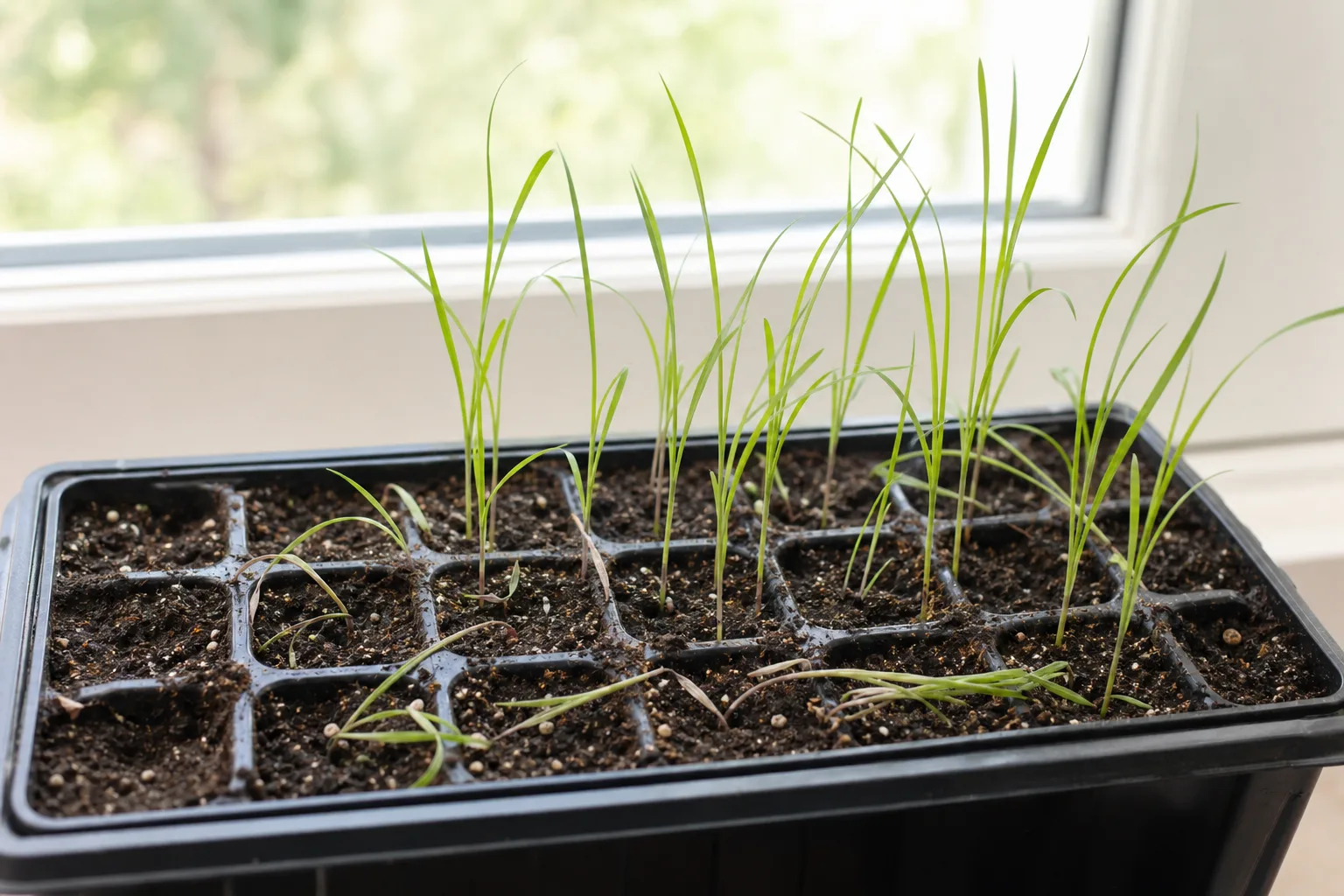
Damping Off on Lemongrass: Causes, Checks & Fixes
This guide covers damping off on Lemongrass. See also the general Damping Off guide, watering, and light pages for this plant.
Damping Off on Lemongrass: Causes, Checks & Fixes
Quick answer
Damping off on Lemongrass kills seedlings when cool wet soil lets fungi rot stems at the soil line. First step: discard collapsed seedlings, sterilize trays, restart in sterile mix with warmth and less water.
Damping off is caused by fungi that thrive in cool, wet conditions and most commonly affects young seedlings-not mature harvest clumps. Lemongrass is more often propagated from division or water-rooted stalks, but seed-started trays still face this risk indoors.
Why Lemongrass gets damping off
Overwatered seed-starting mix displaces oxygen and invites Pythium, Rhizoctonia, and Fusarium. Reused trays, garden soil, or non-sterile compost introduce spores. Cool windowsills slow growth while crowns stay wet from overhead misting. Dense sowing without airflow traps humidity around tender grass stems.
Lemongrass seeds germinate best with warmth and bright light-cool wet soil slows growth and increases infection opportunity. Bottom watering helps keep stems dry while roots wick moisture.
What damping off looks like on Lemongrass
Seedlings wilt suddenly or fall over at the soil line. Stems may appear pinched, thin, or discolored where they enter the mix. Cobweb-like or cotton-like fungal growth sometimes appears on the surface or stem base. Nearby seedlings in the same tray may collapse in succession.
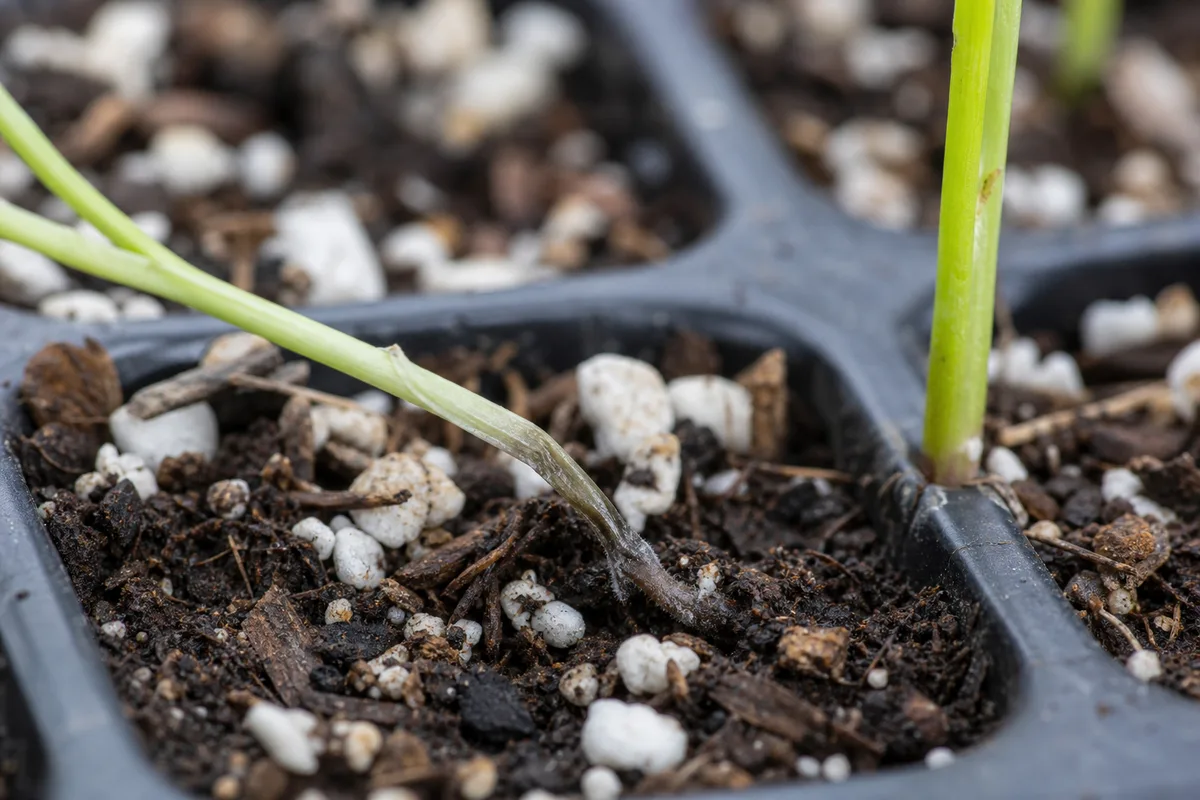
Damping Off symptoms on Lemongrass - compare with healthy tissue on the same plant.
Established lemongrass clumps with yellow stalks and mushy roots are more likely root rot on Lemongrass from overwatering on Lemongrass mature pots-not classic damping off.
How to confirm the cause
Confirm seedling age-damping off targets newly germinated stems, not woody clumps. Check tray drainage, soil source, and temperature log. If only one seedling fell and others are firm with dry crowns, physical damage or underwatering on Lemongrass may explain it instead.
Mature container lemongrass with crown rot on wet cool indoor soil needs root inspection, not seedling tray protocols.
First fix for Lemongrass
Remove collapsed seedlings immediately and discard infected surface mix from that cell. Sterilize reused pots and trays in 10% bleach solution for 30 minutes. Restart remaining healthy seedlings in fresh sterile potting mix with bottom watering.
Provide 12–16 hours of bright light and warm soil near 70–75°F using a heat mat if needed. Keep mix moist but never soggy.
Step-by-step prevention restart
- Discard collapsed seedlings and lightly remove top wet layer from affected cells.
- Sanitize trays, domes, and tools before re-use.
- Fill trays with new commercial potting mix-not garden soil.
- Sow sparingly for airflow between grass seedlings.
- Water from below so crowns stay dry.
- Use warmth and strong light from germination onward.
- Wait for several true leaves before weak quarter-strength fertilizer.
Recovery timeline
Collapsed seedlings do not recover-plan on resowing or switching to stalk division for faster culinary clumps. Surviving tray mates stabilize within days once moisture, warmth, and light improve. Mature clumps propagated by division skip seedling damping-off entirely.
Causes to rule out
- Root rot on mature clumps - Large pots, woody stems, mushy roots-not thin seedling collars.
- Cutworm or physical knock-over - Clean cut or soil disturbance without fungal collar.
- Underwatering - Dry mix, shriveled but upright stems without collar rot.
- Low light etiolation - Leggy pale seedlings that still stand firm at the base.
What not to do
Do not reuse infected mix or trays without sterilizing. Do not overhead water cold seedlings at night. Do not over-fertilize before true leaves develop. Do not crowd an entire culinary harvest expectation into one unventilated dome.
How to prevent damping off
Use new potting mix and pots with good drainage. Warm soil, bright light, and sparse sowing beat fungicide for home growers. For kitchen clumps, propagate from division or supermarket stalks to avoid seed-stage vulnerability.
When to worry
Escalate when entire trays collapse within 48 hours-discard the flat and sterilize before re-sowing. Single seedling loss with firm neighbors is often physical, not epidemic. Mature clump crown rot is a different protocol-do not treat woody plants as seedling damping off.
Lemongrass care cross-check
Most kitchen lemongrass skips seed-stage risk entirely via stalk rooting-use that path when repeated seed trays fail from damping off.
Conclusion
Damping off on lemongrass is a seedling-tray problem of cool wet sterile-poor conditions-not mature clump disease. Confirm collar collapse on young stems, discard victims, sanitize, restart warm and dry at the crown, or propagate mature clumps instead for reliable harvest regrowth.
When to use this page vs other Lemongrass guides
- Lemongrass watering guide - Use for routine moisture checks before assuming damping off is the main issue.
- Lemongrass problems hub - Browse all 52 common issues on this species.