Flowers Turning Brown on Lemongrass: Causes, Checks & Fixes
Quick answer
Brown lemongrass flower spikes usually mean normal panicle aging after pollen shed, heat or wind drying, or gray mold in humid stagnant air-not a stalk harvest failure. First step: decide whether the spike is finishing its cycle or drying abnormally, then improve airflow and water rhythm in hot sun.
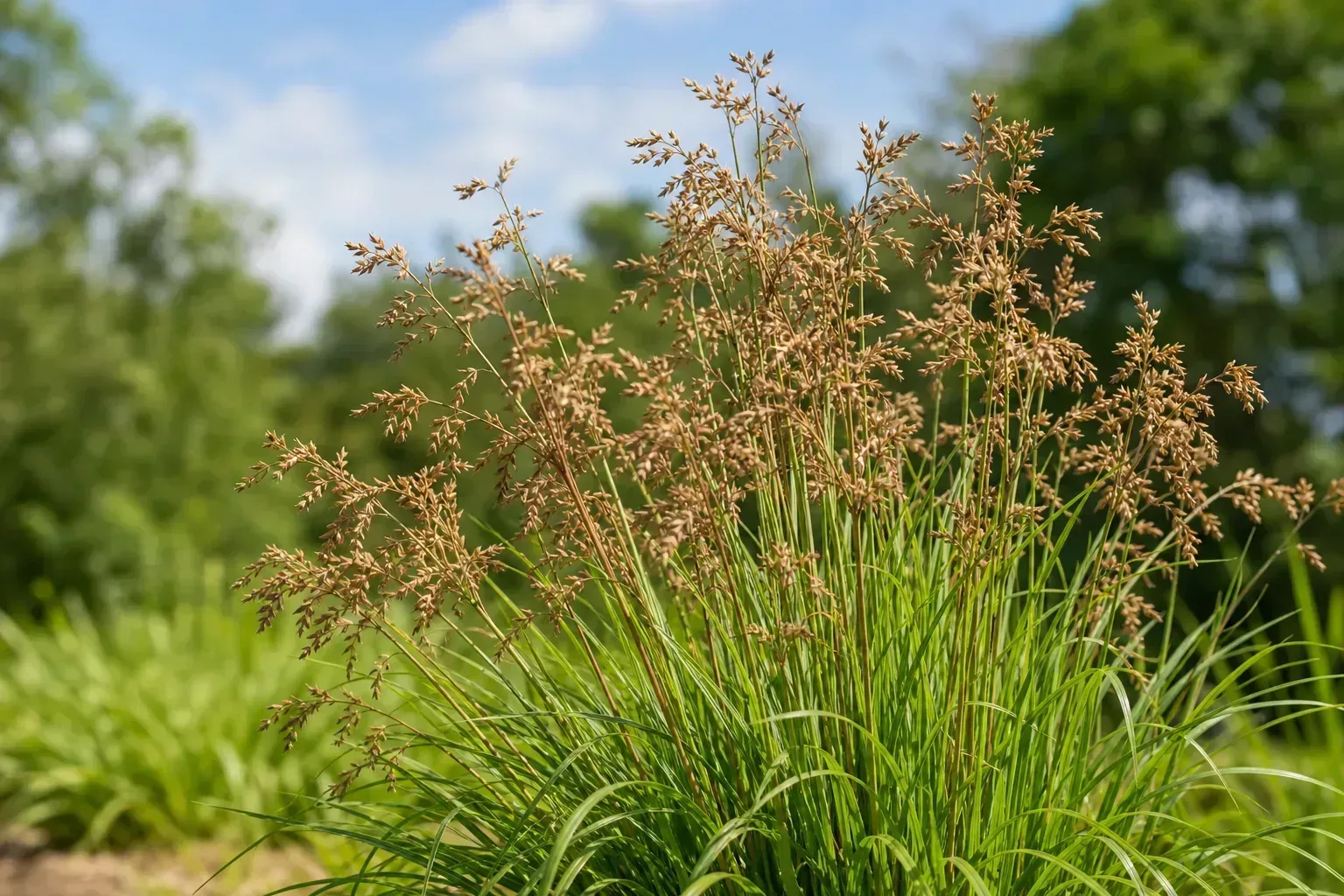
Flowers Turning Brown on Lemongrass: Causes, Checks & Fixes
This guide covers flowers turning brown on Lemongrass. See also the general Flowers Turning Brown guide, watering, and light pages for this plant.
Flowers Turning Brown on Lemongrass: Causes, Checks & Fixes
Quick answer
Brown lemongrass flower spikes usually mean normal panicle aging after pollen shed, heat or wind drying, or gray mold in humid stagnant air-not a stalk harvest failure. First step: decide whether the spike is finishing its cycle or drying abnormally, then improve airflow and water rhythm in hot sun.
This page is about open spikes turning tan-brown as they age or stress. If your question is whether modest brown spikelets on a first-time bloom are normal size, see small flowers on lemongrass instead-brown aging and small normal blooms are different concerns on the same grass inflorescence.
Most growers focus on Cymbopogon citratus stalks, not blooms. Outdoors in full sun, mature clumps may send up airy grass-family inflorescences in warm weather. Those spikes naturally turn tan to brown after pollen sheds-especially late in summer when growth slows.
What brown lemongrass flower spikes look like
Lemongrass flowers are small, airy panicles on tall stalks above the blade mass-not showy garden blooms. NParks describes numerous brownish florets on compound drooping panicles-individual spikelets are tiny by design.
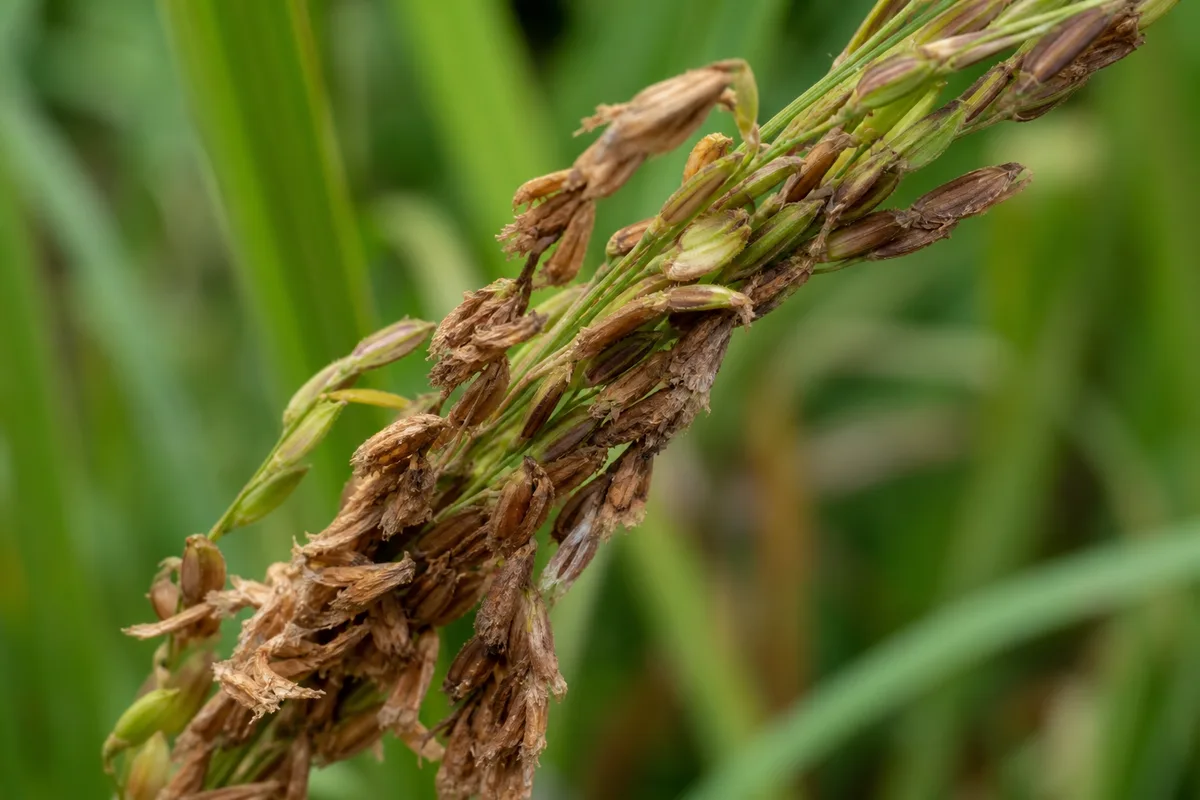
Flowers Turning Brown symptoms on Lemongrass - compare with healthy tissue on the same plant.
Normal aging shows on a spike that has been open about one to two weeks:
- Even browning from the tip downward along the panicle branches
- Dry, papery spikelets without slime or fuzzy coating
- Firm green stalk bases below the flower zone
- New vegetative blades still emerging from the clump centre
Heat desiccation browns spikes fast:
- Crisp brown overnight or within a day after a heat wave or missed watering
- Thin flower stalk dries before lower blades show major damage
- Often follows the same dry spell that triggers heat stress on lemongrass-midday wilt on blades, then spike crisping on the most exposed tissue
Humid fungal browning from Botrytis gray mold appears in sheltered, still corners:
- Patchy brown while parts of the spike stay green
- Soft brown tissue with fuzzy gray mold under moist conditions
- Blades and spikelets stay wet past midday after evening rain or overhead watering
- Common when crowded patio pots trap humidity inside arching leaves
Harvest confusion happens when growers cut near flowering stalks and assume blade browning is “flower” damage. True flower browning stays on the panicle stalk above the harvest zone-the bulbous pseudostem base you peel for cooking sits below that zone.
Why lemongrass flower spikes turn brown
Natural senescence is the most common cause outdoors. After flowering, grass spikes dry and brown as the plant shifts energy back to vegetative blades-normal for a frost-tender clumping grass in active summer growth. Missouri Botanical Garden notes flowers are insignificant and rarely produced-when they do appear, senescence follows quickly.
Heat and wind desiccation browns spikes fast when a clump in full sunlight and plenty of moisture misses a drink during a heat wave. Long grass blades transpire heavily; flower stalks dry first because they are thin and exposed above the blade mass. Container rims baking in afternoon sun accelerate surface drying-see the lemongrass watering guide for active-season rhythm.
Humid stagnant air keeps spike and blade surfaces wet overnight, encouraging gray mold on spent flowers. Botrytis attacks rapidly on old petals and grass spikelets when plant parts stay wet for extended periods in cool, overcast, or very humid weather. Lemongrass tolerates native-range humidity but still needs blades to dry between rains or irrigation.
Dense clump architecture on crowded patio pots traps humidity at spike level. Arching blades form a canopy that slows evaporation after evening watering-exactly where gray mold spores land on decaying spikelets.
How to confirm the cause
Work through this numbered checklist in order. Each step narrows the cause before you spray, repot, or change winter care.
- Spike age - Has the panicle been open more than a week? Even tip-down browning likely means normal finish, not failure.
- Browning pattern - Tip-down even tan-brown = aging. Overnight crisp brown = heat desiccation. Patchy soft brown with gray fuzz = gray mold.
- Weather in the last 72 hours - Did a heat spike, dry wind, or cool humid spell precede browning?
- Moisture at 3–4 cm depth - Push your finger in. Bone-dry mix during active growth supports desiccation; sour wet mix with soft bases points to crown trouble-see root rot on lemongrass.
- Blade wetness at midday - Are arching leaves still damp in a sheltered corner? Wet past noon raises gray mold odds.
- Stalk base firmness - Squeeze pseudostems at soil line. Firm green bases confirm spike-level cosmetic browning. Soft, mushy, or foul-smelling bases escalate beyond flowers.
- Whole-clump context - New tillers emerging from centre with firm bases? Healthy vegetative recovery is underway regardless of brown spikes.
If stalk bases soften, soil smells sour, or wilting appears with wet mix, shift diagnosis to root problems-not flowers.
Lookalike symptoms to rule out
| What you see | Likely cause | Key check |
|---|---|---|
| Even tip-down tan-brown on week-old spike | Normal panicle senescence | Firm bases; new blades emerging |
| Crisp brown spike after heat wave | Heat desiccation | Dry surface mix; midday blade wilt - heat stress |
| Patchy brown with gray fuzzy coating | Botrytis gray mold | Blades wet overnight; sheltered pot |
| Wilting stalks, sour soil, mushy bases | Crown or root rot | Wet mix; brown spreads into green stalks - root rot |
| Bleached crispy leaf tips on sun-facing blades | Blade sun scorch | Damage on foliage, not panicle alone |
| Brown outer blades after cold snap | Cold damage | Below ~50°F (10°C); outer leaves first |
| Tiny brown spikelets on first modest bloom | Normal small flowers | Spike size modest from the start - small flowers |
First fix for lemongrass
Decide whether the spike is finishing normally or drying from stress-then make one correction.
Normal aging
Snip spent spikes at the base with clean shears per the lemongrass pruning guide. No spray or fertilizer needed. Judge plant health by new blade growth, not by keeping old panicles green.
Heat desiccation
Water so pots do not dry out during active summer growth, then let the top 3–4 cm dry before the next drink. Mulch container rims to slow surface evaporation. If blades wilt midday, follow the heat-stress recovery path before treating spikes as disease.
Humid fungal browning
Improve spacing and airflow; water at the soil line in morning so blades dry by afternoon. Remove heavily moldy spikes and dispose of them-do not compost infected tissue on kitchen clumps. UMD Extension recommends deadheading spent and diseased blossoms as the primary gray mold management step. Do not overhead mist foliage in evening. Fungicide is rarely needed on culinary clumps when removal and airflow fix the moisture pattern-avoid spraying near harvest stalks you plan to cook with that week.
Make one correction first-do not stack fungicide, heavy feed, and Lemongrass repotting guide on the same day.
Step-by-step recovery if stress persists
After heat desiccation
- Soak dry mix once until a little drains from the pot; empty saucers within 30 minutes.
- Move container off radiating pavement if rim heat bakes the crown.
- Resume regular summer watering per the watering guide-surface dry, then soak.
- Cut crisp spent spikes at the base once bases stay firm.
- Watch for new tillers within one to two weeks in warm weather.
After gray mold on spent spikes
- Remove all moldy panicles and any wet brown spikelets touching healthy tissue.
- Thin crowded pots or space clumps so air moves through arching blades after rain.
- Switch to morning soil-line watering only until blades stay dry by afternoon.
- Do not harvest or cook with moldy panicle tissue or pesticide-treated spikes.
- Re-check in five to seven days; if gray mold returns on new spikes in dry weather, review whether blades still stay wet overnight.
When browning spreads into stalk bases
Stop flower-focused fixes. Probe moisture, smell the mix, and inspect crown firmness. Soft bases with sour soil need the root rot escalation path-salvage may require division of firm outer tillers only.
Recovery timeline
Spent spikes do not re-green. New vegetative shoots from the clump centre within one to two weeks confirm the plant is healthy. Flowering may return next warm season outdoors; indoor overwintering clumps rarely bloom.
After removing a heat-stressed spike, expect greener new blades within two to four weeks once watering and sun stabilize-not overnight stalk thickening.
What not to do
Do not treat every brown spike with fungicide-aging spikes are normal. Do not increase winter watering indoors because a summer spike browned months ago. Do not harvest browning flower stalks for cooking; flavor is in the bulbous stalk base, not the dry panicle.
Do not confuse this page with small flowers on lemongrass-modest spikelet size on a first bloom is normal biology, while this guide covers browning progression on open panicles.
Do not apply gray-mold fungicide on culinary clumps without reading the label for harvest intervals and keeping spray off stalk bases you plan to peel that week.
How to prevent brown spikes next season
Grow clumps in well-drained soil in full sun with steady active-season moisture. Accept ornamental browning as part of the grass flowering cycle, or remove spikes early if you prefer a tidy kitchen clump-early removal also redirects energy to stalks, as described on the small-flowers guide.
Space pots so air moves through arching blades after rain. Water in the morning at soil level. Scout weekly in late summer and snip emerging spikes on culinary plants before they invest energy in seed heads.
For complete culture context-sun, division, harvest rhythm-see the lemongrass overview.
When to worry
Flower browning alone on firm green stalk bases is cosmetic. Escalate when:
- Brown moves down from the panicle into previously green pseudostems
- Stalk bases soften, smell sour, or feel hollow while mix stays wet
- The whole clump wilts despite moist soil-crown rot may be advancing
- Gray mold keeps returning on new spikes after airflow and morning watering fixes
A robust outdoor clump with tip-down aging on one spike while new blades emerge needs no emergency rescue.
Related lemongrass problems
If brown spikes are not the full picture, these guides cover overlapping symptoms:
- Small flowers on lemongrass - normal modest spikelets and early spike removal for kitchen clumps
- Heat stress on lemongrass - midday wilt, crispy blades, and watering rhythm in hot sun
- Root rot on lemongrass - soft bases, sour soil, and crown failure when browning spreads below the flower zone
- Lemongrass watering - active-season moisture without waterlogging the crown
- Lemongrass pruning - spent spike removal and harvest-zone cuts
- Lemongrass overview - full culture, division, and seasonal care
Conclusion
Brown lemongrass flower spikes are usually normal panicle aging or environmental drying, not proof your culinary stalks failed. Confirm the pattern on the panicle, keep stalk bases firm, adjust water and airflow for heat or humidity, and cut spent spikes when they finish. Judge plant health by new blade growth from the crown-not by keeping old flower stalks green.
When to use this page vs other Lemongrass guides
- Lemongrass watering guide - Use for routine moisture checks before assuming flowers turning brown is the main issue.
- Lemongrass problems hub - Browse all 52 common issues on this species.