Transparent Leaves on Lemongrass: Causes, Checks & Fixes
Quick answer
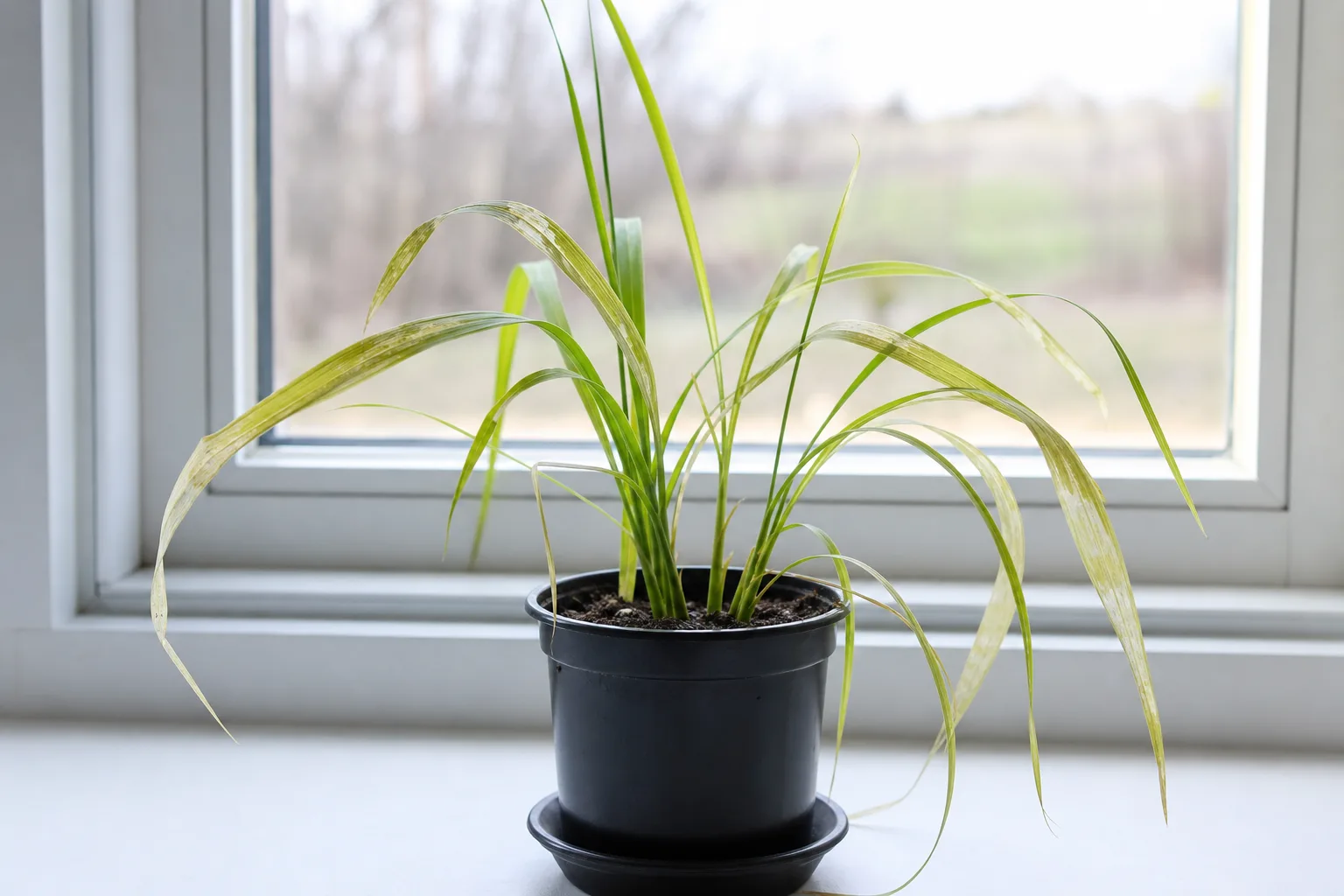
Transparent leaves on lemongrass look glassy or water-soaked when cold ruptures cells, roots stay wet in cool indoor air, or edema builds from overwatering on cloudy days. First step: check last night's temperature, stalk-base firmness, and whether soil is wet or dry before you water or spray.
Transparent Leaves on Lemongrass: Causes, Checks & Fixes
This guide covers transparent leaves on Lemongrass. See also the general Transparent Leaves guide, watering, and light pages for this plant.
Transparent Leaves on Lemongrass: Causes, Checks & Fixes
Quick answer
Transparent leaves on lemongrass look glassy, water-soaked, or see-through when plant cells rupture from cold, when roots absorb water faster than leaves release it, or when a soggy crown rots in cool indoor conditions. Healthy mature blades are opaque light green-not translucent.
First step: check last night’s temperature, stalk-base firmness at soil level, and whether the mix is wet or dry before you water, fertilize, or spray. This page is the multi-cause glassiness Lemongrass overview for container and patio clumps; acute frost rescue lives on cold damage, wet-soil deep-dives on root rot and overwatering, and mite stippling on spider mites. For overwintering rhythm and pet safety, see the lemongrass overview.
Why lemongrass blades go transparent
Lemongrass (Cymbopogon citratus) is a tropical clumping grass that expects warm nights, full sun, and steady moisture during active growth. It is not built for freezing air or for sitting in saturated mix while growth slows indoors.
Cold and frost injury
When tissue freezes, ice crystals puncture cell membranes. As blades thaw, they look dark green, water-soaked, and translucent before turning brown or black. Purdue Extension notes that frozen plant tissues often appear water-soaked and translucent upon thawing-the same pattern you see on tender herbs left outside too long. Lemongrass is frost-tender and commonly overwintered indoors in pots in cooler climates, which makes sudden cold exposure on a porch or against a window a frequent trigger.
In-ground vs. container: Garden clumps in zones 9–11 may survive brief dips with mulch and a south-facing wall, but blades still glass over after hard frost. Potted clumps freeze faster because roots chill from all sides-move containers indoors when temperatures cool rather than waiting for visible blade collapse. For wind-driven chill on exposed patio pots, see wind damage.
Edema during overwintering
Edema creates blister-like, water-soaked patches when roots take up water faster than leaves transpire it-common during cool, cloudy, humid stretches with moist soil. Edema develops when roots absorb water faster than leaves can transpire it, especially when cool nights suppress leaf water loss. Lemongrass overwintering in a bright but cool room, or sitting outdoors through several overcast days after heavy rain, can show glassy lower blade sections without any frost at all.
Crown rot from chronic wet soil
Water-soaked collapse at the base of stalks often follows summer watering carried into dim winter conditions. UF/IFAS recommends bringing potted lemongrass indoors when temperatures cool and adjusting care for reduced growth-yet many growers keep summer frequency on a dormant clump. Saturated mix in dim winter light weakens roots, and the lowest blades go limp and translucent before the whole clump collapses. Full unpot-and-trim protocols are on root rot.
Lookalikes to separate early
Young seedling blades are thin but firm and evenly green, not glassy. Sun scorch on lemongrass turns tips tan or brown and crispy rather than water-soaked-see sunburn if relevant. Spider mite damage causes stippling and dull foliage, not uniform transparency across whole blade sections.
What transparent leaves look like on lemongrass
Frost or cold-window injury
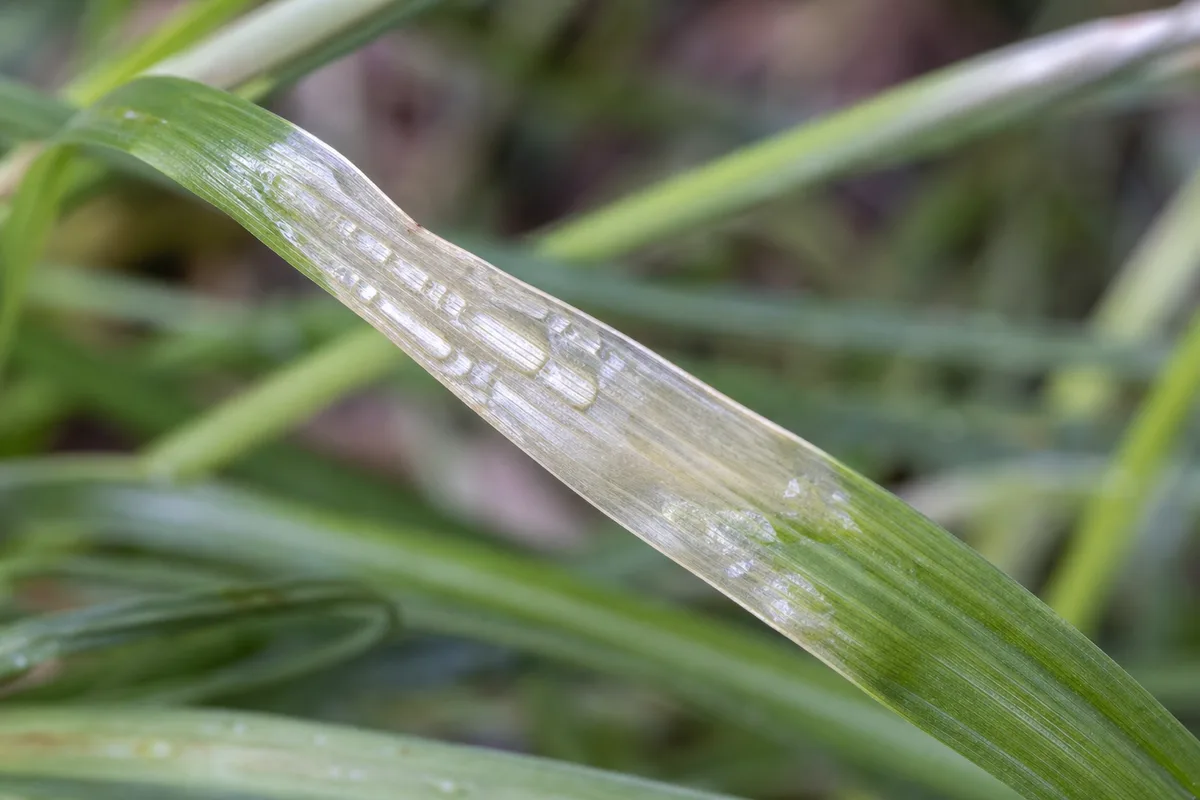
Transparent Leaves symptoms on Lemongrass - compare with healthy tissue on the same plant.
- Glassy, water-soaked patches appearing suddenly on outer or upper blades
- Blades go limp and lose their upright arch, often all at once after one cold night
- Tissue turns straw-colored or brown within a day or two
- Damage often worst on blades touching cold glass or exposed to wind
Edema on container clumps
- Small to patchy translucent, blister-like areas, often on lower blade sections
- Soil stays moist while air is cool and humid
- No frost in the forecast, but several cloudy days in a row
- Crown still firm; problem spreads slowly compared with frost
Crown rot from chronic wet soil
- Water-soaked transparency starting at the base of stalks, not just leaf tips
- Sour or musty smell from the mix
- Stalk bases feel soft or hollow when squeezed
- Yellowing or collapse climbing from the bottom of the clump
Healthy lemongrass blades are strap-shaped, arching, and opaque light green with a lemon scent when crushed. Transparency always means damaged tissue-not normal anatomy.
How to confirm the cause
Work through these checks in order:
- Weather and placement - Did temperatures drop near freezing outdoors, or did the pot sit on a cold windowsill overnight? Chill injury tracks a cold event. Edema tracks cloudy, humid weather with wet soil.
- Stalk-base squeeze test - Pinch the pale bulbous base just above the soil. Firm and white inside means the crown survived. Mushy, dark, or liquid tissue means rot has reached the growing point.
- Soil moisture and smell - Stick a finger 3–4 cm into the mix. Heavy, wet soil with a sour odor points to rot or edema risk. Light, dry soil with glassy blades after a cold night points to frost, not drought.
- Pattern on the clump - Frost often hits exposed outer blades uniformly. Rot starts at the lowest stalk bases. Edema may show scattered water-soaked patches on lower foliage while inner shoots still look normal.
- Pest check - Look for aphids on new shoots, fine webbing from spider mites, or stippling. Heavy sap feeding weakens tissue but rarely creates whole-blade glassiness without other pest signs. Spider mites are a serious pest on indoor lemongrass-see the spider mites guide for treatment depth.
If the crown is firm, roots are white or tan, and damage followed a single cold night, frost is the likely answer. If the crown is soft on wet soil with no frost, treat it as rot until proven otherwise.
Cause quick-reference: frost vs. edema vs. rot
| Pattern | Soil / pot | Stalk base | Urgency | Deep-dive guide |
|---|---|---|---|---|
| Glassy blades after frost or cold window | Dry to lightly moist | Firm | Medium - move off glass | Cold damage |
| Blister-like lower patches; cloudy humid days | Wet; no frost event | Firm | Medium - dry down | Overwatering, watering |
| Water-soaked bases; sour smell | Saturated days | Softening | High - same day | Root rot |
| Stippling with webbing; not whole-blade glass | Normal | Firm | Medium | Spider mites |
| Tan crispy tips after sudden sun move | Normal | Firm | Low | Sunburn |
First fix for lemongrass
Move the pot to a warm, bright spot away from cold glass or drafty doors, then hold all watering until you confirm stalk bases are firm and the top 3–4 cm of mix is dry.
This one step protects a cold-injured clump from further chill and stops a rotting crown from getting wetter. Do not trim every glassy blade immediately if more frosts are forecast-damaged foliage can shield living tissue below-but do move indoor pots off freezing window sills the same day.
Do not fertilize transparent blades hoping they green up. Do not repot on day one unless stalk bases are already mushy and the mix smells sour-escalate to root rot rescue instead.
Step-by-step recovery
After the initial move and watering pause:
- For confirmed frost injury - Once nights stay safely above 50°F (10°C) or the pot is stable indoors in bright sun, cut glassy brown blades back to 5–8 cm above firm white stalk bases. Save 15 cm bulbous sections with roots for overwintering if the whole clump was damaged outdoors. In-ground clumps: mulch after trimming; do not strip all foliage before a hard freeze if you are trying to protect the crown.
- For edema - Let the top 3–4 cm dry before the next drink per the watering guide. Increase airflow around the pot and give the brightest window available. Reduce watering during cool periods when transpiration is low. New blades should emerge opaque once conditions warm.
- For crown rot - Unpot the clump, trim brown mushy roots with clean shears, and repot into fresh, well-draining mix-or follow the full numbered protocol on root rot. Water lightly once, then let the surface dry before watering again. Discard clumps whose bases have turned to mush.
- Resume normal care only when new growth appears - Return to consistent moisture and regular feeding from June through September outdoors, not during a stressed overwintering pause.
- Scout for pests on regrowth. Rinse new shoots with water if aphids appear; repeat before reaching for soap on edible herbs.
Recovery timeline
Glassy tissue never re-greens. Affected plants often recover when more favorable growing conditions return-expect new firm green shoots within one to three weeks in warm bright conditions if the crown stayed firm and you corrected the trigger. Frost-damaged outdoor clumps may take longer if cool nights continue. Rot-rescue plants often need two to four weeks before harvestable stalks return; timelines vary with how much root mass was lost.
Documented pattern (balcony pot, first November frost): A 12-inch container on a railing showed glassy outer blades after one 28°F (-2°C) night while the crown squeeze test stayed firm and soil was only lightly moist. Moved indoors off the window glass, held water until the top 3–4 cm dried, trimmed brown glassy blades to firm white bases once nights stabilized above 50°F-first opaque green tiller at day 16; harvestable stalk at week 4. Old glassy tissue never re-greened.
Judge success by opaque new tillers at the center of the clump, not by old damaged blades.
Lookalike symptoms to rule out
- Underwatering - Dry pot, brown crispy tips, firm roots. Blades look dull and thin, not water-soaked or glassy. See underwatering if relevant.
- Sun scorch after sudden move - Tan or bleached patches on blades that faced intense afternoon sun. Tissue is dry, not translucent.
- Normal aging - Outer woody stalks fade yellow and dry at the tips over weeks. Inner shoots stay green and opaque.
- Damping-off in seedlings - Thin young blades collapse at soil line in wet seed-starting mix. That is a seedling problem, not mature clump transparency.
Mistakes to avoid
Do not leave overwintering pots on the same summer watering calendar-cool dim conditions plus wet soil invite edema and rot per the watering guide.
Do not assume transparency means the plant needs more water. Wilting on wet, sour soil is a rot clue, not thirst.
Do not prune all foliage to the ground before a hard freeze if you are trying to protect an in-ground clump-the remaining blades buffer the crown.
Do not compost severely rotted clumps near garden lemongrass divisions without confirming the crown was the issue.
Cooking and harvest after trimming glassy blades
Firm white stalk bases below trimmed glassy tissue are usually fine for the kitchen once you peel away damaged outer layers and use the tender interior core-the same harvest approach UF/IFAS describes for cutting stems at ground level and removing woody layers. Do not cook with mushy, sour-smelling, or rotting bases. If you applied soap or pesticide during recovery, wash blades thoroughly and follow any label pre-harvest interval before culinary use.
Pet safety when removing glassy blades
Lemongrass is toxic to cats and dogs per the ASPCA. Trimming glassy blades and moving pots indoors increases pet access-bag debris and keep clumps out of reach of chewers. This is general safety information, not veterinary advice.
How to prevent transparent leaves next time
Move potted lemongrass indoors or under cover when night temperatures sink toward 10°C (50°F), not after blades already froze. Place winter pots in the brightest window but not touching cold glass per the light guide.
Cut back watering indoors to match reduced growth-water when the top 3–4 cm dries, not on a summer every-other-day schedule.
Improve airflow during long cloudy periods if you grow in a humid sunroom. Avoid saucers that keep mix saturated.
Harvest outer woody stalks regularly during summer per the pruning guide so the clump stays vigorous and less prone to waterlogged crowns.
When to worry
Treat as urgent when transparency spreads from stalk bases with mushy tissue and sour-smelling soil-that is active crown rot, not cosmetic cold spotting. Escalate immediately to root rot.
UF/IFAS freeze guidance notes that soft, mushy, water-soaked tissue can signal severe injury that may not recover if the growing point has collapsed.
Replace the clump if bases feel hollow, roots are brown and slimy throughout, or no new shoots appear after four weeks in warm bright conditions. Lemongrass is easy to restart from grocery stalks or saved divisions-nursing a dead crown wastes space.
Single glassy outer blades after one cold night on an otherwise firm clump is manageable. Wait for new growth before declaring the plant lost.
Related lemongrass problems
- Cold damage - acute frost collapse and freeze-rescue protocols (narrower than this glassiness overview)
- Root rot - full unpot-and-trim rescue when mushy roots dominate
- Overwatering - summer rhythm carried into cool dormancy
- Wilting - when droop vs. glassiness is unclear
- Wind damage - chill and desiccation on exposed patio pots
- Spider mites - stippling deep-dive for indoor clumps
- Lemongrass overview - hub, pet toxicity, overwintering rhythm
- Watering - winter dry-down vs. summer frequency
Conclusion
Transparent lemongrass blades mean damaged cells-usually from cold, edema, or a wet crown in cool conditions. Use the cause-routing table, confirm stalk-base firmness, and hold water until you know the mix status. New opaque green shoots tell you the fix worked; old glassy blades will not recover.
When to use this page vs other Lemongrass guides
- Lemongrass watering guide - Use for routine moisture checks before assuming transparent leaves is the main issue.
- Lemongrass problems hub - Browse all 52 common issues on this species.