Seedlings Falling Over on Lemongrass: Causes, Checks & Fixes
Quick answer
Falling lemongrass seedlings usually mean damping off in wet trays or leggy stretch from weak light-not mature clump lean. First step: feel the stem base at soil level; if it is mushy or pinched, remove that seedling immediately before adjusting light or water.
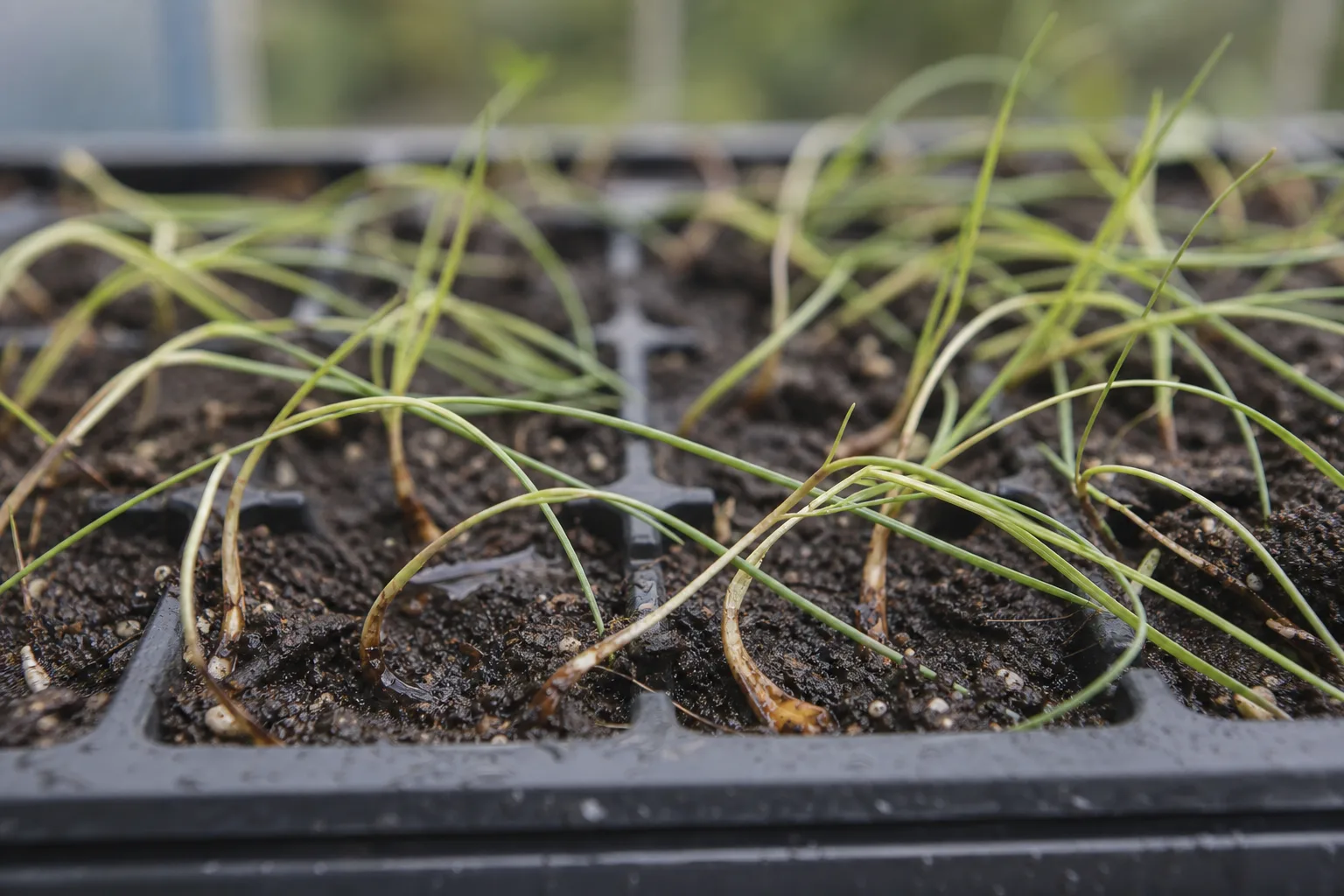
Seedlings Falling Over on Lemongrass: Causes, Checks & Fixes
This guide covers seedlings falling over on Lemongrass. See also the general Seedlings Falling Over guide, watering, and light pages for this plant.
Seedlings Falling Over on Lemongrass: Causes, Checks & Fixes
Quick answer
Falling lemongrass seedlings usually mean damping off in wet, stagnant trays or leggy stretch from insufficient light-not the same problem as a mature clump leaning in wind. Lemongrass seed germinates slowly and stays fragile in trays longer than fast herbs like basil, so tray conditions matter more than they do for quick-sprouting crops.
First step: feel the stem base at soil level. If it is mushy, pinched, or brown where it meets the mix, remove that seedling from the tray immediately before you adjust light or watering. A firm green base with a tall pale blade leaning toward the window is a light problem, not fungal collapse.
For kitchen growers who mainly want stalks to cook with, lemongrass is rarely grown from seed-grocery stalks root in water in about two weeks and skip the fragile seedling stage entirely.
What falling seedlings look like on Lemongrass
Young lemongrass (Cymbopogon citratus) emerges as thin grass blades from tiny seeds sown on the surface. Healthy sprouts stand upright with firm bases and gradually stiffen as roots anchor. When something goes wrong, the failure pattern tells you which cause to chase.
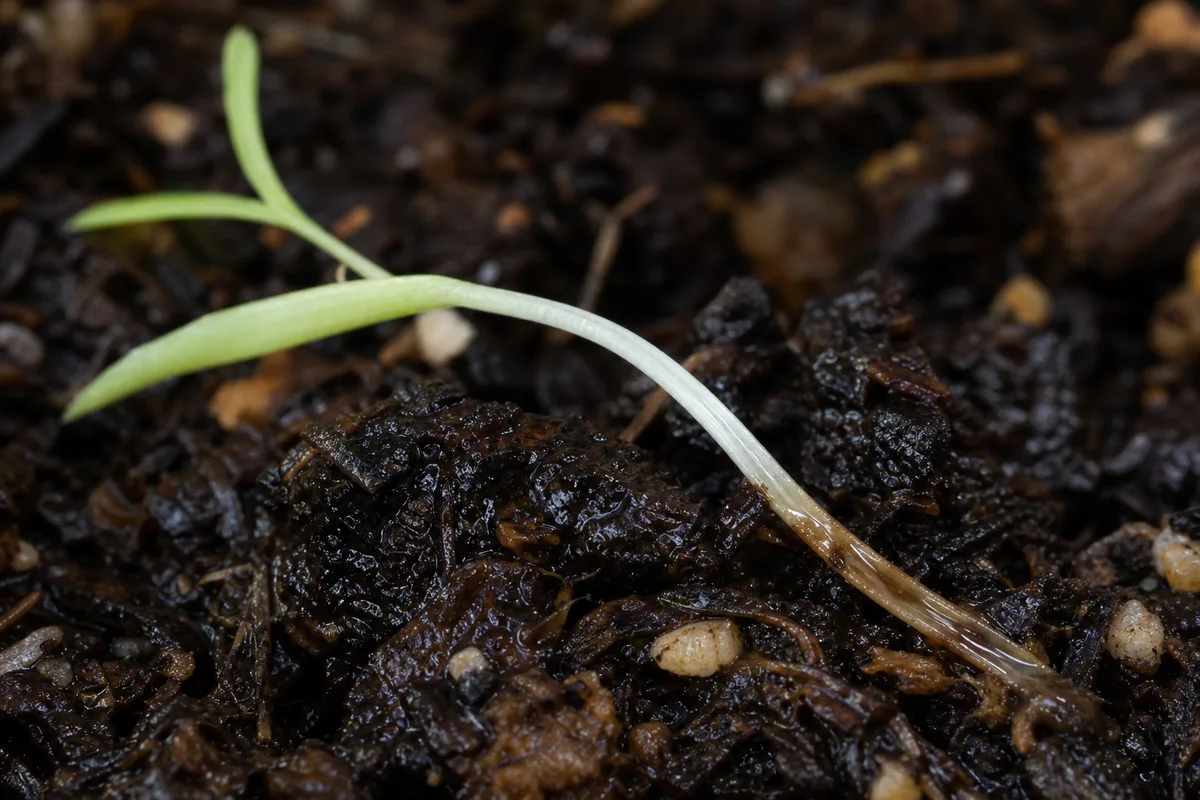
Seedlings Falling Over symptoms on Lemongrass - compare with healthy tissue on the same plant.
Damping off:
- Seedlings collapse right at the soil line, often in clusters
- Stem base looks pinched, water-soaked, brown, or thread-thin
- White fuzzy mold on mix surface or seedling stems in humid trays
- Neighbors in the same cell or row fail within days
- Cotyledons wilt and turn gray-green even when mix feels wet
Leggy stretch from weak light:
- Blades lean hard toward the brightest window or lamp
- Stems stay green and firm at the base but are tall, thin, and pale
- Seedlings fall over mid-stem or at an angle, not with a rotted collar
- No mold on the surface; mix may actually be on the dry side
- Growth accelerates toward light rather than spreading evenly
Not seedling problems:
- A mature potted clump leaning sideways in summer wind is a different issue-established lemongrass forms dense fibrous clumps that behave unlike fragile tray sprouts
- Thin adult stalks from low nitrogen or cool weather are a mature-plant nutrition issue, not damping off
Why Lemongrass seedlings fall over
Damping off in slow-germinating trays
Damping off is a seedling disease caused by soil-borne fungi and water molds such as Rhizoctonia, Fusarium, and Pythium. They thrive in cool, wet, low-airflow conditions and attack stems at soil level. Infected seedlings rarely survive.
Lemongrass seed is especially vulnerable because germination takes two to three weeks at 20–25°C (68–77°F) with only moderate success rates. That long window in a warm, moist tray gives pathogens time to colonize before roots fully anchor. Overhead misting, domes left on too long after sprouting, and reusing unsterilized trays all raise risk.
Leggy growth from insufficient light
Lemongrass evolved as a full-sun tropical grass. Window light alone is often inadequate for seedlings-extension guidance recommends 12–16 hours of supplemental grow light, not just ambient daylight. Without enough intensity, blades stretch toward the light source, stems stay weak, and the shoot topples under its own weight or a light brush.
Heat mats without matching light make this worse: warm soil pushes growth while dim light produces thin, floppy tissue.
overwatering on Lemongrass and poor drainage
Lemongrass wants consistently moist soil once established, but seed-starting mix should stay lightly moist-not soggy. Constant surface wetness displaces oxygen at the crown, weakens anchoring roots, and invites the same fungi that cause damping off. Bottom-watering helps, but only if you pour off standing water and let the surface dry slightly between cycles.
Crowded cells and slow thinning
Lemongrass seeds are tiny and typically sown several per cell because germination is unreliable. Dense clumps compete for light and airflow. Every seedling in a crowded cell stretches thinner than a properly thinned single plant would.
How to confirm the cause
Work through these checks in order:
- Stem base test - Pinch gently at soil level. Mushy, discolored, or hair-thin tissue confirms damping off. Firm green tissue points away from fungal collapse.
- Surface moisture - Does the top of the mix stay dark and wet for days? Algae, mold, or fungus gnats suggest chronic overwatering.
- Light audit - Count hours of direct bright light or supplemental lamp time. Seedlings leaning uniformly toward one direction almost always need closer, stronger light.
- Tray pattern - Random scattered collapse with mold often means damping off spreading through shared mix. Uniform lean toward the window means light.
- Age and stage - Seedlings with only cotyledons are most vulnerable. Several true leaves and a visible root mass at drainage holes mean the plant is past the highest-risk window-collapse then is more likely physical legginess than classic damping off.
- Temperature swing - Cool water or cold windowsills after warm germination slows growth and increases damping-off opportunity.
If bases are firm and seedlings simply lean, skip fungicide and fix light first. If bases are rotting, do not bury deeper hoping to save them-remove and isolate.
First fix for Lemongrass seedlings
Remove every seedling with a mushy or pinched stem base from the tray immediately, then let the mix surface dry slightly before the next bottom-watering.
This single step stops damping-off pathogens from using collapsed tissue as a bridge to healthy neighbors and breaks the wet-cycle that fuels Pythium and Rhizoctonia. Do not mist the tray. Do not top-water until the surface lightens in color.
If remaining seedlings have firm bases but lean toward the light, your next action-after the tray is stable-is to place grow lights 2–4 inches above the canopy for 14–16 hours daily and raise the fixture as blades grow. That is a light fix, not a rescue for rotted stems.
Do not fertilize collapsed trays hoping to stiffen stems-fertilizer on young seedlings before several true leaves develop can increase damping-off stress. Do not repot the entire tray on day one unless you are moving healthy survivors into fresh sterile mix to escape a spreading infection.
Step-by-step recovery
After the first fix:
- Bottom-water only - Set trays in a shallow dish of water until the mix wicks moisture from below, then lift and pour off excess. Keeps crowns drier than overhead cans that splash stems.
- Add airflow - Run a gentle fan across the room, not a cold draft directly on heat-mat trays. Air movement strengthens grass stems and dries surface moisture.
- Remove humidity domes - Take lids off as soon as the majority of seeds have sprouted. Domes after germination trap the humidity fungi prefer.
- Reposition lights - Move supplemental lamps close enough that seedlings do not lean within 24 hours. A pale green color with vertical growth is the target-not deep shade-green stretch.
- Thin crowded cells - Once blades reach about an inch tall, leave the strongest one or two per cell. Snip extras at soil level rather than pulling, which disturbs roots.
- Repot leggy survivors - When true leaves develop and bases stay firm, transplant into slightly larger pots with the base buried a little deeper for extra support. Use rich, well-draining mix matching mature lemongrass needs.
- Consider restarting from stalks - If half the tray collapsed, rooting grocery stalks in water is often faster and more reliable than resowing seed indoors.
Harden off only after last frost when overnight lows stay above 13°C (55°F)-lemongrass is frost-tender and cold shock on weak seedlings causes a second round of collapse outdoors.
Recovery timeline
Damping off: Collapsed seedlings do not recover. Healthy neighbors may stabilize within three to five days once moisture and airflow improve, but watch closely for secondary collapse.
Leggy stretch: Stronger light shows upright growth on new blades within one week. Repotted survivors may need one to two weeks to stiffen before outdoor hardening.
Stalk propagation bypass: Grocery stalks with intact base bulbs often show roots in about two weeks in water, then move to pots-weeks faster than nursing seed from germination through the fragile stage.
Judge success by firm new blades emerging from the center, white roots visible at pot drainage holes, and no new pinching at soil level.
Lookalike symptoms to rule out
Mature clump lean - Established lemongrass in large outdoor pots may lean from top-heavy harvestable stalks or wind. Bases are thick and fibrous, not thread-thin seedlings.
underwatering on Lemongrass wilt - Dry mix causes limp blades, but the stem base stays firm and roots are white-not brown and pinched.
Spider mites on indoor starts - Fine stippling and webbing on older leaves, not stem collapse at soil line. Mites stress plants but do not cause classic damping-off pinching.
Heat stress from lamps too close - Bleached or scorched leaf tips with otherwise firm bases. Back lights off rather than adding water.
Mistakes to avoid
Do not keep watering a tray where seedlings already collapsed at the base-wet mix spreads infection.
Do not rely on a north-facing windowsill alone in winter for a sun-loving tropical grass.
Do not leave humidity domes on after germination “to keep them warm”-warm wet stagnant air is exactly what damping-off fungi exploit.
Do not use garden soil or last year’s potting mix for indoor seed starts-pathogens survive in reused media.
Do not confuse seedling collapse with adult stalk thinning from insufficient nitrogen-that is a feeding and light issue on established clumps, not a tray disease.
Do not bury rotted seedlings deeper hoping roots will form from the stem-damping-off tissue does not reroot.
Lemongrass care cross-check
Once seedlings survive the tray stage, lemongrass wants conditions opposite to the damp stagnant setup that killed fragile starts:
- Light: Full sun once established-six or more hours of direct sun daily indoors near a south window or under strong supplemental light.
- Water: Consistently moist rich mix for mature clumps, but always in well-draining pots-not waterlogged seed-tray conditions scaled up.
- Temperature: Warm growth from 20°C upward; frost kills outdoor plantings, so timing outdoor moves matters.
- Propagation reality: Nurseries and extension sources emphasize division and stalk rooting over seed because seed is slow and unreliable for kitchen harvest timelines.
If you repeatedly lose seed trays but mature stalk divisions thrive, the problem is the seed-starting environment-not your ability to grow lemongrass.
How to prevent seedlings falling over next time
- Start with sterile seed-starting mix and clean trays; sterilize reused plastic in dilute bleach if you must recycle containers.
- Sow thinly on the surface with a light dusting of vermiculite-lemongrass seeds need light to germinate and wash away easily under heavy watering.
- Maintain 20–25°C (68–77°F) during germination with a heat mat, paired with strong light as soon as sprouts appear-not heat alone.
- Bottom-water and let the surface dry slightly between cycles.
- Provide 14–16 hours of grow light positioned 2–4 inches above tops, raised as seedlings grow.
- Remove domes at first sprout; add gentle fan airflow.
- Thin early to one strong seedling per cell.
- Skip seed entirely for culinary clumps-root fresh supermarket stalks and pot once water roots form.
When to worry
Treat as urgent when the first seedling shows a pinched, water-soaked collar-fungi can kill large tray sections within days. Also act fast if mold spreads across the mix surface while stems soften.
Restart rather than persist when more than half a tray collapses, when collapse returns after you corrected moisture, or when you need harvestable stalks on a timeline-stalk propagation is the practical fallback.
A single leggy seedling with a firm base is not urgent. Adjust light before assuming disease.
Conclusion
Falling lemongrass seedlings almost always trace back to tray conditions: fungal collapse at the soil line from wet stagnant mix, or pale leggy blades stretching toward inadequate light. Feel the stem base first, remove rotted sprouts immediately, then match your fix to the diagnosis-airflow and drier surface cycles for damping off, close bright light for stretch. For reliable kitchen clumps, stalk division often beats fighting slow, fragile seed starts indoors.
When to use this page vs other Lemongrass guides
- Lemongrass watering guide - Use for routine moisture checks before assuming seedlings falling over is the main issue.
- Lemongrass problems hub - Browse all 52 common issues on this species.