Whiteflies on Lemongrass: Causes, Checks & Fixes
Quick answer
Whiteflies on lemongrass fly up in a cloud from blade undersides and weaken tender new shoots with sap feeding. First step: isolate the clump and blast leaf undersides with a strong water rinse before applying any spray.
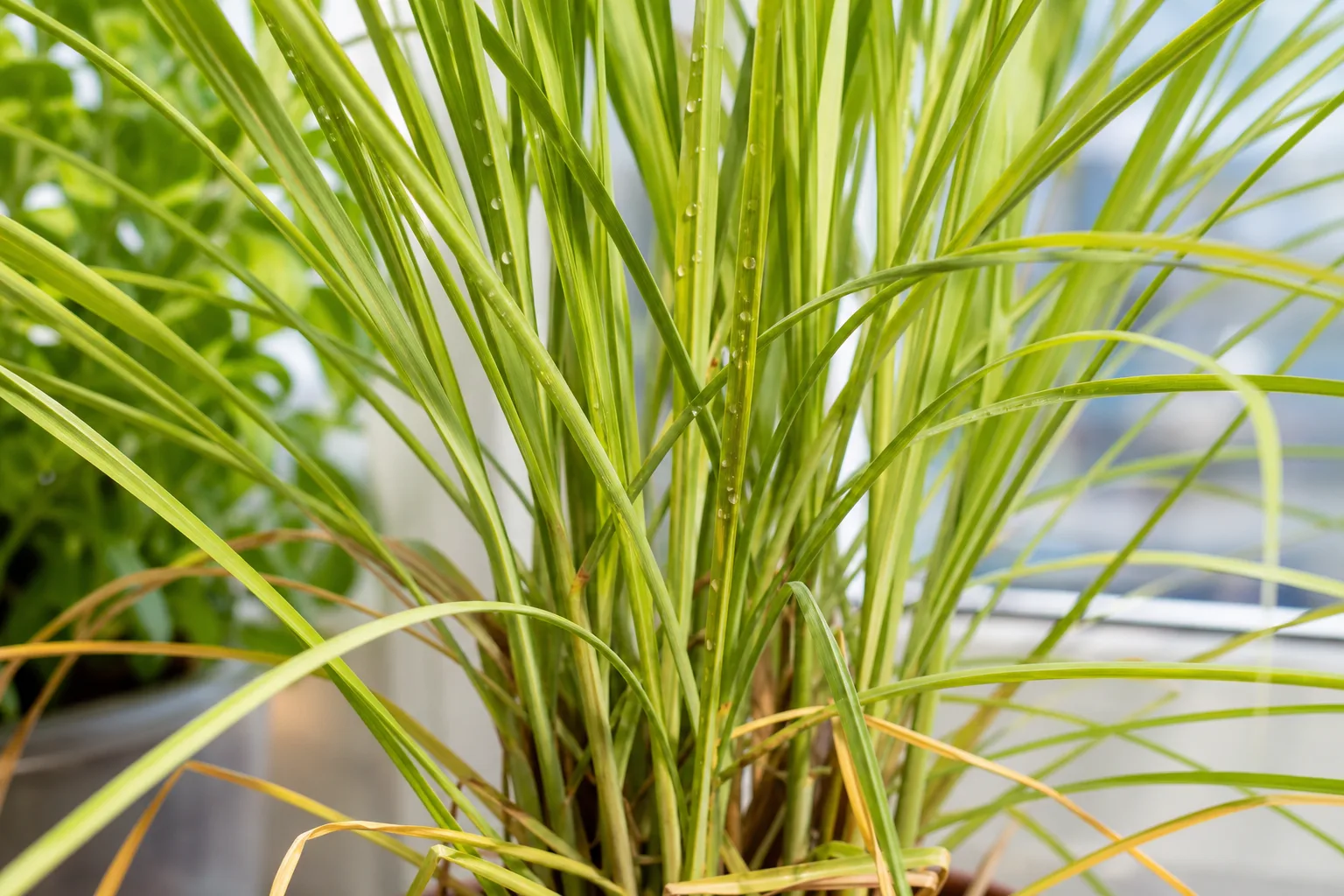
Whiteflies on Lemongrass: Causes, Checks & Fixes
This guide covers whiteflies on Lemongrass. See also the general Whiteflies guide, watering, and light pages for this plant.
Whiteflies on Lemongrass: Causes, Checks & Fixes
Quick answer
Whiteflies on lemongrass (Cymbopogon citratus) show up as tiny white insects that fly from blade undersides when you disturb the clump-especially the inner crown where narrow blades overlap after a kitchen harvest cut. They feed on sap from tender new shoots and leave sticky honeydew that can grow black sooty mold on lower blades.
First step: isolate the clump and blast leaf undersides with a strong water rinse, focusing on the inner crown and newest tillers. Do not reach for spray until you have confirmed live whiteflies with the cloud test. For year-round culture and placement, see the lemongrass overview; this page is the whitefly diagnosis and edible-harvest treatment hub for patio and greenhouse culinary clumps.
What whiteflies look like on Lemongrass
Whiteflies are not flies in the usual sense. Adults are tiny white-winged insects about 1/16 inch long. On lemongrass they hide on the undersides of inner blades and along the crown, not on the tough outer stems you usually harvest.
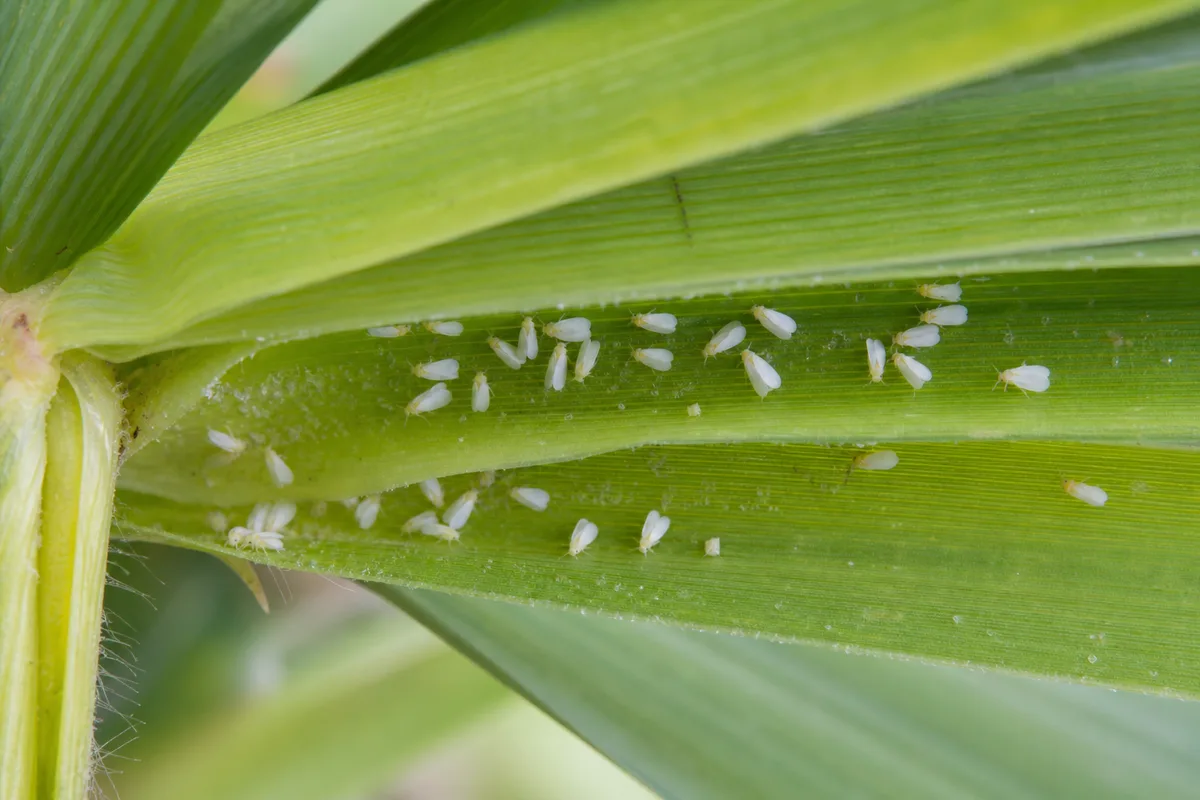
Whiteflies symptoms on Lemongrass - compare with healthy tissue on the same plant.
Lemongrass grows as a dense clumping grass with arching blades emerging from a shared crown. Unlike trailing vines where pests spread along exposed leaf backs, whiteflies here concentrate in the tight blade sheath at the crown-the same sheltered pocket where new tillers open after every cut. That geometry makes the cloud test essential: you must part inner blades and look down into the crown, not just glance at outer arching foliage.
Typical signs on lemongrass:
- A cloud of white insects rising when you brush or shake the clump
- Flat, oval, pale nymphs glued to blade undersides-these immobile stages cause most feeding damage
- Sticky honeydew on lower leaves or pot rims below the crown
- Black sooty mold on honeydew-coated blades, which blocks light but does not infect grass tissue directly
- Yellowing or dull new tillers when feeding is heavy
- Ant trails on the pot or nearby surfaces-often the first visible clue before you spot insects (ants farming honeydew protect whitefly colonies from predators)
Sooty mold grows on honeydew excreted by sap-feeding insects. On lemongrass it usually coats outer lower blades while the infestation sits higher in the crown. Once feeding stops, the mold stops spreading and can be rinsed off.
Heavy whitefly pressure rarely kills an established lemongrass clump outright, but it can stunt new shoots, reduce flavor in tender tips, and make stalks unpleasant to harvest until populations drop.
Why Lemongrass gets whiteflies
Lemongrass is a fast-growing tropical grass that prefers full sun and consistently moist, rich soil. That vigorous summer regrowth is useful in the kitchen-but it also supplies the tender blades whiteflies prefer for feeding and egg laying. After you cut stalks for tea or curry, the clump responds with fresh shoots within days. Those shoots are exactly where whitefly nymphs settle if adults are already nearby-a recurring feeding window that vine houseplants do not share on the same harvest schedule.
Lemongrass is not a magnet for every pest. Its aromatic oils and tough fibrous outer stems give it some resilience compared with softer herbs. Even so, sheltered patio pots, greenhouse benches, and indoor winter clumps can still develop whiteflies-especially when the plant sits beside infested basil, peppers, or tomatoes that share the same warm microclimate. Texas A&M Extension notes whiteflies can complete a generation in 16–18 days at summer peak temperatures, so populations on continuously flushing culinary clumps can surge faster than on slow-growing ornamentals.
Common entry routes include:
- New nursery divisions or supermarket stalks brought home without quarantine
- Shared greenhouse or patio benches where whiteflies move plant to plant
- Ant-protected colonies on neighboring herbs, since ants harvest honeydew and interfere with natural enemies
- Weak shaded clumps that grow slowly with soft, pale inner blades
- Warm humid pockets with poor airflow between crowded containers
Whitefly outbreaks often surge during warm weather when natural predators are disrupted and plants push continuous new growth. Outdoor full-sun clumps with wind exposure usually recover faster than enclosed winter windows where predator populations are absent and blades stay damp longer after rinsing. UF/IFAS notes that lemongrass needs regular water and feeding from June through September to maximize growth-which also means more whitefly-friendly tissue if pests are present.
Lookalike symptoms to rule out
| Symptom pattern | Whiteflies | Aphids | Thrips | Spider mites | Powdery mildew | Drought stress |
|---|---|---|---|---|---|---|
| Disturbance response | Cloud of flying white insects | Clusters stay put | Slender insects may jump; no white cloud | No flight; fine webbing | No insects | No insects |
| Underside sign | Flat pale nymph scales | Soft pear-shaped clusters | Silver scarring, black frass specks | Fine stippling, webbing | Dry white powder on surface | None |
| Honeydew / stickiness | Heavy on lower blades | Common | Uncommon | Rare | None | None |
| Best lemongrass location | Inner crown after harvest cut | New soft shoots | Scarred blade tissue | Hot dry patio clumps | Blade surfaces in humid shade | Dry pot, papery tips |
| Cross-link | This page | Aphids on lemongrass | Thrips guide | Spider mites | Powdery mildew | Underwatering |
Mealybugs form white cottony wax on stems and blade bases-they do not fly in clouds. See mealybugs on lemongrass when you see stationary wax patches instead of flying adults.
How to confirm the cause
Work through these checks in order before you treat:
- Cloud test - Gently shake or brush the inner blades over a sheet of white paper. A brief cloud of tiny white insects confirms whiteflies. If nothing flies but you see soft pear-shaped clusters, suspect aphids instead.
- Underside inspection - Part the blades at the crown and look at undersides with a hand lens. Whitefly nymphs look like flat pale scales. Adults rest with wings folded tent-like.
- Honeydew check - Rub a lower blade between fingers. Sticky residue that transfers to your skin points to sap feeders, not drought stress or normal grass texture.
- Sooty mold check - Black film that wipes off with a damp cloth supports honeydew from whiteflies or aphids-not fungal leaf spot, which penetrates tissue.
- Ant activity - Ants marching on the pot rim or bench strongly suggest honeydew producers are present in the crown. Treat ant trails per the ants-on-plant guide so predators can reach whiteflies.
- Neighbor scan - Check basil, tomatoes, peppers, and other herbs on the same patio. Shared infestations are common on sheltered benches.
- Growth-stage check - Focus on blades that emerged after your last harvest cut. Old woody outer stems rarely host heavy colonies.
If you find nymphs and flying adults on undersides with honeydew, whiteflies are confirmed. Move to treatment without waiting for the whole clump to yellow.
First fix for Lemongrass
Isolate the clump and rinse blade undersides with a strong stream of water, targeting the crown and newest shoots.
Move the pot away from other herbs until you see no new whitefly activity for at least a week after treatment cycles finish. Hold outer blades aside and spray from below so water hits the undersides where nymphs and adults congregate. A firm blast dislodges soft-bodied pests and washes fresh honeydew before ants or sooty mold take hold.
Rinse in morning so blades dry in full sun the same day. Lemongrass tolerates wet foliage better than many succulents, but stagnant damp crowns in shade still invite other problems-so improve airflow after rinsing if the clump sits in a corner. Follow watering guidance so soil stays moist but not waterlogged after repeated crown rinses.
Do not harvest treated stalks for cooking until you have rinsed off any residue and confirmed the plant is pest-free. Do not apply systemic insecticides on culinary clumps without checking edible-plant label restrictions.
Step-by-step recovery by severity
Match your treatment path to how widespread the infestation is. All paths start with isolation and the crown rinse above.
Light infestation (few adults on one or two new tillers)
- Repeat water blasts every two to three days for one week, inspecting undersides after each rinse.
- Hang one yellow sticky trap at canopy height beside the clump. Traps catch adult whiteflies and help monitor population drop-they do not replace underside coverage.
- Scout again after your next kitchen harvest cut when new tillers open; that flush is when missed nymphs often reappear.
Light cases on outdoor sun clumps often clear with rinsing alone when caught within days of the first cloud sighting.
Moderate infestation (cloud on most new blades, honeydew on lower leaves)
- Continue rinses every two to three days until live nymphs and flying adults are gone on inspection.
- Apply insecticidal soap labeled for herbs if colonies persist after several rinses. Cover undersides completely; soap works on contact and has little residual effect, so repeat every five to seven days through one full generation cycle. Missouri Botanical Garden recommends four to five applications at five- to seven-day intervals because eggs and pupae survive single sprays.
- Manage ants if they protect colonies-ant barriers on pot feet or bench legs can help natural enemies reach whiteflies once honeydew trails are broken.
- Wash sooty mold off lower blades with plain water once honeydew production stops.
- Cut back badly distorted new shoots after the clump stabilizes. Clean tillers are a better harvest target than warped infested tips.
Outdoors in summer, lady beetles, lacewings, and parasitic wasps often assist once soap and rinses reduce heavy populations. Avoid broad-spectrum sprays that wipe out these allies.
Heavy infestation (clouds on every new tiller, growth stalled, sooty mold spreading)
- Run the full moderate protocol for two complete soap cycles (about two weeks in warm weather) before deciding the clump is unsalvageable.
- Isolate from all bench neighbors-check aphids and ants-on-plant on shared herbs simultaneously so reinfection stops.
- Move to full outdoor sun if the clump has been in a sheltered winter window; predator access and faster blade drying often break cycles that persist indoors.
- Discard and restart when most new shoots stay infested after repeated rinse-and-soap cycles in sheltered shade with no outdoor option. Lemongrass is easy to restart from fresh division or supermarket stalks-fighting endless reinfestation on a weak shaded plant is often slower than beginning clean stock.
Recovery timeline
Moderate infestations often show fewer flying adults within two to three days of repeated rinses. A full soap cycle with label-interval repeats typically takes one to two weeks through warm weather. Sooty mold fades as honeydew dries up; expect visibly cleaner new tillers within one to two weeks once insects stay gone.
Old distorted blades may remain until you cut them at the base-judge recovery by clean new shoots emerging from the crown, not by whether every damaged outer leaf reverts. Lemongrass is a harvest-and-regrow crop; replacing tired blades is normal even after a successful pest cleanup.
Edible-harvest safety after treatment
Lemongrass is a culinary crop, so harvest timing matters as much as pest kill rate.
Before any treatment: Do not cook with honeydew-coated or sooty-mold-covered stalks. Rinse blades thoroughly and confirm the crown is pest-free before cutting for the kitchen.
After insecticidal soap: Many EPA-registered insecticidal soaps allow use on herbs up to the day of harvest, because they are contact-only products with no lasting residue once washed off. Always read your specific product label-it is the legal authority on pre-harvest intervals and reapplication limits. Even with a zero-day interval, rinse stalks with clean water before cooking to remove soap film and any dislodged insects.
After any spray treatment: Wait until blades are dry, rinse harvest tissue with clean water, and inspect undersides one more time. Pause aggressive harvest cuts while the clump is actively infested-you need leaf area for recovery and do not want to spread insects to clean stalks on your cutting board.
Systemic insecticides: Avoid systemics on culinary clumps unless the label explicitly lists edible herbs and you accept the stated pre-harvest waiting period. Contact rinses and soap are the default first choices on food plants.
Mistakes to avoid
Do not assume lemongrass aroma alone prevents whiteflies. Oils may deter some pests, but sheltered infested clumps still host colonies on tender inner growth.
Do not spray insecticide before confirming insects. Water stress and nutrient issues do not produce flying white clouds.
Do not harvest honeydew-coated stalks without thorough rinsing and a clean pest check.
Do not return an isolated clump to the herb bench after a single rinse. Whitefly eggs and nymphs hatch in cycles; treatment must continue until new growth stays clean.
Do not fertilize heavily while whiteflies cover new shoots-that pushes more soft tissue pests prefer.
Do not ignore neighboring infested tomatoes or basil on the same sheltered patio.
Do not rely on yellow sticky traps alone on edible clumps-underside rinses are non-negotiable.
How to prevent whiteflies next time
Quarantine new lemongrass divisions or supermarket-rooted stalks for at least two weeks before placing them beside harvest clumps. Inspect blade undersides during weekly care, especially within two to three days after each kitchen cut when new shoots open.
Keep clumps in full sun with good airflow when your climate allows. Outdoor sun and wind reduce whitefly pressure compared with enclosed winter windows or crowded shade corners.
On enclosed patios, set yellow sticky traps early in warm months before populations build. Texas A&M Extension recommends weekly underside scouting rather than waiting for obvious damage-early detection on culinary clumps saves harvest weeks.
Preserve beneficial insects by avoiding broad-spectrum sprays unless infestations are severe. Outdoors, healthy predator populations often keep whiteflies in check once ants and heavy colonies are managed.
When to worry
Treat as urgent when whitefly clouds appear on most new blades, sooty mold spreads across lower leaves within days, or new tillers stall completely during active growth season. Isolate immediately from other herbs and act before your next harvest if stalks are coated with honeydew.
Replace severely declining clumps that stay infested after repeated rinse-and-soap cycles in sheltered conditions with no access to outdoor sun. Lemongrass is easy to restart from fresh division or supermarket stalks-fighting endless reinfestation on a weak shaded plant is often slower than beginning clean stock.
A few flying adults on one new tiller after a warm spell is manageable with prompt rinsing-not a reason to discard the whole clump.
Related lemongrass problems
- Lemongrass overview - Sun, water, and container culture hub
- Aphids on lemongrass - Honeydew lookalike with different insect and cloud-test differentiation
- Ants on lemongrass - Ant trails signal hidden sap feeders in the crown
- Mealybugs on lemongrass - Stationary wax patches vs. flying white insects
- Spider mites on lemongrass - Stippling lookalike in hot dry conditions
- Lemongrass watering - Moisture management after crown rinsing
Conclusion
Whiteflies on lemongrass target the tender regrowth you actually harvest, not the tough outer stems. Confirm with the cloud test at the crown, isolate, and rinse undersides before you spray. Match treatment to severity-rinses alone for light hits, soap cycles for moderate colonies, discard-and-restart for chronic sheltered infestations. Judge success by clean new tillers emerging after your next kitchen cut, rinse harvest stalks before cooking, and wire scouting into every post-harvest flush so the problem does not return before your next curry.
When to use this page vs other Lemongrass guides
- Lemongrass watering guide - Use for routine moisture checks before assuming whiteflies is the main issue.
- Lemongrass problems hub - Browse all 52 common issues on this species.