Whiteflies on Plants: Identification and Treatment
'Houseplant pests are common indoors because conditions lack natural predators. Whiteflies often arrives on new plants, open windows, or stressed specimens. When you notice Tiny white flying insects under leaves, act quickly: confirm the pest, isolate the plant, and treat before the population explodes. Track weekly progress after you change care, and note watering, light, and repotting dates so you can tell whether the symptom is improving or returning.'. Compare upper versus lower leaves, new versus old growth, and soil moisture at root depth before you treat, because the same visible symptom can come from watering, light, pests, or normal aging on different plants.
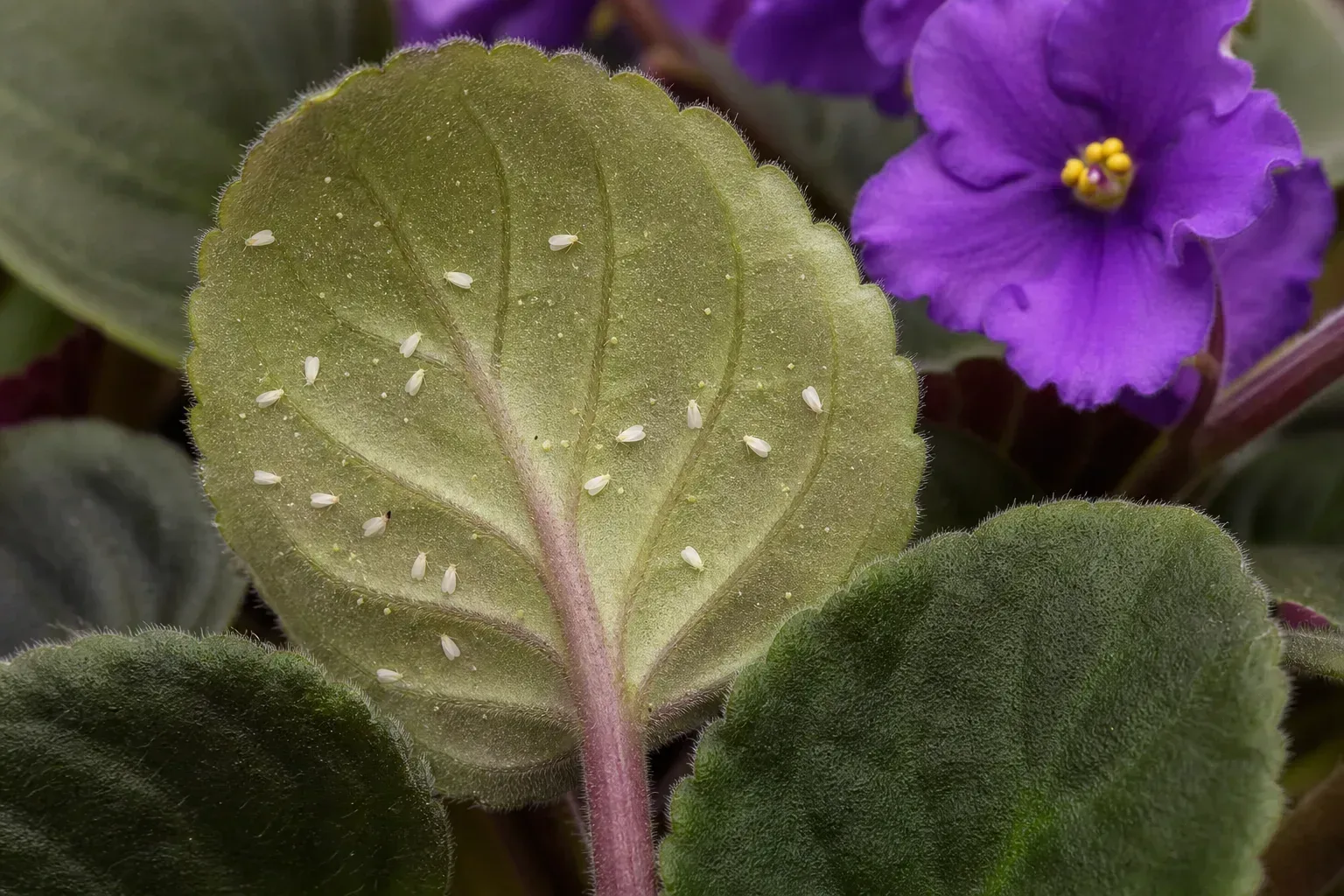
Whiteflies on Houseplants
Still unsure?Match your symptoms to the most likely problems in under a minute.Run diagnosis →Understand and fix whiteflies
'Houseplant pests are common indoors because conditions lack natural predators. Whiteflies often arrives on new plants, open windows, or stressed specimens. When you notice Tiny white flying insects under leaves, act quickly: confirm the pest, isolate the plant, and treat before the population explodes. Track weekly progress after you change care, and note watering, light, and repotting dates so you can tell whether the symptom is improving or returning.'. Compare upper versus lower leaves, new versus old growth, and soil moisture at root depth before you treat, because the same visible symptom can come from watering, light, pests, or normal aging on different plants.
Overview
'Houseplant pests are common indoors because conditions lack natural predators. Whiteflies often arrives on new plants, open windows, or stressed specimens. When you notice Tiny white flying insects under leaves, act quickly: confirm the pest, isolate the plant, and treat before the population explodes. Track weekly progress after you change care, and note watering, light, and repotting dates so you can tell whether the symptom is improving or returning.'. Compare upper versus lower leaves, new versus old growth, and soil moisture at root depth before you treat, because the same visible symptom can come from watering, light, pests, or normal aging on different plants.
How to identify it
- Inspect leaf undersides, stem joints, and soil surface with a magnifying glass
- Look for movement, webbing, sticky honeydew, or cottony clusters
- Check nearby plants-even if only one looks bad initially
- Note whether symptoms match pest damage vs fungal or water issues
- Review recent plant purchases or outdoor time for introduction routes
When to worry
Heavy webbing, visible colonies on multiple plants, or larvae in soggy soil affecting seedlings need immediate treatment across your collection.
Common causes
New plant without quarantine
Pests hitchhike on nursery plants. Skipping a 2-week isolation period is the top way Whiteflies enters a collection.
Dry air and heat stress
Spider mites thrive when humidity is low and plants are stressed. Heat vents and winter heating make infestations worse.
Overwatered soil
Consistently moist organic soil breeds fungus gnat larvae that feed on fine roots and spread annoyance indoors.
Dusty leaves and poor airflow
Dust blocks light and weakens plants, making them easier targets for scale, mealybugs, and aphids.
Step-by-step fix
Isolate the affected plant
Move it away from others until you see no new pest activity for at least two weeks after treatment.
Identify the pest correctly
Compare symptoms to photos or use a pest identifier tool. Treatment differs for mites, gnats, scale, and mealybugs.
Remove what you can manually
Wipe leaves, shower the plant, pick off visible bugs, and scrape scale with a cotton swab dipped in alcohol.
Apply appropriate treatment
Use insecticidal soap or horticultural oil for most soft-bodied pests. Repeat every 5–7 days for two to three cycles to catch hatchlings.
Fix conditions pests love
Let soil dry for fungus gnats, raise humidity for mite-prone plants, and dust leaves regularly.
Prevention tips
- Quarantine new plants for 2 weeks before placing near others
- Inspect leaf undersides during weekly care
- Avoid overwatering and improve airflow between plants
- Keep plants healthy-stressed plants attract pests faster
Common mistakes
- Treating once and assuming pests are gone
- Using the wrong product for the pest type
- Returning an isolated plant too soon
Touching an infested plant can release a small cloud of white insects from beneath the leaves. That dramatic flight is useful evidence, but it shows only the adult stage. The eggs and scale-like nymphs remain attached to the foliage, which is why catching the visible adults rarely ends the infestation.
Whiteflies are tiny sap-feeding insects related to aphids, scales, and mealybugs—not true flies. A workable response targets every stage: isolate the plant, remove adults and badly infested leaves, wash accessible eggs and nymphs away, apply a suitable labelled treatment with full underside coverage, and monitor new hatch.
How to Identify Whiteflies
Adult whiteflies have yellowish bodies and four wings coated in white wax. They usually rest on leaf undersides and fly when the plant is disturbed. UC IPM describes them as sap feeders in the order Hemiptera and notes that many species are easiest to distinguish by their last nymphal stage rather than the adult (UC IPM).
Check the youngest and lowest leaves, then scan upward. A phone macro lens or 10× hand lens reveals far more than shaking the plant. Find both flying adults and attached immature stages before concluding that whiteflies are the cause.
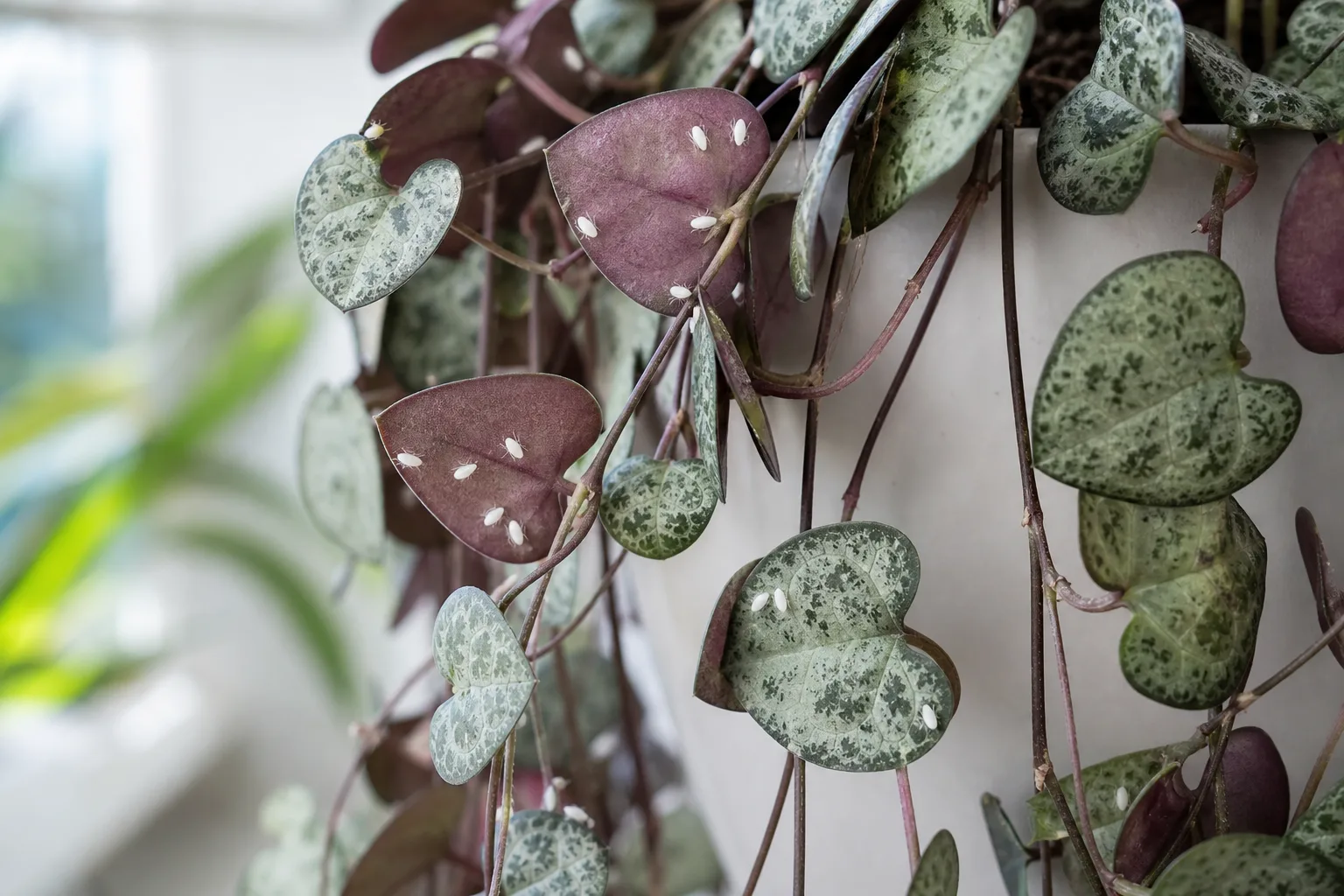
Eggs, Nymphs, and Adults
Eggs are tiny and usually attached to the underside of leaves. Newly hatched crawlers move briefly, then settle. Later nymphs appear as flattened translucent or pale oval discs and can be mistaken for scale or leaf tissue.
Colorado State University Extension explains that nymphs feed for weeks before entering an inactive stage and emerging as adults; most feeding injury comes from nymphs (Colorado State University Extension). Warm indoor conditions let generations overlap, so one leaf may carry eggs, nymphs, and adults together.
Whiteflies vs Other Flying Pests
Fungus gnats are dark, slender flies that hover around moist potting mix; their larvae live in the medium. Whiteflies are pale and gather beneath leaves. Moths are much larger, while winged aphids lack the powdery white appearance and occur among pear-shaped, non-winged aphids.
| Clue | Whiteflies | Fungus gnats | Mealybugs |
|---|---|---|---|
| Where found | Leaf undersides | Potting mix and nearby air | Leaf joints and stems |
| Disturbance response | White adults flutter from foliage | Dark adults fly near soil | Usually remain as cottony clusters |
| Immature stage | Flat discs on leaves | Clear larvae in mix | Mobile wax-covered crawlers |
| Typical residue | Honeydew | Usually none | Honeydew |
Damage and Warning Signs
Adults and nymphs withdraw plant sap. High populations can cause yellowing, premature leaf drop, reduced vigor, and stunting. UC IPM cautions that whitefly outbreaks are difficult to manage once populations become high, especially when natural enemies have been disrupted (UC IPM).
One or two adults do not prove severe injury. Count adults on traps and inspect the density of nymphs across several leaves. A plant with clean new growth and falling counts is improving even if old yellow leaves remain.
Honeydew and Sooty Mold
Whiteflies excrete sticky honeydew that coats foliage and objects beneath the plant. Black sooty mold grows on the sugary deposit and blocks light when coverage becomes heavy. Wash old residue away after reducing the insects so fresh honeydew is easier to detect.
Honeydew is not unique to whiteflies. Aphids, soft scale, and mealybugs also make it. Identify the pest on the plant instead of diagnosing from a sticky windowsill.
Why Whiteflies Rebound
A swat, vacuum, or sticky card mainly removes adults. Eggs and immobile nymphs remain beneath leaves, protected from incomplete spray coverage. New adults emerge and make the problem appear to return, even though it never fully left.
Some whiteflies also develop insecticide resistance, particularly in production settings. UC IPM advises integrating cultural and biological measures and avoiding repeated reliance on broad-spectrum insecticides that harm natural enemies (UC IPM).
Hidden Nymphs Drive the Infestation
Turn every suspect leaf over. Nymphs are often densest on lower or older leaves, but new eggs appear near fresh growth. Mark several leaves and compare them weekly so you measure change rather than reacting to each flying adult.
Contact products kill only the insects they wet. Folded foliage, dense canopies, and leaves pressed against a wall create untreated refuges. Pruning one heavily colonized leaf can sometimes improve coverage more than adding another product.
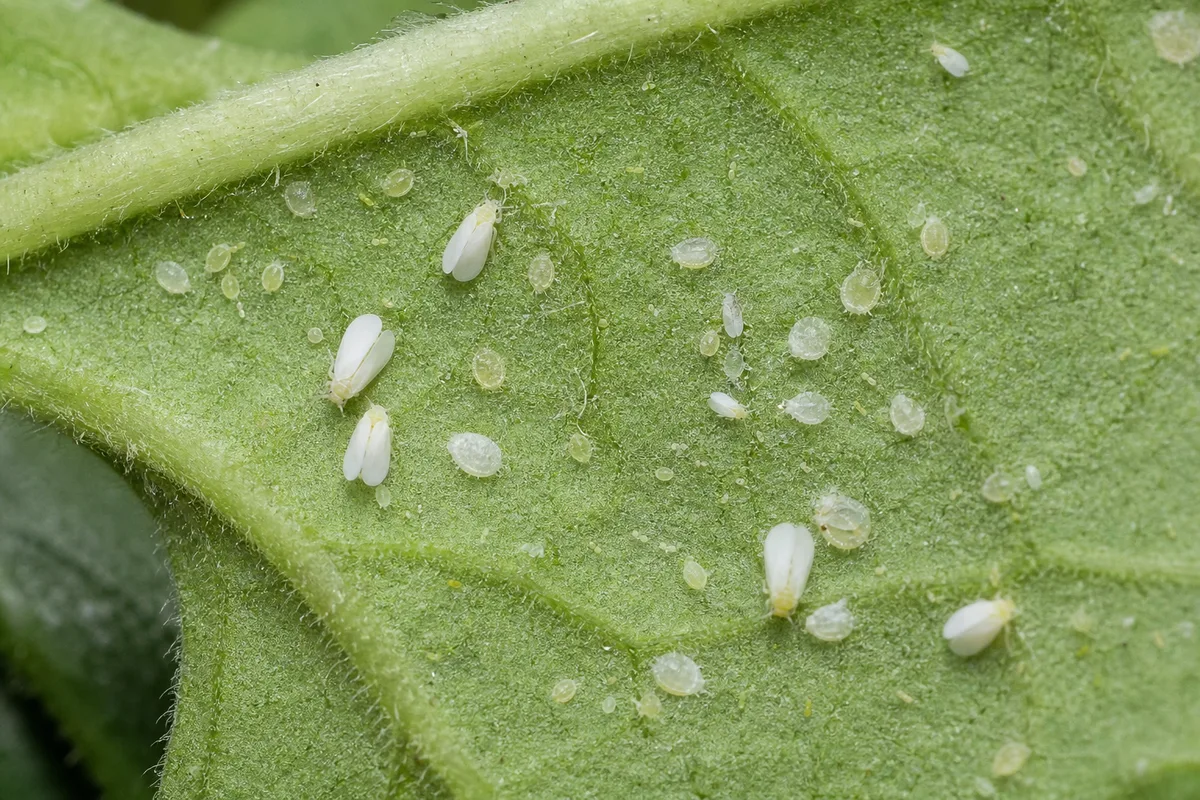
First Actions After Confirmation
Move the plant away from others before handling it extensively. Close windows or vents that could blow adults toward the collection. Then inspect plants that touched it or stood immediately downwind.
Keep care stable. A drought-stressed plant is more likely to react badly to oil or soap, while excessive nitrogen can produce lush susceptible growth. Do not fertilize simply because leaves are yellow.
Isolate and Inspect
Place the plant in suitable light with leaves separated from other plants. Use a yellow sticky card to monitor adult activity, date it, and replace it when dusty. Inspect leaf undersides with magnification at least weekly.
Clean the shelf and remove fallen leaves. Whiteflies develop on living plant tissue, so replacing otherwise healthy potting mix is usually unnecessary. Focus effort aboveground unless a separate root or soil issue exists.
Wash, Vacuum, and Prune
Rinse a sturdy plant with a controlled jet of water, aiming at leaf undersides while supporting stems. UC IPM recommends washing eggs and crawling juveniles from houseplants and disposing of severely infested parts (UC IPM). Repeat washing can reduce pressure without leaving pesticide residue.
Use a small vacuum to capture adults from a compact plant, then empty it outside in a sealed bag. Prune leaves packed with nymphs if the plant will retain enough healthy foliage. These actions reduce numbers but must be combined with monitoring because hidden stages remain.
A Layered Control Plan
Begin with isolation, washing, and removal. Add traps for surveillance and adult reduction. If nymphs persist, apply a labelled insecticidal soap or horticultural oil, reaching every underside, and repeat only at the label interval.
Judge the plan with three measures: fewer adults on fresh traps, fewer live nymphs on marked leaves, and clean new growth. Old yellowing does not reverse. If all three measures stall, review coverage, identification, and whether the infestation is too advanced.
Sticky Traps: Useful but Incomplete
Yellow sticky cards attract and capture adult whiteflies. Colorado State lists them as a useful houseplant management tool (Colorado State University Extension). They help confirm activity and compare trends between weeks.
Traps do not catch eggs or attached nymphs. Keep them close to the canopy without sticking leaves, children, or pets. A trap covered in adults signals a need to inspect foliage; it is not evidence that all whiteflies have been removed.
Insecticidal Soap and Horticultural Oil
Commercial insecticidal soap and horticultural oil can suppress whiteflies through direct contact. UC IPM stresses complete coverage, especially under leaves, and notes that repeat applications may be necessary (UC IPM). Spray runoff alone is not effective coverage.
Test a small section first and wait for the label-directed observation period. Do not apply oils to drought-stressed plants, in hot direct sun, or to species the label excludes. Never substitute household detergent; formulated insecticidal soaps have defined active ingredients and directions.
Follow the current product label. The EPA explains that labels specify legal uses, application directions, protective measures, and environmental precautions (EPA). A systemic product may affect pollinators if the plant later flowers outdoors, so consider exposure beyond the room.
Biological Control
Whitefly parasitoids such as Encarsia formosa can work in greenhouses and larger interiorscapes when temperature, pest species, and release timing fit. Colorado State notes that Encarsia performs better at warm average temperatures and becomes inefficient in cooler conditions (Colorado State University Extension).
Beneficial insects are rarely a simple one-plant purchase. They need enough hosts, a compatible environment, and freedom from pesticide residues. Outdoors, preserve naturally occurring predators and parasitoids by avoiding unnecessary broad-spectrum sprays.
Common Treatment Mistakes
The classic failure is treating the flying adults and ignoring the leaf undersides. Other mistakes include keeping the plant beside healthy hosts, spraying only once, placing traps far from the canopy, using homemade soap mixtures, and applying oils to stressed foliage in bright heat.
Do not combine products unless the labels explicitly permit it. More ingredients can increase phytotoxicity without improving coverage. Do not assume neem is risk-free; it is a pesticide product whose formulation, concentration, label, and plant sensitivity matter.
Recovery and Prevention
Maintain appropriate light, watering, and airflow while the plant rebuilds. Remove leaves only when mostly dead or heavily colonized, because remaining green tissue supports recovery. New growth without nymphs is the best sign of progress.
Inspect plants before purchase and quarantine new arrivals. Check undersides, not just visible upper leaves. University of Minnesota Extension recommends regular pest inspection and treatment targeted to the identified insect rather than routine preventive spraying (UMN Extension).
Discarding can be the sensible option when most leaves carry nymphs, repeated correct treatment fails, or the plant threatens a valuable collection. Bag it before moving it through the home and continue inspecting neighboring plants.
A reliable recovery check begins with a baseline. Select five leaves at different heights, mark their petioles with removable tags, and photograph the same underside area each week. Count living nymphs, note fresh eggs, and record adults on a dated sticky card. Exact counts are less important than inspecting the same area consistently; a falling trend tells you more than shaking the whole plant and guessing.
Keep the plant in appropriate light while isolated. A dark bathroom may be convenient for spraying, but weeks of poor light can cause yellowing that looks like ongoing whitefly damage. Likewise, do not fertilize simply because growth has slowed. Stabilize water, temperature, and light so new symptoms are easier to attribute.
Examine plant architecture when a plan stalls. Broad, widely spaced leaves are comparatively easy to wash and cover, while dense ferns, trailing vines, and tightly folded growth provide hundreds of refuges. Strategic pruning can make remaining foliage treatable, but removing too much green tissue leaves the plant with little capacity to recover. The right balance depends on how much clean growth remains.
Track exposed plants as a separate group. Include every plant whose leaves touched the infested one, any plant directly above or below it, and recent cuttings taken from it. Inspect those plants even if no adults rise when disturbed; early nymphs remain still and easy to miss. Do not apply pesticides preventively without finding the pest, because needless exposure can injure foliage and complicate later biological control.
Before buying a plant, turn over several leaves rather than checking only its display side. Poinsettia, hibiscus, lantana, ivy, and greenhouse vegetables are frequently associated with greenhouse whitefly, although many other plants can host whiteflies. Quarantine a new arrival long enough to inspect more than once, and do not place a sticky card from one quarantine zone beside another plant because that obscures where captured adults originated.
Outdoor prevention has a different context. Beneficial insects often suppress whiteflies, while dust, ants, and broad-spectrum insecticides can disrupt that control. Ant management may matter where ants protect honeydew producers. Avoid moving an indoor systemic-treated flowering plant outdoors where pollinators could visit it unless the label and local guidance make that use appropriate.
Clean-up should support diagnosis, not just appearance. Wash honeydew from leaves, pots, windows, and shelves so any renewed deposit is obvious. Bag pruned foliage at the work site. Clean a sink or tub after washing, and avoid a water jet strong enough to spray adults toward healthy plants.
If a treatment causes spotting, edge burn, or rapid collapse, stop and reassess rather than applying another product. Check whether the plant was dry, in direct sun, or excluded by the label. Product damage and whitefly injury can occur together, so photographs taken before treatment are valuable.
Declare control only after multiple inspections find no living nymphs, trap catches remain low or zero, and new growth stays clean. Old yellow leaves and empty nymphal cases do not become pristine. If those endpoints never improve despite correct execution, disposal is not failure; it is an integrated pest-management decision that protects the rest of the collection.
Choose a repeatable sample instead of counting the entire canopy. Mark five leaves at different heights, photograph the same underside areas, and record living nymphs once a week. Pair that with the number of adults caught on a dated sticky card. The figures are indices rather than a census, but consistent sampling makes improvement or rebound visible and prevents one startled cloud of adults from driving every decision.
Plant response matters alongside insect counts. Note whether the newest leaves are normally sized and colored, whether old leaves are dropping faster, and whether honeydew returns after cleaning. Falling trap catches with increasing nymph density is not control; it may simply reflect a temporary gap between adult generations.
Species can change the plan. Greenhouse whitefly and sweetpotato or silverleaf whitefly overlap in appearance but differ in host use, insecticide susceptibility, and biological-control compatibility. Colorado State Extension describes identifying features and life-cycle details for greenhouse whitefly (Colorado State University Extension). A home grower does not always need a species name, but persistent outbreaks in a greenhouse, nursery, or valuable collection justify diagnostic help before another product is chosen.
Set a review point before treatment begins. Continue while adult catches, living nymphs, and fresh injury trend downward and the plant tolerates the method. Escalate to a local Extension professional when identification is uncertain, several hosts remain infested despite correct coverage, or pesticide injury appears. Consider disposal when dense plant architecture prevents underside treatment, repeated cycles do not reduce live nymphs, or the plant is continually reseeding a valuable collection.
Record exactly what was applied, where, and when. Include product name, active ingredient, dilution required by the label, plant condition, temperature, light, and any injury observed. This record prevents accidental early reapplication and helps distinguish pest damage from phytotoxicity. Never use it to override a changed label; the current container directions control.
Use one card position consistently if you want to compare weeks. A card moved from the canopy to a sunny window may catch a different number even when the infestation is unchanged. Replace cards before dust and captured insects obscure new arrivals, write the installation date on each one, and avoid placing cards where outdoor whiteflies can enter and confuse an indoor count.
Before ordering a parasitoid, identify the whitefly as closely as practical and disclose every recent pesticide to the supplier. Residues can kill or suppress the beneficial organism, while cool rooms may slow establishment. Biological control is usually more predictable in a managed greenhouse or interiorscape than on a single plant moved between rooms. If the environment cannot be held within the supplier’s requirements, washing, pruning, monitoring, and a compatible labelled contact product may be more realistic.
Keep exposed plants in a separate monitoring group even after the original plant improves. Inspect those whose leaves touched, those directly above or below it, and any recent cuttings taken from it. Do not spray them merely because they were exposed; look for adults, eggs, or nymphs first. A clean plant benefits more from careful observation than from unnecessary pesticide exposure.
The final check should include more than shaking foliage. Examine the marked undersides under magnification, replace the sticky card, clean remaining honeydew, and inspect again after the interval in which new adults previously appeared. If no live immature stages are found and new growth stays clean across repeated checks, return the plant gradually to the collection while preserving enough spacing for routine inspection.
Treat uncertainty as a reason to slow down, not to combine products. If pale discs do not match whitefly nymphs, photograph them through a hand lens and seek identification before spraying. Edema, mineral residue, empty scale covers, and other insects can be mistaken for immature whiteflies. A correct diagnosis protects the plant from needless treatment and keeps the monitoring record meaningful.
When the plant returns to its usual position, keep its leaves from touching neighboring foliage and inspect both groups during routine watering. Continue the same marked-leaf method for several checks rather than switching to casual observation immediately. That short follow-through catches a late hatch while the population is still small enough for washing or removal to be practical.
Conclusion
Whitefly control is a life-cycle problem, not a contest with the adults you can see. Confirm adults and nymphs, isolate the plant, wash and prune to lower the population, then use traps for monitoring and a labelled contact treatment when needed.
Keep checking leaf undersides until adult counts fall, nymphs disappear, and clean growth replaces damaged foliage. That measured sequence is safer and more reliable than repeated unscheduled spraying.
Plants commonly affected
These houseplants often struggle with whiteflies. Open a care guide or plant-specific troubleshooting page for tailored fixes.
 Medium
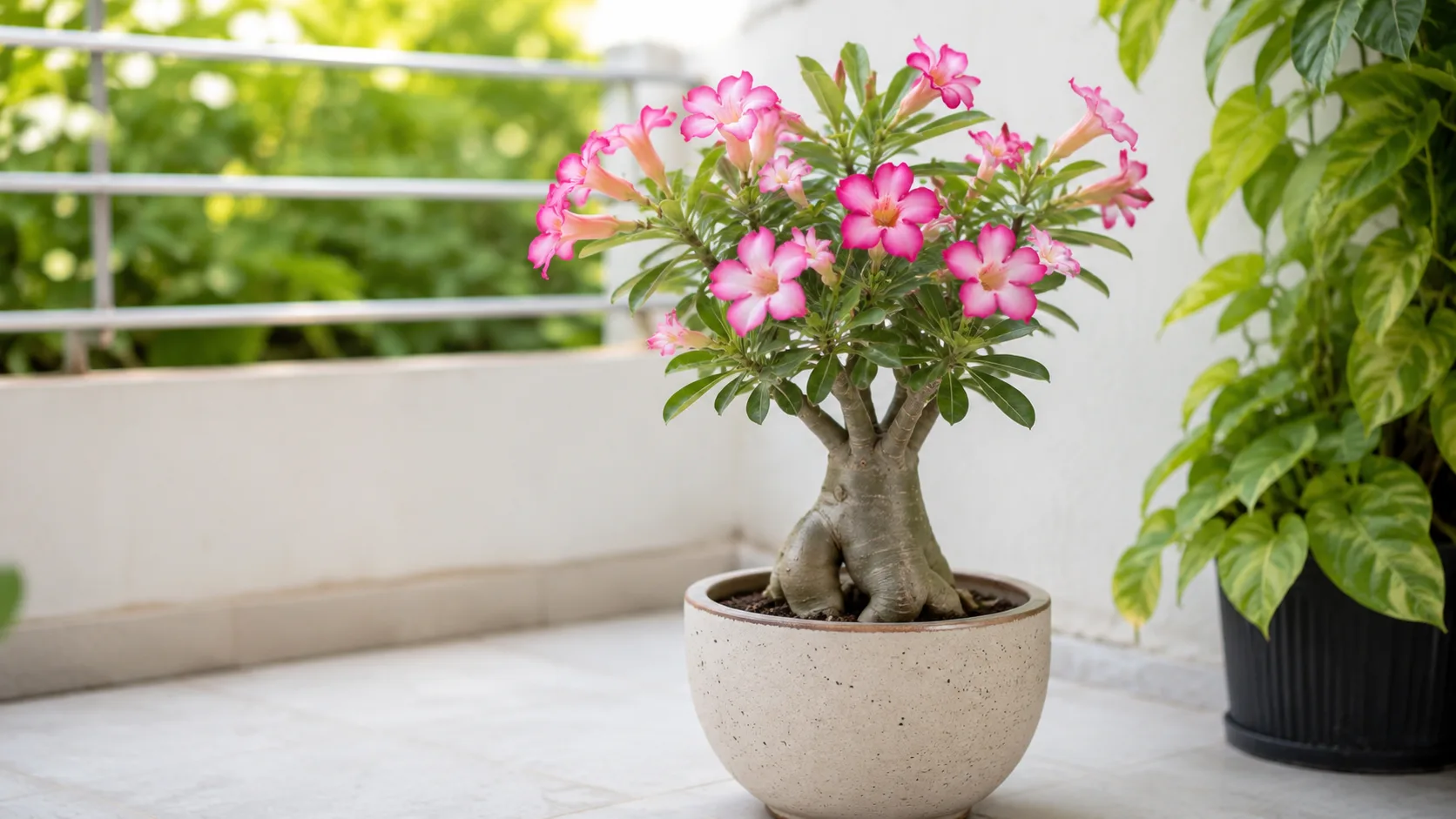
Adenium
Likely causeCommon whiteflies pattern on Adenium under indoor care stress.
Quick fixInspect roots, watering, light, and pests; adjust one variable and monitor new growth.
 Medium
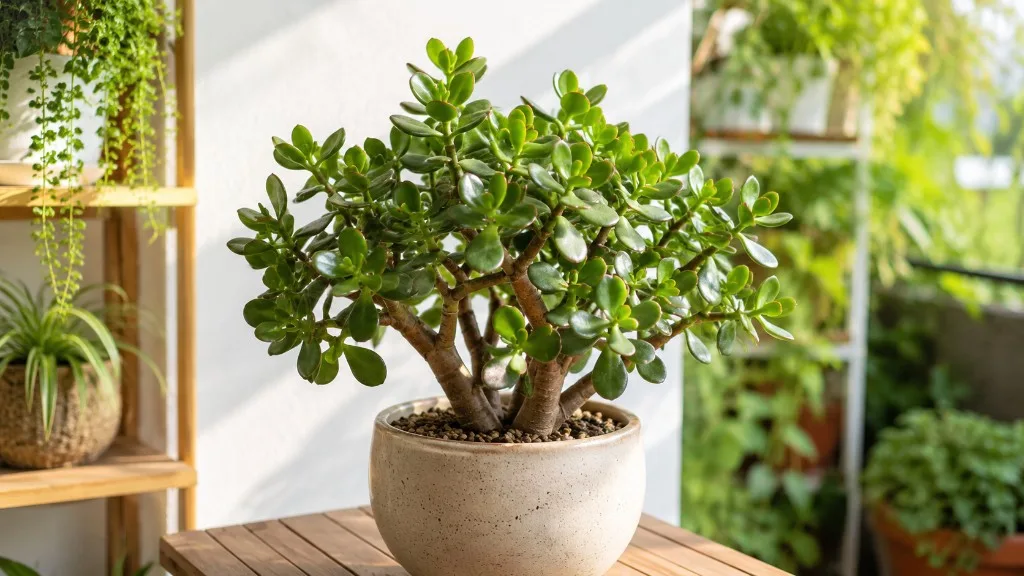
African Milk Tree
Likely causeCommon whiteflies pattern on African Milk Tree under indoor care stress.
Quick fixInspect roots, watering, light, and pests; adjust one variable and monitor new growth.
 Medium
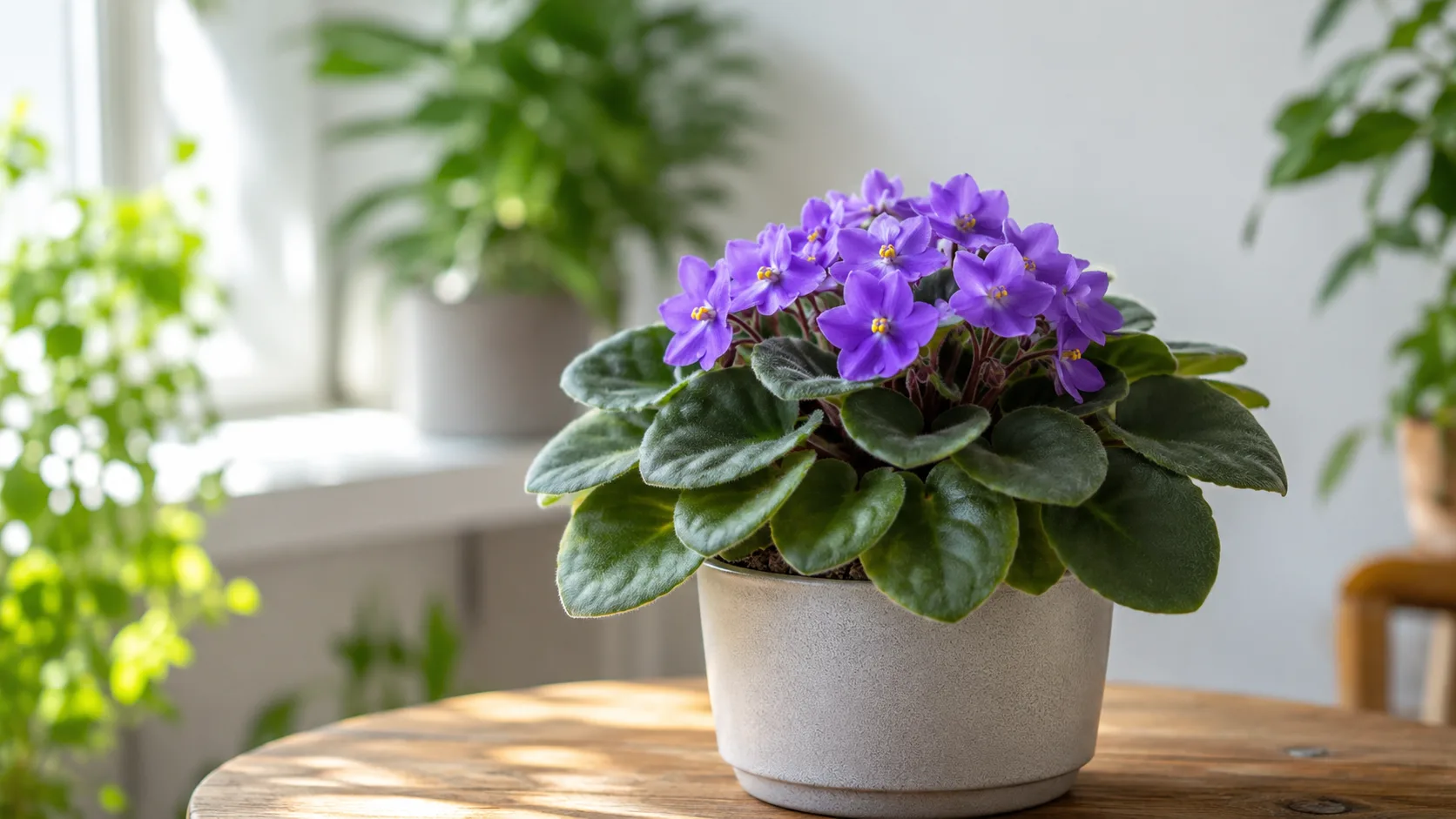
African Violet
Likely causeWhiteflies on African Violet: Whiteflies are small, flying insects which measure 1/16 to 1/8 inch in length. As their name suggests, they are white in color. Whiteflies feed on the juices of African Violets, particularly on the un
Quick fixInspect African Violet, confirm whiteflies matches your symptoms, then adjust care or treat per authoritative guides.
 Medium
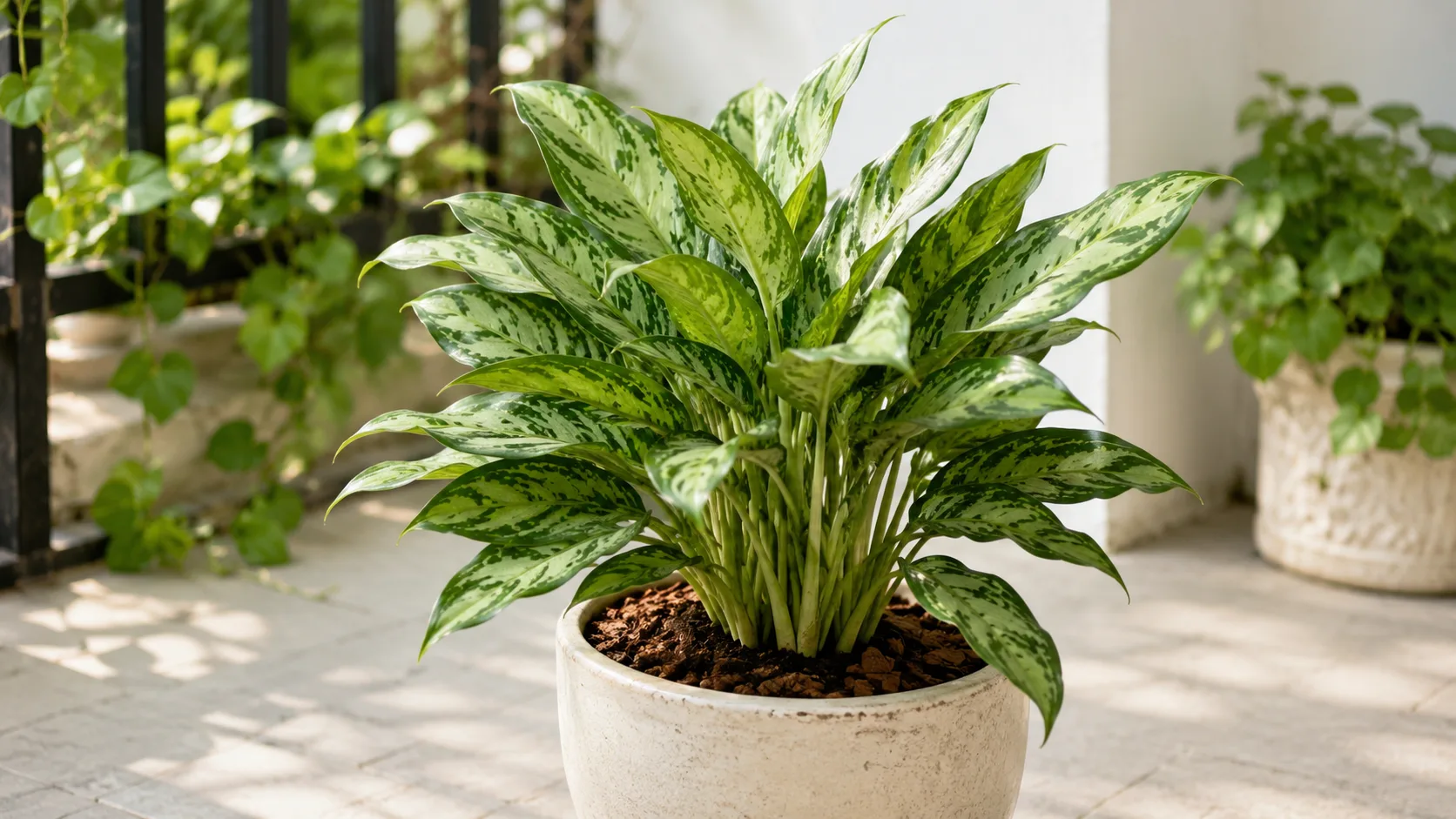
Aglaonema
Likely causeCommon whiteflies pattern on Aglaonema under indoor care stress.
Quick fixInspect roots, watering, light, and pests; adjust one variable and monitor new growth.
 Medium
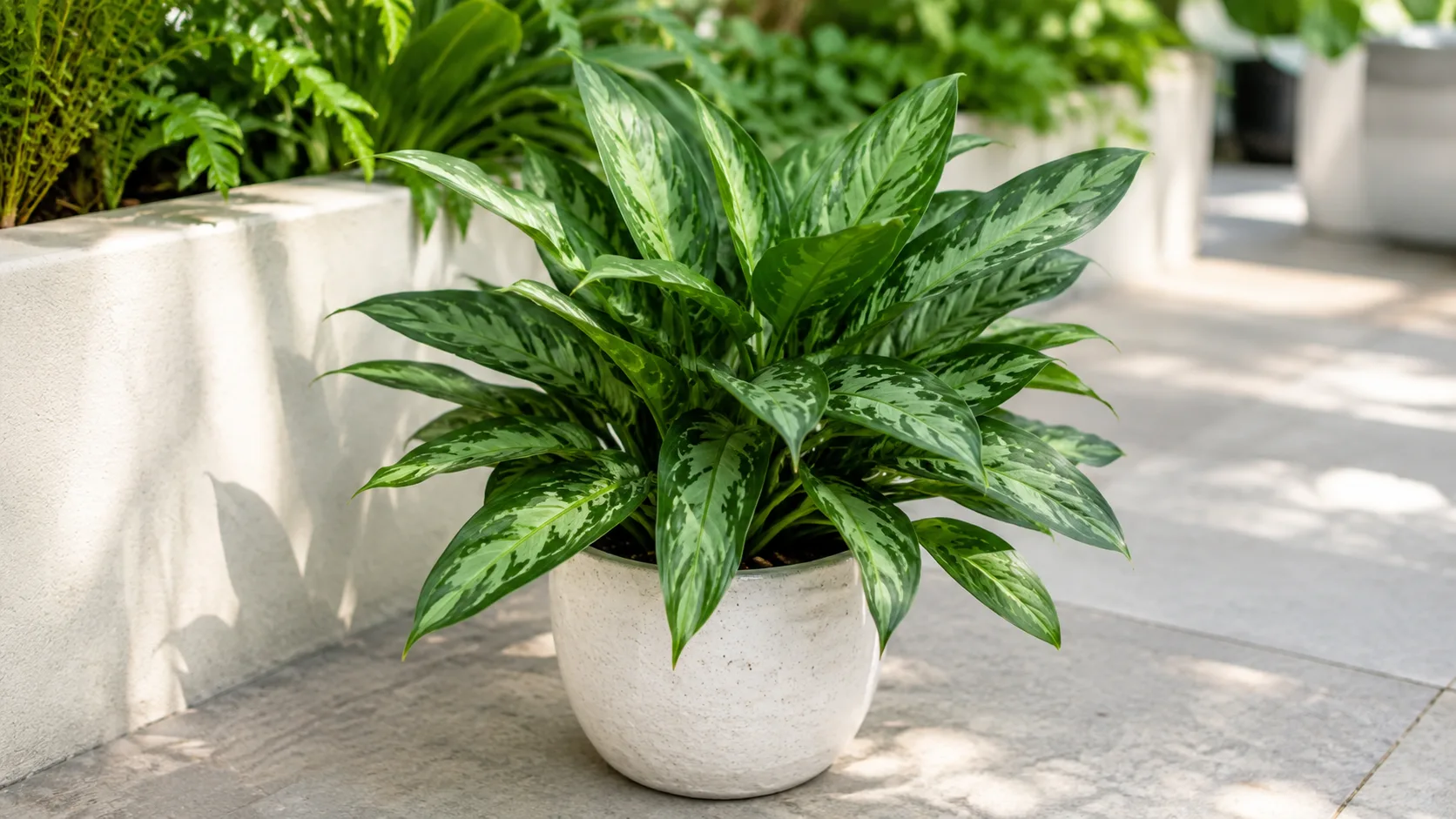
Aglaonema Cutlass
Likely causeCommon whiteflies pattern on Aglaonema Cutlass under indoor care stress.
Quick fixInspect roots, watering, light, and pests; adjust one variable and monitor new growth.
- Medium
Aglaonema Lady Valentine
Likely causeCommon whiteflies pattern on Aglaonema Lady Valentine under indoor care stress.
Quick fixInspect roots, watering, light, and pests; adjust one variable and monitor new growth.
- Medium
Aglaonema Maria
Likely causeCommon whiteflies pattern on Aglaonema Maria under indoor care stress.
Quick fixInspect roots, watering, light, and pests; adjust one variable and monitor new growth.
- Medium
Aglaonema Pictum Tricolor
Likely causeCommon whiteflies pattern on Aglaonema Pictum Tricolor under indoor care stress.
Quick fixInspect roots, watering, light, and pests; adjust one variable and monitor new growth.
 Medium
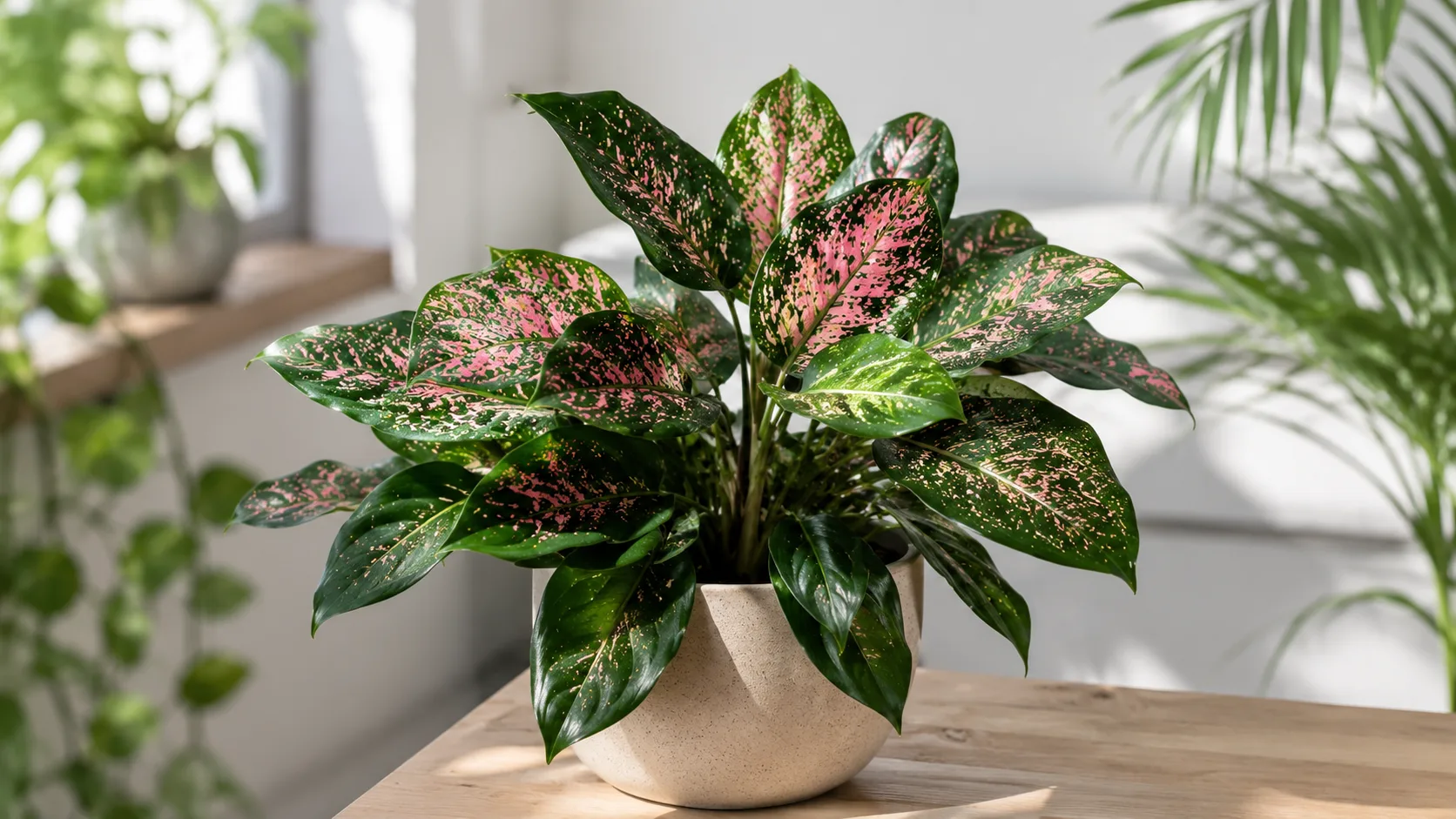
Aglaonema Pink Dalmatian
Likely causeCommon whiteflies pattern on Aglaonema Pink Dalmatian under indoor care stress.
Quick fixInspect roots, watering, light, and pests; adjust one variable and monitor new growth.
- Medium
Aglaonema Red Siam
Likely causeCommon whiteflies pattern on Aglaonema Red Siam under indoor care stress.
Quick fixInspect roots, watering, light, and pests; adjust one variable and monitor new growth.
 Medium
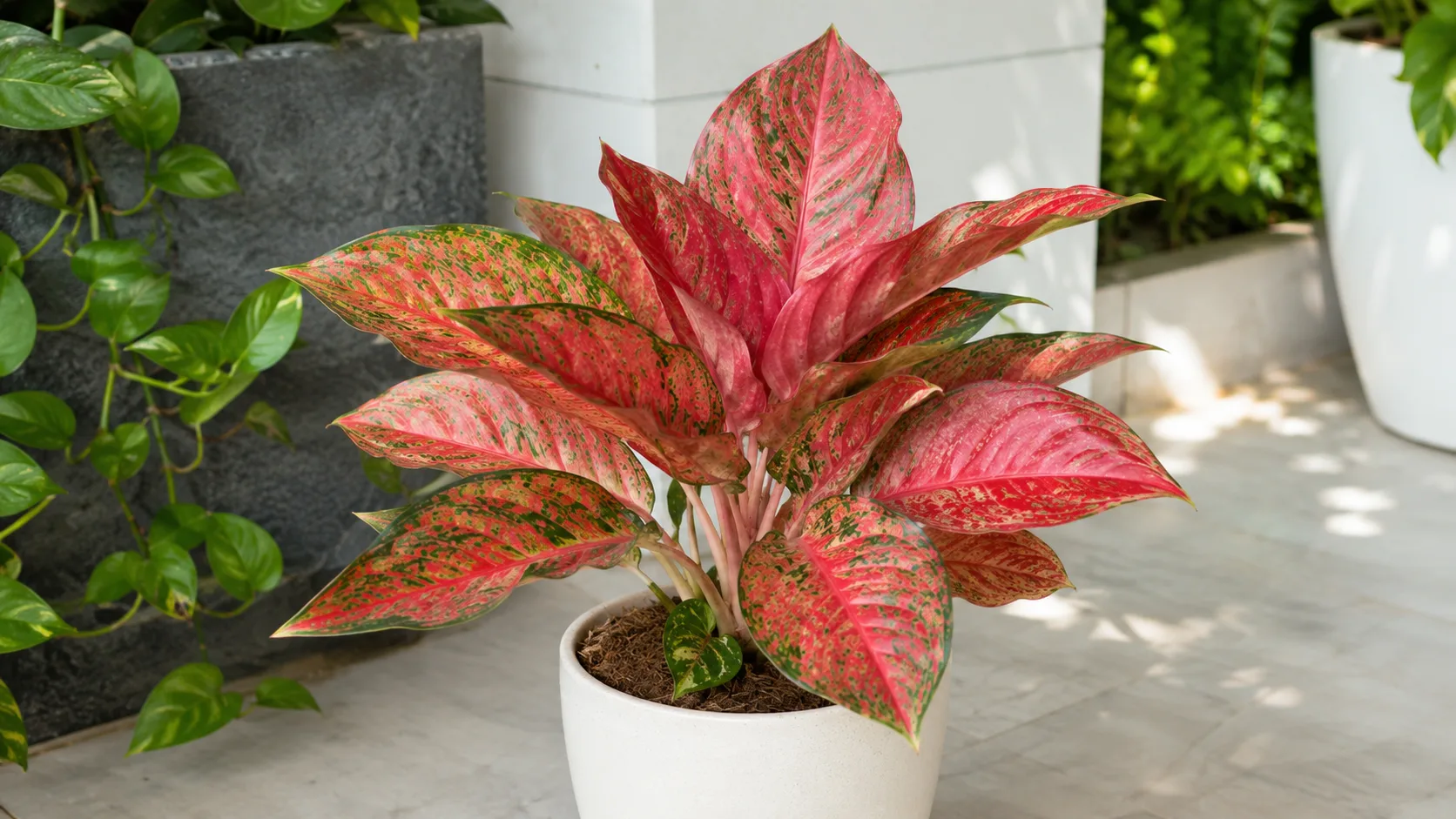
Aglaonema Red Valentine
Likely causeCommon whiteflies pattern on Aglaonema Red Valentine under indoor care stress.
Quick fixInspect roots, watering, light, and pests; adjust one variable and monitor new growth.
 Medium
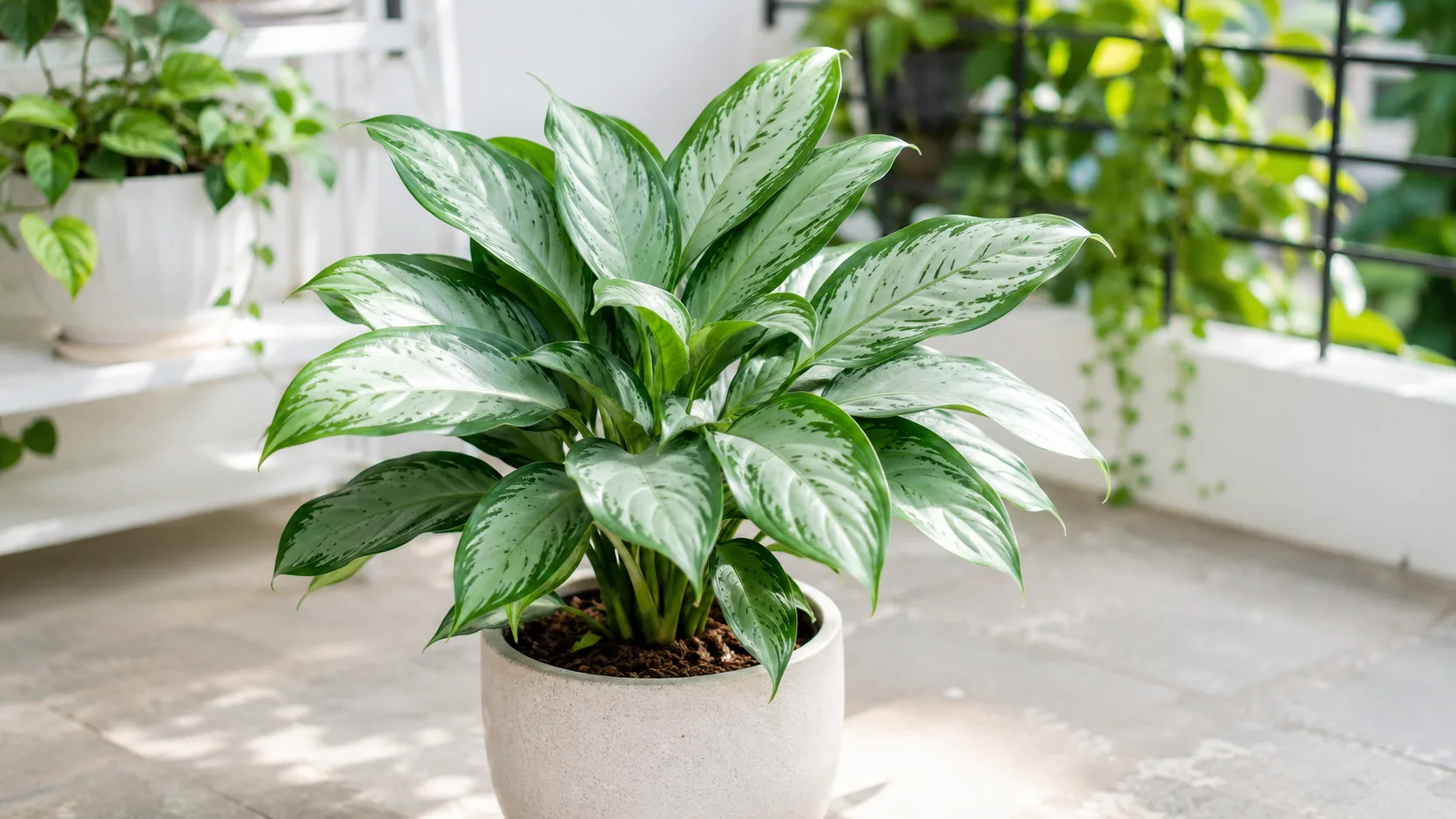
Aglaonema Silver Bay
Likely causeCommon whiteflies pattern on Aglaonema Silver Bay under indoor care stress.
Quick fixInspect roots, watering, light, and pests; adjust one variable and monitor new growth.