Whiteflies on Lucky Bamboo: Causes, Checks & Fixes
Quick answer
Whiteflies on Lucky Bamboo show as tiny white flying insects when leaves are brushed, with nymphs on leaf undersides and sticky honeydew. First step: isolate the plant, rinse undersides with water, and apply insecticidal soap or horticultural oil.
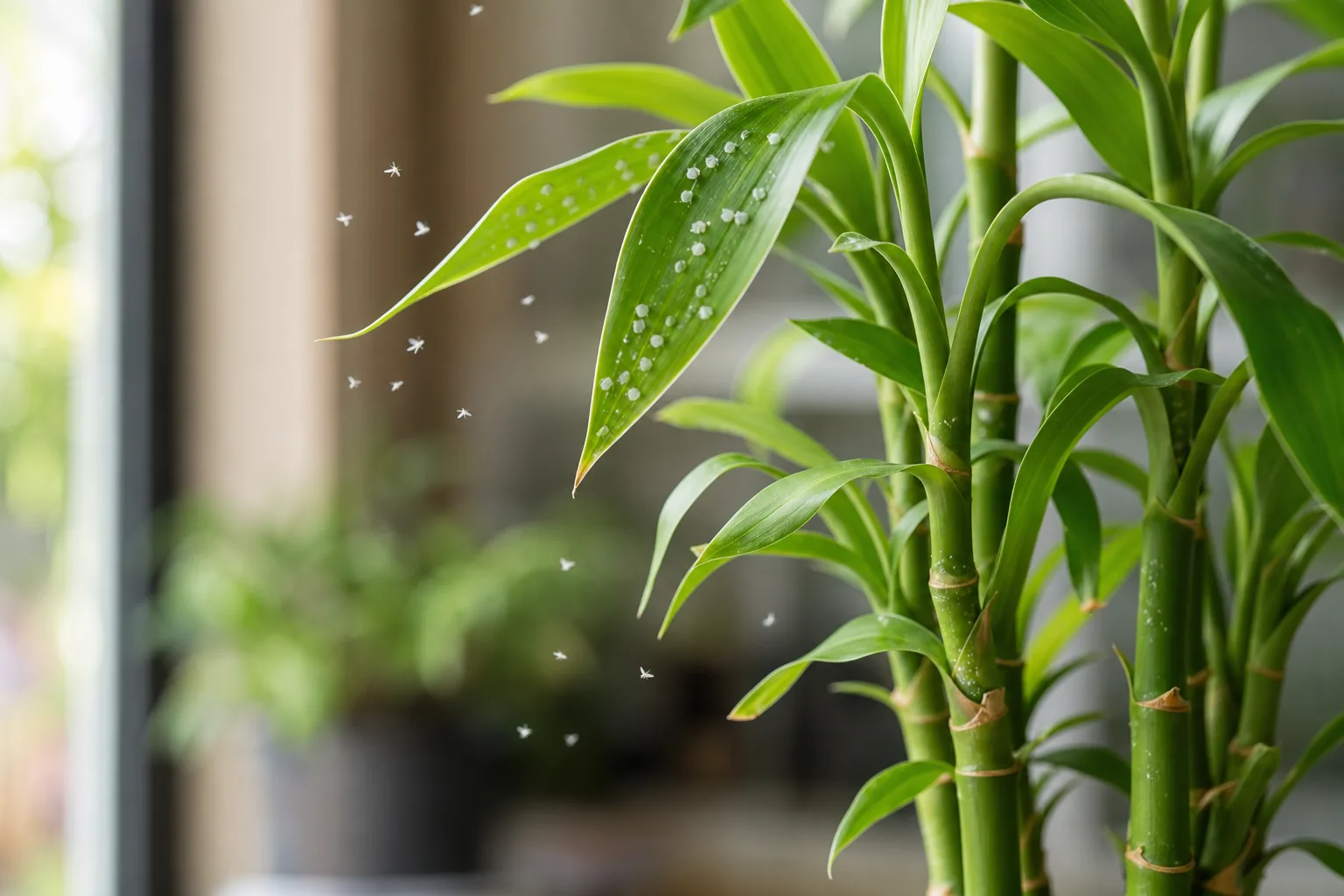
Whiteflies on Lucky Bamboo: Causes, Checks & Fixes
This guide covers whiteflies on Lucky Bamboo. See also the general Whiteflies guide, watering, and light pages for this plant.
Whiteflies on Lucky Bamboo: Causes, Checks & Fixes
Quick answer
If brushing your Lucky Bamboo sends up a white cloud and the vase rim feels sticky, you are probably dealing with whiteflies - not dust. On Dracaena sanderiana, adults fly from narrow strap leaves while flat nymphs cling to undersides and drip honeydew onto pebbles or shelves.
First step: isolate the plant, wash nymphs off with a strong stream of water, then apply insecticidal soap or horticultural oil with full underside coverage.
Whiteflies are less common on Lucky Bamboo than on poinsettias and other primary hosts, but they spread through mixed indoor collections the same way spider mites and mealybugs arrive - hitchhiking on new purchases.
What whiteflies look like on Lucky Bamboo
The species you will most often see indoors is the greenhouse whitefly (Trialeurodes vaporariorum) - a broad host feeder on many houseplants. Silverleaf whitefly (Bemisia tabaci) appears on some collections too; both look similar to the naked eye and need the same repeat-spray protocol.
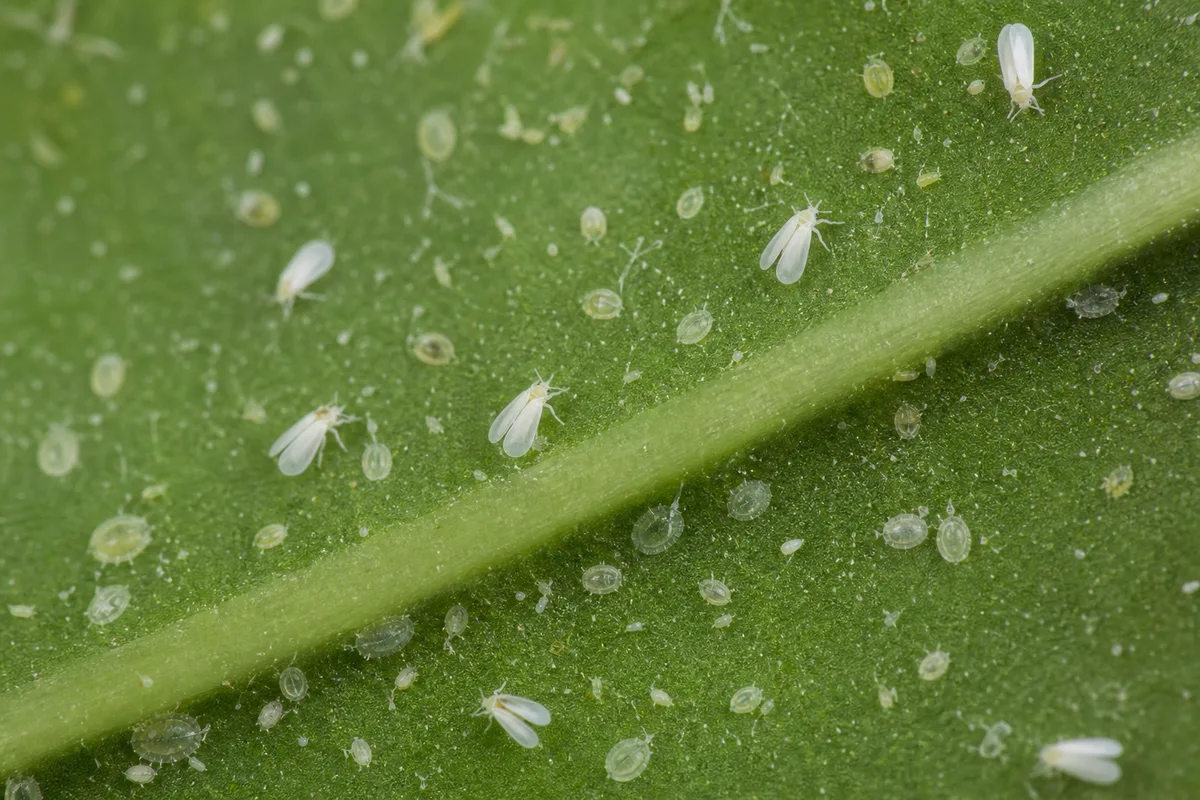
Whiteflies symptoms on Lucky Bamboo - compare with healthy tissue on the same plant.
Adults are small, white to pale yellow winged insects that rise in a cloud when you brush the narrow Dracaena leaves. Nymphs are oval, legless, and stationary on the underside - easy to miss on vertical cane foliage because Lucky Bamboo leaves face outward while pests hide on the back face.
Infested leaves may yellow slowly, then drop as sap is drained. Honeydew makes leaves glossy and can lead to sooty mold on leaves and vase rims. Unlike spider mite stippling, whiteflies are visible insects that fly.
In water culture, honeydew may film the water surface - change water after treatment. In soil culture, sticky leaves and ants scouting honeydew are common secondary signs.
Vertical cane architecture makes underside coverage harder than on trailing pothos whiteflies - you must work each stem individually rather than draping vines in a sink.
Why Lucky Bamboo gets whiteflies
Whiteflies spread from infested houseplants and nursery stock. Warm indoor temperatures let them reproduce year-round through multiple life stages on one plant.
Over-fertilized, tender new growth attracts sap feeders. Fertilize lightly in water or soil - heavy feeding produces soft leaves whiteflies prefer.
Tight braided arrangements reduce airflow and hide undersides from casual checks until honeydew films vase water or the braid interior. Plants in bright, indirect light with dry air may yellow faster once infested.
Lucky Bamboo is a secondary host. Populations often jump from poinsettias, hibiscus, or fuchsia on the same shelf while your canes look fine for weeks - then adults migrate once the primary plant is stressed.
How to confirm the cause (6-step cane inspection)
- Flight test - Disturb foliage; whiteflies fly, dust does not.
- Underside scan - Flat nymphs and pupae on lower leaf surfaces along each cane.
- Sticky leaves - Honeydew points to sap feeders, not fluoride tip burn alone.
- Yellowing pattern - General leaf decline on infested sections, not uniform brown margins from tap water.
- Neighbor plants - Other houseplants with white clouds confirm an active collection-wide source.
- Life stages - Eggs, crawlers, nymphs, and adults together mean repeat treatments are required.
Symptom lookalike comparison
| Sign | Whiteflies | Mealybugs | Dust | Fluoride tip burn | Aphids |
|---|---|---|---|---|---|
| Disturbance test | White insects fly up | Cotton stays put | Wipes off, no flight | N/A | Small soft bodies, may fly |
| Underside | Flat oval nymphs | Waxy cotton in axils | None | N/A | Clusters on new growth |
| Residue | Sticky honeydew | Sticky honeydew | Dry dust only | Dry brown margins | Sticky honeydew |
| Best link | This guide | Mealybugs | Rinse leaves | Brown tips | Aphids |
First fix for Lucky Bamboo
Isolate, rinse undersides, and apply labeled insecticidal soap or horticultural oil.
Move Lucky Bamboo away from other plants - especially any poinsettia or hibiscus on the same shelf. Spray or wipe leaf undersides with a strong stream of lukewarm water to dislodge nymphs. Follow with insecticidal soaps or oils such as neem oil - thorough lower-leaf coverage is essential on vertical canes.
Yellow sticky traps near the vase catch flying adults and help you monitor progress, though traps alone rarely clear established infestations.
Vase culture: rinse without tipping water
For pebble vases, use this sequence instead of lifting the whole display into a shower:
- Slide a plastic bag or cling wrap over the vase mouth and secure with a rubber band - pebbles stay dry.
- Carry the plant to a sink and tilt each cane so undersides face the faucet.
- Rinse both faces of every leaf with lukewarm water; let runoff go into the sink, not the vase.
- Pat dry leaf surfaces with a clean towel before removing the cover.
- Apply soap or oil only to foliage above the water line.
- Change vase water weekly with filtered water after each treatment day.
Do not pour insecticide into vase water unless the label explicitly allows hydroponic use.
Pet safety
Lucky bamboo is toxic to cats and dogs. Treat on a counter pets cannot reach, keep soap runoff away from animals, and wear gloves when removing many infested leaves. If a pet may have chewed freshly treated foliage, contact your veterinarian with the product label in hand - soap residue plus plant sap is a YMYL concern even when the plant itself is the known toxin.
Step-by-step recovery
- Isolate Lucky Bamboo and inspect the highest-risk neighbor plant first.
- Work cane by cane; rinse every leaf underside using the vase-safe protocol above.
- If nymphs coat inner braid leaves after two rounds, partially loosen ties at the top third for one week of spraying access.
- Remove heavily infested yellow leaves if nymphs cover more than half the surface.
- Apply insecticidal soap or horticultural oil; coat undersides until runoff.
- Hang a yellow sticky card just above the foliage.
- Repeat every five to seven days for four to five rounds - eggs and pupae resist single sprays.
- Control ants on shelves if present - they protect whiteflies from natural enemies per UC IPM guidance.
- After each treatment in vases, change water and rinse pebbles if soap dripped through the wrap.
- Inspect neighboring plants before returning Lucky Bamboo to shared shelves.
Documented recovery pattern: A five-cane heart braid in a pebble vase showed white clouds after brushing new shoots in early spring - likely from an untested grocery-store poinsettia on the same desk. After quarantine failure, partial unbraid at week two allowed soap on inner undersides; filtered-water changes followed each spray; clean node shoots appeared by week five after four weekly cycles.
Recovery timeline
Light infestations may clear within three to four weekly treatment cycles if undersides are fully coated each time. Braided forms with hidden nymphs often need six weeks.
Yellowed leaves from feeding do not green up again; watch for clean new growth at nodes. If adults still fly after six rounds, consider discarding severely infested plants to protect the rest of your collection.
Causes to rule out
- Dust on leaves - Wipes away; does not fly or leave honeydew.
- Mealybugs - Cottony white masses in leaf axils, not flying insects.
- Fluoride tip burn - Dry brown margins without sticky residue or nymphs.
- Aphids - Soft-bodied clusters on new growth, usually green or black, not white flyers.
- Fungus gnats - Small flies from soil, not from leaf undersides.
- Thrips - Silvery scrape marks and black specks, not powdery white adults.
What not to do
Do not pour insecticide into vase water unless the label allows hydroponic use. Do not use systemic drenches on edible plants nearby - irrelevant for Lucky Bamboo, but avoid sharing treatment water. Do not stop after one spray; missing pupae reinfests the plant. Do not return to group displays before two clean weekly inspections. Do not ignore the primary host plant on the same shelf.
How to prevent whiteflies next time
Inspect new plants thoroughly before introducing them indoors and quarantine two weeks. Check Lucky Bamboo undersides monthly - especially new shoots.
Feed at quarter strength in water culture. Keep moderate humidity and dust-free leaves. Separate braided canes slightly when possible to improve airflow.
Lucky Bamboo care cross-check
Whitefly treatment must reach every leaf underside on vertical canes - a single missed cluster re-infests after you stop spraying. Pair pest control with weekly filtered water changes so stressed roots recover alongside foliage. Review light placement if leaves were sun-stressed before treatment - soap on heat-stressed foliage can scorch margins.
When to worry
Escalate when most leaves yellow, sooty mold covers the display, or treatments fail after six rounds. Contact your local extension office if multiple houseplants keep whitefly populations after full soap cycles - resistance and mis-identification happen. Lucky bamboo is toxic to pets - see pet safety above if animals had access during floor-level treatment.
Related Lucky Bamboo problems
- Spider mites - stippling and webbing without flying adults
- Mealybugs - cottony wax at nodes, no flight cloud
- Aphids - soft clusters on new shoots
- Thrips - silvery scars, not white moths
- Ants on plant - honeydew farmers that protect whiteflies
Lucky Bamboo care guides
- Overview - vase vs. soil culture hub
- Watering - filtered water rhythm after treatment
- Fertilizer - hold feed until pests clear
- Pruning - sterile removal of heavily infested leaves
Conclusion
Whiteflies on Lucky Bamboo announce themselves when adults fly from brushed leaves and nymphs coat undersides with sticky honeydew. On braided vase displays, the bottleneck is access - not product choice. Isolate, rinse each cane underside, repeat soap or oil on a five- to seven-day schedule, treat the primary host on your shelf, and only re-braid or return to shared spaces after two clean weekly inspections.
When to use this page vs other Lucky Bamboo guides
- Lucky Bamboo watering guide - Use for routine moisture checks before assuming whiteflies is the main issue.
- Lucky Bamboo problems hub - Browse all 41 common issues on this species.