Lucky Bamboo Light Needs: Best Window, Sun & Warning Signs
Quick answer
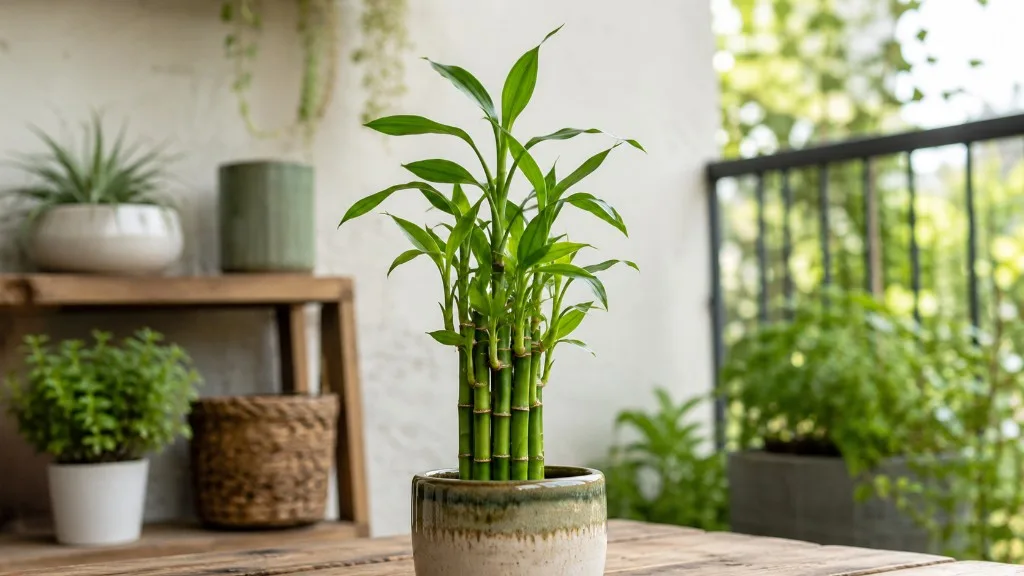
Lucky bamboo grows best in bright, indirect light - the exposure Clemson HGIC and Missouri Botanical Garden recommend for Dracaena sanderiana. It tolerates lower light and office fluorescents with slower growth; unacclimated direct sun scorches leaves.
Lucky Bamboo Light Needs: Best Window, Sun & Warning Signs
Lucky Bamboo Light Needs: Best Window, Sun & Warning Signs
The most common lucky bamboo light mistake is judging the room instead of the plant. A bright living room with the vase on a dim interior shelf is not “good light.” A modest office with steady ceiling LEDs three feet above the canes may be better than a south window where afternoon sun cooks the water. Dracaena sanderiana - the species sold as lucky bamboo - evolved in the filtered understory of tropical western Africa, not in open sun or deep cave darkness. (Missouri Botanical Garden) Clemson HGIC places it in bright, indirect light, often in east- or north-facing rooms, and warns that direct sunlight damages leaves. (Clemson HGIC) NC State Extension lists dappled sunlight and even deep shade among acceptable cultural conditions, which explains why lucky bamboo survives dim desks - but survival is not the same as the compact, green new growth you want on a gift arrangement.
This guide is a light-only companion to the lucky bamboo overview. It covers window compass placement, desk and office fluorescent setups, direct sun limits, grow-light starting points, water-culture quirks, and the warning signs that tell you to move the arrangement before bleached leaves or stretched stems become permanent.
Best Light for Lucky Bamboo
Lucky bamboo performs best in bright, indirect light for most of the day - the kind you get on an east windowsill set back a few inches, or several feet inside a south or west window filtered by sheer curtain. (Clemson HGIC) Missouri Botanical Garden describes the species as easily grown in part shade to full shade indoors but specifies that too much direct sun scorches foliage while bright, indirect light is best. (Missouri Botanical Garden) That pairing is the practical rule: aim for strong plant-facing brightness without sustained hot beams on the leaves or stems.
NC State Extension’s cultural notes - dappled sunlight and deep shade (less than two hours to no direct sunlight) - mark the tolerable floor. (NC State Extension) Lucky bamboo will often maintain existing canes in medium or lower indirect light, especially under office fluorescents, but new shoots stay thinner, leaf spacing widens, and color may darken as the plant stretches toward the brightest vector. For a braided or spiral gift arrangement you want to keep compact, treat lower light as a temporary holding zone, not the long-term goal.
Optimal, Tolerable, and Harmful Exposure Levels
| Level | What it looks like indoors | Lucky bamboo response |
|---|---|---|
| Optimal | Bright indirect: soft hand shadow at leaf height most of the day; gentle morning sun possible | Firm new leaves, even green color, steady slow growth |
| Tolerable | Medium indirect or office ceiling light 2–4 ft above plant; north window at moderate distance | Maintains form; slow or minimal new growth; monitor watering down |
| Harmful | Unfiltered south/west afternoon sun; hot sun through clear vase water | Bleached or yellow patches, crisp scorched areas, sudden collapse after moves |
If you need a measurable reference without buying a meter, roughly 150–400 foot-candles (1,500–4,000 lux) at the leaf surface covers the bright-indirect band most growers target for understory tropicals. Dim interior shelves often fall below 50–100 foot-candles (500–1,000 lux) - enough for short-term survival, weak for vigor. Direct summer sun through glass can exceed 2,000 foot-candles at the pane; unacclimated lucky bamboo leaves rarely handle that without damage.
Judge light by new growth, not old scars. The newest leaf or shoot on each cane tells you whether today’s placement works. Old bleached tissue does not green up again, but correct light today still produces clean new foliage within weeks.
Quick field test: On a clear day, hold your hand between the plant and the window at leaf height. A soft, readable shadow with defined edges usually means bright indirect - the target zone. A faint or absent shadow means low light; survival is possible, vigor is not. If the leaf surface feels hot within an hour of sun hitting it, filter or move back.
Rotate the vase after testing so all canes see similar exposure. Bundled arrangements lean quickly; a quarter turn every week prevents one-sided stretching on spiral or braided gift stock.
Best Window Placement
Window direction matters because it controls beam intensity, duration, and heat - not because compass labels are magic. Lucky bamboo lacks the thick cuticle of a desert succulent; it wants the bright, filtered conditions of an understory shrub. (Missouri Botanical Garden)
Window Compass for Dracaena sanderiana
| Window | Suitability | Placement notes | Main risk |
|---|---|---|---|
| East | Best default | Gentle morning direct sun; bright indirect rest of day. Can sit closer to glass. | Summer morning can intensify - watch first new leaves after seasonal shift |
| North | Good for maintenance | Consistent cool indirect light; rarely scorches | Often too dim for thick new shoots unless you supplement with a grow light |
| West | Use with filtering | Set back 3–6 ft or behind sheer curtain; rotate weekly | Hot afternoon sun and leaf scorch in summer |
| South | Filtered only | Several feet back from glass or behind curtain; avoid clear-vase direct beam | Heat buildup in water culture; bleaching on sun-facing leaves |
Clemson HGIC explicitly suggests east- or north-facing rooms with bright, indirect light. (Clemson HGIC) An east exposure usually outperforms a south window with the pot pressed against unfiltered glass. If your only bright exposure is south or west, prioritize distance and diffusion over proximity.
Rotate the arrangement a quarter turn every week or two so all sides of braided or bundled canes receive similar light. Lucky bamboo leans toward the brightest source; uneven light on a spiral-trained stem can open the spiral on one side only.
Desk, Office, and Feng Shui Placement
Lucky bamboo is sold as a desk and office plant for good reason: it tolerates the steady, moderate irradiance from overhead fluorescent or LED office panels better than many flowering tropicals. Place the vase or pot where plant-facing light is consistent - typically 2 to 4 feet below ceiling fixtures in an open cubicle, not inside a closed cabinet with a glass door that blocks most PAR.
Feng shui traditions often specify corners, entry tables, or wealth sectors without mentioning foot-candles. You can honor placement preferences and meet horticultural needs by choosing a symbolic spot that still receives reflected window light or steady overhead illumination. A southeast corner two feet from an east window satisfies both filtered brightness and common feng shui southeast associations better than a northeast alcove with no light path.
Pet safety: The ASPCA lists Dracaena species as toxic to cats and dogs. (ASPCA) If you place lucky bamboo on a desk or low table for feng shui visibility, keep it out of reach of chewing pets - ingestion can cause vomiting and other symptoms. For homes with curious animals, a higher shelf with similar light may be safer than a floor-level wealth corner.
Can Lucky Bamboo Take Direct Sun?
Unacclimated direct sun - especially hot afternoon rays through south or west glass - will damage lucky bamboo leaves. Clemson HGIC states plainly that direct sunlight damages leaves, causing them to turn brown. (Clemson HGIC) Missouri Botanical Garden adds that too much direct sun scorches foliage. (Missouri Botanical Garden)
A brief period of gentle morning sun on an east sill can work for plants already adapted to bright conditions. The danger is moving a dim-shelf store plant onto a hot windowsill in one step. Leaves formed in low light have physiology tuned to that level; sudden high light and heat causes bleached patches, crisp margins, and in water culture, warmed vase water that stresses roots.
Acclimation Steps Before Stronger Light
- Start at the current location and note new-growth color and spacing for one week.
- Move 1–2 feet closer to the target window (or add one hour of filtered morning sun) and wait 5–7 days.
- Inspect the newest leaves on the sun-facing side. If you see pale yellowing or crisp edges, step back.
- Repeat until the plant sits at the desired spot or you reach bright indirect without scorch.
- Hold fertilizer and major water changes during acclimation - change only one stressor at a time.
Total acclimation from a dim shop shelf to a bright filtered east window typically takes 7–14 days for lucky bamboo’s slow metabolism. Faster moves are possible in cool seasons; summer heat demands more patience.
Low-Light Limits
Lucky bamboo can tolerate lower light for extended periods - NC State’s deep shade rating is real - but it will not thrive there indefinitely. (NC State Extension) Growth slows, internodes lengthen, and leaves may darken as chlorophyll density increases to capture sparse photons. That etiolated look is often misread as “healthy green” because the plant is still upright.
In low light, reduce expectations and adjust care downstream. A dim plant uses less water; in soil that means longer dry intervals (see the watering guide). In a vase, you still need weekly water changes to prevent bacteria even when transpiration is low - but algae grows more slowly, which is one small advantage of dim placement.
Signs Light Is Now Limiting Growth
Watch for smaller new leaves, wider spacing between leaves on each cane, thin or weak new shoots, uniform dark green color without the fresh lime tone of active growth, and no new shoots for many months despite stable water and temperature. If multiple stems in a bundle show these signs together, the whole arrangement needs brighter indirect light or a supplemental lamp - not more fertilizer.
Leggy stretching toward a single window is a directional clue: rotate for evenness, but also raise total daily brightness if the plant keeps leaning after two rotation cycles.
Water-Grown vs Soil-Grown Light Response
Most gift lucky bamboo grows in clear vases with pebbles and water. Soil-grown specimens behave like other Dracaena houseplants in pots. Light hits the same leaves, but failure modes differ.
In water culture, intense light through a clear glass vase can heat the water like a small greenhouse, especially when sun strikes the vessel directly. Warm, stagnant water accelerates bacterial growth and stem stress at the waterline even when leaves look fine. Bright placement is good; direct sun on the vase itself is the combination to avoid. Algae on glass and pebbles also increases under strong light - a cosmetic issue that still signals you should keep up weekly water changes per the watering guide.
In soil culture, scorch shows as bleached or brown leaf patches first; root issues from overwatering on Lucky Bamboo in dim corners follow when growers keep a “moist soil” schedule that worked near a brighter window. Soil buffers temperature better than a thin glass vessel, but soggy mix in low light remains a common path to root rot. Match light changes to watering checks on the soil guide if you grow in mix.
Braided, spiral, or column arrangements add one more variable: inner canes shade outer ones. The front-facing stem may get perfect bright indirect light while stems behind it etiolate. Rotate bundles, or accept that intricate shapes need slightly brighter ambient light than a single straight cane would require.
Using Grow Lights Indoors
When natural light is weak - north rooms, interior offices, short winter days - a full-spectrum LED grow light closes the gap more reliably than hoping ceiling fluorescents alone will push new growth. Lucky bamboo’s slow growth rate means you do not need high-intensity bloom fixtures; a modest vegetative lamp on a timer is enough.
Distance, Duration, and Heat Checks
Start with the fixture 12 to 18 inches (30–45 cm) above the tallest leaf or cane tip. Run 8 to 10 hours daily on a timer to approximate useful day length. If new growth pales or stretches toward the lamp, lower the fixture slightly or add an hour. If leaf edges crisp only under the bulb, raise it or reduce hours.
Use a lamp that covers the whole arrangement, not just the center cane. A single narrow beam leaves outer stems in shadow - the same problem as window-side leaning. LED panels run cool, but enclosed desk domes trapping heat can still stress leaves; leave air space above the canopy.
After adding a grow light, recheck vase water temperature and soil moisture after two weeks. Extra light increases metabolic rate even on slow Dracaenas.
Seasonal Light Shifts and Winter Placement
Day length and sun angle change lucky bamboo’s effective exposure even when you never move the vase. A spot that receives gentle morning sun in June may deliver only dim indirect light in December. If new shoots stall every winter despite stable watering, supplement with a grow light from late fall through early spring rather than pushing the arrangement closer to cold glass.
Conversely, a south-window lucky bamboo that was perfect in January can scorch in July when afternoon beams strengthen and vase water warms. Add sheer curtain, move the arrangement back, or shift it to an east exposure before leaves bleach. Re-check placement at both solstice windows - not because the plant is fussy, but because your room’s light is seasonal even when your care routine is not.
How to Move Lucky Bamboo Safely
Sudden light jumps cause leaf curl, yellowing, scorch, or stalled shoots on lucky bamboo. The plant adjusts slowly; treat placement changes like a dial, not a switch.
Seven- to Fourteen-Day Acclimation Timeline
| Days | Action | What to watch |
|---|---|---|
| 1–3 | Move halfway toward the new bright spot (or add sheer curtain) | Newest leaves on sun-facing side |
| 4–7 | Complete the move if no bleaching; otherwise hold position | Leaf color firmness, stem firmness at waterline |
| 8–14 | Fine-tune distance from window or grow light | New shoot size and spacing |
Do not combine a major light upgrade with Lucky Bamboo repotting guide, full fertilizer, or an aggressive water change in the same week. If you must repot, stabilize light first for ten days. Fluoride and chlorine sensitivity on Dracaena leaf tips - documented on Missouri Botanical Garden’s entry - can mimic light stress; rule out water quality via the overview’s water-quality section before chasing another window. (Missouri Botanical Garden)
Warning Signs Checklist
Use new growth after any move as your primary diagnostic. Old damage is historical.
Too Much Light or Heat
- Bleached white or yellow patches on sun-facing leaves
- Crisp brown margins that appear within days of a window move
- Sudden leaf collapse on the brightest side of the arrangement
- Cloudy vase water developing faster after bright exposure (heat + light accelerating biology)
- Algae bloom on pebbles and glass within days - not harmful by itself, but a sign of strong light plus nutrients in water
Pull back to filtered bright indirect, confirm vase water is cool, and acclimate again if you need more brightness.
Too Little Light
- Long internodes and smaller new leaves
- Dark, uniform green with no fresh shoots for months
- Leaning or opening of spiral/braid shape toward one light source
- Soil staying wet for weeks without plant uptake (linked low-light metabolism)
Upgrade to east-window bright indirect or add a grow light before increasing fertilizer. See not enough light and leggy growth problem pages if symptoms persist after brightening.
Light and Watering: Why They Move Together
Light is the throttle on lucky bamboo metabolism even though watering gets blamed first. A brighter plant transpires faster; a dim plant sits idle with wet roots or stale vase water. Every light upgrade deserves a two-week watering recheck - brighter placements may need more frequent soil irrigation, while vase culture still demands weekly full water changes regardless of light level. (Clemson HGIC)
Conversely, moving to a dim office corner without adjusting a weekly soil-watering habit is a common path to yellow leaves and rot. Read the full lucky bamboo watering guide for vase depth, weekly changes, and top-inch dry rules; use light level only to tune the interval, not to abandon the routine.
Know Your Plant: Dracaena sanderiana in Indoor Light
Lucky bamboo is Dracaena sanderiana - a slow-growing herbaceous shrub from tropical western Africa, not a true bamboo. NC State Extension places it in the asparagus family (Asparagaceae) and notes it performs well in bright but indirect light indoors all year. That rainforest understory origin explains the light sweet spot: more brightness than deep-shade specialists need, less harsh direct exposure than desert succulents tolerate.
Indoors, mature plants reach a few feet tall with widely spaced lance-shaped leaves along upright canes. Missouri Botanical Garden describes slow growth even in good conditions - which means light stress develops gradually and recovery after a correction also takes weeks. Store-bought spirals and braids are trained shapes, not separate species; they all follow the same light rules, but bundled stems shade one another more than a single cane would.
Temperature interacts with light at the window. Clemson HGIC advises bringing lucky bamboo indoors before nighttime temperatures drop below 65°F (18°C) when grown outdoors seasonally. A cold draft on a winter windowsill plus strong glass contact can yellow leaves even when foot-candles look adequate - factor season and sill temperature into placement, not just compass direction.
How We Wrote and Verified This Guide
Author: sai-ananth. Reviewer: LeafyPixels Review Board. Methodology: Recommendations were checked against Clemson HGIC, NC State Extension, and Missouri Botanical Garden references for Dracaena sanderiana, then aligned with LeafyPixels lucky-bamboo care data. Window compass, acclimation timeline, and grow-light starting ranges follow extension light guidance and slow Dracaena growth habit.
Primary sources used: Clemson HGIC (bright indirect, east/north rooms, direct sun damage); NC State Plant Toolbox (dappled sun, deep shade, cultural flexibility); Missouri Botanical Garden (part shade to full shade, scorch risk, bright indirect optimum); ASPCA (Dracaena pet toxicity). Retail claims that lucky bamboo “needs almost no light” or “loves full sun” were rejected when they contradicted extension ranges.
Related Lucky Bamboo Care
- Lucky bamboo overview - identification, water quality, toxicity
- Watering - weekly vase changes and soil moisture
- Soil and mix - drainage for potted specimens
- Propagation - salvaging etiolated canes
- Fertilizer - only after light and water are stable
- Sunburn · Yellow leaves · Brown tips · Not enough light
Conclusion
Lucky bamboo light needs reduce to one clear preference backed by extension sources: bright, indirect light for most of the day, with east or filtered exposures as the safest defaults. The species tolerates lower light and office fluorescents longer than many tropicals, but compact gift arrangements and steady new growth need more brightness than a dim interior shelf provides.
Place the plant where new leaves prove the light works, not where the room looks bright to you. Filter harsh south and west sun, protect clear vases from direct beams that heat water, and acclimate over 7–14 days when upgrading from a store display. Link every light change to a watering recheck, keep pets away from toxic Dracaena tissue on low desks, and use the warning-sign checklist before fertilizer or repotting enter the picture.
When to use this page vs other Lucky Bamboo guides
- Lucky Bamboo overview - Start here for whole-plant context before deep-diving this topic.
- Lucky Bamboo problems hub - Jump to symptom-specific fix guides when this care topic does not resolve the issue.
- Sunburn / Scorched Leaves on Lucky Bamboo - Escalate here when light adjustments are not enough.
- Leaf Drop on Lucky Bamboo - Escalate here when light adjustments are not enough.