Lucky Bamboo Repotting: Water Vase & Soil Methods
Quick answer
Most lucky bamboo grows in a water vase - repot when roots crowd the glass or water turns sour; scrub pebbles, trim rotted roots, and refill with filtered water covering roots plus 1 inch of stem. Soil-grown plants go one pot size up in spring with well-drained mix, stake tall canes, and skip fertilizer for a month.
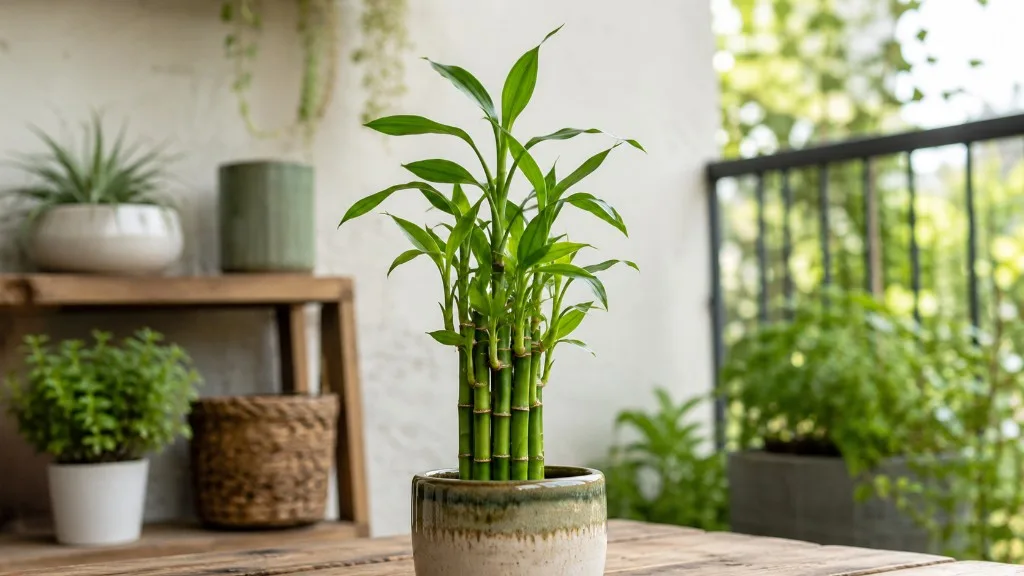
Lucky Bamboo Repotting: Water Vase & Soil Methods
Lucky Bamboo Repotting: Water Vase & Soil Methods
Lucky bamboo repotting starts with a question most generic houseplant guides skip: is your plant growing in a glass vase with pebbles or in potting soil? Most retail lucky bamboo never touches soil. Roots sit in decorative stones with standing water covering the base of the canes - and that setup follows a completely different repot workflow than upgrading a soil-grown specimen in a drain-hole pot. Treating every lucky bamboo like a pothos in peat mix is why vase growers land on soil-only pages, repot nothing, and watch roots crowd the glass until water turns sour.
Lucky bamboo is not true bamboo. It is Dracaena sanderiana, a tropical shrub from western Africa in the asparagus family (Asparagaceae). Stems develop adventitious roots at nodes and can live submerged in water for years - a trait that makes desk displays possible but also makes stagnant water and crowded roots the primary repot triggers. This guide covers both paths: when and how to move a vase arrangement, when to upsize a soil pot, how to clean pebbles, what water to use after the move, and how to transition between media without losing twisted stalks. For ongoing moisture rules after repotting, see the lucky bamboo watering guide; for mix recipes on the soil path, see the lucky bamboo soil guide.
Why Lucky Bamboo Repotting Is Different From Other Houseplants
Most houseplant repotting advice assumes a fibrous root ball in peat-based mix, a drainage hole, and a calendar of spring upsizing. Lucky bamboo breaks that template in two ways. First, water culture is the default retail format - bundled canes in a narrow vase, not a nursery pot. Second, even soil-grown specimens have thin, cane-like stems that may need staking after repot until new roots grip the mix (Clemson HGIC). You are not always “refreshing soil.” Sometimes you are scrubbing pebbles, trimming water roots, and moving to a taller vase while keeping a precise submersion depth.
Repotting also resets the hygiene cycle. In a vase, old water harbors bacteria that cause stem rotting - yellow, soft tissue at the waterline. A full vase move with pebble cleaning is often the fix when weekly water changes alone no longer keep water clear. In soil, repotting addresses compacted mix, circling roots, and pots that drain too slowly. The goal is the same - healthier roots - but the hands-on steps diverge from step one.
Vase culture vs soil culture at a glance
| Vase + pebbles | Potting soil | |
|---|---|---|
| Typical trigger | Roots fill glass, water clouds fast, sour smell | Roots circle pot, water runs through, mix breaks down |
| Core repot action | Larger vase, scrub pebbles, trim roots, refill water | One size up, fresh well-drained mix, stake if tall |
| Water depth after | Roots + at least 1 inch (2.5 cm) of stem submerged | Top inch dry before next watering |
| Post-repot care | Full water change weekly | Lighter watering 2–3 weeks; skip fertilizer ~1 month |
| Main risk | Stagnant water → stem rot | Oversized pot → root rot |
NC State Extension describes lucky bamboo as growable in chlorine-free water with pebbles or a moist potting mix. Pick the row that matches your plant before reading further.
First Step: Is Your Plant in Water or Soil?
Look at the container base. If you see glass, marbles, or polished stones with visible water - you are a vase grower. Jump to the vase step-by-step section. If the plant sits in opaque mix with a drainage hole (or a nursery pot inside a decorative sleeve) - you are on the soil path. If you inherited a gift arrangement in a sealed cache pot with no drainage and no visible water line, gently lift the grow pot or tilt the container: water culture often uses a clear or semi-clear inner vase.
Do not assume soil because the label said “lucky bamboo.” Most gift plants are water-grown. Applying soil repot steps - teasing a root ball, adding peat mix - to a vase specimen damages water-adapted roots and wastes an hour. Conversely, submerging soil-grown canes in a decorative vase without acclimation causes rot. When in doubt, check the lucky bamboo overview for how your specimen was likely sold, then confirm by inspecting the root zone.
When Lucky Bamboo Needs Repotting
Lucky bamboo does not demand annual repotting on a fixed calendar. Vase plants may go two to three years between full moves if weekly water changes keep water clear and roots have room. Soil specimens often need refreshing every one to two years in active indoor growth, or when mix quality declines. Plan work during spring or early summer when the plant can recover fastest - unless foul water or rot forces an immediate vase rescue.
Signs your water vase needs attention
Repot or fully refresh the vase when two or more of these appear:
- Roots fill the glass - white tips press against the walls, weave through pebbles densely, or block your view of the stem bases.
- Water clouds within days of a full change, or develops a sour smell - bacterial buildup in pebbles and on roots.
- Water level drops unusually fast between weekly changes because the root mass displaces volume.
- Stems yellow or soften at the waterline while upper leaves stay green - early stem rot tied to stagnant water (NC State Extension).
- Algae coats the glass so thickly that light to lower stems is reduced - common in bright windows; cleaning alone may suffice, but crowded roots often need a larger vessel.
A pebble refresh without a larger vase is enough when roots still have an inch of clear glass space but stones feel slimy. Full repot means new container, scrubbed pebbles, optional root trim, and fresh water.
Signs your soil pot needs a bigger home
Soil-grown lucky bamboo needs repotting when:
- Roots circle the drain hole or rise to the soil surface in a dense mat.
- Water runs straight through without absorbing - compacted or spent mix.
- Growth stalls in appropriate light despite consistent care.
- Mix smells sour, stays wet for many days after watering, or grows fungus gnats.
- The pot tips easily because the root ball is top-heavy relative to the container.
Go one pot size up - about 2–5 cm (1–2 inches) wider in diameter (Clemson HGIC). Jumping to a much larger pot holds excess moisture around thin roots and invites rot - the same mistake as oversizing any slow indoor shrub.
Best Time of Year to Repot Lucky Bamboo
Spring through early summer is the safest window for both culture methods. Rising light and warmth support new root growth after disturbance. Indoor temperatures roughly 65–80°F (18–27°C) suit recovery.
Winter repotting is acceptable only when delay would clearly harm the plant: foul-smelling vase water, active stem rot, severe root-binding, or sour soil. Use minimal root disturbance, avoid fertilizer for at least a month on soil specimens, and keep vase water on a strict weekly change schedule afterward. If the plant is merely slightly tight but healthy, wait for spring.
Fall is a reasonable time for a pebble scrub and water refresh in a vase without upsizing - lower growth speed means less stress. Avoid stacking repotting with a major location or light change the same week.
Tools and Materials for Water vs Soil Repots
Vase repotting needs: a clean vase one size larger (wider and often taller), room-temperature filtered, distilled, or dechlorinated water, a bowl for holding pebbles during scrubbing, an old toothbrush or soft brush, scissors or pruners sterilized with rubbing alcohol, optional diluted liquid houseplant fertilizer at one-quarter strength for later (not at repot day), and a towel for spills. Rinse new pebbles or marbles before use to remove dust.
Soil repotting needs: a pot 2–5 cm wider with drainage holes, fresh well-drained indoor or tropical potting mix (see the soil guide for perlite ratios), a hand trowel, chopstick or pencil for settling mix, clean scissors, stakes and soft ties if canes are tall, and a saucer. Water the day before so the root ball holds together.
Keep pets and children away from the work area - lucky bamboo contains saponins toxic to cats and dogs if chewed.
Step-by-Step: Repotting Lucky Bamboo in a Water Vase
Set aside 30–45 minutes for a typical three-stem arrangement. Work over a sink or tray.
-
Prepare the new vase and water. Rinse the new container. Fill a pitcher with room-temperature filtered or distilled water - NC State Extension recommends chlorine-free water for plants grown in standing water.
-
Lift the arrangement carefully. Tilt the old vase and pour out all water. Note smell, slime, and root color. Firm white roots are healthy; brown, mushy sections need trimming.
-
Remove pebbles into a colander. Rinse under lukewarm running water. Scrub each stone with a brush if a biofilm slips off as gray slime - that film feeds bacteria that cause stem rot.
-
Inspect and trim roots. Cut mushy brown roots back to firm white tissue with sterile scissors. Trim only what is necessary; lucky bamboo tolerates moderate root pruning in water. Avoid bare-rooting the entire mass unless rot is extensive - keep pebble-embedded roots intact when possible.
-
Check stems. Wipe lower stems with a damp cloth. If tissue is soft at the waterline, cut back to firm green cane and reduce submersion depth slightly on that stem if needed.
-
Reassemble in the new vase. Add a thin layer of rinsed pebbles. Stand canes upright, spreading roots gently. Add pebbles around roots for support - twisted or braided arrangements may need a narrower neck on the vase to hold stalks vertical.
-
Add water to the correct depth. Submerge roots and at least one inch (2.5 cm) of the lowest stem. Do not flood leaves or upper stems. Mark the glass at the waterline if helpful.
-
Place back in bright, indirect light. Avoid direct sun the first week. Begin weekly full water changes immediately - same routine as the watering guide describes.
Success looks like clear water for a full week, firm green stems at the submersion line, and new white root tips within two to four weeks in warm, bright conditions.
Cleaning and reusing pebbles safely
You can reuse pebbles if you scrub them thoroughly. Soak in hot water for ten minutes, brush, rinse until rinse water stays clear, then air-dry on a towel before reassembly. Replace pebbles that crumble, smell persistently sour after scrubbing, or carry visible mold in crevices. Never return slimy stones to a fresh vase without cleaning - you reintroduce the bacteria you repotted to remove.
Step-by-Step: Repotting Lucky Bamboo in Soil
Soil repotting follows classic houseplant logic with one lucky-bamboo-specific addition: staking tall canes until roots anchor.
-
Water the day before so the root ball stays intact.
-
Choose the new pot - one size up, with drainage holes. Place mesh or a coffee filter over the hole if mix escapes.
-
Unpot gently. Tip the plant and slide it out. Tease circling roots at the bottom and sides; cut dead, mushy tissue.
-
Partial soil refresh. Shake off no more than one-third of old mix unless rot or salt buildup requires more. Keep some original medium around fine roots.
-
Fill the new pot partway with fresh well-drained indoor potting mix. Set the root ball so the stem bases sit at the same depth as before - do not bury canes deeper than they grew.
-
Backfill and settle. Add mix around the sides. Use a chopstick to eliminate air pockets without compacting heavily.
-
Stake if needed. Tall stems should be staked until roots anchor into the potting soil. Use a bamboo stake and soft ties; avoid crushing leaves.
-
Water lightly once. Let excess drain fully; empty the saucer. Keep out of direct sun for a week.
-
Hold fertilizer for at least a month. Resume monthly feeding during the growing season per Clemson guidance - or follow the fertilizer guide for rates.
Water when the top inch of soil is dry, then drain thoroughly. Do not leave standing water in a saucer.
Staking tall stems until roots anchor
Thin lucky bamboo canes wobble after repotting because new mix is loose and roots have not yet gripped the sides. A single stake placed alongside the cluster, with ties below the leaf line, prevents tipping without damaging nodes. Remove stakes after four to six weeks when a gentle tug meets resistance - the same root-establishment window as other repotted houseplants. Braided specimens may need two stakes forming an X for stability.
Moving Between Water and Soil
Water to soil: Rinse pebbles off roots under lukewarm water. Pot immediately into moist (not soggy) well-drained mix. Stake tall canes. Expect one to two weeks of mild stress - slight leaf yellowing or paused growth is common. Keep soil evenly moist but never waterlogged the first month; roots adapted to standing water are vulnerable to rot in saturated mix.
Soil to water: Gently wash soil from roots under running water. Trim any mushy sections. Place in a vase with rinsed pebbles and chlorine-free water at the correct submersion depth. Change water weekly. Transition is often easier than water-to-soil because adventitious roots form readily in water (Clemson HGIC propagation guidance).
Do not flip media during a health crisis - stabilize the plant first. For multiplying canes after a trim, see lucky bamboo propagation.
Water Quality After Repotting
Water chemistry matters more after a vase repot because disturbed roots are exposed and leaf tips are sensitive. NC State Extension recommends chlorine-free water for water-grown plants. Missouri Botanical Garden notes Dracaena species may develop brown leaf tips from chlorine and fluoride in tap water.
Filtered or distilled water is the safest default after repotting. Leaving tap water open overnight removes chlorine but not fluoride. If tips brown within two weeks of an otherwise correct repot, switch water sources before assuming failure. For soil-grown plants, use the same quality water you will use long term - salts in hard tap water accumulate in mix over months.
Common Mistakes and How to Recover
Skipping pebble cleaning - Cloudy water returns within days. Fix: disassemble, scrub stones, trim rotted roots, refill with fresh water.
Oversized soil pot - Mix stays wet; lower leaves yellow. Fix: unpot, let root ball dry slightly, repot into a smaller appropriate container with gritty mix; withhold fertilizer.
Submerging too much stem - Upper stem tissue rots. Fix: lower water to roots plus one inch of cane only; remove soft tissue.
Bare-rooting water culture plants - Fine water roots tear away; shock lasts weeks. Fix: next time keep pebble-embedded mass intact; trim only rot.
Repotting into a cache pot with no drainage - Soil path only. Decorative outer pots must not hold standing water. Use an inner nursery pot or drill holes.
Fertilizing immediately after soil repot - Burns recovering roots. Wait at least a month.
Recovery signal for vase culture: water stays clear a full week. For soil: new shoots or firm leaves within two to four weeks.
Recovery Timeline by Culture Method
Vase repot: Most arrangements look normal within three to seven days if water quality is good and rot was removed. New white root tips often appear within two to four weeks. Continue weekly full water changes - repotting does not replace that routine.
Soil repot: Mild wilt or growth pause for one to two weeks is normal. Full root establishment takes four to six weeks. New leaf growth confirms success. Damaged leaves do not green up again - watch new growth instead.
If yellowing spreads, stems soften, or soil smells sour after three weeks, inspect roots immediately and adjust water or medium - see root rot and yellow leaves problem guides.
Pet and Child Safety During Repot Work
Lucky bamboo is toxic to cats and dogs - saponins can cause vomiting, drooling, and dilated pupils in pets if ingested. Sap may irritate human skin. Keep the plant, trimmings, and rinse water away from pets and children during repotting. Wash hands after handling cut stems. Contact your veterinarian if a pet chews any part of the plant.
Conclusion
Lucky bamboo repotting is a culture choice first. Vase growers scrub pebbles, trim crowded roots, move to a taller glass, and refill with chlorine-free water at the correct submersion depth - then resume weekly water changes. Soil growers go one pot size up with well-drained mix, stake wobbly canes, water lightly, and skip fertilizer for a month. Match the workflow to how your plant actually grows, link repot timing to clear signs rather than a blind calendar, and use spring when you can. Done with that fork in mind, repotting is a short maintenance session that buys years of stable roots instead of a recurring emergency search for why the water smells wrong.
When to use this page vs other Lucky Bamboo guides
- Lucky Bamboo overview - Start here for whole-plant context before deep-diving this topic.
- Lucky Bamboo problems hub - Jump to symptom-specific fix guides when this care topic does not resolve the issue.
- Transplant Shock on Lucky Bamboo - Escalate here when repotting adjustments are not enough.
- Root Rot on Lucky Bamboo - Escalate here when repotting adjustments are not enough.