Root Rot on Lucky Bamboo: Causes, Checks & Fixes
Quick answer
Lucky Bamboo root rot usually starts with stagnant vase water or soggy soil. First step: fully change vase water or unpot, trim mushy roots, and repot in fresh draining mix with reduced watering.
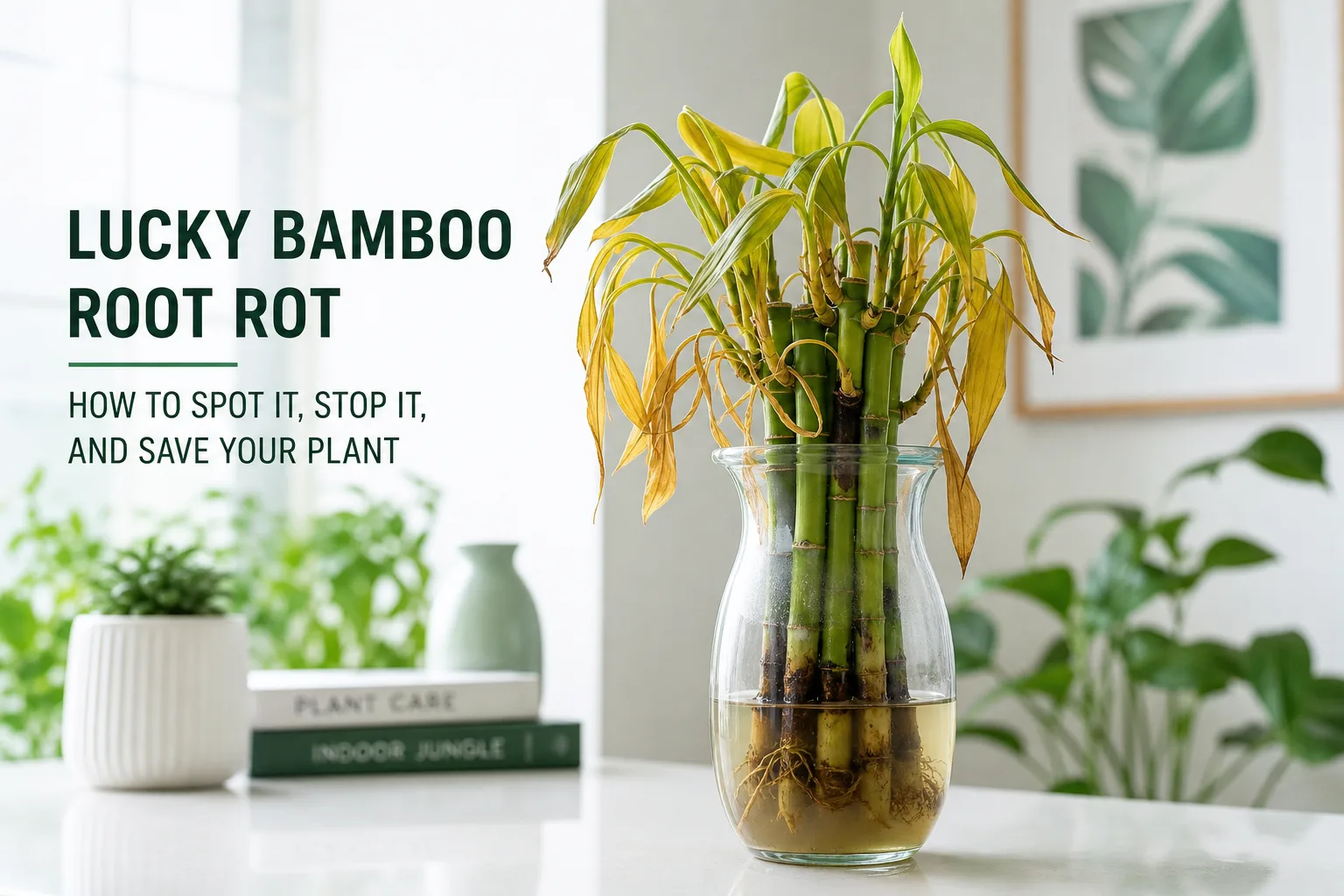
Root Rot on Lucky Bamboo: Causes, Checks & Fixes
This guide covers root rot on Lucky Bamboo. See also the general Root Rot guide, watering, and light pages for this plant.
Root Rot on Lucky Bamboo: Causes, Checks & Fixes
Quick answer
Root rot on Lucky Bamboo (Dracaena sanderiana) almost always traces to stagnant vase water or waterlogged soil. First step: fully change the water and rinse pebbles, or unpot soil-grown plants, trim mushy roots, and repot in fresh mix - then water less until new roots stabilize.
Lucky Bamboo is commonly sold in decorative vases, but fog or cloudiness in the water is a sign of bacteria that can attack the plant. In soil, overwatering can cause yellowing of the leaves and rotting of the stems. Damaged roots cannot move water, so canes wilt even when the vase looks full.
What root rot looks like on Lucky Bamboo
In water culture, early rot shows as cloudy or milky water, a sour smell, and roots turning brown or slimy instead of firm and white. Canes may yellow from the base upward while water still covers the roots.
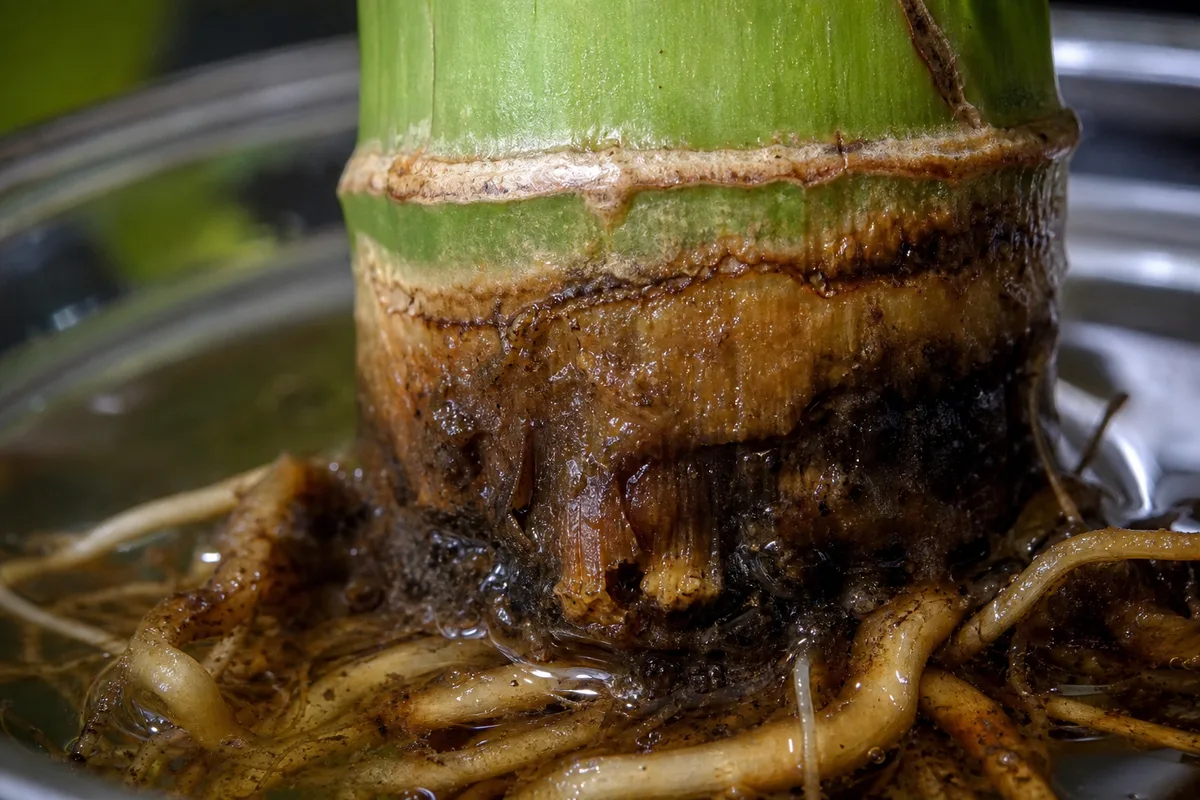
Root Rot symptoms on Lucky Bamboo - compare with healthy tissue on the same plant.
In soil culture, the pattern mirrors other houseplants: wilting despite wet mix, lower leaves yellowing, and a musty odor from the pot. Advanced cases show soft green stems at the water line or soil surface - a serious sign on cane plants where rot climbs quickly.
Healthy Lucky Bamboo roots in water are pale and resilient. Rotted roots pull away easily when rinsed. Stem nodes should feel solid; mushy tissue at a node means decay has moved above the root zone.
Why Lucky Bamboo gets root rot
Water-culture setups fail when water is not changed weekly. Organic debris from old leaf sheaths and algae feeds bacteria. Dracaena species are easily affected by fluoride in tap water, which weakens tissue and makes rot spread faster once bacteria take hold.
Soil-grown plants rot when mix stays saturated. Easily grown in evenly moist soil does not mean constantly wet - pots without drainage, saucers holding runoff, or watering before the top inch dries create anaerobic root zones.
Low light compounds the problem. A plant in dim corners uses little water, so vase water or soil stays stale longer. Cool rooms slow metabolism further, turning a summer watering habit into overwatering.
How to confirm the cause
Confirm in this order:
- Culture type - Is the plant in a vase or soil pot? Each has different inspection steps.
- Water clarity - Clear water with firm roots usually means something else; cloudy water with soft roots confirms vase rot.
- Last change date - Water unchanged for more than 10–14 days strongly supports bacterial rot.
- Soil moisture - For potted plants, wet mix for days with wilting canes suggests root dysfunction.
- Root inspection - Slide soil plants out or lift canes from pebbles. Compare firm white roots with brown slime.
- Stem base - Soft, dark tissue at nodes indicates advanced rot; trimming roots alone may not save braided stems.
underwatering on Lucky Bamboo shows dry pebbles, light pots, and wrinkled canes with firm roots - the opposite pattern.
First fix for Lucky Bamboo
Fully change vase water and rinse pebbles, or unpot, trim rotted roots, and repot in fresh draining mix.
For vase plants: dump all water, scrub the container, rinse pebbles, trim brown roots with clean scissors, and refill with filtered or distilled water. Submerge roots and at least one inch of stem in clean water.
For soil plants: remove wet mix, cut mushy roots back to firm tissue, and repot into well-drained potting soil in a pot with open drainage. Water lightly once, then let the top inch dry before the next drink.
Step-by-step recovery
- Remove the plant from cloudy water or wet soil; discard contaminated substrate.
- Rinse roots gently under lukewarm water to see firm versus mushy tissue.
- Trim all soft roots; sterilize scissors between cuts.
- For vases: clean container and pebbles; refill with filtered water at the correct depth.
- For soil: repot into fresh indoor potting mix with perlite; stake tall canes until roots anchor.
- Hold fertilizer until new leaf tips appear - stressed roots cannot handle salts.
- Place in bright, indirect light with good airflow while recovering.
If braided stems are mostly firm but roots failed, individual canes may survive after separation and rerooting in clean water.
Recovery timeline
Mild vase rot with firm stems may stabilize within one to two weekly water changes if light and water quality improve. Soil recovery often takes two to four weeks before new root tips appear.
Severe stem softness at multiple nodes usually means the display cannot be saved whole. New roots will usually form within 2 to 3 weeks from healthy cane cuttings placed in fresh water - start backups before rot spreads.
Causes to rule out
Root rot symptoms overlap with:
- Fluoride damage - Brown or yellow leaf tips with firm roots and clear water; fix water source, not drainage.
- Underwatering - Dry vase or light pot, limp canes, white firm roots.
- Cold damage - Brought outdoors too early; bring indoors before nighttime temperatures drop below 65°F.
- Normal leaf sheath scars - Brown patches where old leaves detached are cosmetic, not rot.
What not to do
Do not top up cloudy vase water without a full change. Do not keep watering wilting soil-grown plants without inspecting roots. Avoid tap water if fluoride has been a problem. Do not fertilize rotting plants. Do not repot into oversized pots that hold moisture longer.
How to prevent root rot next time
Change the water weekly and use chlorine-free, low-fluoride water. Rinse pebbles monthly to limit algae.
For soil culture, water when the top inch of soil is dry and empty saucers completely. Match watering to light - brighter spots dry faster.
Consider growing in soil long term if weekly vase maintenance is hard to sustain; Dracaena sanderiana is much less difficult to maintain in soil when drainage and filtered water are consistent.
Related Lucky Bamboo problems
- Overwatering - wet soil before roots fail
- Drooping leaves - leaf hang with intact canes
- Wilting - cane collapse routing
- Poor drainage - soil structure failure
- Brown tips - fluoride with firm roots and clear water
Lucky Bamboo care guides
- Watering - weekly vase change rhythm
- Repotting - soil rescue after trim
- Overview - culture-type decision hub
When to worry
Escalate immediately if stems turn mushy, black patches climb nodes, or vase water clouds again within 48 hours of changing. Lucky bamboo is toxic to pets - wear gloves when handling sap from trimmed rot tissue and keep plants out of reach.
Conclusion
Lucky Bamboo root rot begins with stale vase water or soggy soil, not mysterious wilt. Confirm by inspecting water clarity and root firmness, trim decay, refresh the growing medium, and use filtered water on a weekly rhythm.
When to use this page vs other Lucky Bamboo guides
- Lucky Bamboo watering guide - Use for routine moisture checks before assuming root rot is the main issue.
- Lucky Bamboo problems hub - Browse all 41 common issues on this species.
- Overwatering on Lucky Bamboo - Different entry point when symptoms overlap with root rot.
- Yellow Leaves on Lucky Bamboo - Different entry point when symptoms overlap with root rot.
- Poor Drainage on Lucky Bamboo - Different entry point when symptoms overlap with root rot.