Poor Drainage on Lucky Bamboo: Causes, Checks & Fixes
Quick answer
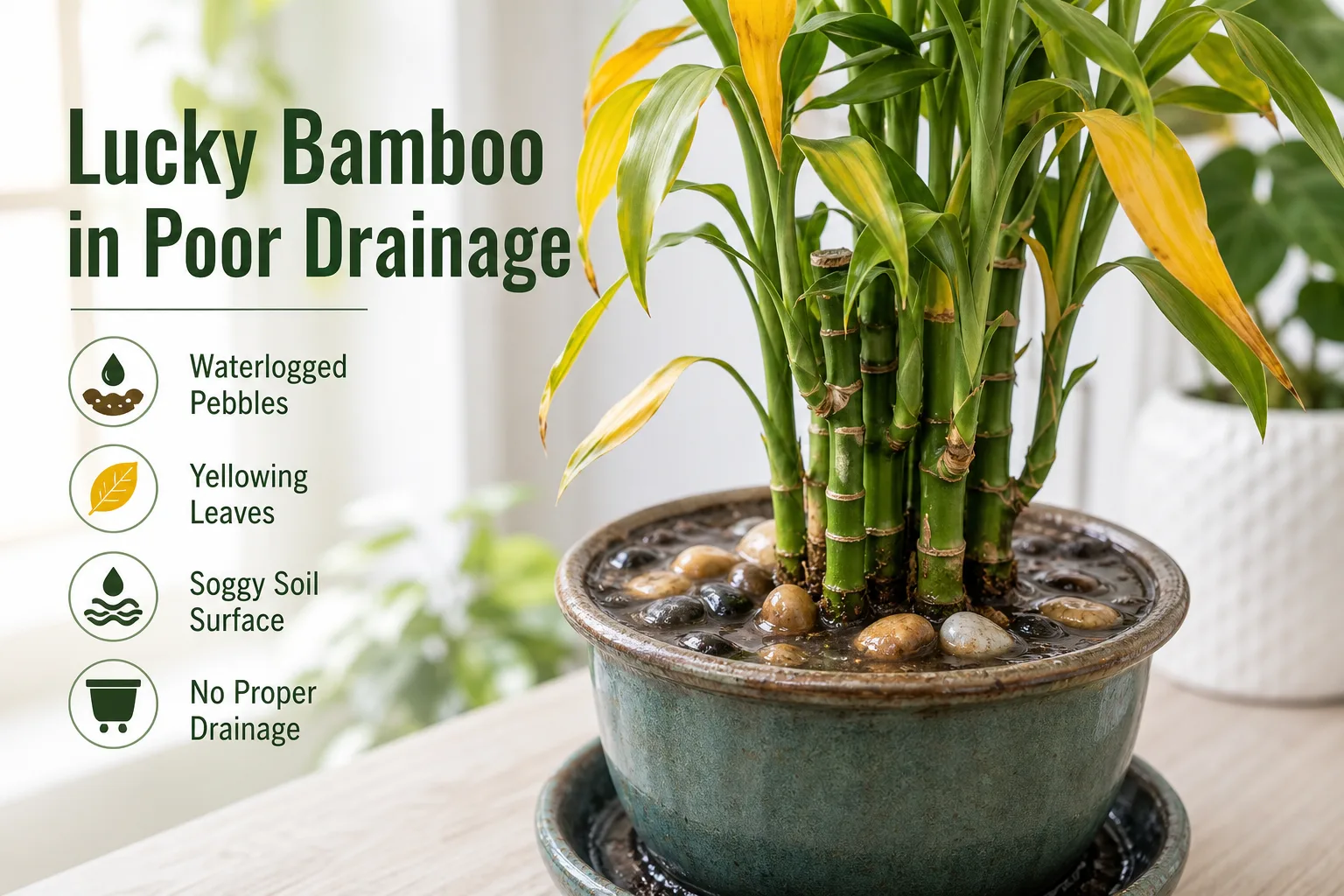
Poor drainage on soil-grown Lucky Bamboo means waterlogged mix or blocked drain holes. First step: run a pour test, unpot, inspect root firmness, and repot into 60% indoor mix + 40% perlite in a pot with open drainage - then water only when the top inch dries.
Poor Drainage on Lucky Bamboo: Causes, Checks & Fixes
This guide covers poor drainage on Lucky Bamboo. See also the general Poor Drainage guide, watering, and light pages for this plant.
Poor Drainage on Lucky Bamboo: Causes, Checks & Fixes
Quick answer
Poor drainage on Lucky Bamboo (Dracaena sanderiana) affects soil-grown plants when mix stays saturated or pots cannot shed water. First step: run a pour test, unpot, check root firmness, and repot into the 60% indoor mix + 40% perlite recipe in a container with open drainage - then water when the top inch of soil is dry.
Water-culture Lucky Bamboo does not need drain holes, but the species is not aquatic - roots still need oxygen. Stagnant vase water causes similar root stress even without soil. For weekly change protocol, see the watering guide.
What poor drainage looks like on Lucky Bamboo
Soil culture signs
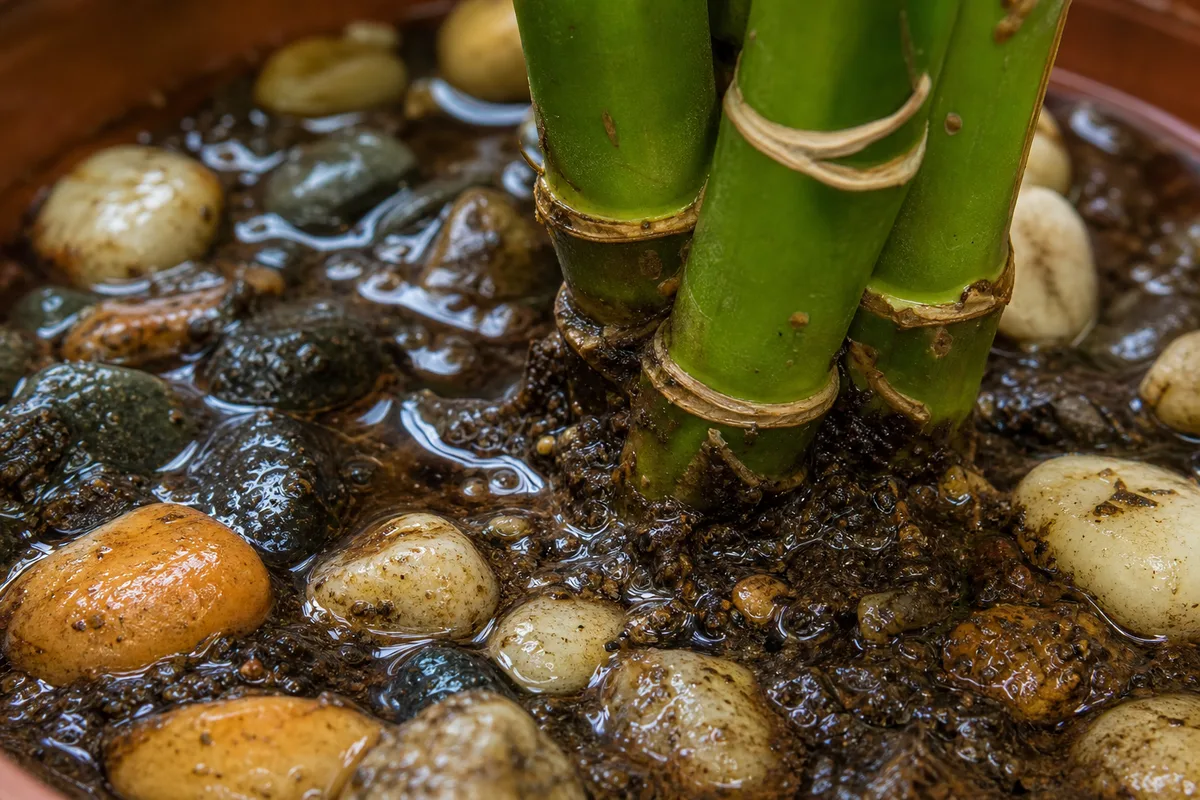
Poor Drainage symptoms on Lucky Bamboo - compare with healthy tissue on the same plant.
In soil culture, poor drainage shows as yellowing lower leaves, drooping canes, and a musty smell from wet mix that never dries between waterings. The pot stays heavy for days. Advanced cases bring soft green stems at the soil line and brown, mushy roots when you unpot.
A telltale pattern on braided displays: the surface feels dry while the center stays wet - common when an oversized decorative pot holds more mix than roots can use. That volume problem overlaps pot too large; this page covers when water simply cannot exit or mix cannot breathe.
White mold on the soil surface often signals chronic wetness - see mold on soil if fuzz is the main concern.
Vase culture signs
Drainage problems are rare in vases - but decorative pots without pebble layers, or vases packed too tightly, can trap roots in stagnant water. Cloudy water and slimy roots mirror soil drainage failure even without potting mix.
Healthy vs. damaged roots
Healthy soil-grown roots are pale and firm. Wet mix that smells sour or shows white mold on the surface strongly suggests the root zone lacks air. Rotted roots pull away easily when rinsed; firm white tissue after a pour-test failure means you caught drainage stress early.
Why Lucky Bamboo gets poor drainage
Lucky Bamboo in soil needs well-drained potting soil labeled for indoor plants. NC State Extension recommends a moist, well-drained container mix - not garden loam or moisture-control blends that stay wet indoors.
Rain forest species grow in loose, fast-draining soil with damp - not constantly wet - roots. Braided displays in oversized decorative pots often sit in saturated mix because the volume of soil holds water longer than slow-growing canes can use. In a dim office, low transpiration lets that outer wet ring persist for weeks.
Heavy garden soil, pots without holes, or decorative cachepots that trap runoff all keep the root zone anaerobic. Low light slows water uptake - a plant in a dim corner with a generous watering schedule will sit in wet soil even in a pot with drainage holes if saucers are not emptied.
Water-culture setups fail differently: pebbles packed too tight, or water unchanged for weeks, create the same oxygen-starved conditions extension guidance links to bacterial attack.
Compensating for yellow leaves by watering more in a dim office accelerates anaerobic rot in oversized pots - the mix never dries, and slow cane metabolism cannot pull moisture fast enough to refresh the root zone.
How to confirm the cause
Confirm in this order:
- Culture type - Soil drainage applies to potted plants; vase plants need water-quality and change-frequency checks instead.
- Pour test - Water until runoff appears. Water should exit within seconds; pooling on the surface for minutes confirms failure.
- Drain hole function - Probe holes for roots, pebbles, or debris blocking exit.
- Saucer check - Standing water under the pot re-wets the mix from below.
- Moisture depth - Surface dry with wet center confirms internal saturation or oversized pot volume.
- Root inspection - Slide the plant out. Firm white roots mean drainage may be adequate; brown slime confirms saturation damage.
- Mix texture - Dense, compacted soil that clumps when squeezed drains poorly.
Overwatering on good drainage shows wet mix from watering frequency, not blocked holes - see overwatering if pour tests pass but soil stays soggy from habit.
Lookalike comparison table
| Symptom pattern | Poor drainage (soil) | Pot too large (volume) | Overwatering (frequency) | Advancing root rot | Vase stagnation |
|---|---|---|---|---|---|
| Leaf signs | Yellow lower leaves, droop | Yellow lower, slow growth | Yellow lower, droop | Yellow climbs, soft base | Yellow from base up |
| Moisture | Wet center, sour smell | Dry surface, wet deep mix | Wet mix 5+ days | Cloudy water fast return | Cloudy, sour water |
| Pour test | Fails - pools or slow exit | May pass; pot stays heavy | Often passes | N/A in soil | N/A |
| Stem base | Soft in wet mix | Firm unless rot sets in | Soft in wet mix | Mushy, dark | Soft at waterline |
| First move | Clear holes, refresh mix | Downsize pot | Stop watering rhythm | Root rot protocol | Full water change |
| Read next | This guide | Pot too large | Overwatering | Root rot | Watering |
First fix for Lucky Bamboo
Unpot, trim any mushy roots, and repot into fresh well-drained indoor mix in a pot with open drainage.
Use the 60% potting mix + 40% perlite blend for porosity. Easily grown in evenly moist soil means evenly moist after proper dry-down - not permanently wet.
For vase plants with stagnant water: dump all water, rinse pebbles, trim soft roots, and refill with filtered or distilled water. Submerge roots and at least one inch of stem.
Mild, moderate, and severe branches
Mild - Pour test slow but roots firm and white, no sour smell: clear drain holes, empty saucers, move to brighter light, and withhold water until the top inch dries. Re-test pour flow in one week.
Moderate - Yellow lower leaves, sour smell, brown slimy roots, or compacted mix: trim mushy roots with sterilized scissors, repot into fresh well-drained mix in a pot only slightly larger than the root ball, and stake tall canes until roots anchor.
Severe - Stem bases mushy, water clouds within 48 hours of a full vase clean, or multiple soft nodes on braided canes: follow the root rot guide the same day. Propagate firm cane sections in clean water if the display cannot be saved intact.
When to escalate to root-rot protocol
Escalate when mushy stems persist 48 hours after repotting into fresh draining mix and corrected watering, when yellowing spreads up canes despite dry surface soil, or when more than half the root mass is brown and slimy on inspection. Early drainage triage on this page is not enough once stem tissue rots.
Step-by-step recovery
- Remove the plant from wet soil or cloudy vase water.
- Rinse roots gently; cut all brown, mushy tissue with sterilized scissors. If step 2 reveals mostly mushy roots and soft stem bases, stop here and switch to root rot rescue.
- Choose a pot only slightly larger than the root ball, with multiple drain holes.
- Repot into fresh indoor potting mix amended with perlite per the soil guide; stake tall canes until roots anchor.
- Water lightly once, then wait until the top inch dries before watering again.
- Empty saucers completely after every watering.
- Move to bright, indirect light so the plant uses water at a steady rate.
Hold fertilizer until new growth appears - stressed roots cannot process salts.
Recovery timeline
Mild drainage stress with firm stems may stabilize within one to two weeks after repotting and corrected watering. New root tips often appear in two to four weeks - judge progress by firm canes and stopped yellow spread, not by old leaves greening up.
Severe stem softness at multiple nodes may mean the braided display cannot be saved whole. New roots will usually form within 2 to 3 weeks from healthy cane cuttings - propagate backups while correcting drainage on survivors.
Causes to rule out
Poor drainage symptoms overlap with:
- Root rot from stagnant vase water - Cloudy water and foul smell; fix with weekly changes per the watering guide, not repotting alone.
- Fluoride damage - Brown leaf tips with firm roots and clear water; switch to filtered water and see brown tips.
- Overwatering on good drainage - Wet mix from frequency, not blocked holes; see overwatering.
- Pot too large - Dry surface, wet center, heavy pot days after watering with passing pour test; see pot too large.
- Cold damage - Bring indoors before nighttime temperatures drop below 65°F; yellowing from temperature, not drainage.
What not to do
Do not add gravel at the bottom of the pot - it does not improve drainage and can create a perched water table that harms slow-growing cane roots. Do not repot into an oversized decorative pot that holds more wet mix than roots can dry. Do not keep watering wilting plants without inspecting roots first. Avoid heavy outdoor garden soil indoors.
Do not move from vase to soil the same day as rescue - stabilize roots in one culture first. Do not drill holes in a sealed cachepot while the plant sits inside; lift the nursery pot out to drain.
How to prevent poor drainage next time
Use pots with open drainage and well-drained potting soil. Water when the top inch of soil is dry and empty saucers every time.
For decorative cachepots: keep the plant in a holed nursery pot inside the sleeve and dump pooled water after each watering. Match pot size to root ball - oversized containers are a separate failure mode on pot too large.
For water culture, change the water weekly and use pebbles that allow root spread. Consider soil culture long term if weekly vase maintenance is hard - Dracaena sanderiana is much less difficult to maintain in soil with proper drainage and filtered water.
In cool dim offices during winter, mix dries slower - stretch soil watering intervals but keep vase changes weekly because bacteria do not wait for transpiration.
Related Lucky Bamboo guides
- Lucky bamboo overview
- Lucky bamboo soil - mix recipe, gravel myth, drainage speed
- Lucky bamboo watering - dry-down and vase-change protocol
- Pot too large - volume mismatch lookalike
- Overwatering - frequency lookalike
- Root rot - advanced drainage-failure escalation
- Mold on soil - white mold surface symptom
- Yellow leaves
- Brown tips
- Repotting
- Light
When to worry
Escalate immediately if stems turn mushy, black patches climb nodes, or soil smells sour within days of repotting - use the root rot guide that day. Lucky bamboo is toxic to pets - wear gloves when handling sap from trimmed rot tissue, keep plants out of reach, and contact a veterinarian promptly if a pet ingests leaves or contaminated vase water.
Conclusion
Poor drainage on Lucky Bamboo is a soil-culture problem of saturated mix, blocked holes, or cachepots trapping runoff - not a mystery wilt. Run a pour test, confirm root firmness, repot into the 60/40 draining mix, and water only when the top inch dries. If stems stay mushy 48 hours after that reset, escalate to root-rot rescue. Water-culture plants need weekly fresh water instead of soil drainage fixes.