Pot Too Large on Lucky Bamboo: Causes, Checks & Fixes
Quick answer
An oversized pot keeps Lucky Bamboo soil wet too long between waterings. First step: unpot, inspect roots, and move to a container only one size larger than the root ball with open drainage - then water when the top inch dries.
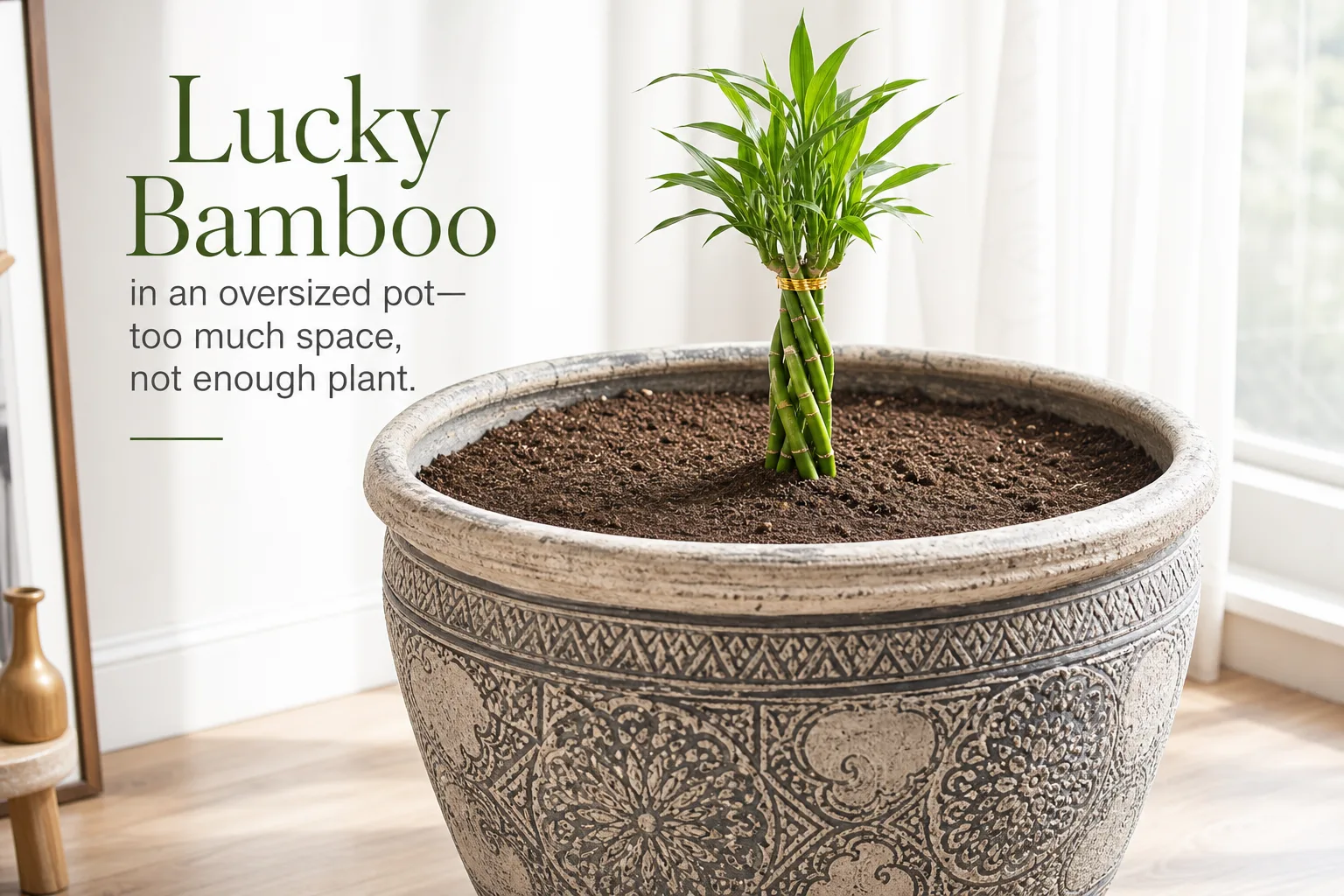
Pot Too Large on Lucky Bamboo: Causes, Checks & Fixes
This guide covers pot too large on Lucky Bamboo. See also the general Pot Too Large guide, watering, and light pages for this plant.
Pot Too Large on Lucky Bamboo: Causes, Checks & Fixes
Quick answer
A pot too large for Lucky Bamboo (Dracaena sanderiana) keeps soil saturated because the root ball cannot dry the excess mix. First step: unpot, inspect root firmness, and repot into a container only slightly larger than the roots with well-drained potting soil - then water when the top inch of soil is dry.
Oversized decorative pots are a common cause. Rain forest species prefer damp roots, not wet, and a huge soil volume works against that balance on a slow-growing cane plant.
What an oversized pot looks like on Lucky Bamboo
Soil-grown Lucky Bamboo in a pot too large shows slow or stalled growth, yellowing lower leaves, and a pot that stays heavy for many days after a single watering. The surface may look dry while the center of the mix remains wet - a classic sign the root mass is too small for the container volume.
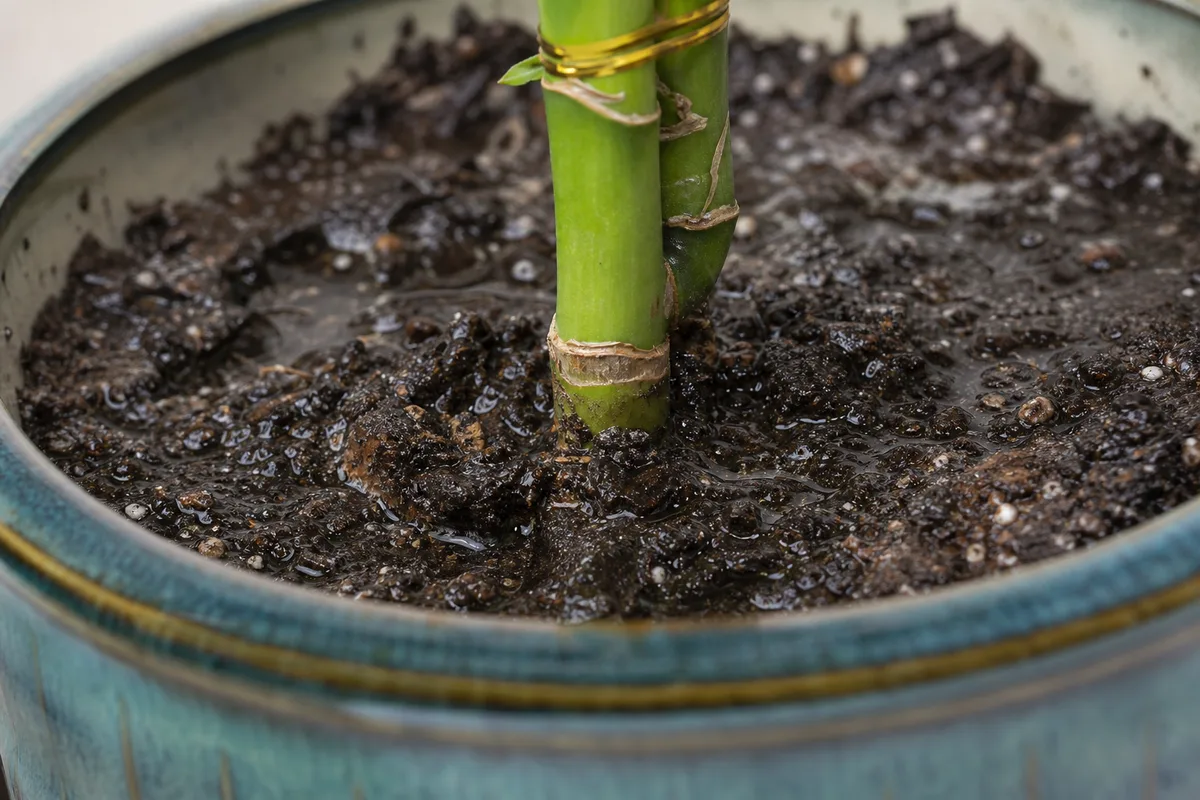
Pot Too Large symptoms on Lucky Bamboo - compare with healthy tissue on the same plant.
Canes may droop despite wet soil because saturated roots lose function. White mold or algae on the soil surface can appear in the unused outer ring of mix where water sits unused.
In water culture, an oversized vase with a deep pebble bed can hold stagnant water below the visible water line. Roots packed in the bottom of a tall container may sit in oxygen-poor conditions even when the water looks clear at the top.
Why Lucky Bamboo suffers in oversized pots
Lucky Bamboo is a slow-growing houseplant with a modest root system relative to its cane height. Braided displays often get repotted into large decorative containers for visual balance, but the roots cannot use the water held in all that extra soil.
The soil should drain quickly and stay damp but not soggy. In an oversized pot, the outer soil ring stays wet longest, creating an anaerobic zone that spreads inward toward roots.
Low light reduces water uptake further. A large pot in a dim corner becomes a permanent wet zone. Overwatering can cause yellowing of the leaves and rotting of the stems - and an oversized pot makes every watering effectively an overwatering event.
Gift Lucky Bamboo often arrives in soil-filled pots sized for display, not root volume. Upsizing at repot time “to avoid Lucky Bamboo repotting guide again soon” commonly backfires.
How to confirm the cause
Confirm in this order:
- Root-to-pot ratio - Unpot and compare. Healthy repotting leaves roughly one to two inches of fresh mix around the root ball, not a wide empty ring.
- Moisture pattern - Top inch dry with wet center, days after watering, points to excess soil volume.
- Growth rate - No new leaf tips for months in an oversized pot with regular watering suggests root-zone stress.
- Root health - Firm pale roots mean you caught it early; brown slime means saturation damage has started.
- Pot weight - A light-feeling oversized pot is less common; heavy pots days after watering confirm retained moisture.
- Drainage function - Holes may work fine; the problem is volume, not blockage.
Root-bound plants in appropriately sized pots show circling roots and fast dry-down - the opposite pattern.
First fix for Lucky Bamboo
Downsize to a pot only slightly larger than the root ball and repot into fresh well-drained mix.
Choose a container where roots fill most of the volume after repotting, with open drain holes. Use indoor or tropical potting soil amended with perlite. Trim any mushy roots before repotting.
For vase plants in oversized containers: transfer to a vase sized to the root spread, rinse pebbles, and refill with filtered or distilled water covering roots and one inch of stem.
Step-by-step recovery
- Remove the plant from the oversized pot; shake off wet outer soil that was never penetrated by roots.
- Trim brown or mushy roots with sterilized scissors.
- Select a new pot roughly one to two inches wider in diameter than the trimmed root ball.
- Repot with fresh indoor mix; stake tall braided canes until roots re-anchor.
- Water lightly once, then wait until the top inch dries before watering again.
- Empty saucers completely after every watering.
- Place in bright, indirect light to encourage steady water use.
Hold fertilizer until new growth appears.
Recovery timeline
Mild cases with firm stems often show stabilized watering within one to two weeks after downsizing. New leaf tips may appear in three to six weeks as roots colonize the appropriately sized pot.
Advanced stem softness may require separating braided canes. New roots will usually form within 2 to 3 weeks from healthy cuttings placed in fresh water.
Causes to rule out
Oversized-pot symptoms overlap with:
- Poor drainage from blocked holes - Water pools on the surface; fix holes, not pot size alone.
- root rot on Lucky Bamboo from stagnant vase water - Cloudy water; change weekly instead of downsizing soil pot.
- Fluoride damage - Brown tips with firm roots; switch water source.
- Normal slow growth - Lucky Bamboo grows slowly by nature; confirm wet-soil pattern before repotting.
What not to do
Do not upsize again hoping the plant will “grow into” a large pot - roots may rot first. Do not add extra gravel to fill a decorative pot; repot to the correct size instead. Do not keep watering on a calendar without checking soil moisture depth. Avoid fertilizing a stressed plant in wet soil.
How to prevent pot-too-large problems next time
Repot only when roots circle the current pot or emerge from drain holes - then move up one size, not two or three. Use well-drained potting soil and match watering to how fast the smaller soil volume dries.
For water culture, choose vases that fit the root mass rather than oversized gift containers. Change the water weekly regardless of vase size.
Lucky Bamboo care cross-check
Pot size, light, and watering work together. A correctly sized pot in dim light still dries slowly - move to brighter indirect light if the mix stays wet. Braided displays need staking after downsizing until roots anchor in the smaller volume.
When to worry
Escalate if stems turn mushy, rot smell rises from the pot, or yellowing accelerates after downsizing. Lucky bamboo is toxic to pets - handle trimmed tissue carefully and keep plants away from cats and dogs.
Conclusion
An oversized pot keeps Lucky Bamboo soil wet longer than its roots can manage. Confirm by comparing root mass to container volume, downsize with fresh draining mix, and water when the top inch dries. Correct pot size prevents the yellowing and stem rot that oversized decorative plantings often trigger.
When to use this page vs other Lucky Bamboo guides
- Lucky Bamboo watering guide - Use for routine moisture checks before assuming pot too large is the main issue.
- Lucky Bamboo problems hub - Browse all 41 common issues on this species.