Black Spots on Lucky Bamboo: Causes, Checks & Fixes
Quick answer
Black spots on Lucky Bamboo leaves often mean fungal leaf spot or fluoride burn; black patches on submerged stems mean rot. First step: note whether spots are on leaf blades or cane tissue, then change vase water or adjust watering and light accordingly.
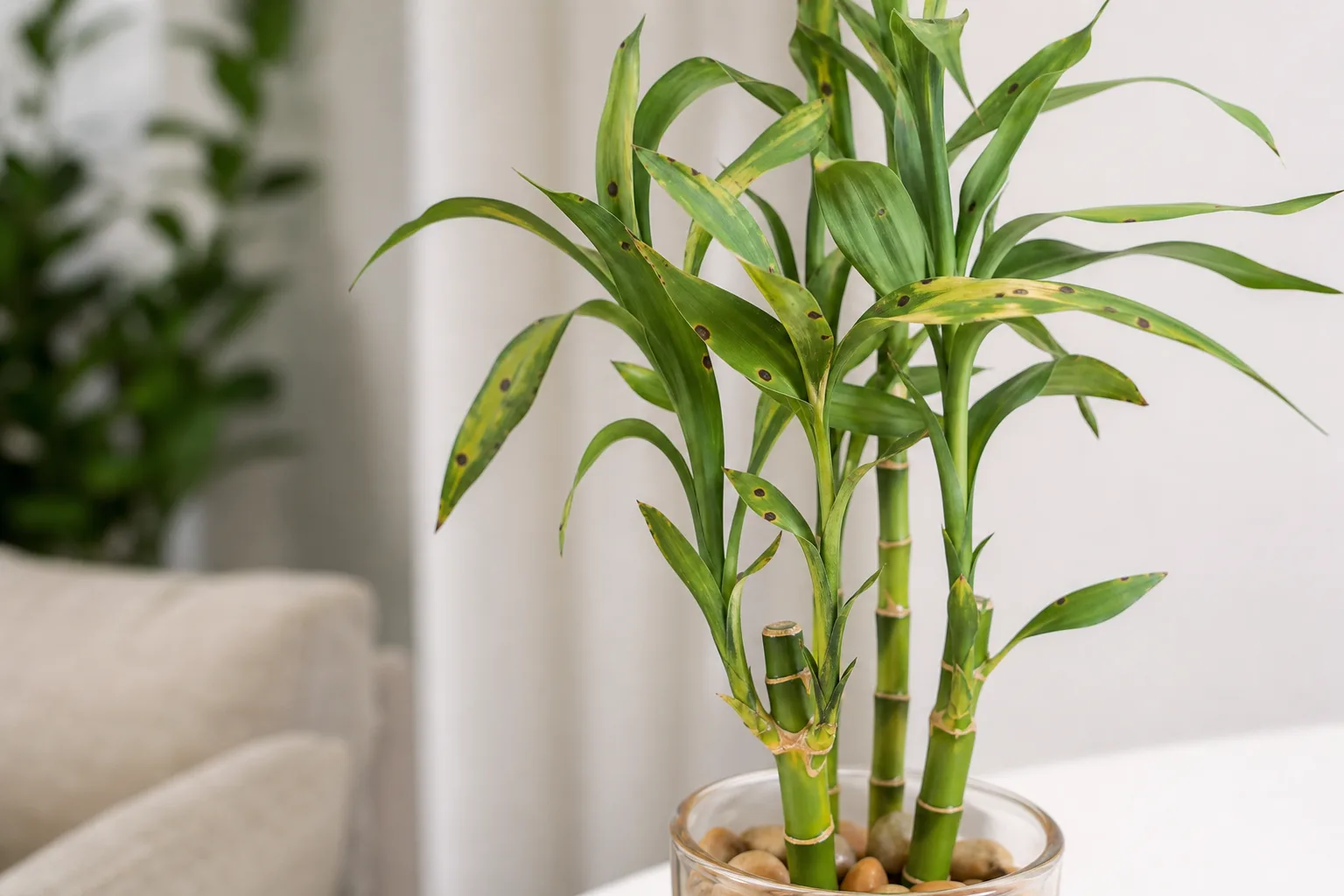
Black Spots on Lucky Bamboo: Causes, Checks & Fixes
This guide covers black spots on Lucky Bamboo. See also the general Black Spots guide, watering, and light pages for this plant.
Black Spots on Lucky Bamboo: Causes, Checks & Fixes
Quick answer
Black spots on Lucky Bamboo (Dracaena sanderiana) split into two very different problems: dark patches on leaf blades (often fungal leaf spot or old sheath scars) versus black tissue on submerged stems (bacterial or fungal rot at the water line). First step: identify location - leaf, tip, or stalk - then either refresh vase water and improve airflow, or trim rotted stems and repot.
Dracaena species are easily affected by fluoride in tap water, which can darken leaf tips that resemble spots. Overwatering can cause yellowing and rotting of stems that show as black zones at the soil surface - a more serious pattern than isolated leaf flecks.
What black spots look like on Lucky Bamboo
On leaves (above water or soil):
- Small dark brown to black flecks with yellow halos - typical of fungal leaf spot in humid, stagnant air
- Dry brown-black tips along leaf margins - often fluoride or chlorine damage from tap water
- Oval brown patches where old leaf sheaths detached - cosmetic scars, not active disease
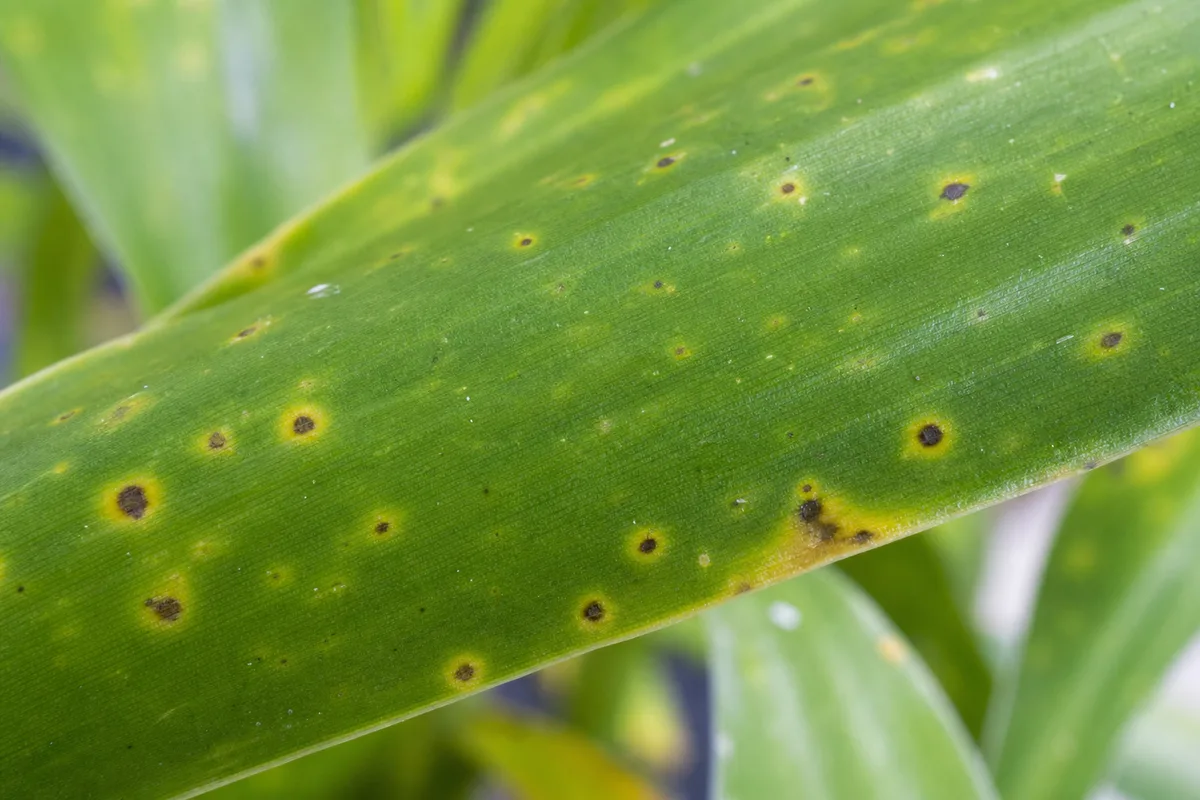
Black Spots symptoms on Lucky Bamboo - compare with healthy tissue on the same plant.
On stalks (at or below water line):
- Wet-looking black bands encircling submerged nodes
- Soft tissue that darkens and spreads upward within days
- Often paired with cloudy or foul vase water
In water culture, leaf spots appear on foliage kept dry above the rim while stem blackening hits submerged sections. In soil culture, leaf spots cluster on lower leaves near damp mulch or saucers; stem blackening sits at the soil line when mix stays wet.
Why Lucky Bamboo develops black spots
Fungal leaf spot favors high humidity, poor airflow, and wet leaf surfaces - common when Lucky Bamboo sits in steamy bathrooms or crowded braided displays. Grown indoors in part shade, the plant tolerates low light but stagnant corners prolong leaf wetness after misting.
Stem black spots trace to submerged tissue decay when vase water is not changed weekly, pebbles harbor algae, or soil remains saturated. Fluoride weakens cell walls at leaf tips, creating dark margins mistaken for spreading spots.
Direct sun rarely causes black spots - it more often bleaches or scorches leaves yellow-white. Cold drafts after window exposure can brown edges but usually without the slimy stem texture of rot.
How to confirm the cause
Confirm in this order:
- Location - Leaf blade, leaf tip only, or stem at water/soil line?
- Texture - Dry and papery (fluoride, sun, old sheath) versus wet and soft (rot)?
- Water clarity - Clear water with dry black tips suggests water chemistry; cloudy water with stem bands suggests rot.
- Spread speed - Tips worsen over weeks; stem black climbs nodes within days.
- Humidity context - Bathroom or terrarium setups favor fungal leaf flecks on blades.
- Root check - Firm white roots with leaf-only spots differ from mushy roots with stem blackening.
Peel one leaf sheath at the lowest node: water-soaked black under the sheath confirms stalk disease, not a leaf fungus alone.
First fix for Lucky Bamboo
For leaf spots or tip darkening: switch to filtered or distilled water, improve bright, indirect light and airflow, and trim badly spotted leaves at the sheath base with clean scissors.
For stem black spots: fully change vase water, scrub the container, rinse pebbles, cut stems at least one inch above firm green tissue, and refill with filtered water covering roots and one inch of stem only.
For soil plants with stem banding: unpot, trim rotted roots and stem tissue, repot into well-drained potting soil, and water when the top inch dries.
Step-by-step recovery
- Photograph spots to track spread over the next week.
- Separate leaf-tip issues from stem-base issues - different fixes.
- Dump cloudy vase water; never top off without inspecting stems.
- Wipe leaf blades with a damp cloth; do not mist for two weeks if fungal flecks were present.
- Trim individual leaves with >50% black area; sterilize scissors between cuts.
- For rot: remove all soft stem sections; reroot firm canes in clean water or fresh soil.
- Move the plant away from steamy showers until leaf spots stop spreading.
- Hold fertilizer until new growth looks clean - salts worsen tip burn.
If a braided bundle shares one vase, isolate any cane with stem blackening before it contaminates neighbors.
Recovery timeline
Fluoride tip darkening stabilizes within one to two weeks after switching water sources - existing damage stays, new tips emerge cleaner. Fungal leaf spots stop spreading in similar time once humidity drops and water is fresh.
Stem rot recovery depends on how much firm tissue remains - single canes may reroot in 2 to 3 weeks; advanced black climbing multiple nodes usually means propagate tops only.
Causes to rule out
Black markings overlap with:
- Normal sheath scars - Brown ovals at former leaf bases on green stems; firm tissue, no odor.
- root rot on Lucky Bamboo without stem bands - Mushy roots, yellow leaves, but stem still firm above water.
- Mealybug soot - Black mold on sticky honeydew, not true leaf spots; wipe reveals green tissue beneath.
- Cold damage - Pale then brown leaf margins after a cold night; stems stay firm unless rot follows.
What not to do
Do not submerge leaves to “hydrate” spotted foliage - that worsens stem rot. Avoid fungicide sprays on indoor Lucky Bamboo without identifying leaf versus stalk issues first. Do not use straight tap water if fluoride has already darkened tips. Never ignore stem blackening while treating leaf spots with humidity changes alone.
How to prevent black spots next time
Change vase water weekly with chlorine-free, low-fluoride water. Keep all foliage above the rim and rinse pebbles monthly.
For soil culture, water when the top inch is dry and avoid oversized pots. Position in Lucky Bamboo light guide - not dark humidity traps.
Consider long-term soil culture if vase maintenance is inconsistent; Dracaena sanderiana maintains more easily in soil with proper drainage.
Lucky Bamboo care cross-check
Black spots resolve faster when you match the fix to stalk versus leaf. Weekly filtered water changes, correct submersion depth, and bright indirect airflow prevent most recurrence. A plant in a sealed bathroom with unchanged vase water will develop both leaf flecks and stem rot - address culture before reaching for sprays.
When to worry
Escalate if black tissue encircles a stem above the water line, vase water clouds within 48 hours of changing, or multiple canes in one vase show simultaneous stem banding. Lucky bamboo is toxic to pets - discard trimmed rot tissue safely and wash hands after handling sap.
Conclusion
Black spots on Lucky Bamboo require location-based diagnosis: leaf tips and flecks usually mean water quality or humidity; stem bands at the water line mean rot demanding immediate trimming and fresh water. Confirm texture and spread speed, fix filtered water and weekly changes for leaves, sterilize and reroot for stalks, and prevent both with proper submersion depth and airflow.
When to use this page vs other Lucky Bamboo guides
- Lucky Bamboo watering guide - Use for routine moisture checks before assuming black spots is the main issue.
- Lucky Bamboo problems hub - Browse all 41 common issues on this species.
- Overwatering on Lucky Bamboo - Different entry point when symptoms overlap with black spots.
- Leaf Drop on Lucky Bamboo - Different entry point when symptoms overlap with black spots.