Ants on Lucky Bamboo: Causes, Checks & Fixes
Quick answer
Ants on Lucky Bamboo almost never feed on the plant itself - they follow honeydew from aphids, mealybugs, or scale, or visit sugary spills near the vase. First step: trace the trail to cane nodes or the vase rim, confirm the sap feeder or spill, then treat the source - not spray ants on the canes.
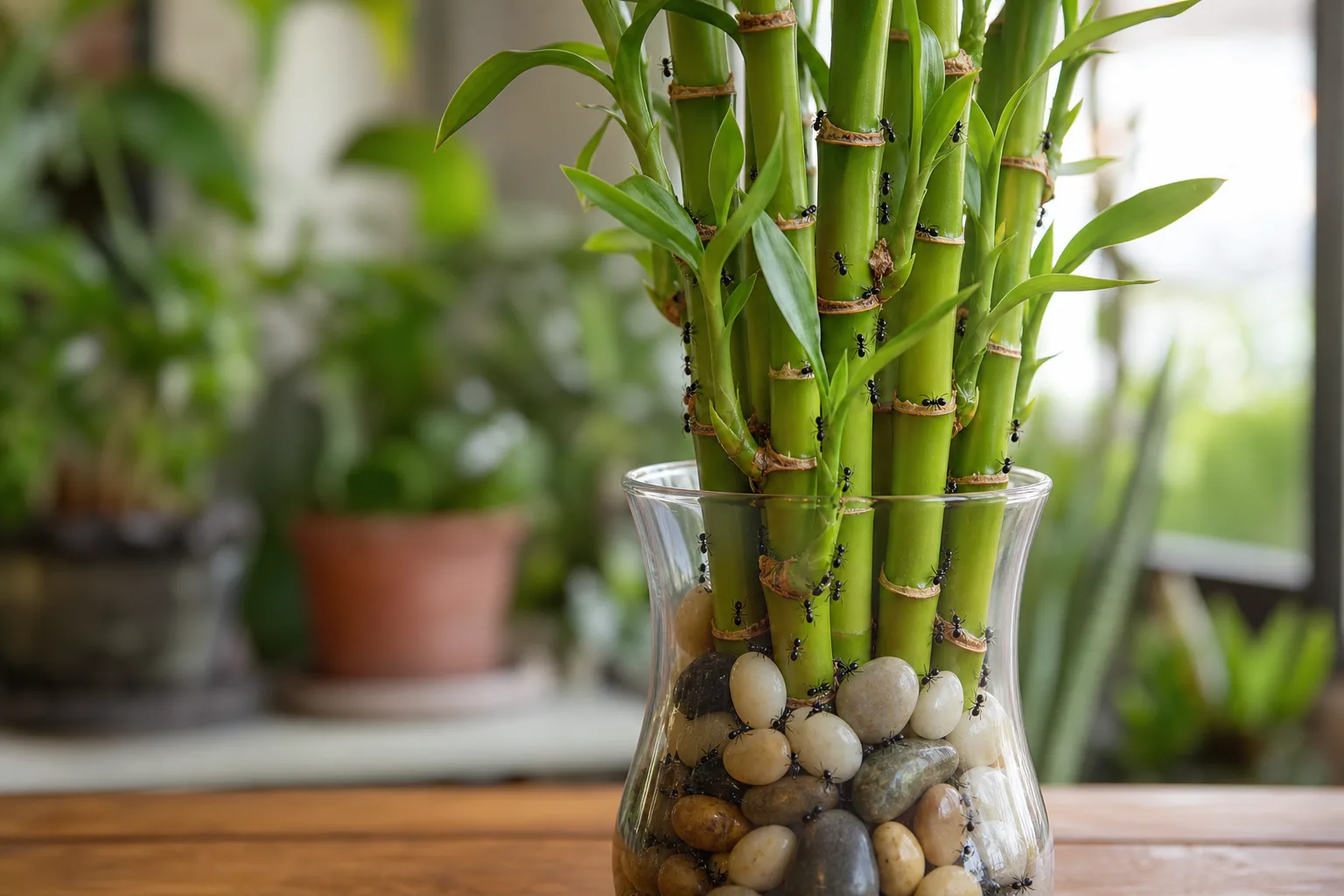
Ants on Lucky Bamboo: Causes, Checks & Fixes
This guide covers ants on plant on Lucky Bamboo. See also the general Ants on Plant guide, watering, and light pages for this plant.
Ants on Lucky Bamboo: Causes, Checks & Fixes
Quick answer
Ants on Lucky Bamboo (Dracaena sanderiana) almost never mean the canes are ant food. They arrive because something sweet is nearby - usually honeydew from aphids, mealybugs, or scale at cane nodes, or a sugary spill on the vase rim. First step: trace the trail to where it stops, confirm the sap feeder or spill at that point, clean sticky residue, and treat the insect source - not spray ants on the foliage.
Indoor Lucky Bamboo in bright, indirect light stays relatively pest-free, but ants tend honeydew-producing insects and protect them from predators. In water culture, pests cluster where canes emerge from pebbles; in soil, they trail up from the pot surface to feeding sites on new leaves. If you find cottony white masses, read mealybugs on Lucky Bamboo; for green soft bodies on new shoots, see aphids.
What ants on Lucky Bamboo look like
Ants appear as a steady line along the vase exterior, pebble surface, or pot rim - often most active in morning or evening. You may see them pausing at cane joints where leaves attach, not chewing tissue.
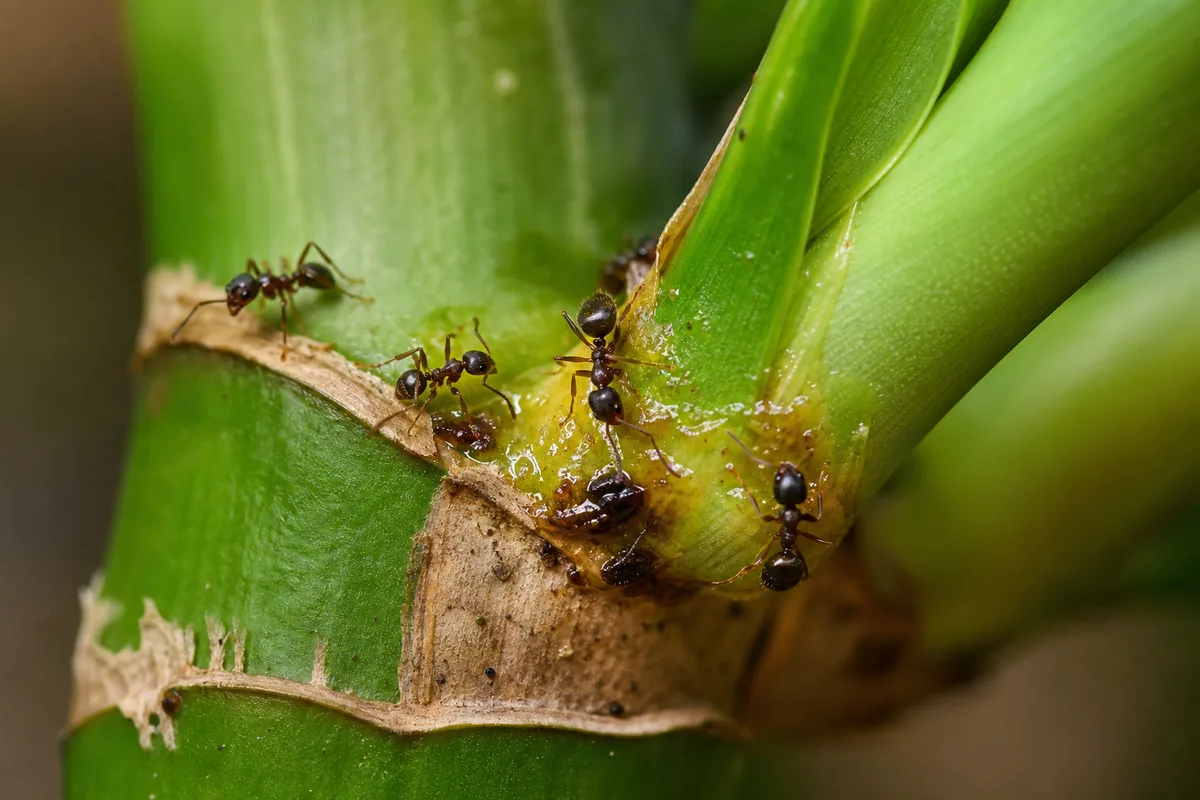
Ants on Plant symptoms on Lucky Bamboo - compare with healthy tissue on the same plant.
The plant itself may look fine at first, or show shiny, sticky leaf surfaces and faint black sooty mold if sap feeders have been present for weeks. Yellowing leaves without stickiness usually points elsewhere.
In water culture, ants sometimes gather where fertilizer drops dried on glass or where organic debris collects between pebbles. In soil culture, trails often start at the drain hole or saucer when the mix stays constantly wet - a separate stress pattern from honeydew farming above.
Severity tiers
| Level | What you see | Likely source | First response |
|---|---|---|---|
| Scout ants | Few ants on vase glass or desk, no stickiness on leaves | Kitchen spill, dried fertilizer splash, or passing foragers | Wipe container, remove nearby food source, watch 48 hours |
| Honeydew farm | Steady trails ending at cane nodes with sticky shine | Mealybugs, aphids, or scale protected by ants | Alcohol swab pests at nodes, off-plant bait, sibling pest guide |
| Pebble-tray nest | Ants under stones with or without pests on canes | Damp debris in pebbles plus optional sap feeders above | Dump and rinse pebbles, inspect submerged stems, bait off-plant |
Why Lucky Bamboo attracts ants
Ants feed on honeydew excreted by aphids, mealybugs, and soft scales and harass predators that might otherwise control those pests. Dracaena sanderiana grown indoors can host mealybugs at leaf bases - especially on crowded braided arrangements where airflow is poor.
Open-vase fertilizer splashes are a uniquely common desk-display attractant. A single drop of liquid feed on glass reads like a sugar trail to scout ants, even when no pest is present yet.
Water-culture setups also invite ants when fruit bowls or sweet drinks sit beside the display, or when pebbles hold decaying leaf sheaths that smell fermenting.
Soil-grown plants attract ants when overwatering on Lucky Bamboo keeps the surface moist. Dracaena sanderiana prefers evenly moist, well-drained soil in part shade - constantly soggy mix favors fungus gnats and damp saucers ants patrol, separate from honeydew trails climbing the canes.
Low light slows new growth but does not stop ants - it can hide pest colonies longer because you inspect braid crossings less often.
Lookalike symptoms to rule out
| Symptom | Ants + honeydew pests | Kitchen spill | Fungus gnats | Root rot | Fluoride tips | Cloudy vase water |
|---|---|---|---|---|---|---|
| Insects seen | Ants at nodes + sap feeders | Ants on glass only | Tiny flies, not ants | None on canes | None | None |
| Leaf feel | Sticky, shiny | Dry | Normal or yellow lower leaves | Yellow, limp | Brown dry margins | May yellow with rot |
| Trail endpoint | Cane joint or leaf axil | Vase rim, desk | Soil surface | Mushy roots below | Leaf tips only | Water line / roots |
| Fix | Treat pest + off-plant bait | Wipe spill | Fix watering - fungus gnats | Root rot protocol | Filtered water | Dump, rinse, refill |
Ant presence alone does not confirm sap feeders - always run the sticky test before treating pests.
How to confirm the cause
Confirm in this order:
- Follow the trail - Does it end at a cane node, leaf axil, or soil surface?
- Sticky test - Rub a leaf between fingers; honeydew feels tacky. Dry dust rules out sap feeders.
- Pest search - Look for cottony white clusters (mealybugs), green soft bodies (aphids), or brown immobile bumps (scale) at the base of leaves.
- Vase inspection - Lift canes from pebbles; check for insects on submerged stem sections and root crowns.
- Spill check - Wipe the vase exterior; if ants leave after cleaning alone, the source was residue, not the plant.
- Water quality - Cloudy vase water signals bacteria, not ants, though both can appear together in neglected displays.
Mealybugs vs aphids vs scale on narrow canes
| Pest | Appearance on D. sanderiana | Where ants stop | Read next |
|---|---|---|---|
| Mealybugs | White cottony masses at nodes and braid crossings | Leaf axils, hidden inner joints | Mealybugs guide |
| Aphids | Soft green or brown bodies on new shoots | Tender leaf tips and young sheaths | Aphids guide |
| Scale | Brown or tan domes that do not move when touched | Stem joints along older canes | Treat below; alcohol dab on shields |
If no pests and no spills appear after a thorough check, ants may be passing through from an outdoor nest near an open window - still remove them before they discover honeydew later.
First fix for Lucky Bamboo
Find and treat the insect producing honeydew, or remove the sugary residue attracting scouts - then disrupt ant trails with a damp cloth.
For confirmed mealybugs or aphids: dab insects with isopropyl alcohol on a cotton swab at cane nodes, rinse affected areas, and change vase water weekly with filtered or distilled water if the plant is in water culture.
For scale on cane nodes: press an alcohol-dipped swab against each immobile shield for ten seconds, then gently lift - repeat every five to seven days for three cycles. Narrow Dracaena leaves burn easily; never soak the whole arrangement in oil sprays. Test one leaf if you use horticultural oil, and keep oil out of vase water.
Place ant bait stations off the plant - on the floor or windowsill away from the vase - so foraging ants carry bait to the colony without contaminating pebbles or soil. UC IPM recommends enclosed bait where ants tend honeydew producers. Never spray broad insecticides directly on Lucky Bamboo leaves; Dracaena is sensitive to chemicals and indoor displays are often near food areas.
Step-by-step recovery
Spill-only scouts
- Wipe vase exterior, desk surface, and nearby shelves with warm water.
- Remove fruit bowls or sweet drinks from beside the display.
- Rinse pebbles if organic debris collected between stones.
- Watch 48 hours - ants should not return if no honeydew source exists.
Honeydew pest scenario
- Move the arrangement away from kitchens temporarily.
- Trace ant lines and mark where they concentrate on the plant.
- Inspect every cane node and leaf sheath; separate one braid stalk if joints are hidden.
- Alcohol-dab mealybugs, aphids, or scale shields; repeat every three to five days until clean.
- Wipe sticky leaves with lukewarm water; sooty mold wipes off once honeydew stops.
- For vases: dump water, rinse pebbles, scrub the container, refill with filtered water to the correct depth per the watering guide.
- Set ant bait traps beside - not in - the display; wipe trails daily until activity stops.
- Hold fertilizer until new growth looks clean for two weeks.
Pebble-nesting colony
- Lift all canes from pebbles and inspect submerged stems for pests.
- Dump pebbles, scrub tray, rinse until runoff is clear.
- Refill with filtered water covering roots and one inch of stem.
- Bait off-plant; if ants return from the window side after two weeks, consider sealing the entry or building pest control in multi-unit housing.
Sooty mold cleanup on narrow leaves
Sooty mold grows on honeydew deposits and does not infect plant tissue directly, but heavy coating can block light on narrow Dracaena leaves. Control the sap feeder first - mold will not return once honeydew stops.
After pests are controlled:
- Dampen a soft cloth with lukewarm water - RHS notes lukewarm water removes light sooty mold more effectively.
- Wipe each strappy leaf from base to tip, supporting the blade so it does not crease.
- Rinse the cloth between leaves if black residue builds up.
- Let foliage air-dry before returning the vase to direct sun.
Stubborn black film may take several weekly wipes. New clean leaves emerging after treatment are the best sign the problem is resolving.
Recovery timeline
Once honeydew sources are removed, ant visits usually drop within two to five days. Pest populations take one to three weekly inspection cycles to clear fully on a small Lucky Bamboo display.
Sticky sooty mold on leaves may remain until you wipe it off or new growth replaces old leaves. Ant bait colonies can take one to two weeks to collapse - patience beats spraying the plant.
What not to do
Do not spray insecticide directly on Lucky Bamboo foliage or into vase water. Do not dust cinnamon or diatomaceous earth into pebbles where roots sit - it can irritate tissue and cloud water. Avoid flooding soil to “drown ants”; that worsens root stress. Do not ignore ants assuming they are harmless - they protect pests that weaken canes over time. Do not place bait inside the pebble tray where roots and pets can reach it.
Lucky Bamboo care cross-check after ants clear
Once trails stop and leaves feel dry, rebuild a routine that keeps scouts from returning:
- Water rhythm - Weekly filtered water changes for vase culture; let soil top inch dry before rewatering in pots. Full baseline on the watering guide.
- Fertilizer hold - Skip feed for two weeks after pest treatment. Open vases rarely need fertilizer; splashes attract ants.
- Weekly node rescout - Inspect inner braid crossings at each water change for white wax or brown scale domes.
- Light check - Bright indirect light without direct sun scorch; see the overview for vase vs soil placement.
- Humidity and drafts - Keep displays away from heating vents that dry leaf edges into brown tips.
Recurring ant lines after this routine mean a hidden pest or environmental sugar source you have not fixed yet.
How to prevent ants next time
Quarantine new Lucky Bamboo bundles for one week before display. Change vase water weekly and rinse pebbles monthly to limit organic buildup.
If you fertilize, use a single drop of dilute liquid feed in soil only - open vases rarely need fertilizer and splashes attract ants. Keep displays away from open windows leading to outdoor ant nests during summer.
Inspect cane nodes whenever you change water; early mealybug removal prevents ant trails entirely. Scout inner braid crossings where mealybugs hide before ants establish protective trails.
When to worry
Escalate if stems soften while ants and sticky residue are present - that combination can mean sap feeders plus stem rot from stagnant water. Route to root rot if vase water smells sour.
Escalate pest treatment if scale shields cover most cane nodes after three weekly alcohol-dab cycles, or if braided arrangements hide colonies you cannot reach without partial disassembly.
Lucky bamboo is toxic to pets; keep bait traps and alcohol swabs out of reach of cats and dogs. Consult a veterinarian if a pet ingests treated foliage or contacts bait.
In apartment buildings, persistent window-side trails after two weeks of off-plant baiting may need professional ant management - DIY bait alone may not reach exterior supercolonies.
Related Lucky Bamboo problems
- Mealybugs - white cottony masses at nodes; primary honeydew source when ants climb braid joints
- Aphids - soft bodies on new shoots; common on tender growth ants farm first
- Fungus gnats - tiny flies above wet soil, not ant trails on canes
- Brown tips - fluoride margins without stickiness; filtered-water fix when tips brown but no pests
- Root rot - cloudy vase water or mushy roots when ants pair with sour smell and soft stems
- Watering - weekly filtered rhythm for vase and soil culture after recovery
- Overview - vase vs soil culture hub and placement basics
Conclusion
Ants on Lucky Bamboo are a secondary symptom - trace trails to honeydew pests at cane nodes or sugary spills on glass before spraying anything on the canes. Treat mealybugs, aphids, or scale first, wipe sooty mold after honeydew stops, refresh vase water on the watering schedule, and use off-plant bait for the colony. If stems soften or scale covers hidden braid joints after three treatment cycles, escalate to the mealybugs or root rot guides rather than repeating ant spray alone.
When to use this page vs other Lucky Bamboo guides
- Lucky Bamboo watering guide - Use for routine moisture checks before assuming ants on plant is the main issue.
- Lucky Bamboo problems hub - Browse all 41 common issues on this species.