Bacterial Wilt on Lucky Bamboo: Causes, Checks & Fixes
Quick answer
Bacterial wilt on Lucky Bamboo shows as sudden cane collapse, mushy stem tissue, and foul-smelling vase water or wet soil. First step: remove affected canes immediately, sterilize the container, trim firm tissue only, and repot or refill with filtered water.
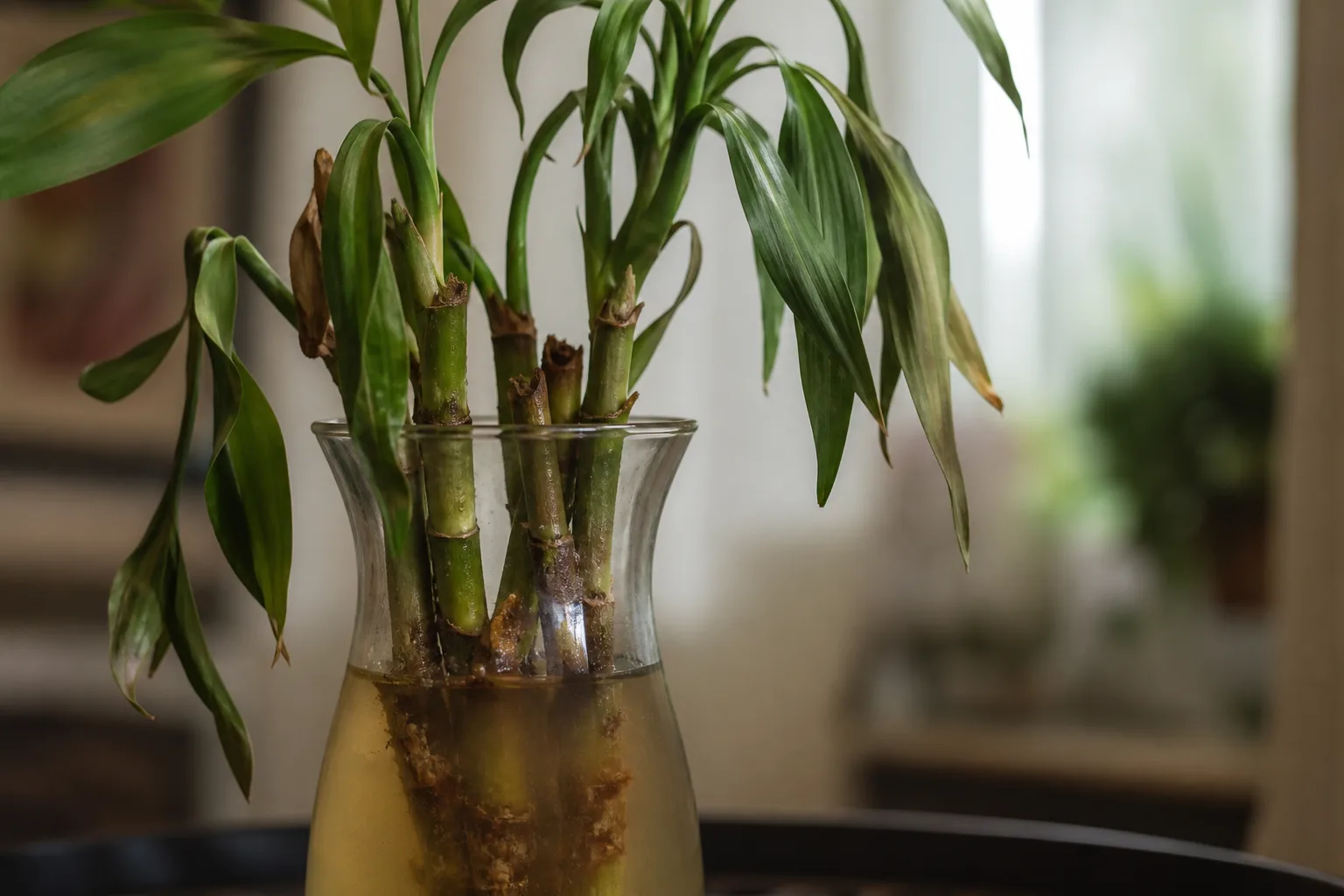
Bacterial Wilt on Lucky Bamboo: Causes, Checks & Fixes
This guide covers bacterial wilt on Lucky Bamboo. See also the general Bacterial Wilt guide, watering, and light pages for this plant.
Bacterial Wilt on Lucky Bamboo: Causes, Checks & Fixes
Quick answer
Bacterial wilt on Lucky Bamboo (Dracaena sanderiana) - more accurately bacterial soft rot in most home cases - causes sudden collapse, mushy stems, and foul vase water or soggy soil. First step: isolate the display, remove every soft cane, sterilize the container, trim back to firm green tissue, and reroot survivors in fresh filtered water or well-drained soil.
Fog or cloudiness in vase water is a sign of bacteria that can attack the plant. Unlike gradual fluoride tip burn, bacterial rot moves fast through submerged stem tissue - especially when water sits unchanged for weeks or wounds at nodes contact stagnant liquid.
What bacterial wilt looks like on Lucky Bamboo
In water culture, expect one or more canes to wilt while leaves still look green, then turn yellow and collapse within days. The submerged stem section turns brown, slimy, or black and may emit a sour smell. Vase water clouds quickly even after topping off.
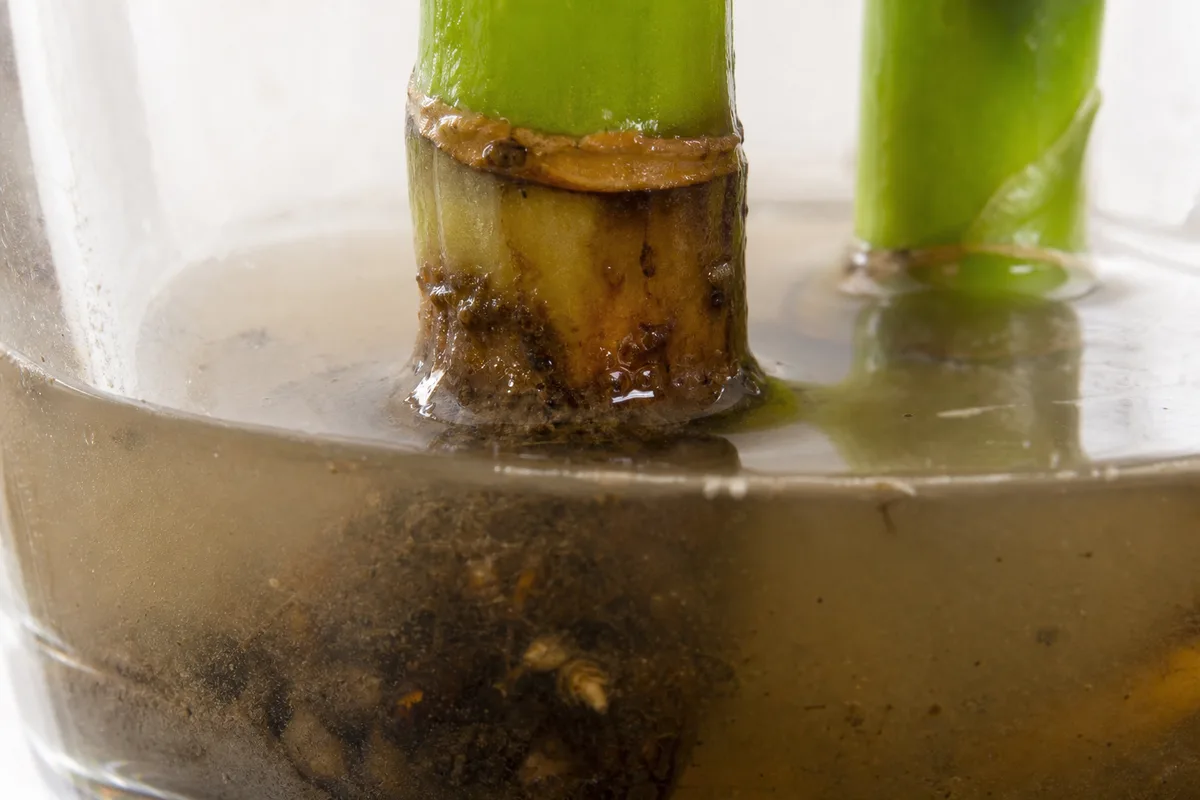
Bacterial Wilt symptoms on Lucky Bamboo - compare with healthy tissue on the same plant.
In soil culture, wilting matches overwatering that causes yellowing and stem rotting - but bacterial soft rot adds water-soaked dark lesions at the soil line and a rotten odor from the pot. Stems feel hollow or squishy when pinched above the rot zone.
Advanced cases show black streaks climbing nodes on braided arrangements. Healthy Lucky Bamboo stems are firm and smooth; anything that indents under gentle pressure at the base is already invaded.
Leaf symptoms alone are unreliable - focus on stalk tissue at and below the water or soil line.
Why Lucky Bamboo gets bacterial wilt
Bacteria enter through wounds at trimmed nodes, cracked leaf sheaths, or tissue weakened by fluoride in tap water. Stagnant vase water feeds populations that colonize submerged stems within days if you do not change water weekly.
Crowded pebbles trap debris and limit oxygen at roots. Warm room temperatures accelerate bacterial growth in closed vases with no water movement.
Soil-grown plants develop soft rot when mix stays saturated - easily grown in evenly moist soil does not tolerate anaerobic root zones. Overhead watering that pools in leaf cups rarely causes wilt on Lucky Bamboo, but soil-line wounds from Lucky Bamboo repotting guide can.
Low light slows the plant but not bacteria; a dim corner with unchanged water is a common setup for sudden collapse.
How to confirm the cause
Confirm in this order:
- Speed of collapse - Hours to days favors bacteria; weeks of slow yellowing favors fluoride or light stress.
- Stem feel - Mushy, slimy base tissue confirms rot; firm stems with dry pebbles suggest underwatering on Lucky Bamboo.
- Water or soil smell - Rotten egg or sour odors strongly support bacterial soft rot.
- Water clarity - Cloudy vase water within 48 hours of changing confirms active bacterial bloom.
- Node inspection - Peel back one leaf sheath at the lowest node; dark water-soaked tissue means spread above visible rot.
- Root comparison - Rotted roots are brown slime; bacterial wilt often starts higher on stems while some roots still look pale.
True vascular wilt diseases are rare on indoor Lucky Bamboo. Home “bacterial wilt” almost always means Erwinia-style soft rot at the stem base - treat accordingly.
First fix for Lucky Bamboo
Remove every mushy cane immediately and sterilize the vase or repot survivors in fresh mix before bacteria spread through shared water.
For vase plants: dump all water, scrub the container with hot soapy water, rinse pebbles, cut infected stems at least one inch above firm tissue with sterilized scissors, and refill with filtered or distilled water. Submerge only roots and one inch of stem - never leaves.
For soil plants: unpot, discard infected tissue and contaminated mix, trim roots to firm white sections, and repot into well-drained potting soil in a clean pot. Water once lightly, then wait until the top inch dries.
Do not return trimmed canes to the same unwashed pebbles or pot.
Step-by-step recovery
- Work over a sink; wear gloves - rot sap can irritate skin and Lucky bamboo is toxic to pets.
- Lift all canes from the vase or unpot the bundle.
- Identify firm versus mushy stems; mark cut lines one node above healthy tissue.
- Sterilize blades with rubbing alcohol between each cane.
- Rinse surviving roots under lukewarm water; trim any brown slime.
- For vases: clean container and pebbles thoroughly; use fresh filtered water at proper depth.
- For soil: repot with perlite-amended mix; stake tall canes until roots anchor.
- Hold fertilizer until new root tips or leaf buds appear - salts stress compromised tissue.
- Place in bright, indirect light with good airflow; avoid sealed terrariums.
Propagate firm top sections from badly rotted displays - new roots form within 2 to 3 weeks in clean water.
Recovery timeline
Single canes trimmed early may stabilize after one to two weekly water changes if remaining tissue stays firm. Soil repots often need two to four weeks before new root growth shows.
If multiple nodes in a braid are soft, recovery as a single display is unlikely - plan on separate rerooted canes instead. Black slime above the water line within a week of treatment means discard, not retry.
Causes to rule out
Sudden wilt overlaps with:
- root rot on Lucky Bamboo alone - Mushy roots but firm stem bases; fix drainage and trimming without stem amputation.
- Underwatering - Dry pebbles, limp leaves, firm pale roots, no odor.
- Cold damage - After exposure near a draft; tissue browns but is not slimy unless secondary rot follows.
- Fluoride injury - Brown leaf tips with firm stems and clear water.
What not to do
Do not top up cloudy vase water without a full change and stem inspection. Do not apply copper or hydrogen peroxide doses into vase water without extension guidance - wrong concentrations burn tissue. Avoid rebundling rotted canes before they reroot separately. Do not fertilize collapsing plants.
How to prevent bacterial wilt next time
Change vase water weekly with low-fluoride water. Rinse pebbles monthly and keep leaf tips above the water surface.
For soil culture, water when the top inch of soil is dry and empty saucers. Sterilize tools when trimming nodes for propagation.
Consider switching chronically troubled vase displays to soil - Dracaena sanderiana is much less difficult in soil when drainage and filtered water are consistent.
Lucky Bamboo care cross-check
Bacterial soft rot thrives where weekly maintenance lapses - unchanged water, crowded pebbles, and dim corners combine into the classic failure pattern. Align water changes, filtered water, Lucky Bamboo light guide, and stem-wound hygiene before adding decorative stones that trap debris.
When to worry
Escalate when rot crosses from one cane to neighbors in a shared vase, when stems blacken above the water line, or when vase water clouds within two days of a full change. Those patterns mean discard infected material and start clean cuttings rather than repeated partial trims.
Conclusion
Bacterial wilt on Lucky Bamboo is usually stem-base soft rot from stagnant vase water or waterlogged soil - not a mysterious leaf disease. Confirm with mushy tissue, foul odors, and rapid collapse; remove infected canes, sterilize containers, reroot firm sections in filtered water, and prevent recurrence with weekly water changes and proper submersion depth.
When to use this page vs other Lucky Bamboo guides
- Lucky Bamboo watering guide - Use for routine moisture checks before assuming bacterial wilt is the main issue.
- Lucky Bamboo problems hub - Browse all 41 common issues on this species.