Underwatering on Lucky Bamboo: Vase & Soil Checks
Quick answer
Underwatered Lucky Bamboo has dry vase pebbles or bone-dry soil and limp canes with firm roots. First step: refill vase water to cover roots and one inch of stem, or soak soil thoroughly and drain.
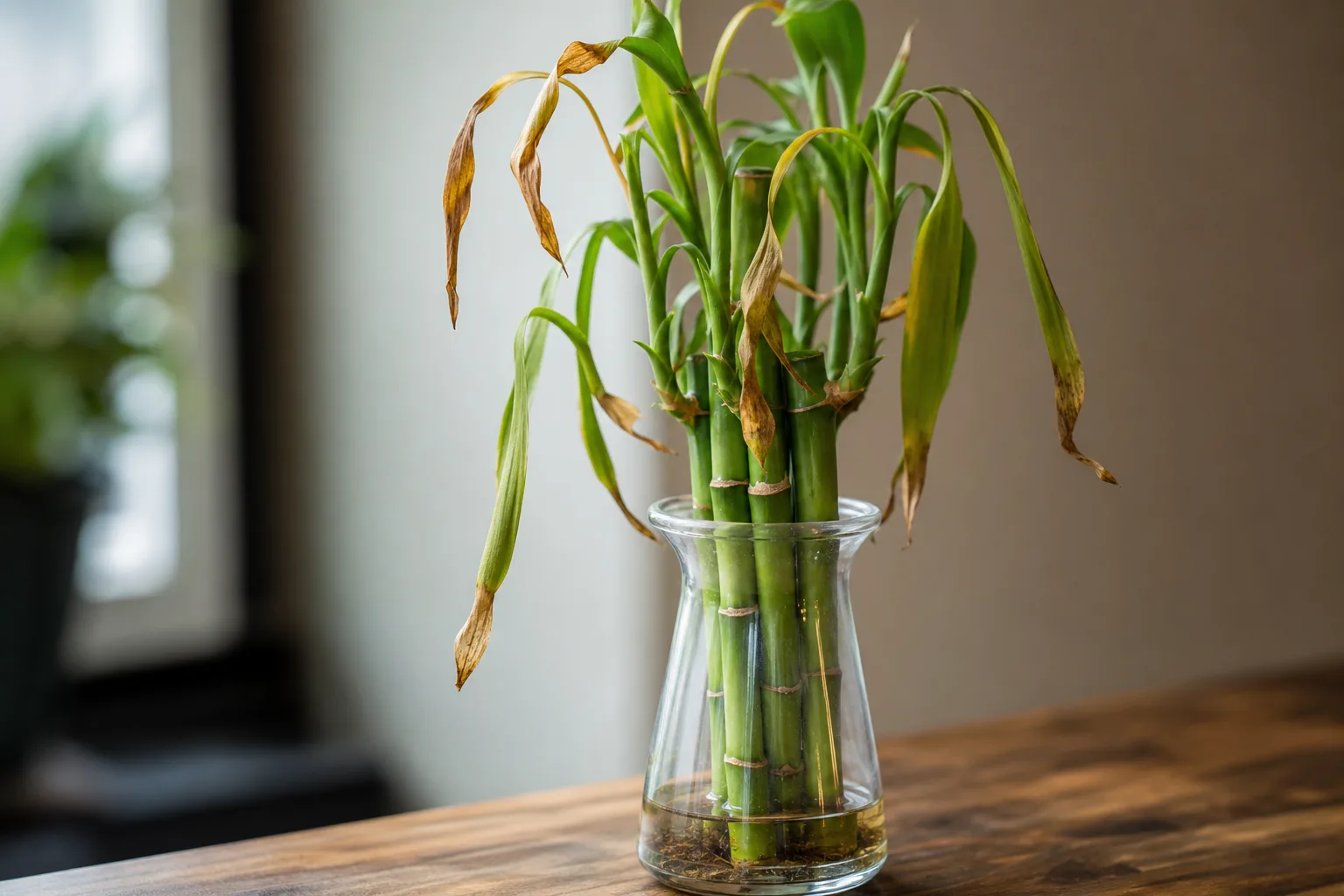
Underwatering on Lucky Bamboo: Causes, Checks & Fixes
This guide covers underwatering on Lucky Bamboo. See also the general Underwatering guide, watering, and light pages for this plant.
Underwatering on Lucky Bamboo: Causes, Checks & Fixes
Quick answer
Underwatering on Lucky Bamboo (Dracaena sanderiana) happens when vase water drops below roots or soil dries too far between drinks. This page covers drought-specific diagnosis - if whole canes collapse limply from the base, see wilting for stem-level collapse; for mixed drought-and-rot confusion, see water stress.
First step: submerge the roots and at least one inch of stem in clean filtered water, or water soil thoroughly until drainage runs, then empty saucers.
Lucky Bamboo stores some moisture in fleshy green canes, so it tolerates brief lapses - but chronic drought causes limp leaves, brown tips, and stalled growth. Severe underwatering can look like overwatering from a distance because leaves droop - the tell is firm, dry roots, not mushy tissue. Full overwatering routing applies when the pot stays wet.
Underwatering vs wilting on Lucky Bamboo
| Pattern | Water / soil | Roots | Canes | Start here |
|---|---|---|---|---|
| Underwatering | Dry pebbles, low vase, light pot | Firm, pale, dry when rinsed | Slightly wrinkled at nodes, still solid | This page |
| Wilting | May be dry or wet | Often damaged | Whole cane limp from base upward | Wilting |
| Root rot | Wet soil or cloudy vase | Mushy, brown, foul smell | Soft at base despite water present | Root rot |
| Fluoride burn | Adequate water depth | Firm | Firm | Brown tips |
Shared Dracaena drought biology also appears on the genus underwatering guide - use this page for vase culture, braided displays, and lucky-bamboo-specific refill steps.
What underwatering looks like on Lucky Bamboo
Vase culture
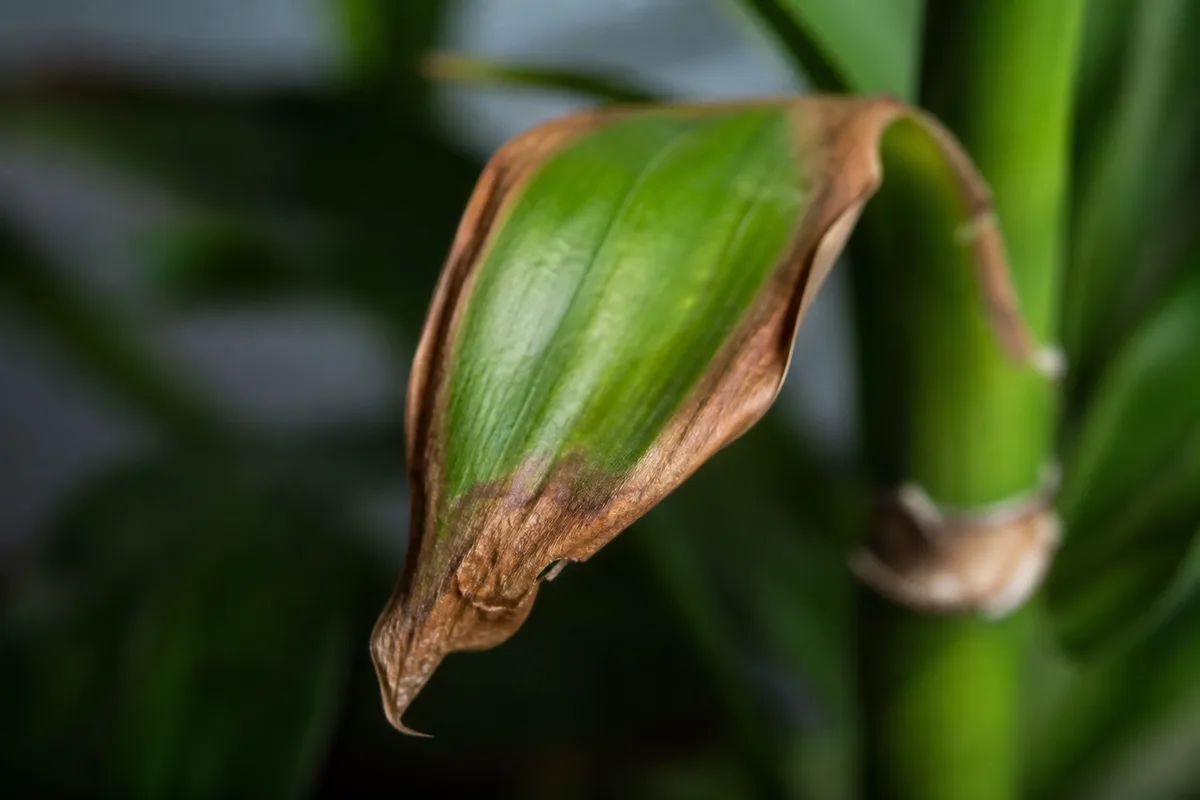
Underwatering symptoms on Lucky Bamboo - compare with healthy tissue on the same plant.
Pebbles dry above the water line, roots exposed to air turn gray-brown and brittle, and leaves droop along canes. Water level may sit visibly low in the container - sometimes only half full while owners assume roots still reach.
In braided gift arrangements, outer canes may look fine while inner stems dry first because water pools unevenly or evaporation leaves the braid center exposed.
Soil culture
Pot feels light, mix pulls from the pot walls, and lower leaves yellow or curl. Canes may look slightly wrinkled at nodes while remaining firm - unlike mushy rot.
Both cultures
Growth pauses and leaf tips brown from moisture stress compounded by low humidity. Confusingly, severe underwatering mimics overwatering droop from across the room - inspect roots before adding water.
Why Lucky Bamboo gets underwatered
Vacation neglect and forgotten vase top-ups are common. Evaporation in bright, warm spots lowers water faster than owners expect - especially near heating vents, space heaters, sunny windowsills, and desk lamps that warm the glass.
Small decorative vases evaporate faster than wide bowls in the same room because less water volume sits in a tall narrow column. AC airflow across an open vase accelerates loss even in cool offices.
Soil plants in bright, indirect light use water quicker than dim-corner plants; a monthly watering habit fails in summer windows.
Owners sometimes fear overwatering after a rot scare and let soil stay dry too long, or reduce vase refills without trimming bad roots first - see overwatering for the opposite mistake.
Braided arrangements with shared water reservoirs may leave outer canes hydrated while inner stems dry if water level is uneven or pebbles trap air pockets at the braid base.
How to confirm the cause
Work through these checks in order:
- Water level - Are roots fully submerged with stem coverage in vases? Can you see dry root tips above the surface?
- Pot weight - Light container and dry skewer several inches down confirm soil drought.
- Root texture - Firm, dry roots support underwatering; mushy roots in cloudy water mean root rot.
- Soil moisture vs. wilt - Limp leaves with dry mix = drought; limp with wet mix = rot.
- Recent history - Travel, heat wave, or moved to brighter light without more water?
- Tip pattern - Dry brown tips on multiple leaves often follow drought cycles; fluoride burn with adequate depth points to brown tips.
- Braid center - Lift inner canes; hidden dry roots with firm outer stems confirm uneven hydration.
First fix for Lucky Bamboo
Rehydrate immediately with filtered water at the correct depth.
Vases: follow the step-by-step refill below - emergency top-up to proper depth, then a full rinse-and-change within 24 hours.
Soil: water until a small amount drains, wait 30 minutes, water once more if mix absorbed quickly, then empty saucers. Do not leave the pot in standing water long term - one thorough drink differs from chronic saturation.
Do not fertilize limp plants before they rehydrate.
Step-by-step vase refill after drought
Use this protocol when pebbles are dry, roots are exposed, or water dropped below the root line:
- Lift canes gently - Support the braid at the base so stems do not snap. Set canes in a clean bowl if the display is too tight to work inside the vase.
- Dump old water - Pour out all remaining liquid, even if it looks clear. Stagnant water may harbor bacteria that will attack stressed roots.
- Rinse dry roots - Hold roots under lukewarm filtered or rain water for 30 seconds. Gray-brown desiccated tips may not green up - firm white tissue below means recovery is possible.
- Scrub pebbles - Rinse marbles or stones in a colander to remove algae film. Dirty pebbles reintroduce bacteria into fresh water.
- Re-seat at correct depth - Return canes to the vase. Add pebbles for stability. Pour filtered water until roots and one inch of lowest stem are submerged - not so high that upper nodes sit underwater for days.
- Mark the level - Note water height on the glass with a removable sticker or mental reference at the one-inch stem mark. Check twice weekly in summer.
- Schedule weekly changes - Change water weekly thereafter with filtered water. Top up only between changes if evaporation drops the level below roots.
Soil rehydration steps
- Water slowly until drainage exits the bottom holes.
- Wait 30 minutes; if the top still looks dry, water once more.
- Empty saucers completely after 15 minutes.
- Move temporarily out of hottest direct sun while recovering - bright indirect is fine.
Step-by-step recovery
- Rinse dry roots gently before refilling vases per the protocol above.
- Trim only fully dead leaves; keep firm canes.
- Move temporarily away from heating vents and direct sun scorch while rehydrating.
- Establish a weekly vase check or soil finger test at the top inch - see the watering guide for baseline rhythm.
- Wait 24–48 hours; canes should firm at nodes before you consider fertilizer.
- Apply dilute feed only if growth was pale before drought - not as first response. Wait at least one week after vase rehydration.
Recovery example: vacation neglect
A desk vase left for ten days in a warm office often drops two inches below the root line. After a full rinse-and-refill to one-inch stem coverage with filtered water, firm canes typically regain turgor within 36–48 hours - leaves may still show old brown tips, but nodes stop wrinkling. Judge success by cane firmness and new leaf angle, not instant tip green-up.
Recovery timeline
Single drought events often show perking within one to two days after proper watering when roots stayed firm. Canes firm at nodes before every leaf lifts.
Repeated cycles need two to three weeks of stable moisture before new leaves emerge cleanly without tip burn.
Roots desiccated in air for many days may need trimming and rerooting in fresh water - new roots form in 2 to 3 weeks on healthy cuttings. Severely shriveled canes that stay limp after two thorough waterings may not recover whole - propagate firm sections instead.
Causes to rule out
| Lookalike | Key difference from underwatering |
|---|---|
| Root rot | Wet soil or cloudy water with mushy roots - root rot |
| Fluoride burn | Brown tips with adequate water depth and firm canes - brown tips |
| Low humidity alone | Tip browning without limp canes or dry pebbles - low humidity |
| Cold shock | After outdoor nights below 65°F - yellowing with firm roots |
| Overwatering paradox | Wet pot, limp leaves, but you have been watering - overwatering |
What not to do
Do not pour small daily sips that never reach dry roots deep in soil. Do not refill vases with untreated tap water if fluoride already browns tips - use rain or distilled water when rehydrating aggressively. Avoid fertilizing limp plants before they rehydrate. Do not assume all drooping means overwatering - the dry-root drought pattern is common on vase-grown lucky bamboo.
Do not keep topping cloudy vase water without a full change and root inspection - bacterial water mimics drought droop.
Lucky Bamboo care cross-check
Light and water rate: Water needs rise with light. A plant moved from a dim lobby to a brighter desk needs more frequent checks - not the same monthly refill. Bright, indirect light increases transpiration and vase evaporation.
Braided displays: Monthly, lift each cane separately and inspect inner shoots for dry roots or wrinkled nodes hidden inside the weave. Separate canes if center stems stay dry while outer leaves look fine - uneven hydration kills inner growth first.
Desk placement: Vases within three feet of heating vents, laptop exhaust, or sunny windows lose water faster. Wide shallow bowls evaporate differently than tall narrow cylinders - adjust check frequency to container shape, not calendar memory alone.
Post-rot-scare caution: After trimming rot, owners sometimes under-water. Maintain proper depth with weekly filtered changes instead of letting water sit low “to be safe.”
How to prevent underwatering next time
Set a weekly reminder to check vase depth and clarity - align with the watering guide rhythm. For soil, water when the top inch is dry - frequency rises in bright, warm spots.
Use filtered or distilled water to avoid tip burn when you rehydrate aggressively. Group vase checks with other houseplant routines.
Check water level twice weekly in summer - evaporation outpaces winter. Mark your vase at the correct stem-coverage line after each full change.
When to worry
Escalate if canes shrivel and stay limp after two thorough waterings - roots may have died in air. Lucky bamboo is toxic to pets if chewed; keep recovery water and trimmed leaves away from cats and dogs. Contact a veterinarian if a pet ingests foliage or drinks vase water - do not wait for plant recovery first.
Contact your local Cooperative Extension office if firm-caned plants stay limp after corrected rehydration and weekly filtered water care.
Related Lucky Bamboo problems
- Wilting - whole-cane collapse from the base when drought advances past leaf droop
- Water stress - mixed drought-and-rot confusion when symptoms overlap
- Overwatering - wet soil before roots fail; opposite misdiagnosis from drought
- Root rot - cloudy vase water or mushy roots despite a full-looking vase
- Brown tips - fluoride margins with adequate depth; not drought
- Low humidity - tip browning without dry roots
- Watering - weekly filtered rhythm for vase and soil prevention
Lucky Bamboo care guides
- Overview - vase vs. soil culture hub
- Dracaena genus underwatering - shared Dracaena drought biology
Conclusion
Underwatered Lucky Bamboo shows dry roots, limp leaves, and firm canes - inspect roots before you water again when droop could mean rot. Rehydrate to proper vase depth with the rinse-and-refill protocol, or soak soil once and drain well, then match weekly checks to your light and container. For braided displays, lift inner canes monthly - center drought fails before the outer arrangement looks stressed.
When to use this page vs other Lucky Bamboo guides
- Lucky Bamboo watering guide - Use for routine moisture checks before assuming underwatering is the main issue.
- Lucky Bamboo problems hub - Browse all 41 common issues on this species.
- Brown Tips on Lucky Bamboo - Different entry point when symptoms overlap with underwatering.
- Yellow Leaves on Lucky Bamboo - Different entry point when symptoms overlap with underwatering.
- Leaf Drop on Lucky Bamboo - Different entry point when symptoms overlap with underwatering.