Underwatering on Dracaena (Corn Plant): Causes, Checks &
Quick answer
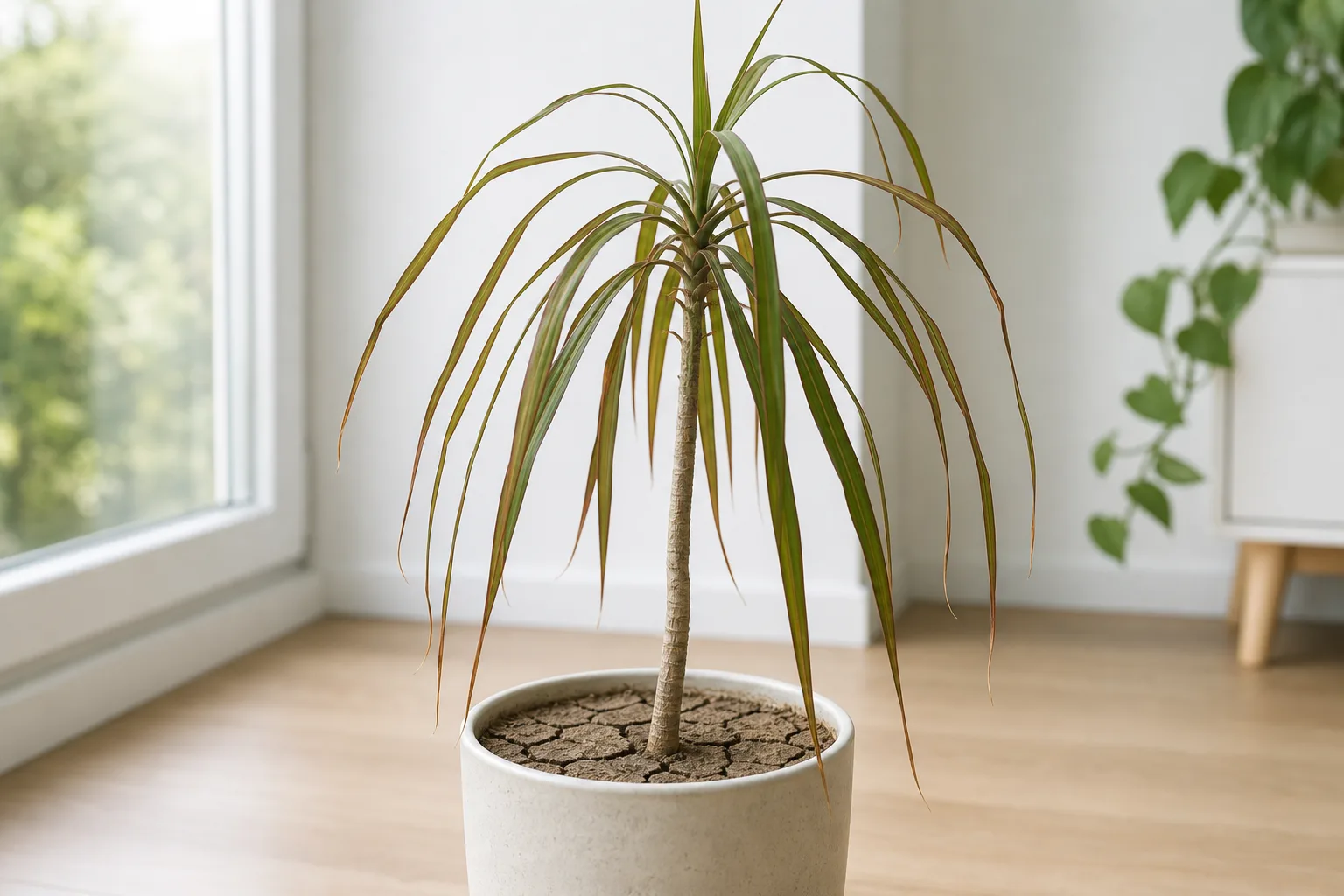
Underwatered Dracaena shows a very light pot, drooping strap leaves, and dry mix two inches down with a firm cane base. First step: bottom-water or soak until the root zone rewets, then drain fully before adjusting your schedule.
Underwatering on Dracaena (Corn Plant): Causes, Checks & Fixes
This guide covers underwatering on Dracaena. See also the general Underwatering guide, watering, and light pages for this plant.
Underwatering on Dracaena (Corn Plant): Causes, Checks & Fixes
Quick answer
Underwatering on Dracaena - primarily corn plant (Dracaena fragrans), the species most owners mean when they search this genus - means the root zone has stayed dry too long for Dracaena overview to replace the water its long strap leaves lose every day. The pot feels light, the mix pulls away from the sides, and the arching leaves hang limp instead of holding their usual curve. Press the cane base at the soil line - it should feel firm like wood. Firm cane plus dusty dry mix points to drought; soft cane plus wet mix points to root rot, not thirst.
First step: bottom-water or soak until the root ball rewets. Set the pot in a sink or tray of room-temperature water, let the mix absorb until the surface darkens, then lift the pot out and drain every drop from the saucer. One deep soak beats repeated small sips that never reach the lower roots on a tall cane plant. For seasonal rhythm after recovery, see the Dracaena watering guide.
Firm cane + dry two inches → soak. Soft cane + wet mix → stop water and open the root rot guide. Brown tips only on otherwise firm leaves with reasonable moisture → check fluoride and brown tips before you soak again.
This page targets D. fragrans / corn plant underwatering - the most common indoor Dracaena in drought stress. Dragon tree (D. marginata) and Janet Craig (D. deremensis) share cane architecture and the same pot-weight logic, but fragrans carries the largest leaf surface and dries out fastest in bright light. The corn plant underwatering guide covers the same species with mass-cane wording; start here for genus-wide drought diagnosis and cross-links to related problems.
What underwatering looks on Dracaena
Dracaena stores some moisture in its thick cane, so it tolerates a missed watering better than a fern-but it is not a desert plant. When drought stress builds, symptoms show on the foliage first:
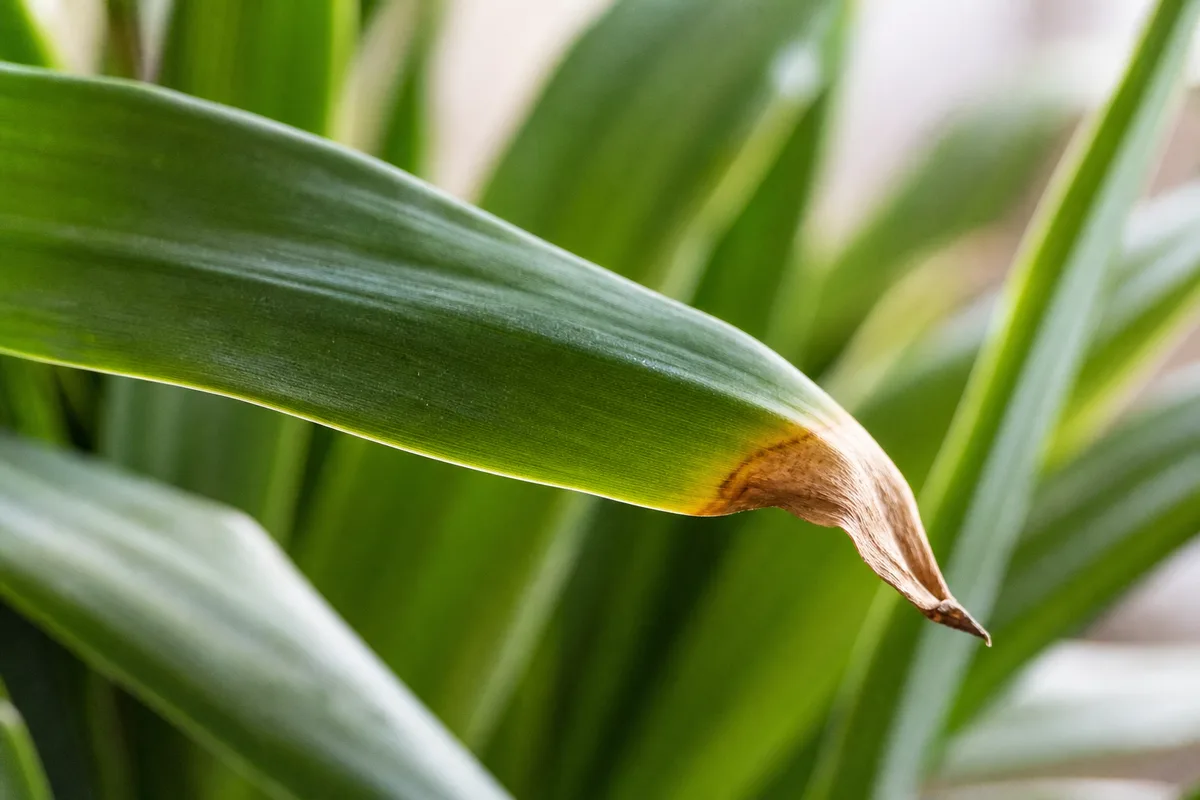
Underwatering symptoms on Dracaena - compare with healthy tissue on the same plant.
- Drooping or curling strap leaves that lose their stiff arch and feel thin rather than leathery - see also drooping leaves when wilt is the main signal
- Brown, dry leaf tips or margins, sometimes with yellowing on the oldest lower leaves after repeated dry cycles
- Very light pot weight when you lift one corner of the container
- Dry mix two inches down that may shrink and pull away from the pot wall
- Water running straight through the surface without darkening the mix-a sign the peat has gone hydrophobic after long drought
- Slowed or stalled new growth from the cane tip while existing leaves look dull
On a multi-stem corn plant, the outermost leaves often droop before the center rosette. That pattern fits drought better than a pest issue, which usually coats leaf undersides or shows sticky residue.
Important distinction: Brown tips on Dracaena are often blamed on fluoride in tap water-and that is a real problem on this species. Fluoride damage typically appears while soil moisture is uneven but not bone dry throughout the pot. If the mix is dusty dry two inches down and the whole plant droops, underwatering is the more likely driver until you prove otherwise.
Why Dracaena gets underwatered
Dracaena is marketed as an easy, forgiving houseplant, which leads many owners to treat it like a cactus. In reality, corn plant wants evenly moist, well-drained soil during active growth and only a modest dry-down between drinks-not weeks of neglect.
Common Dracaena-specific triggers:
Calendar watering in winter without checking soil. Growth slows from fall through late winter, so the plant uses less water-but indoor heating and dry air still pull moisture from large leaves. Skipping checks for three weeks in a bright room can dry a root ball even when you “watered on schedule.”
Underestimating leaf surface area. Indoor corn plants carry sword-shaped leaves up to two or three feet long on mature specimens. More leaf area means faster transpiration, especially in medium to Dracaena light guide where Dracaena grows best.
Root-bound pots in summer. A crowded root ball in a small container can go from moist to dry in a few days during warm weather. Wilting between waterings every two days is a classic root-bound drought pattern.
Hydrophobic old peat mix. When dry peat repels water, surface watering runs down the inside wall of the pot while the center stays dry. The plant looks watered; the roots stay thirsty. Clemson HGIC recommends placing the pot in a sink or bucket of water until the surface moistens when soil has dried excessively.
Fear of overwatering after past root problems. Dracaena is sensitive to soggy soil and root rot from overly frequent watering-especially in cool rooms. Swinging from daily drenching to almost no water creates chronic drought stress and brown, crispy foliage. If your last crisis was wet-soil wilt, read the overwatering guide before you assume every droop needs more water.
Heat, drafts, and low humidity. Near radiators, HVAC vents, or sunny windows, pots dry faster than in a stable corner. Dry air also accelerates tip browning, which can mask whether the real issue is soil dryness or humidity alone.
Confirm underwatering vs. rot, fluoride, and lookalikes
Work through these checks before soaking or Dracaena repotting guide:
- Pot weight - Lift the pot after watering once to learn the heavy feel. A drought-stressed Dracaena feels dramatically lighter.
- Finger test at two inches - Push your finger knuckle-deep. Dracaena is normally watered when the soil surface is dry; if it is dusty throughout, drought is confirmed.
- Drainage hole peek - Look underneath. Pale, firm roots and dry mix support underwatering. Mushy brown roots with wet mix mean rot, not thirst.
- Smell - Dry soil smells neutral. A sour or swampy odor means overwatering or decay-do not treat that with more water.
- Leaf pattern - All leaves limp with dry soil fits drought. Lower yellow leaves on wet soil fits overwatering. Speckled brown tips on otherwise firm leaves may be fluoride or low humidity with adequate root moisture.
- Water absorption test - Pour a small amount on the surface. If it beads and runs off, the mix is hydrophobic and needs a slow soak, not another splash on top.
Symptom lookalike comparison
| Pattern | Pot / soil | Cane base | Leaf feel | First path |
|---|---|---|---|---|
| Limp leaves, light dry pot, dusty mix 2 in. down | Bone-dry throughout | Firm | Thin, may feel crispy at edges | Soak and drain - this page |
| Limp leaves, heavy wet pot, yellow lowers | Saturated days after watering | Usually firm early | Soft, not crispy | Overwatering - stop water |
| Limp leaves, sour smell, mushy roots | Wet, anaerobic mix | Soft or spongy | Soft | Root rot - unpot today |
| Brown tips/margins only, otherwise upright | Moisture reasonable at depth | Firm | Tips crispy; blade firm | Brown tips - fluoride or salts |
| Tips brown, low humidity room | Can be dry or moist | Firm | Crispy tips only | Low humidity + soil check |
| One yellow lower leaf, rest turgid | Normal dry-down | Firm | Normal | Natural aging - not drought |
If the pot is heavy, soil stays cool and damp at the surface for many days, and lower leaves yellow while the cane base stays firm, overwatering or root rot is more likely than underwatering-adding water will make things worse. Wet-soil wilt happens because damaged roots cannot move water upward even when the mix is saturated; that is root failure, not drought.
First fix: bottom-water until the root zone rewets
Bottom-water or soak until the root zone rewets, then drain completely.
Place the pot in a sink or basin filled with room-temperature water up to the pot rim. Clemson HGIC advises removing the pot when the soil surface is moist after soaking in a sink or bucket-typically 30–45 minutes for a medium corn plant pot, longer for a large multi-cane container in dense mix. Lift the pot, let excess drain for several minutes, and empty the saucer. Do not leave the plant sitting in runoff overnight.
If water ran through too fast on the first pass-common with hydrophobic peat-repeat the soak once after the initial drain, or use the double watering method (water once, then again half an hour later). Avoid pouring ice-cold tap water on stressed roots; room temperature is gentler.
Do not fertilize, repot, or prune heavily on the same day. The first job is getting moisture back into the root ball.
What not to do the same day
Do not drench daily after one dry period-that swings hard toward root rot on a plant already sensitive to soggy soil. Do not mist leaves instead of soaking soil-roots need moisture in the mix, not a brief humidity bump on foliage. Do not assume every droop means underwatering without checking soil; wilt on wet soil is rot until proven otherwise.
Step-by-step recovery and timeline
Once the initial soak is done, follow this order over the next two weeks:
- Wait for the perk-up - Leaves often firm within 24–48 hours if roots were healthy. No improvement with wet soil means inspect roots for rot.
- Resume the two-inch rule - Water again only when the top two inches of mix are dry. Use the climate table below as a starting range, but always let pot weight guide you-not a calendar.
- Use a thorough top water occasionally - After bottom-watering stabilizes the plant, a slow top water until runoff clears the drainage hole helps flush salts. Discard saucer water within 30 minutes.
- Address hydrophobic mix - If water keeps channeling away from roots, top-dress is not enough. Plan a spring repot into fresh, well-drained peat-free mix with perlite and coarse bark-but only after the plant perks up.
- Trim dead tips if you wish - Brown crispy edges will not re-green. Dracaena sap can irritate skin on sensitive people-wear gloves or wash hands after trimming damaged strap leaves with sterilized scissors once new growth looks stable.
- Hold fertilizer - Skip feed until leaves stay firm for two weeks and new growth appears. Salts on drought-stressed roots add stress.
Recovery timeline: Mild underwatering on Dracaena often reverses within one to two days after a proper soak-you will see leaves lift and feel thicker. Moderate stress with some crispy tip damage may take one to two weeks before new foliage looks normal, though old brown edges remain.
Judge success by firm new leaves from the cane crown, not by saving every damaged strap. If the plant stays limp after the mix is evenly moist for several days, unpot and inspect roots-some fine roots may have died during the dry spell.
Prevent underwatering without causing rot
Build a simple routine around how your pot dries, not a generic schedule:
Pot-weight baseline: For two weeks after recovery, lift the pot immediately after every thorough watering and note the heavy feel. When the same pot feels noticeably lighter-before leaves droop-you are approaching the next drink. This beats any calendar rule for tall cane specimens.
Climate-aware watering rhythm (starting ranges)
| Placement | Season | Typical dry-down before next soak | Check frequency |
|---|---|---|---|
| Bright south or west window | Spring–summer | 7–10 days | Every 3–4 days |
| Bright south or west window | Fall–winter (heated room) | 10–14 days | Every 5–7 days |
| Moderate indirect light | Spring–summer | 10–14 days | Every 5–7 days |
| Moderate indirect light | Cool winter slowdown | 14–21 days | Weekly |
| Dim office corner | Year-round | 14–21+ days | Weekly |
| Near radiator or HVAC vent | Any season | Shorten above ranges by 2–4 days | Every 3–4 days |
These are starting points only-root-bound pots, small containers, and post-vacation neglect dry faster. Check soil moisture before watering every time; underwatering prevention and overwatering avoidance use the same finger test.
- Use filtered, distilled, or rainwater if tip burn is a recurring issue, while still watering deeply when soil is dry.
- Refresh old, peat-heavy mix that repels water instead of fighting it with surface splashes.
- Keep the plant in well-draining mix with perlite and bark, in a pot with open drainage holes-Dracaena needs moisture, but the mix must never stay saturated.
When travel or busy weeks are coming, group plants away from heat vents and give a trusted soak before you leave rather than hoping the calendar matches the pot.
When to worry - failed recovery and root inspection
Escalate beyond a simple soak if:
- Leaves stay limp after the mix has been evenly moist for three to four days
- The cane base feels soft or smells sour despite your drought diagnosis
- Most roots are brown and mushy when you unpot-drought may have weakened them, but rot is the active problem
- New growth stops entirely for more than a month after you corrected watering
- The plant was bone dry in hot direct sun and leaves do not firm within 48 hours after rehydration
A healthy Dracaena cane can lose many lower leaves and still recover if the stem stays firm and roots are pale and solid. If the growing tip collapses or the base rots, propagation from a healthy cane section may be the backup-but that is a last resort, not the first fix.
If you have confirmed dry mix, firm cane, and a full soak with drain-and the plant still will not perk up-contact your local cooperative extension office or master gardener helpline. Chronic failure after correct rehydration may point to hidden root damage, pest pressure, or a soil mix that no longer holds water evenly.
Recommendations were checked against Clemson HGIC dracaena culture, Clemson HGIC indoor plant watering, Missouri Botanical Garden Dracaena fragrans, and NC State Extension Dracaena fragrans, plus LeafyPixels Dracaena guides on watering, overwatering, and root rot. Author: sai-ananth. Reviewer: LeafyPixels Review Board. Reviewed June 2026.
When to use this page vs other Dracaena guides
- Dracaena watering guide - Use for routine moisture checks before assuming underwatering is the main issue.
- Dracaena problems hub - Browse all 16 common issues on this species.
- Wilting on Dracaena - Different entry point when symptoms overlap with underwatering.
- Brown Tips on Dracaena - Different entry point when symptoms overlap with underwatering.
- Yellow Leaves on Dracaena - Different entry point when symptoms overlap with underwatering.