Yellow Leaves on Dracaena: Causes, Checks & Fixes
Quick answer
Yellow leaves on Dracaena usually mean overwatering, cold damage below 50°F (10°C), or normal aging of older lower leaves on each cane. First step: press the cane base where it enters the soil-it should feel firm like wood, not squishy. Check soil moisture and recent temperature before fertilizing or repotting.
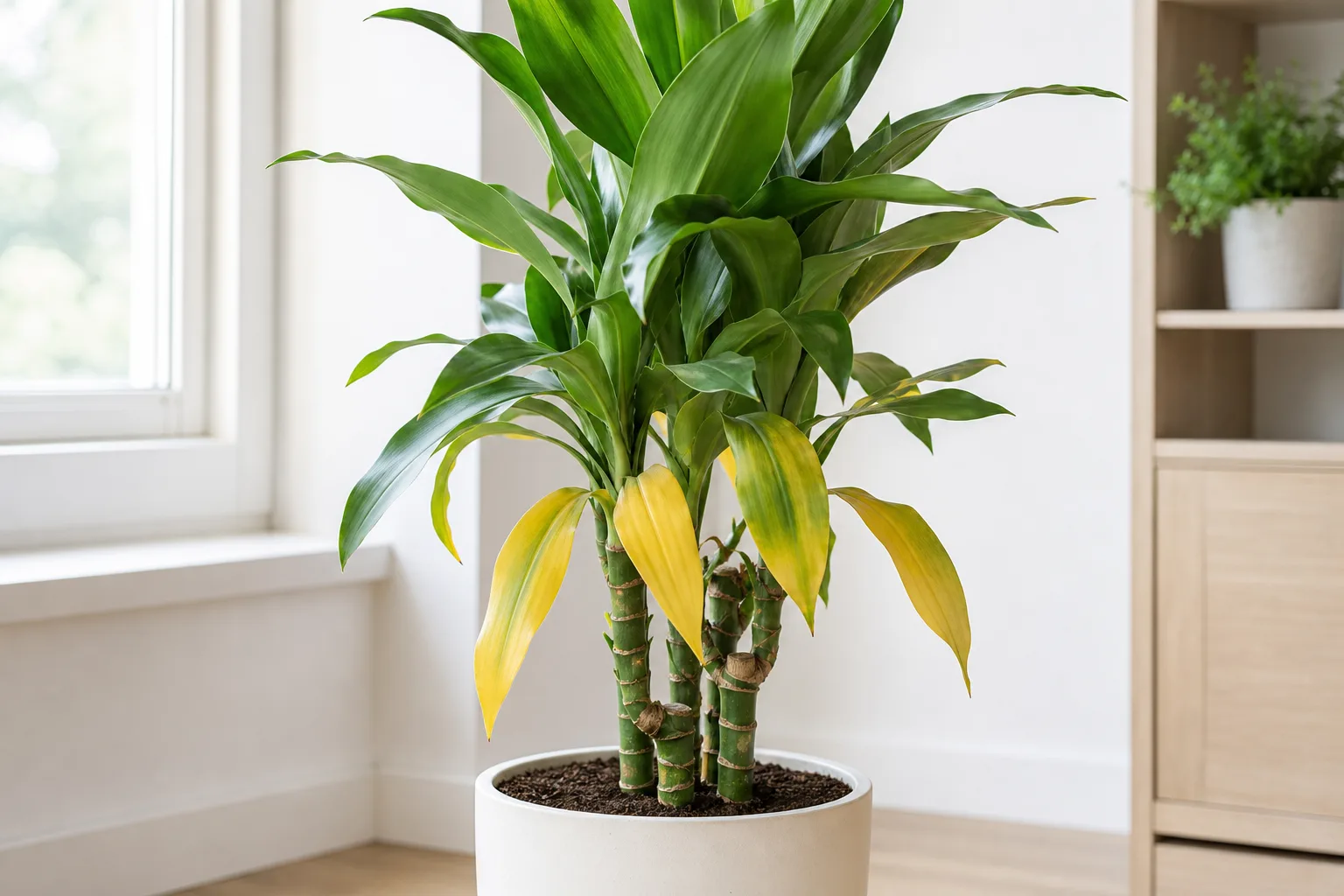
Yellow Leaves on Dracaena: Causes, Checks & Fixes
This guide covers yellow leaves on Dracaena. See also the general Yellow Leaves guide, watering, and light pages for this plant.
Yellow Leaves on Dracaena: Causes, Checks & Fixes
Quick answer
Yellow leaves on Dracaena-corn plant (Dracaena fragrans), dragon tree (Dracaena marginata), Janet Craig, Warneckii, and related cane types-are a symptom, not a single diagnosis. The same yellow strap leaf can mean normal aging on a healthy cane, chronic overwatering with rotting roots, a cold night near a winter window, or fluoride stress that often starts at leaf margins before whole blades fade.
First step: press the cane where it enters the soil and stick a finger two inches into the mix. A firm cane with one yellow bottom leaf and dry-to-normal soil is often harmless senescence. A soft, squishy cane base with wet, cool soil and multiple yellow leaves at once means stop watering and inspect roots before you fertilize or repot. For genus-wide context on cane architecture and water quality, see the Dracaena overview.
What yellow leaves look like on Dracaena
Dracaena are woody cane plants, not basal rosette species like African violets. Each upright stem carries a terminal rosette of strap-shaped leaves; the oldest blades sit lowest on that rosette and yellow first during normal aging while the cane above stays bare and firm. Multi-stem corn-plant pots show this pattern independently on each cane.
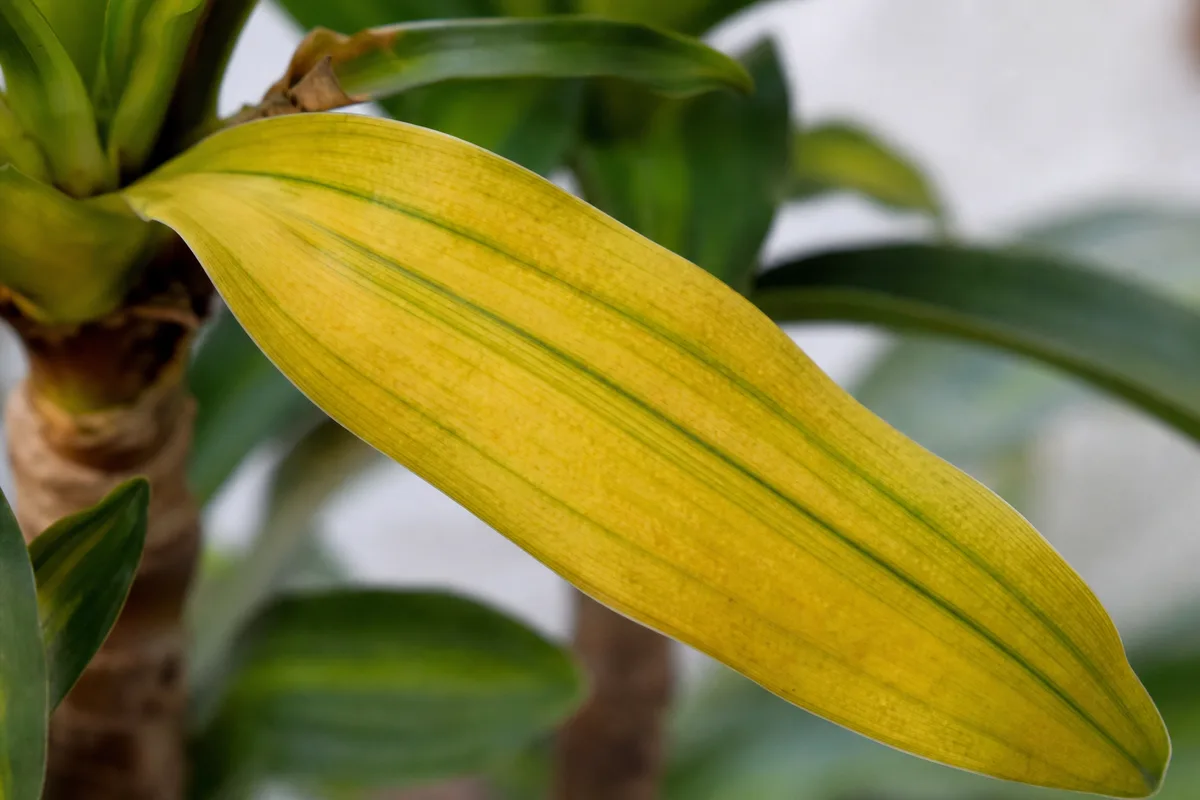
Yellow Leaves symptoms on Dracaena - compare with healthy tissue on the same plant.
Normal lower-leaf aging:
- One or two bottom leaves fade from green to yellow over weeks, then drop
- Cane feels solid from soil line to crown; top rosette stays green
- Soil moisture matches your species’ dry-down rule in the watering guide
- No sour smell; no sudden batch of yellow leaves overnight
Overwatering and root stress:
- Multiple lower leaves yellow at once while mix stays dark, cool, and wet for many days
- Leaves may look limp or pale despite moisture; sudden loss of many leaves can follow poor drainage or too much water
- Cane base softens or feels hollow when pressed-stem rot may follow root failure
- Fungus gnats or white mold on soil surface sometimes appear with chronic sogginess
Cold temperature injury:
- Several leaves yellow or drop within a day or two after a cold night near a window or draft
- Pattern often hits outer or upper leaves exposed to glass, not just the lowest senescent blade
- Soil moisture was normal; cane may still feel firm
- Container dracaenas should be protected from temperatures below about 50°F (10°C)
Fluoride and salt stress (often overlaps with brown tips):
- Yellow or scorched tips and margins on multiple leaves while the cane stays firm
- Dracaena is very sensitive to fluoride; symptoms include yellowing of tips or margins
- White crust on pot rim or soil surface from hard water or heavy feeding
- Whole-leaf yellow is less common than tip burn but can follow months of fluoridated tap water on sensitive cultivars-see brown tips on Dracaena
Low-light pale yellow:
- Upper leaves turn pale yellow-green on long bare cane with a small top tuft
- Soil dries slowly; plant may be underwatered or overwatered depending on your response to dim conditions
- Distinct from one bottom leaf aging-read not enough light on Dracaena
Why Dracaena gets yellow leaves
Dracaena evolved as drought-adapted tropical cane plants with water storage in stems and roots. That storage helps them survive missed waterings-but it also means chronic overwatering suffocates roots while the cane still looks upright for days. Yellow lower leaves are often the first visible signal that the root zone has stayed wet too long.
Overwatering and poor drainage remain the most common indoor cause. Calendar watering, oversized pots, heavy mix, and saucers left full all keep roots in oxygen-poor soil. Root rot usually results from mix that does not drain quickly or overly frequent watering. Dracaena fragrans (corn plant) is easily overwatered and prefers a deeper dry-down than Janet Craig types, per Pacific Northwest guidance-yet all species yellow from wet roots the same way.
Natural senescence on cane architecture is the benign counterpart. As each rosette produces new center leaves, the oldest outer straps yellow and drop, leaving a bare woody stem below the living crown. That is expected on floor-sized corn plants and branched dragon trees-not a sign of disease when the cane stays firm and only one or two bottom blades fade at a time.
Cold drafts and sub-50°F (10°C) exposure damage cell tissue quickly. Winter window contact, entry-door drafts, and AC blasts can trigger batch yellowing or leaf drop even when watering was appropriate. Damaged leaf tissue does not recover; prevention and stable placement matter more than extra water afterward.
Fluoride and fertilizer salts concentrate at leaf margins on this genus. Clemson HGIC notes that heavy fertilizing can burn or yellow tips and margins, and superphosphate fertilizers add fluorine-double stress on an already sensitive plant. Yellowing from salts usually pairs with tip scorch rather than wet soil and soft cane.
Underwatering yellows fewer leaves than overwatering but can pale and crisp lower foliage on very dry mix, especially when a large corn-plant pot dries unevenly. Compare pot weight and skewer moisture before assuming rot-see underwatering on Dracaena.
Lookalike symptoms to rule out
| Pattern | Likely cause | First direction |
|---|---|---|
| One yellow bottom leaf; firm cane; normal soil | Normal aging | Remove spent leaf; no watering change |
| Multiple yellow lowers; wet soil; soft cane | Overwatering / rot | Stop water; inspect roots - overwatering guide |
| Batch yellow after cold night; firm cane | Temperature injury | Move off window; stabilize warmth |
| Yellow tips/margins; firm cane; tap water | Fluoride / salts | Water switch - brown tips guide |
| Pale upper leaves; long bare cane | Low light | Improve light - not enough light |
| Yellow lowers; very dry, light pot | Underwatering | Deep soak once - underwatering guide |
Yellow leaves vs. brown tips: Fluoride stress usually starts at margins before whole blades yellow. Wet-soil yellowing hits lower leaves first with limp texture. Both can coexist on one stressed plant-use the table above rather than treating every yellow leaf as a watering problem.
How to confirm the cause
Run this cane + soil + temperature checklist before changing fertilizer, Dracaena repotting guide, or cutting the plant back.
- Cane firmness - Press the base where the cane enters the soil. Firm wood-like tissue supports aging or cold injury diagnoses; squishy tissue with wet mix points to rot.
- Soil moisture - Stick a finger 2 inches (5 cm) deep, or lift the pot. Heavy, cool, damp mix after days without watering confirms overwatering; dusty dry mix suggests underwatering.
- Leaf pattern - Note whether one bottom leaf fades slowly or many leaves yellow at once, and whether tips or margins scorched first.
- Recent temperature - Did the pot sit on a cold windowsill, near a draft, or under an AC vent in the last 48 hours?
- Water source and feeding - Fluoridated tap water, superphosphate fertilizer, or white salt crust on the rim suggest fluoride/salt overlap.
- New growth - Green leaves emerging from the crown mean the plant is still functioning; widespread yellowing into the top rosette means escalate fast.
If wet soil pairs with soft cane and spreading yellow leaves, unpot and inspect roots before the next watering. Firm cane with a single yellow lower leaf and appropriate dry-down usually needs no emergency repot.
First fix for Dracaena
Match your first action to what the checklist confirmed-do not stack repot, fertilizer, and watering changes on day one.
When soil is wet and the cane feels soft or lower leaves are yellowing in clusters: Stop watering immediately. Move the plant to bright indirect light so the mix dries evenly-shade slows evaporation and worsens rot. If yellowing continues after the top 2 inches (5 cm) dry, unpot, trim brown or mushy roots, and repot into fresh well-draining mix with a drainage hole. Full rescue steps live in the root rot guide.
When the cane is firm and only one or two bottom leaves are yellow: Remove the spent straps with clean pruners and resume your species’ normal dry-down from the watering guide. No repot or fertilizer is needed.
When batch yellowing followed a cold night: Move the pot to stable 65–80°F (18–27°C) away from glass and vents. Hold watering until the top of the mix dries unless leaves are also wilting from extreme dryness.
When tips scorched before whole-leaf yellow and soil moisture was normal: Switch to filtered, distilled, or rainwater, flush accumulated salts, and read the brown tips guide-do not increase watering.
Step-by-step recovery by cause
Overwatering / root stress
- Stop watering until the top 2 inches (5 cm) of mix are dry.
- Empty saucers; confirm drainage holes are open.
- If the cane softens or smell turns sour, unpot, trim rot, repot one size up at most.
- Resume watering only when dry per species rules-corn plant dries deeper than Janet Craig.
- Remove fully yellow leaves to reduce pest hiding spots; they will not re-green.
Normal aging
- Pull or cut the yellow strap at the base of the rosette.
- Keep the existing watering rhythm-aging is not a call to water more.
- Expect the next bottom leaf to yellow in weeks or months as the cane lengthens.
Cold injury
- Relocate off the windowsill or draft path.
- Avoid fertilizing until new growth appears.
- Remove collapsed yellow leaves for appearance; wait for new straps from the crown.
Fluoride / salt stress
- Switch water source; flush the pot with two to three pot volumes of plain water.
- Skip superphosphate fertilizer; hold feeding until new leaves open clean.
- Trim dead tip tissue cosmetically-focus on new leaf color, not old blades.
Recovery timeline
Fully yellow strap leaves do not turn green again-they drop or stay yellow until you remove them. Judge success by firm cane tissue and new green growth from the top rosette, not by old leaf color.
- After correcting overwatering: Lower yellowing often stops within one to two weeks once soil oxygen returns; the first clean new leaf may take two to four weeks in warm months.
- After cold injury: Damaged leaves may drop immediately; new growth stabilizes over two to four weeks if temperatures stay in range.
- Normal aging: One bottom leaf every few weeks to months on large corn plants-no recovery clock because there is no disease to cure.
- Fluoride correction: Whole-leaf yellow from salts is slower; allow four to six weeks after water switch and flush before deciding the fix failed.
Dracaena grows slowly compared with pothos-a month of stable new growth means you likely found the right lever.
What not to do
- Do not fertilize a yellowing, stressed plant hoping to “green it up”-salts worsen fluoride-sensitive foliage and soggy roots cannot uptake nutrients.
- Do not increase watering when lower leaves yellow unless the pot is genuinely dry and lightweight; wet-soil yellowing gets worse with more water.
- Do not repot into a larger container to “help drying”-oversized pots hold excess wet mix and accelerate rot.
- Do not assume every yellow leaf needs a new pot-firm cane with one fading bottom leaf is often normal senescence.
- Do not confuse cold damage with underwatering and soak a cold-shocked plant in saturated mix.
- Discard removed yellow leaves away from pets if chewed-Dracaena spp. are toxic to cats and dogs.
How to prevent yellow leaves on Dracaena
- Water on moisture checks, not calendar dates-match dry-down to species in the watering guide.
- Use pots with drainage holes and empty saucers within 30 minutes of watering.
- Keep plants away from winter windowsills and AC vents when outdoor temperatures drop below 50°F (10°C).
- Use filtered or low-fluoride water on sensitive cultivars to limit tip and margin yellowing-details in brown tips.
- Provide bright indirect light so the plant uses water predictably; dim corners slow dry-down and invite rot-see light needs.
- Remove spent lower leaves promptly so pests and mold do not colonize dying tissue.
- Flush salts every two to three months if you feed during active growth; skip superphosphate products entirely.
When to worry
Treat as urgent when the cane base is soft or squishy, soil smells sour, multiple leaves yellow within a few days on wet mix, or yellowing climbs into the top rosette while the crown wilts. Those patterns point to advancing stem or root rot-see root rot on Dracaena and overwatering.
Lower urgency: one yellow bottom leaf every few weeks on a firm cane, appropriate soil moisture, and green new growth from the center. Remove the spent leaf and monitor before changing care.
Cultivar notes
Dragon tree (Dracaena marginata) tolerates lower light and less frequent watering than corn plant but shows fluoride damage quickly on narrow leaves. Corn plant (Dracaena fragrans) prefers brighter indirect light and a deeper dry-down-it is easily overwatered, which yellows lower leaves while the thick cane still feels firm briefly. Janet Craig and Warneckii (D. deremensis types) want more even moisture without waterlogging; yellowing on wet mix appears faster than on marginata in the same window. This genus page is the canonical yellow-leaf hub for all soil-grown Dracaena species; cultivar-specific yellow-leaves URLs should cross-link here rather than duplicate generic advice.
Dracaena yellow-leaf quick reference
| Cause | Soil state | Cane feel | Leaf pattern | Urgency |
|---|---|---|---|---|
| Normal aging | Normal dry-down | Firm | One bottom leaf at a time | Low |
| Overwatering | Wet, cool, heavy pot | Softening base | Multiple lowers, limp | High |
| Cold injury | Normal | Firm | Batch yellow after cold night | Medium |
| Fluoride / salts | Normal | Firm | Tips/margins first | Medium |
| Underwatering | Very dry, light pot | Firm | Pale, crisp lowers | Medium |
| Low light | Slow to dry | Firm | Pale uppers, leggy cane | Low–medium |
Related Dracaena problems
- Dracaena overview - species differences, fluoride sensitivity, and cane architecture
- Overwatering - wet-soil yellowing and saucer mistakes
- Root rot - soft cane and mushy roots
- Brown tips - fluoride lookalike and water-quality fixes
- Watering - species dry-down rhythm
- Not enough light - pale upper leaves on leggy cane
- Underwatering - dry-pot lookalike
Conclusion
Yellow leaves on Dracaena stop being mysterious once you read cane firmness, soil moisture, and recent temperature together. Woody cane plants drop old lower straps as they grow-that is normal. Wet soil with a soft base is not. Cold nights and fluoride stress fill the gap between those extremes, which is why generic houseplant yellow-leaf lists fail this genus. Press the cane, check the mix, fix the confirmed cause once, and watch new top growth for the verdict. Old yellow blades will not re-green, but a firm cane pushing clean leaves means you chose the right lever-cross-check everyday care in the linked guides when symptoms overlap with tip burn, low light, or watering stress.
When to use this page vs other Dracaena guides
- Dracaena watering guide - Use for routine moisture checks before assuming yellow leaves is the main issue.
- Dracaena problems hub - Browse all 16 common issues on this species.
- Overwatering on Dracaena - Different entry point when symptoms overlap with yellow leaves.
- Underwatering on Dracaena - Different entry point when symptoms overlap with yellow leaves.
- Not Enough Light on Dracaena - Different entry point when symptoms overlap with yellow leaves.