Root Rot on Dracaena: Causes, Checks & Fixes
Quick answer
Root rot on Dracaena follows chronically wet mix around upright canes-yellow strap leaves and limp foliage on damp soil are the classic trap. First step: stop watering, press the cane base for firmness, and unpot if the mix smells sour or lower leaves yellow on wet soil.
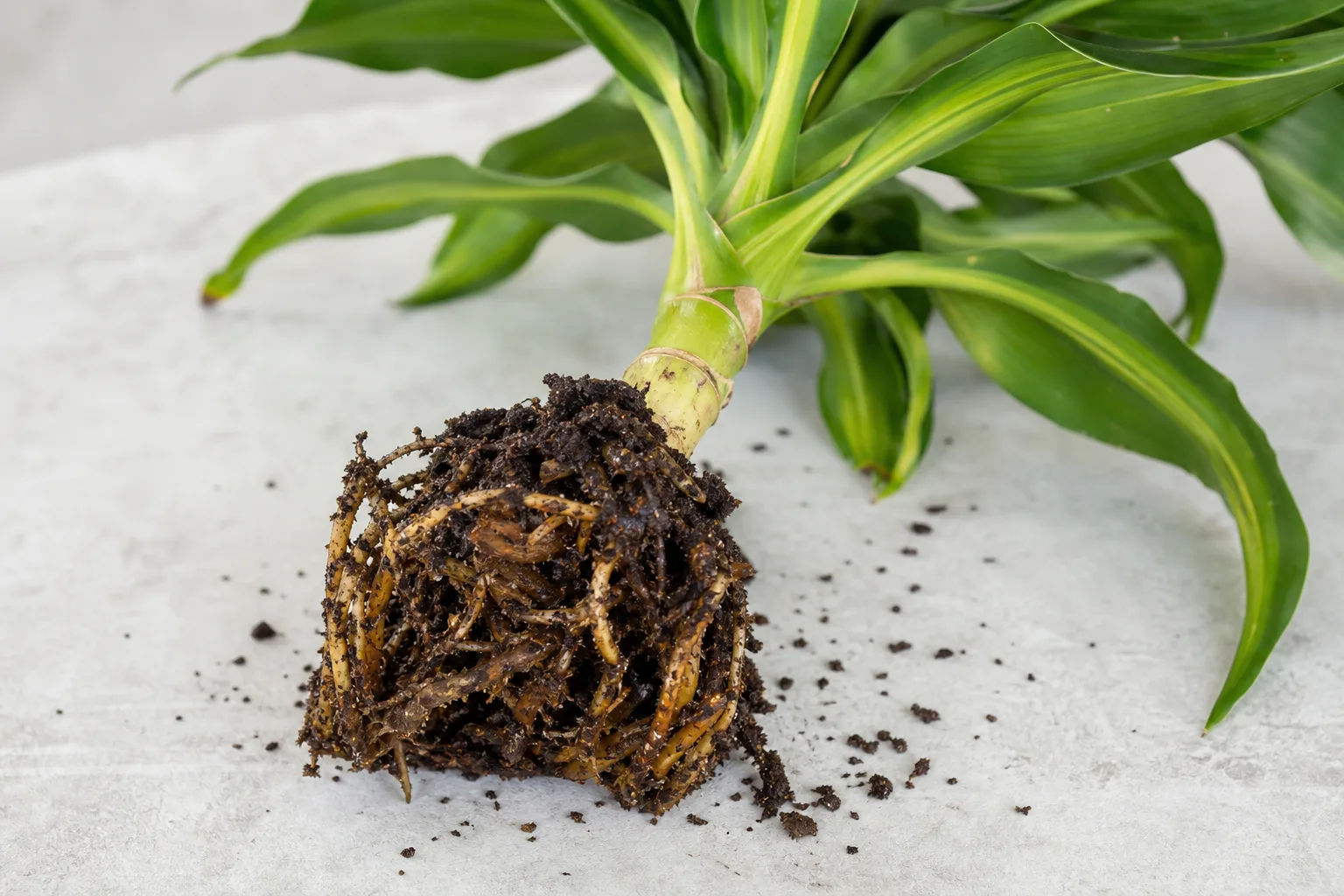
Root Rot on Dracaena: Causes, Checks & Fixes
This guide covers root rot on Dracaena. See also the general Root Rot guide, watering, and light pages for this plant.
Root Rot on Dracaena: Causes, Checks & Fixes
Quick answer
Root rot on Dracaena is almost always a watering and drainage failure on upright cane plants that tolerate missed drinks better than constant sogginess. When mix stays wet, fine roots die in oxygen-poor soil, strap leaves yellow, and the cane base at the soil line can go soft while the pot still feels heavy. For general rot mechanics, see our root rot symptom hub; for routine moisture checks on this species, see overwatering on Dracaena.
First step: stop watering immediately. Press the cane where it enters the soil-it should feel firm like wood, not squishy. If mix is wet and sour, or lower leaves yellow on damp soil, unpot and inspect roots before you repot or trim. For watering rhythm, see our Dracaena watering guide.
Root rot vs. other Dracaena problems
| Pattern | Pot weight | Soil | Cane at soil line | Likely cause |
|---|---|---|---|---|
| Root rot | Heavy | Wet, sour | Soft or blackening | Failed roots on saturated mix |
| Underwatering | Light | Dry | Firm | Turgor loss from drought |
| Low light + slow dry-down | Medium-heavy | Damp weeks | Firm but pale leaves | Overwatering risk |
| Fluoride/brown tips | Normal | Variable | Firm | Water quality-not rot |
| Normal lower leaf drop | Normal | Appropriate | Firm | Aging on lower straps |
Root rot is a common houseplant problem caused by overwatering or poorly draining soil. Dracaena’s woody cane stores some water, so wilting can lag behind root damage-firm upper leaves are not proof roots are healthy when soil stays wet.
What root rot looks like on Dracaena
Rot hides in the root ball while strap leaves still look acceptable on tall canes.
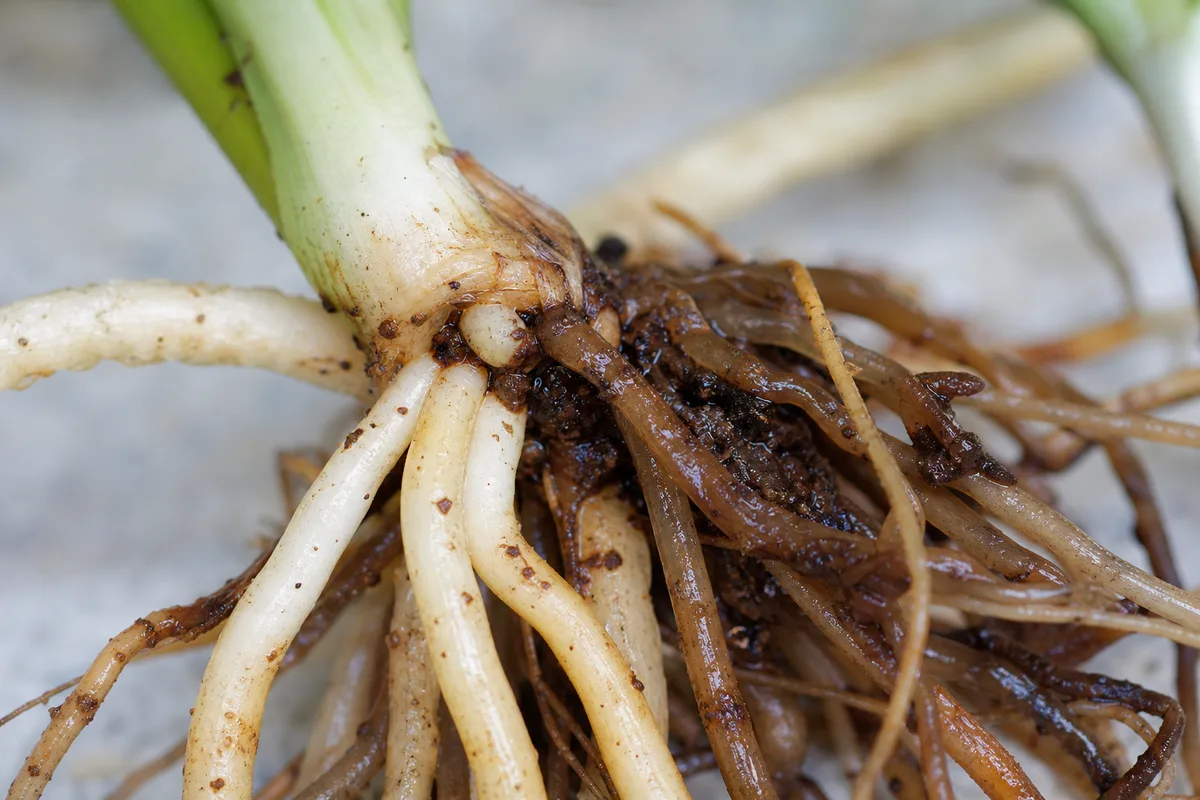
Root Rot symptoms on Dracaena - compare with healthy tissue on the same plant.
Early signs:
- Yellow lower strap leaves while mix stays damp
- Limp arching leaves on wet soil that do not rebound after watering
- Sour smell when lifting the pot
- Fungus gnats on never-drying surface
- Slowed new growth at cane tip
Advanced signs:
- Soft mushy cane at or just above soil line
- Brown or black tissue on cane base
- Cane tips over from failed anchoring roots
- Roots that slip off when touched-healthy dracaena roots stay firm and white or tan
- Widespread yellow-brown strap leaves despite moisture
Compare with underwatering: light dry pot, thin soft green leaves, recovery after thorough soak.
Why Dracaena gets root rot
Overwatering on schedule. Clemson HGIC recommends allowing soil to dry between waterings for dracaena. Calendar watering in cool winter rooms keeps mix wet for weeks.
Poor drainage. Blocked holes, dense peat, oversized pots, and saucers left full after watering keep the root zone anaerobic.
Low light and cool rooms. Dracaena in dim corners uses less water per week. Same summer rhythm overwaters in January.
Fluoride stress compounding damage. Brown tips from fluoride weaken plants but rot still traces to wet roots-fix drainage first.
Cachepots. Decorative outer pots trap runoff against cane bases.
Seasonal rhythm shifts. Dracaena in cool winter rooms uses far less water than in summer. Owners who keep the same weekly schedule from July through January often waterlog cane plants that would have tolerated a longer dry-down. Pair seasonal cuts with the light guide—dim corners dry slowly and hide rot until lower strap leaves yellow on heavy wet mix.
How to confirm root rot
- Soil moisture - Wet clinging soil 2–3 cm down on heavy pot after days without intentional watering.
- Cane firmness - Press base at soil line. Soft = unpot now.
- Smell - Sour odor from drainage holes.
- Root inspection - Rinse roots. Firm white/tan = healthy. Brown mushy slimy = rot.
- Lookalikes - Dry light pot = drought. Only brown tips = water quality. Firm cane with one yellow lower leaf = aging.
First fix for Dracaena
Stop watering. Unpot if cane base is soft, mix is sour, or multiple strap leaves yellow on wet soil.
Mild case (some lower yellow leaves, firm cane, mostly white roots):
- Let top 2–3 cm dry completely
- Resume watering only when dry per watering guide
- Remove spent yellow straps cleanly
Moderate case (sour smell, some mushy roots, firm cane above base):
- Unpot and rinse roots
- Trim brown mushy roots with sterile blade
- Repot into fresh well-draining mix per soil guide in same-size or smaller clean pot
- Wait 5–7 days before first cautious drink
Severe cane mush:
- Cut healthy cane section above rot with sterile blade
- Let cut dry 24–48 hours
- Reroot top section in fresh airy mix or water
- Discard rotted base and infected soil
Recovery timeline
- Weeks 1–2: Yellowing stops spreading; soil dries on schedule; cane stays firm
- Weeks 3–8: New strap leaves unfurl from cane tip
- Months: Canes regain full rosette density
Worsening: black tissue climbing cane, tip collapse on drying soil, persistent sour smell after repot.
What not to do
- Water wilted dracaena on wet soil
- Fertilize rotting roots
- Repot into larger pot “to help drying”
- Ignore soft cane base hoping upper leaves recover alone
- Use fluoride-heavy tap without brown tip management during recovery stress
How to prevent root rot next time
- Water when top 2–3 cm dry per watering guide
- Well-draining mix; pot sized to root mass
- Empty saucers within 30 minutes
- Reduce winter frequency in cool dim rooms
- Bright indirect light per light guide so soil dries predictably
When to worry
Escalate when cane base goes mushy, black tissue climbs above soil, or plant tips over despite corrective watering. Salvage healthy cane tops before rot reaches the growing tip-once the terminal bud rots, recovery requires propagation from side shoots if any remain firm.
When to use this page vs other Dracaena guides
- Dracaena watering guide - Use for routine moisture checks before assuming root rot is the main issue.
- Dracaena problems hub - Browse all 16 common issues on this species.
- Overwatering on Dracaena - Different entry point when symptoms overlap with root rot.
- Yellow Leaves on Dracaena - Different entry point when symptoms overlap with root rot.
- Wilting on Dracaena - Different entry point when symptoms overlap with root rot.