Brown Tips on Dracaena: Causes, Checks & Fixes
Quick answer
Brown tips on Dracaena usually trace to fluoride in tap water; low humidity and overfertilizing are common secondary causes. First step: switch to filtered or distilled water, flush the pot with three times its volume of plain water, and trim dead tips at an angle-watch whether new leaves open with clean margins.
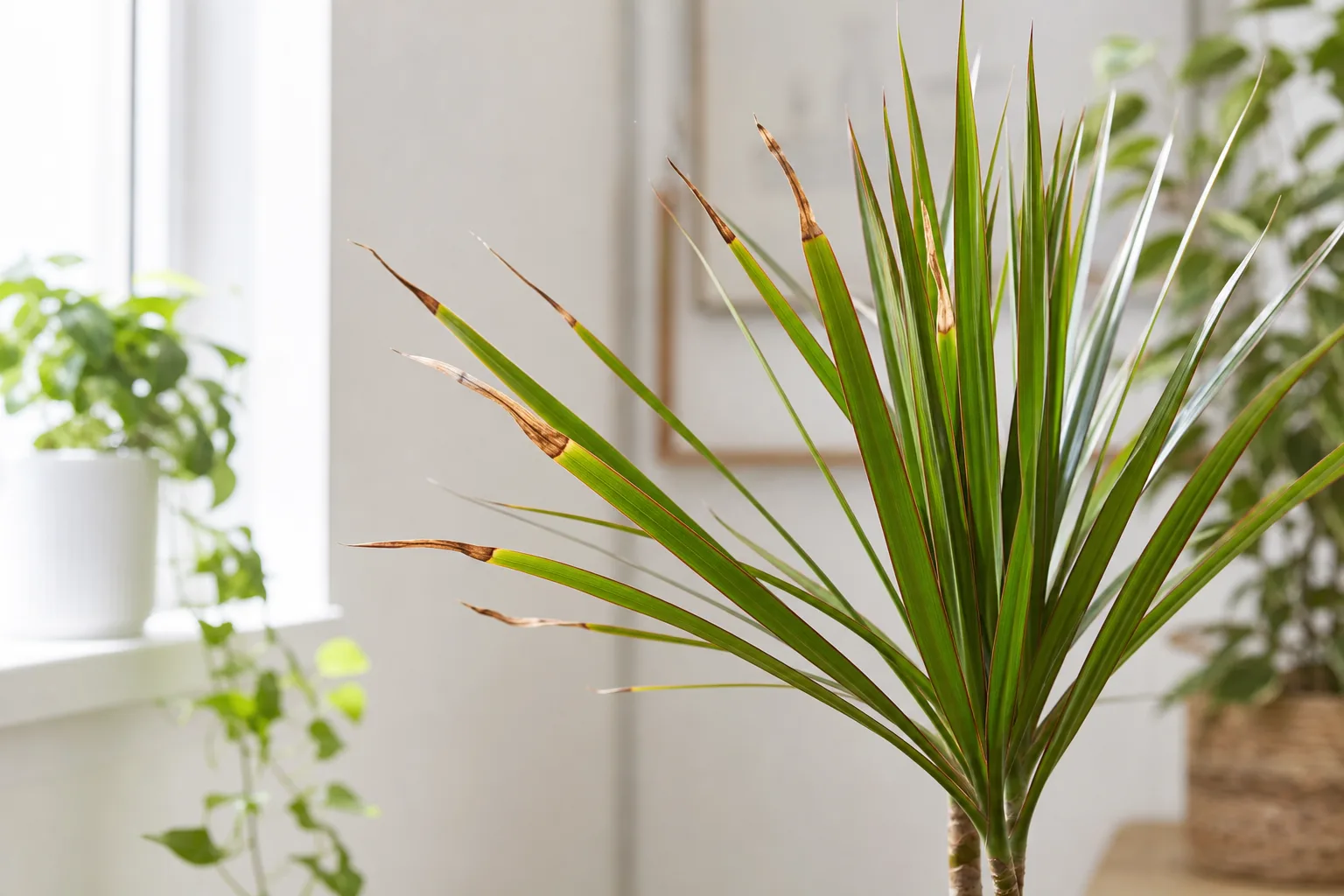
Brown Tips on Dracaena: Causes, Checks & Fixes
This guide covers brown tips on Dracaena. See also the general Brown Tips guide, watering, and light pages for this plant.
Brown Tips on Dracaena: Causes, Checks & Fixes
Quick answer
Brown tips on Dracaena-corn plant (Dracaena fragrans), dragon tree (Dracaena marginata), Janet Craig, Warneckii, and related cane types-usually trace to fluoride and salts in tap water, not a mysterious leaf disease. Clemson HGIC lists Dracaena as very sensitive to fluoride, with symptoms that include yellowing or scorched tips and margins. Low indoor humidity, heavy fertilizing, and direct sun scorch can produce similar edge damage, but fluoridated municipal water is the first suspect in most homes.
First step: switch to filtered, distilled, or rainwater and flush the pot with roughly three times its volume of plain water. Trim existing dead tips for appearance only, then watch whether the next new leaf opens with a clean margin. Dracaena is a slow-growing, drought-tolerant cane plant-recovery shows on fresh growth, not on tissue that already browned. For genus-wide water-quality context, see the Dracaena overview.
Why Dracaena gets brown tips
Dracaena evolved in tropical climates with cyclical rainfall, not constant exposure to treated municipal water. Indoors, three stressors converge on the same symptom-crispy leaf tips and margins-more often than on thicker-leaved houseplants.
Fluoride toxicity from tap water. Many municipal water sources inject fluorine at about 1 ppm as an additive. The Pacific Northwest Pest Management Handbooks describe fluoride as an accumulative poison in plant foliage that moves through the transpiration stream and concentrates at leaf margins. Dracaena deremensis and D. fragrans are especially sensitive. Symptoms build gradually: new leaves may look fine at first, then tips brown as fluoride accumulates over weeks of repeated watering.
Low humidity. Clemson HGIC notes that dry tips and edges are usually caused by too little humidity when fluoride is not the driver. Winter heating drops relative humidity below 30–40% in many homes. Dracaena tolerates moderate humidity better than prayer plants, but prolonged dry air still pulls moisture from thin leaf margins-especially on dragon trees with narrow blades.
Fertilizer salts and superphosphate. Leaf tips and margins may burn or yellow if plants are fertilized too heavily, per Clemson guidance. Missouri Extension adds that fertilizer salts concentrate as potting mix dries, mimicking overfeeding even when you applied a normal dose. Clemson warns against fertilizers containing superphosphate because they often carry high fluorine levels-double trouble on an already fluoride-sensitive genus.
Direct sun scorch. Round dry patches and streaks on leaves may be caused by excessive sunlight on foliage that formed in lower light. This pattern differs from uniform tip necrosis: scorch shows as bleached or tan patches on the sun-facing side, not a narrow band at every leaf tip.
Less common contributors: underwatering on Dracaena that concentrates salts at drying tips, water from a sodium-based softener, and boron or chloride in some treated supplies. Those look different once you audit water source, soil moisture, and feeding history.
What brown tips look like on Dracaena
Brown tips on dracaena have recognizable patterns once you separate cosmetic edge burn from root failure or pest damage.
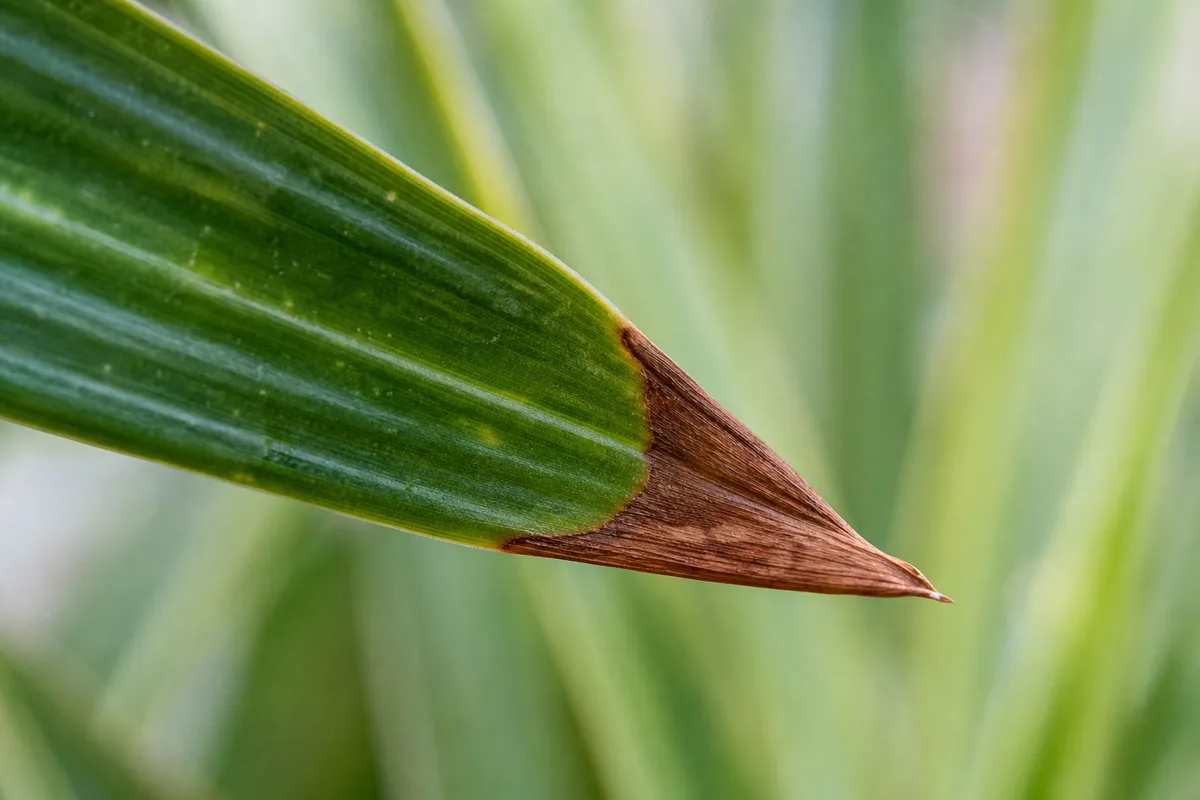
Brown Tips symptoms on Dracaena - compare with healthy tissue on the same plant.
Classic fluoride tip burn:
- Narrow tan-to-dark-brown band at the very tip or along the leaf margin on multiple leaves at once
- Papery, dry texture on an otherwise green, firm leaf attached to a solid cane
- Often worse on older outer leaves while the center still pushes new growth
- May coincide with white crust on soil surface or pot rim from hard water or fertilizer salts
- Progresses slowly over weeks to months of tap-water watering-not overnight collapse
Low-humidity signature:
- Browning along both margins of narrow dragon-tree leaves, not just isolated tip points
- Worsens in late fall through early spring when heating runs constantly
- Soil moisture feels normal; cane stays firm at the base
- For whole-margin crisping without fluoride history, also read low humidity on Dracaena
Sun scorch:
- Round or irregular dry patches on leaves facing a south or west window
- One side of the plant may look worse than the other
- Distinct from uniform tip bands on every leaf
What tip burn is not: widespread yellow lower leaves with wet soil (overwatering on Dracaena-see yellow leaves), limp crown with mushy cane (root rot), or stippling with fine webbing (spider mites). Tips alone with a firm cane and appropriate soil moisture usually mean water quality or humidity, not emergency root failure.
Lookalike symptoms to rule out
| Pattern | Likely cause | First direction |
|---|---|---|
| Crispy tips only; firm cane; soil moist | Fluoride or salt buildup | Water switch + soil flush |
| Tips plus margins on many leaves in winter | Low humidity | Humidifier; see low-humidity guide |
| Round tan patch on window-facing side | Direct sun scorch | Move to Dracaena light guide |
| Tips after monthly full-strength feed; white soil crust | Fertilizer / salt burn | Flush pot; see fertilizer guide |
| Yellow lower cluster, wet soil, soft cane | Overwatering | Stop watering; check roots |
| Dry top half, limp arching leaves | Underwatering | Thorough soak; see watering guide |
How to confirm the cause
Work through these checks in order. One change at a time makes it easier to read the plant’s response over the next four to six weeks-Dracaena responds slowly.
-
Water source audit - Note whether you use straight tap, softened water, or water left standing overnight. Switch to rainwater, distilled, or filtered water for a full month. Missouri Extension recommends rainwater or distilled water for fluoride-sensitive plants and notes that trace fluorides in public water can accumulate to toxicity over time-standing tap water does not remove fluoride the way it may reduce chlorine. Never irrigate Dracaena with water that has passed through a water softener.
-
Potting mix check - Inspect the label or crumble a sample. Avoid potting soils with a high percentage of perlite for fluoride-sensitive Dracaena-perlite contains fluorides, per Missouri Extension. Confirm soil pH stays in the 6.0 to 6.5 range Clemson recommends to reduce fluoride uptake.
-
Fertilizer history - List products used in the last three months. Stop any feed containing superphosphate. If white crust sits on the soil surface, plan a flush before resuming diluted fertilizer.
-
Hygrometer reading - Place a digital hygrometer near the top leaves. Readings below 30–40% with margin crisping support low humidity even when water chemistry is fine. Clemson suggests occasional foliage misting when house humidity falls below 30–40%.
-
Light and scorch map - Check whether afternoon sun beams hit leaves directly. Scorch patches concentrate on the exposed side; fluoride tips appear on multiple leaves regardless of orientation.
-
New-growth watch - The decisive test is the next leaf the plant produces. Clean margins on new tissue confirm your fix; repeated browning on fresh leaves means another cause is still active.
-
Species watering cross-check - Water D. deremensis so soil is evenly moist; allow D. fragrans to dry out more between waterings, per Pacific Northwest guidance. Match your species to the correct dry-down rhythm in the Dracaena watering guide before blaming fluoride alone.
You have likely confirmed fluoride or salt stress when new leaves stay clean for four to six weeks after a water switch and pot flush, with firm cane, appropriate soil moisture, and no superphosphate in your feed schedule.
First fix for Dracaena
Apply one correction at a time so you can judge new leaf quality on this slow-growing genus.
If tap water is the likely driver
Switch water source immediately and water thoroughly with room-temperature filtered, distilled, or rainwater. Continue your normal soil dry-down check-do not add extra water because tips are brown.
Flush accumulated salts and fluoride:
- Place the pot in a sink or tub where water can drain freely.
- Slowly pour plain low-fluoride water through the mix until roughly three times the pot volume has run through-about three gallons for a 10-inch pot.
- Let the pot drain completely; empty the saucer within 15 minutes.
- Repeat the flush once if white crust was heavy or you fertilize monthly.
- Resume normal watering only with the new water source.
Expect the next one or two new leaves to show the clearest response within three to six weeks.
If humidity is below 30–40%
Run a small room humidifier several hours daily in the same room, or group plants to raise local humidity. Supplement with a pebble tray-wide tray, stones, water just below the stone surface, pot on top, never submerged. See low humidity on Dracaena for full targets.
If fertilizer salts are suspected
Stop feeding until new growth looks clean. Flush as above with plain water. When you resume, use half-strength liquid fertilizer once monthly during spring and summer only, following the Dracaena fertilizer guide.
Cosmetic trim (after the fix is in place)
Snip dead tips with clean scissors, following the natural leaf edge at a slight angle. Brown tissue does not re-green. Discard trimmed leaves away from pets-the ASPCA lists Dracaena spp. as toxic to cats and dogs.
Recovery timeline
Damaged leaf tissue is permanent. Brown or crispy tips will not turn green again. Judge success by stopped spread to healthy tissue and clean margins on newly produced leaves.
- After water switch and flush: First clean new leaf often appears within three to six weeks once fluoride accumulation stops-Dracaena grows slowly, so allow a full month before concluding the fix failed.
- After humidifier adjustment: Margin crisping on new growth usually stabilizes within two to four weeks when relative humidity holds above 40%.
- Older leaves: May keep brown tips indefinitely; remove them only if more than half the blade is dead.
If two consecutive new leaves open with clean edges, consider the brown-tip problem controlled. Keep the low-fluoride water routine through the rest of the year.
What not to do
- Do not assume standing tap water removes fluoride-chlorine may dissipate, but fluoride remains and continues to accumulate in leaf margins.
- Do not use softened water-sodium adds to salt stress in the root zone.
- Do not fertilize a stressed plant before water quality and flushing stabilize.
- Do not repot, heavily prune, and change water source on the same day-Dracaena needs time to show which fix worked.
- Do not increase watering because tips are brown; soggy soil invites root problems that yellow lower leaves while tips stay crisp.
How to prevent brown tips on Dracaena
- Use filtered, distilled, or rainwater long term-match the routine in the Dracaena watering guide.
- Choose perlite-free or low-perlite mix when Dracaena repotting guide fluoride-sensitive cultivars; keep pH near 6.0–6.5.
- Skip superphosphate fertilizers; flush the pot with plain water every two to three months if you feed during active growth.
- Run a hygrometer through heating season and add humidity when readings drop below 30–40%.
- Allow appropriate dry-down between waterings-corn plant (D. fragrans) dries more than Janet Craig types; see species notes in the overview.
- Inspect new leaves monthly so tip damage is caught while the fix is a water tweak-not a repot.
When to worry
Treat as urgent if brown damage spreads to most new leaves within two weeks, the cane softens at the soil line, soil smells sour, or lower leaves yellow in clusters with wet mix-those patterns point past cosmetic tip burn toward root rot or overwatering. See root rot and yellow leaves.
Lower urgency: a few crispy tips on older outer leaves while the cane stays firm, soil moisture matches your species’ dry-down rule, and new growth is still emerging. Fix water quality and humidity before escalating to repotting.
Cultivar notes
Dragon tree (Dracaena marginata) shows tip burn quickly on fluoridated tap water but tolerates lower light and less frequent watering than corn plant. Corn plant (Dracaena fragrans) prefers brighter indirect light and a more pronounced dry-down-allow it to dry out; it is easily overwatered, per Pacific Northwest guidance. Janet Craig and Warneckii (D. deremensis types) want evenly moist soil without waterlogging-a different rhythm from fragrans even though all share fluoride sensitivity. Cultivar-specific brown-tip pages for dragon tree and corn plant duplicate this genus advice; treat this URL as the canonical fluoride and tip-burn hub for all Dracaena species grown in soil.
Related Dracaena problems
- Dracaena overview - species differences and fluoride sensitivity at genus level
- Watering - dry-down rhythm and water-quality rules
- Low humidity - margin crisping without fluoride
- Fertilizer - superphosphate warning and salt flush routine
- Yellow leaves - wet-soil lookalike that is not tip burn
Conclusion
Brown tips on Dracaena are frustrating but usually environmental-not a death sentence. Slow-growing cane plants accumulate fluoride and salts at leaf margins long before roots fail, which is why office lobby dracaenas often show tip burn despite “low maintenance” reputations. Switch water, flush the pot, trim dead tissue for appearance, and watch new leaves for the real verdict. Old tips stay brown, but clean new growth means you found the right lever-keep that water-quality routine year-round and cross-check everyday care in the linked guides when symptoms overlap with humidity or watering stress.
When to use this page vs other Dracaena guides
- Dracaena watering guide - Use for routine moisture checks before assuming brown tips is the main issue.
- Dracaena problems hub - Browse all 16 common issues on this species.
- Low Humidity on Dracaena - Different entry point when symptoms overlap with brown tips.
- Underwatering on Dracaena - Different entry point when symptoms overlap with brown tips.
- Overwatering on Dracaena - Different entry point when symptoms overlap with brown tips.