Dracaena Fertilizer: When, How, and Mistakes to Avoid
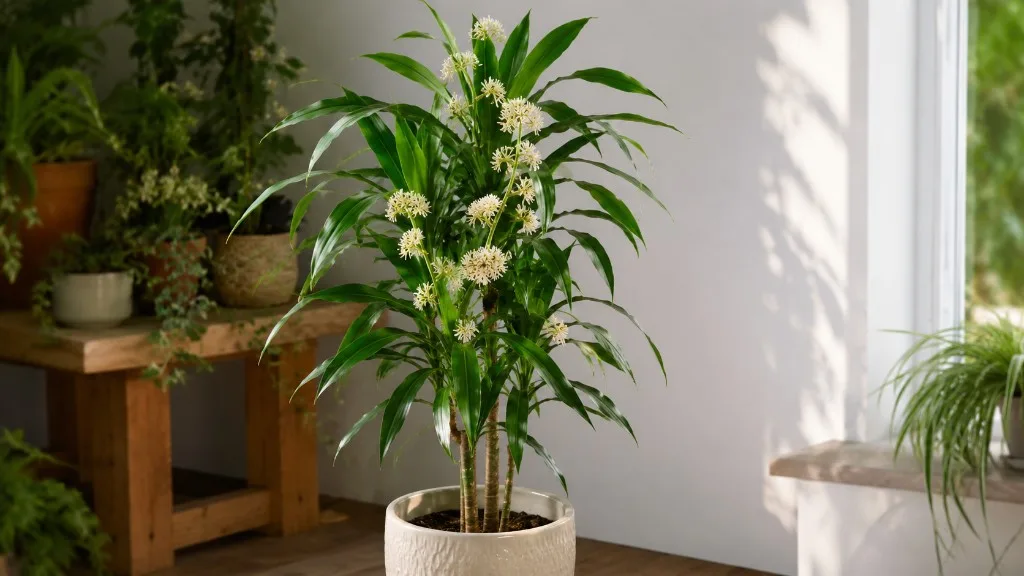
Dracaena Fertilizer: When, How, and Mistakes to Avoid
Dracaena Fertilizer: When, How, and Mistakes to Avoid
A Dracaena that suddenly develops crispy brown leaf tips after you start feeding it is not being dramatic - it is telling you something went wrong with the dose, the timing, or the formula. Dracaena fertilizer should be a light, seasonal supplement, not a year-round heavy feed. These slow-growing tropical plants evolved in lean forest soils and tolerate neglect far better than excess. The right approach is straightforward: use a dilute balanced liquid fertilizer during the growing season only, and pay close attention to fluoride sensitivity, which makes Dracaena one of the most salt- and fluoride-reactive houseplants you can grow indoors.
Whether you are caring for a corn plant (Dracaena fragrans), a dragon tree (Dracaena marginata), or a compact Janet Craig (Dracaena deremensis), the feeding logic is the same. Feed when the plant is actively producing new leaves, skip feeding when growth stalls, and always err on the side of less. The sections below walk through why Dracaena needs fertilizer at all, exactly when and how to apply it, what formula to choose, and how to recover when things go wrong.
Why Dracaena Needs Light Fertilizer, Not Heavy Feeding
Dracaena is not a heavy feeder. Unlike fast-growing tropicals such as pothos or philodendron, which can consume nutrients quickly in bright light, Dracaena grows on a slower metabolic clock. In its native habitat across tropical Africa and parts of Asia, it grows as an understory plant where nutrients are limited and root systems spread through thin, well-drained soil. That evolutionary background matters because it shapes how the plant responds to fertilizer indoors.
Nutrients in potting mix deplete over time as you water and as roots absorb what they need. Nitrogen supports leaf and stem development, phosphorus aids root function, and potassium helps with overall plant health and stress tolerance. A balanced supply keeps foliage deep green and stems sturdy without pushing soft, weak growth. But Dracaena can only use so much at once. Excess fertilizer does not make the plant grow faster - it accumulates as soluble salts in the soil, raises osmotic stress on roots, and eventually shows up as burned leaf margins.
Clemson University’s Home & Garden Information Center notes that leaf tips and margins may burn or yellow when Dracaena is fertilized too heavily. That warning applies across species. The goal is not to maximize growth rate but to maintain steady, healthy foliage over years in the same pot. A light feeding schedule during active growth gives Dracaena what it needs without the salt load that causes the brown tips so many owners blame on underwatering on Dracaena or low humidity alone.
Understanding this distinction saves you from the most common indoor plant mistake: treating fertilizer like a growth accelerator. For Dracaena, fertilizer is maintenance nutrition - a small top-up during the months when the plant is actually using it.
When to Fertilize Dracaena: Growing Season Only
Dracaena fertilizer belongs in the growing season only. That means spring through late summer for most indoor plants in temperate climates, roughly April through August in the Northern Hemisphere. During this window, longer daylight hours and warmer temperatures trigger new leaf production, and roots actively take up water and nutrients. Outside this window, growth slows or stops entirely, and any fertilizer you apply sits in the soil unused, building salts that damage roots over time.
The growing-season-only rule is not arbitrary. Dracaena responds to photoperiod - the length of daylight - as much as temperature. Even in a warm room, decreasing day length in autumn signals the plant to reduce metabolic activity. Continuing to feed into fall and winter invites the kind of soft, pale growth that Dracaena cannot sustain, followed by leaf drop when conditions do not support it.
Before every feeding, look for evidence of active growth: a new leaf unfurling from the crown, a fresh shoot emerging from a cane cut, or visibly expanding foliage at the tip. If your Dracaena has not produced new growth in six weeks or more, skip the feed regardless of what the calendar says. The plant is telling you it is not ready.
Spring and Summer Feeding Window
The primary feeding window runs from early spring through late summer. Here is a practical month-by-month guide for indoor Dracaena in most North American homes:
| Month | Action | Notes |
|---|---|---|
| March | Observe only; water as usual | Wait for first visible new leaf before feeding |
| April | First feed at half strength if new growth appears | Use dilute balanced liquid on moist soil |
| May–July | Feed every 4–6 weeks | Peak growth; leach soil monthly with plain water |
| August | Final feed or extend to 6-week intervals | Slow if new leaf production drops |
| September–February | No fertilizer | Dormancy; water when top 2 inches of soil are dry |
In spring, resist the urge to feed the moment days get longer. Dracaena roots wake up before top growth becomes obvious, but applying fertilizer before the plant shows new leaves adds salts to soil that roots are not yet using efficiently. Wait until you see a fresh leaf or shoot, then start with one half-strength application.
Through May, June, and July, feeding every four to six weeks matches the pace most Dracaena species prefer indoors. A dragon tree in Dracaena light guide may lean toward every four weeks; a corn plant in moderate office light may do fine at six. Adjust based on new growth, not a rigid calendar.
Why to Pause in Fall and Winter
From late autumn through early spring, stop fertilizing Dracaena entirely. Growth slows as daylight shortens, even if your thermostat keeps the room warm. Roots become less active, transpiration drops, and the plant simply cannot process additional nutrients. Fertilizer applied during dormancy does not disappear - it concentrates in the potting mix and raises the salt index of the soil.
Over-fertilizing during dormancy is one of the leading causes of Dracaena decline in homes and offices. The symptoms - brown leaf tips, yellowing lower leaves, white crust on the soil surface - often appear weeks or months later, which makes the cause hard to trace. Owners assume the problem is water quality or humidity when the real trigger was a winter feeding that seemed harmless at the time.
If your Dracaena lives in a consistently warm, brightly lit environment and continues pushing new leaves through winter - common in greenhouses or sunrooms in mild climates - you can feed lightly once during that period. For the typical indoor Dracaena in a living room or bedroom, the answer is still no. Let the plant rest.
Resume feeding in early spring when you see the first new leaf of the season. Start with half strength and return to your regular schedule over two to three weeks rather than jumping back to full frequency immediately.
Best Dracaena Fertilizer Type: Dilute Balanced Liquid
The best dracaena fertilizer is a dilute balanced liquid formula applied to moist soil during active growth. Liquid fertilizers dissolve completely in water, distribute evenly through the root zone, and let you control the exact dose - all critical advantages for a salt-sensitive plant in a container.
Balanced means the three primary macronutrients - nitrogen (N), phosphorus (P), and potassium (K) - appear in roughly equal proportions. A standard houseplant liquid labeled 10-10-10 or 20-20-20 works well for most Dracaena species grown for foliage rather than flowers. Some growers prefer a slightly nitrogen-forward ratio such as 3-1-2 for dragon trees, where the goal is full, lance-shaped leaves on upright stems. Either approach is fine as long as you dilute and feed sparingly.
Avoid slow-release pellets in small indoor pots unless you understand their release rate. Granules break down unpredictably with temperature and moisture fluctuations, and a single heavy application can supply months of nutrients that Dracaena does not need. If you use slow-release at all, apply a light dose once in spring and skip liquid feeding entirely - but for most indoor Dracaena owners, liquid at half strength is simpler and safer.
Organic options such as fish emulsion or seaweed extract work if diluted properly, though they can carry odor and may not list NPK ratios as precisely. Synthetic balanced liquids are not inherently harmful to Dracaena; the risk comes from concentration and frequency, not the source.
NPK Ratios That Work for Dracaena
For most indoor Dracaena, these NPK ratios perform well when diluted to half the label strength:
- 10-10-10 - General-purpose balanced formula; widely available and easy to measure
- 20-20-20 - Same balance at higher concentration; dilute to half strength or further for sensitive plants
- 3-1-2 or 5-5-5 - Slightly nitrogen-leaning options that support foliage without excess phosphorus
Dracaena rarely flowers indoors, so high-phosphorus “bloom booster” formulas (ratios like 10-30-20) add phosphorus the plant does not need and can contribute to salt buildup without benefit. Stick with balanced or foliage-oriented ratios.
Micronutrients matter at low levels. Iron, manganese, zinc, and copper support chlorophyll production and enzyme function. Most quality houseplant fertilizers include these in trace amounts. If your Dracaena shows interveinal yellowing on new leaves despite correct watering and light, a micronutrient deficiency is possible - but rule out overwatering on Dracaena and fluoride damage first, because those cause similar symptoms.
The dilution rule is non-negotiable: always mix liquid fertilizer to half the label strength for Dracaena, and consider quarter strength for newly repotted plants or species known to be sensitive, such as Dracaena marginata. Full-strength houseplant fertilizer in a container is designed for faster-growing species and will burn Dracaena roots over time.
Fluoride Sensitivity: What to Avoid in Fertilizers
Dracaena is among the most fluoride-sensitive houseplants you can grow. Both Dracaena fragrans (corn plant) and Dracaena deremensis (Janet Craig, Warneckii) are documented as highly susceptible to fluoride toxicity, and dragon trees show similar tip-burn patterns when fluoride accumulates in leaf tissue. The Pacific Northwest Pest Management Handbooks describe fluoride as an accumulative poison in plant foliage that moves through the transpiration stream and concentrates at leaf margins, causing necrotic brown tips and edges.
Fluoride reaches Dracaena from three main sources: municipal tap water (often fluoridated at around 1 ppm), potting mixes containing perlite (which can release fluoride), and certain fertilizers - especially those containing superphosphate, which frequently carries high fluorine levels. Michigan State University Extension warns that single superphosphates in fertilizer are a significant fluoride source for sensitive crops, including Dracaena.
What this means for fertilizer choice:
- Avoid fertilizers listing superphosphate or high-phosphorus raw materials known to contain fluorine
- Prefer nitrate-based nitrogen sources over urea when options are available, as some research suggests urea can interact with fluoride uptake in sensitive plants
- Do not assume “organic” or “natural” labels mean fluoride-free - check ingredients
- Combine low-fluoride fertilizer with low-fluoride water (distilled, reverse osmosis, or rainwater) for the best results on sensitive cultivars
Fluoride damage and fertilizer salt burn look similar - brown, necrotic leaf tips and margins - but the fix differs slightly. Salt burn responds to flushing and feeding pause. Fluoride damage is cumulative and largely irreversible on affected tissue; you can stop further injury by changing water and fertilizer sources, but existing brown tips will not green up again. Trim damaged tips with clean scissors if they bother you aesthetically.
Clemson HGIC recommends keeping soil pH between 6.0 and 6.5 to reduce fluoride availability and avoiding perlite-heavy mixes for fluoride-sensitive Dracaena. Fertilize sparingly - their guidance aligns with everything else: less is more.
How Often to Fertilize Dracaena
During the active growing season, fertilize Dracaena every four to six weeks with half-strength balanced liquid fertilizer, or follow Clemson HGIC guidance to feed with liquid foliage plant fertilizer once a month during spring and summer. That frequency gives the plant steady nutrition without overwhelming the root zone. Here is how to calibrate:
- Every 4 weeks - Dracaena in bright indirect light, warm conditions, or actively pushing multiple new leaves
- Every 5–6 weeks - Dracaena in moderate light, standard office or living room conditions
- Every 6–8 weeks - Compact or slow-growing species, or plants in larger pots where soil volume buffers salt accumulation
- Not at all - Fall through early spring, or anytime the plant shows stress, drought, or no new growth
Some growers feed at quarter strength every watering during summer. That approach can work if you are consistent and flush the soil regularly, but it raises the risk of salt buildup in small pots because fertilizer goes in more often. For most owners, a clear monthly-or-so schedule with plain water between feedings is easier to manage and easier to diagnose when something goes wrong.
After Dracaena repotting guide into fresh potting mix, wait four to six weeks before fertilizing. Commercial mixes often contain starter fertilizer, and disturbed roots need time to re-establish before handling nutrient loads. Feeding too soon after repotting is a common cause of post-transplant leaf drop.
Step-by-Step: How to Feed Dracaena Safely
Follow this sequence every time you fertilize Dracaena to minimize root burn and salt stress:
Check the calendar and the plant first. Confirm you are within the spring-to-late-summer window and that the plant is producing new growth. If either condition fails, skip feeding.
Verify soil moisture. Never apply fertilizer to dry soil. Water the plant thoroughly with plain water the day before feeding, or feed immediately after a regular watering when the soil is evenly moist but not waterlogged.
Mix fertilizer at half strength. Measure carefully using the product label as a starting point, then cut the dose in half. Use a dedicated measuring spoon or syringe rather than estimating.
Apply to moist soil, not leaves. Pour the diluted solution slowly over the soil surface until it runs from the drainage holes, the same way you would water. Avoid splashing fertilizer on leaf surfaces - foliar feeding is unnecessary for Dracaena and can cause spotting.
Empty the saucer. Do not let the plant sit in fertilizer runoff, which wicks back into the soil and concentrates salts at the root zone.
Record the date. A simple note on your phone or calendar prevents accidental double-feeding, which is more harmful than skipping a week.
Once a month during the feeding season, replace one watering with a plain-water flush: water thoroughly several times in succession, letting excess drain fully each time. This leaches accumulated salts from the soil and is one of the most effective preventive habits for Dracaena health.
Signs Your Dracaena Is Getting the Right Amount
When dracaena fertilizer timing and dose are correct, the plant tells you through steady, proportional growth rather than dramatic spurts. New leaves emerge at a normal size for the species - not oversized and soft, not stunted and pale. Color stays deep green on green varieties, and variegated forms maintain their pattern without fading or bleaching.
Stems remain firm and upright on cane-type Dracaena, without leggy stretching toward a light source that would indicate excess nitrogen combined with insufficient light. The soil surface stays free of white crystalline crust, and the pot does not develop a sour smell from anaerobic breakdown caused by salt-stressed roots.
Perhaps the most reliable indicator is consistency: your Dracaena produces a predictable number of new leaves each growing season, loses old lower leaves at a normal rate, and does not suffer sudden tip burn after feeding. If you fed six weeks ago and the plant looks stable, you are on the right track.
Signs of Over-Fertilizing and Fluoride Damage
Over-fertilizing is the most common mistake with Dracaena, and its symptoms overlap with fluoride toxicity and underwatering - which is why diagnosis requires looking at the full care picture, not just one leaf.
Signs of over-fertilizing or salt buildup:
- Brown, crispy leaf tips and margins, often appearing shortly after feeding
- White or yellowish crust on the soil surface
- Yellowing of lower leaves while tips burn
- Sudden leaf drop without other obvious cause
- Stunted new growth that emerges small and deformed
- Root tips appearing brown or black when you inspect the root ball
Signs specifically linked to fluoride accumulation:
- Gradual tip burn that worsens over months rather than appearing overnight after a feed
- Burn concentrated on margins and tips while the rest of the leaf stays green longer
- Symptoms persisting or worsening despite reduced feeding, especially when using tap water in fluoridated municipalities
- Multiple sensitive plants in the same space (spider plant, lily, calathea) showing similar tip burn
Existing damaged leaf tissue does not recover. New growth comes in clean once you fix the source - whether that means flushing salts, pausing fertilizer, switching water, or all three. Trim old brown tips for appearance, cutting at an angle that follows the natural leaf shape.
How to Flush Dracaena After Over-Feeding or Salt Buildup
If you suspect over-fertilizing, act quickly. The recovery protocol is simple and effective:
- Stop feeding immediately. Do not apply another dose to “balance things out.”
- Flush the soil thoroughly. Water with plain, room-temperature water (preferably low in fluoride) until water runs freely from drainage holes. Wait thirty minutes, then flush again. Repeat a third time for severe cases.
- Empty saucers completely after each flush.
- Move to bright indirect light if the plant is not already there - moderate light reduces stress while roots recover, but avoid harsh direct sun on a weakened plant.
- Wait four to six weeks before resuming fertilizer at half strength, and only if new growth appears.
Badly burned roots may take one to two full leaf cycles to recover. Be patient and resist feeding during this period even if the plant looks pale. Pale growth from root damage is not the same as nutrient deficiency; adding fertilizer to damaged roots makes the problem worse.
If white crust covers more than a third of the soil surface and flushing does not help after two attempts, repotting into fresh, well-draining mix may be the cleaner solution - but wait until spring if possible, because repotting during winter dormancy adds another stress layer.
Seasonal Adjustments for Different Dracaena Species
All Dracaena share the same core feeding logic, but species differ slightly in speed and sensitivity:
Corn plant (Dracaena fragrans) - Moderate feeder in bright conditions. Every four to six weeks at half strength during spring and summer works for most indoor specimens. Known for fluoride sensitivity; prioritize low-fluoride water and fertilizer. Easily overwatered, so always feed moist soil, never bone-dry or soggy.
Dragon tree (Dracaena marginata) - Slower grower that prefers leaner feeding. Every six to eight weeks at half strength is often sufficient. Among the most fluoride- and salt-sensitive Dracaena; err toward quarter strength if tips brown repeatedly. Narrow leaves show damage faster than broad-leafed species.
Janet Craig and Warneckii (Dracaena deremensis cultivars) - Documented as highly fluoride-sensitive by university extension sources. Feed sparingly, flush regularly, and avoid perlite-heavy mixes. Every five to six weeks at half strength in growing season.
Song of India (Dracaena reflexa) - Variegated foliage needs bright light to use nutrients efficiently. In lower light, feed less often. Every six weeks at half strength is a safe starting point.
Adjust any schedule based on what you observe. A species label on the pot is a starting point; the plant’s actual growth rate in your specific light and humidity is the final authority.
Dracaena Fertilizer and Water Quality
Fertilizer does not exist in isolation. The water you use to mix and apply it determines how much total mineral load reaches your Dracaena’s roots. This matters enormously for a fluoride-sensitive plant.
Tap Water, Fluoride, and Fertilizer Salts Combined
Municipal tap water in many countries contains added fluoride for dental health, typically around 1 ppm. Dracaena accumulates fluoride with each watering, and fertilizer salts add to the total dissolved mineral burden in the soil. A plant that tolerates tap water alone may show tip burn when fertilizer pushes the combined salt level past its threshold.
Chlorine in tap water dissipates if you let water sit overnight. Fluoride does not evaporate from sitting water - a common misconception that leads owners to keep using tap water while wondering why tips keep browning. For fluoride-sensitive Dracaena, use distilled water, reverse osmosis water, or collected rainwater for both watering and fertilizer mixing.
Hard water adds calcium and magnesium, which are not harmful in moderation but contribute to soil alkalinity and crust formation over time. If your tap water is hard and fluoridated, switching to a low-mineral source benefits Dracaena more than any fertilizer upgrade.
When you flush soil to remove fertilizer salts, use the same low-fluoride water you use for regular care. Flushing with fluoridated tap water removes some fertilizer salts but replaces them with fluoride - a partial fix at best.
When NOT to Fertilize Dracaena
Hold off on feeding entirely when any of these conditions apply, regardless of season:
- The soil is dry. Water first, feed later.
- The plant was recently repotted (within the last four to six weeks).
- You see active stress signals - widespread yellowing, drooping, leaf drop, or pest infestation.
- It is fall, winter, or early spring and the plant is not actively growing.
- White salt crust is visible on the soil surface.
- You fed within the last three weeks and the plant already looks off.
- The root ball smells sour or the soil stays wet for weeks, indicating root rot on Dracaena - fix drainage and root health before adding nutrients.
Fertilizer is not medicine. It will not revive a struggling Dracaena and can accelerate decline when roots are already compromised. Fix water, light, and root conditions first; add feeding only when the plant is stable and growing.
Common Dracaena Fertilizer Mistakes
These errors account for most Dracaena fertilizer problems indoors:
Feeding at full label strength. Houseplant fertilizer labels assume faster-growing species and outdoor conditions. Dracaena needs half strength at minimum.
Feeding on a calendar without checking growth. A monthly reminder that fires in November hurts the plant. Feed the plant’s condition, not the date.
Using bloom booster or high-phosphorus formulas. Dracaena does not need flowering support indoors. Extra phosphorus adds salts without benefit.
Ignoring fluoride in fertilizer and water. Brown tips treated as a humidity problem when fluoride is the actual cause leads to years of frustration.
Slow-release pellets in small pots. Unpredictable nutrient release causes boom-and-bust salt cycles that liquid feeding avoids.
Feeding every watering at low dose without flushing. Constant micro-dosing still accumulates salts if you never leach the soil.
Double-feeding after missing a month. One skipped feeding is safe. Two doses to catch up is not.
Each of these is preventable with a lighter hand and a seasonal mindset.
How Fertilizer Connects to Light, Water, and Soil
Fertilizer only works when the rest of the care routine supports nutrient uptake. Dracaena in bright indirect light photosynthesizes actively and uses fertilizer efficiently. The same plant in a dim corner metabolizes slowly - it needs less food and builds up salts faster if you feed on a bright-light schedule.
Dracaena watering guide matters equally. Overwatered Dracaena in soggy soil has reduced root function and cannot absorb nutrients properly; fertilizer in wet, anaerobic soil worsens root decline. Underwatered Dracaena shrivels roots and cannot take up nutrients even when they are present. Stable, moderate moisture before feeding is the prerequisite.
Soil composition affects salt retention. Heavy, peat-rich mixes hold moisture and minerals longer; a flush matters more. Chunky, well-draining mixes leach faster but dry quicker. Perlite improves drainage but can contribute fluoride - a trade-off for sensitive species. Match feeding frequency to your specific soil and pot size, not a generic blog schedule.
Think of fertilizer as the last layer in a stack: correct light, correct water, appropriate soil, then light feeding during growth. Skip any layer below and fertilizer becomes a liability instead of a benefit.
Conclusion
Dracaena fertilizer is not complicated, but it demands restraint. Use a dilute balanced liquid formula - 10-10-10 or 20-20-20 at half strength - and apply it every four to six weeks during the growing season only, from spring through late summer. Pause completely in fall and winter, never feed dry or stressed plants, and flush the soil monthly with plain water to prevent salt buildup.
Pay special attention to fluoride sensitivity: avoid superphosphate-based fertilizers, use low-fluoride water when possible, and keep soil pH in the 6.0–6.5 range. Brown leaf tips from over-feeding or fluoride are common but preventable, and existing damage on old leaves will not heal - only new growth tells you the fix worked.
When in doubt, skip a feeding. Dracaena survives missed nutrients far better than it survives excess. Watch for new leaves, keep the soil leached and moist, and let the plant’s growth - not the calendar - guide your schedule.
When to use this page vs other Dracaena guides
- Dracaena overview - Start here for whole-plant context before deep-diving this topic.
- Dracaena problems hub - Jump to symptom-specific fix guides when this care topic does not resolve the issue.
Related Dracaena guides
- Dracaena overview
- Dracaena watering
- Dracaena light
- Dracaena soil
- Dracaena propagation
- Dracaena repotting
- Dracaena problems
Related tool
Try the Fertilizer Dilution Calculator with dracaena pre-selected to estimate needs for your setup.