Dracaena Plant Care: Light, Water & Species
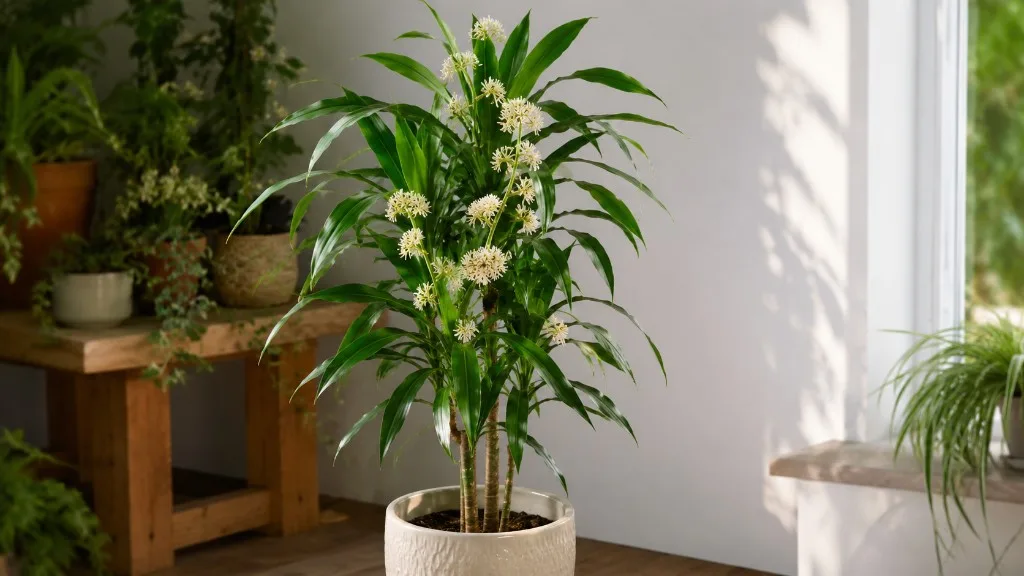
Dracaena fragrans
Dracaena thrives in medium indirect light, watered every 7–14 days when the top 2 inches dry. Use filtered water to prevent fluoride-induced brown tips. Toxic to cats and dogs.
Dracaena Plant Care: Light, Water & Species
Start with wateringThe most common care mistake for DracaenaWatering guide →Dracaena care essentials
Light
medium to bright indirect light
Water
Water when top 2 inches are dry; every 7–14 days in summer; 14–21 days in winter.
Soil
Well-draining potting mix with perlite and coarse bark.
Humidity
40–60%
Temperature
18–27°C (65–80°F)
Fertilizer
About Dracaena
Dracaena is native to Tropical Africa (Sudan to Mozambique and Ivory Coast), typically reaches 4–6 ft tall indoors as a cane plant; large strap leaves 2–3 ft long indoors, with slow to moderate growth. Dracaena has a tree like growth habit and part of the Asparagaceae family. It is also known as Corn Plant, Happy Plant, Mass Cane, and Striped Dracaena.
| Detail | Information |
|---|---|
| Also known as | Corn Plant, Happy Plant, Mass Cane, Striped Dracaena |
| Native region | Tropical Africa (Sudan to Mozambique and Ivory Coast) |
| Mature size | 4–6 ft tall indoors as a cane plant; large strap leaves 2–3 ft long |
| Growth rate | Slow to moderate |
| Growth habit | Tree Like |
| Scientific name | Dracaena fragrans |
| Family | Asparagaceae |
Dracaena Plant Care: Light, Water & Species
What Is Dracaena?
Dracaena is a large genus of tropical woody plants grown indoors for their architectural canes and strap-shaped or sword-like foliage. At the garden center, the name covers several distinct species that share a forgiving reputation - and a shared weakness most beginner guides underplay: fluoride and salt sensitivity in water and soil. The corn plant (Dracaena fragrans), the Madagascar dragon tree (Dracaena marginata), and striped cultivars sold as Janet Craig or Warneckii (Dracaena deremensis and related forms) all appear under the single word “dracaena,” yet they differ in leaf shape, cane thickness, light tolerance, and how aggressively they show water-quality problems.
Indoors, most dracaenas grow as slow-to-moderate upright specimens on woody stems, often reaching 4 to 6 feet (1.2 to 1.8 m) in height before ceiling height becomes the limiting factor, matching the typical indoor range described for corn plant. Dracaena marginata can push taller - toward 8 to 10 feet (2.4 to 3 m) in bright conditions over many years - while maintaining a slimmer profile. Growth is not explosive like a pothos; instead, dracaena rewards patience with a clean, vertical silhouette that fits living rooms, offices, and dimmer corners where showier plants fail. The trade-off is sensitivity at the leaf margins: brown tips are so common on dracaena that they function as a diagnostic language for water quality, humidity, and root health.
If you are deciding whether dracaena fits your home, the honest summary is this: dracaena tolerates irregular watering and moderate light better than most foliage plants - but it punishes chronic overwatering on Dracaena, cold drafts, and untreated tap water. It is easier than a fiddle-leaf fig and less demanding than a calathea. The payoff is years of structure from a single pot, plus propagation from cane cuttings when the plant gets too tall. One critical caveat for pet owners: dracaena is toxic to cats and dogs according to the ASPCA, which surprises many people who know it only as an office lobby plant.
Botanical Background and the Dracaena Genus
Dracaena belongs to the family Asparagaceae/details) - the asparagus family - though older tags and some references still list Agavaceae. Family placement matters less day to day than growth habit: dracaenas are woody, drought-adapted tropical plants with storage capacity in their stems and roots. They evolved in climates with distinct wet and dry seasons across tropical Africa, Madagascar, and parts of southern Asia, which is why they prefer to dry between drinks rather than sit in constantly moist mix.
Botanists recognize dozens of species and hundreds of cultivars, but indoor commerce concentrates on a handful. Retail pots are often labeled only “Dracaena” or a cultivar trade name - Massangeana for the yellow-striped corn plant, Colorama or Tricolor for red-edged dragon trees - without printing the full species. For care purposes, grouping by species is more reliable than grouping by brand name. Dracaena fragrans carries broad, corn-like leaves on thick canes; Dracaena marginata carries narrow, arching leaves with red or pink margins on slim, often branched stems; Dracaena deremensis types carry narrower solid or striped leaves in compact rosettes; Dracaena reflexa (Song of India) shows tighter spirals of yellow-margined leaves on flexible stems.
Do not confuse dracaena with Cordyline, which is often shelved nearby and shares the “ti plant” look in some markets. Cordylines are also saponin-containing and pet-toxic in many references, but their moisture and light preferences run wetter and brighter than typical dracaena. When in doubt, read the tag’s botanical name and match care to Dracaena specifically.
Why the Species on Your Tag Changes the Basics
Two dracaenas in the same window can behave differently because species set the baseline for drought tolerance, fluoride sensitivity, and low-light performance. Dracaena marginata is widely cited as among the most fluoride-sensitive common houseplants - brown tips appear quickly on tap water - yet it also tolerates lower light and less frequent watering than Dracaena fragrans, which prefers brighter conditions and a more pronounced dry-down between waterings according to Clemson HGIC and the Pacific Northwest Pest Management Handbooks.
Dracaena deremensis (Janet Craig, Warneckii, and related striped forms) sits between those extremes in many homes: compact rosettes, moderate light, even moisture without waterlogging. The practical takeaway is not memorizing every species chart - it is reading your plant’s newest leaves and cane firmness against the species you can identify. A dragon tree with persistent tip burn on filtered water points to humidity or salt buildup, not necessarily fluoride alone. A corn plant with soft cane and yellowing across multiple leaves at once points to root rot on Dracaena from overwatering, not normal lower-leaf aging.
Common Dracaena Species You Will See Indoors
Most buyers encounter dracaena through a small set of species that have dominated interior landscaping for decades. Knowing which one you have speeds up troubleshooting because leaf shape and cane structure are visible even when the tag is long gone.
Corn Plant, Dragon Tree, and Other Cultivars
Corn plant (Dracaena fragrans) is the thick-cane species with broad, arching leaves that resemble sweet corn foliage - hence the common name. The popular ‘Massangeana’ cultivar adds a yellow central stripe to each leaf and is the version most people picture in hotel lobbies. Indoors it typically reaches 4 to 6 feet (1.2 to 1.8 m) on one or more bare canes topped by a rosette of leaves. It prefers medium to Dracaena light guide, dries down noticeably between waterings, and is often sold as a multi-stem “staggered” cane arrangement in one pot for visual depth.
Dragon tree types (Dracaena marginata) - including ‘Colorama’, ‘Tricolor’, and the standard red-edged form - carry narrow, sword-like leaves with red or pink margins on slim, woody stems that may twist or branch with age. This is the species most often called Madagascar dragon tree on pet-toxicity lists. It tolerates lower light than fragrans and is widely used in offices for that reason, but it is also highly sensitive to fluoride in tap water, making brown tips the default complaint in fluoridated municipalities. Mature indoor specimens can exceed 6 feet (1.8 m) and respond well to beheading - cutting the cane to force branching lower on the stem.
Striped and compact forms (Dracaena deremensis and allies) include Janet Craig (dark green, wide leaves), Warneckii (white-striped leaves), and similar cultivars still sold under the deremensis name in commerce even as taxonomy shifts. These plants stay bushier and shorter than cane corn plants - often 3 to 5 feet (0.9 to 1.5 m) - and suit tables and floor corners where a wide corn-leaf rosette would overwhelm the space. They want steady moisture without sogginess and bright indirect light; dim corners work temporarily but produce sparse lower foliage over time.
Song of India (Dracaena reflexa) and gold-dust dracaena (Dracaena surculosa) appear less often but follow the same genus rules: bright indirect light, excellent drainage, and careful water quality. Lucky bamboo (Dracaena sanderiana) is botanically a dracaena despite the bamboo marketing; it is often grown in water or very moist media and is also toxic to pets. Treat lucky bamboo as a separate care track if you keep it in a water vase - the soil-grown species above this paragraph are the focus of most floor-plant care questions.
Best Growing Conditions for Dracaena
Dracaena performs best when your room approximates the bright, warm, cyclical dryness of its native range. The four variables that decide almost every outcome are light, water, soil, and temperature. Align those and feeding, Dracaena repotting guide, pruning, and propagation become straightforward maintenance. Misalign one - especially water volume or quality - and the plant declines on a timeline measured in weeks, not hours, which makes diagnosis harder for beginners who expect instant feedback.
Light Requirements
Dracaena grows best in bright, indirect light for most of the day. A practical placement is within a few feet of an east-facing window, or several feet back from a south- or west-facing window where direct sunbeams do not strike the leaves for hours at a time. Dracaena marginata tolerates medium to low indirect light better than Dracaena fragrans, which loses vigor and develops weak, spaced leaves when kept far from windows. Even the most shade-tolerant dragon tree will grow slower and use less water in dim corners - adjust watering downward when you move a dracaena away from light, or root rot follows.
The fastest diagnostic for incorrect light is new growth, not old damage. Compact new leaves with good color mean the plant is probably fine. Long bare cane with a small leaf tuft at the top means the plant wants more light. Bleached patches, brown scorch on sun-facing leaves, or midday curling mean less direct exposure or slower acclimation. Leaves formed in low light burn easily if you jump straight into afternoon sun; acclimate over one to two weeks by pulling the pot back from the window and moving it closer incrementally.
If natural light is weak - common in north-facing apartments or winter at higher latitudes - a full-spectrum grow light on a 10–12 hour timer, positioned 12 to 18 inches (30 to 45 cm) above the foliage, prevents the stretched, top-heavy look dracaenas develop when they reach for a distant window. Rotate the pot every two to three weeks so canes do not lean permanently toward the light source.
Temperature and Humidity
Dracaena prefers stable indoor temperatures between 65 and 80°F (18 and 27°C) during active growth, matching Clemson HGIC guidance of roughly 60 to 70°F (16 to 21°C) day temperatures with slightly cooler nights. Brief excursions above that range are usually fine if moisture keeps pace; cold is the sharper edge. Exposure to temperatures below about 50°F (10°C) - from a winter window contact, a drafty door, or an AC vent - can cause sudden leaf drop, brown patches, or limp foliage that will not recover on damaged tissue; Missouri Botanical Garden notes that container plants should be brought indoors before outdoor temperatures dip below 50°F.
Humidity is secondary to water quality for dracaena, but not irrelevant. Most species tolerate 40 to 50% relative humidity, typical of heated homes, yet 40 to 60% produces cleaner leaf margins in dry winter air. When only tips brown while the rest of the leaf stays green, suspect fluoride or salts first, then humidity. When whole leaf edges crisp during heating season, add a pebble tray, group plants, or a small humidifier rather than misting - misting raises humidity briefly and can leave wet foliage that invites fungal spotting where airflow is poor.
Keep dracaena away from radiators, fireplace heat, and direct AC blasts. The cane acts like a thermometer for the root zone: repeated hot-cold swings show up as spotty yellowing long before you notice the vent placement.
Soil and Drainage
Use a well-draining houseplant potting mix that dries evenly and retains air around roots. A workable blend is two parts quality peat-free or peat-based mix, one part perlite, and one part coarse bark or pumice - adjust toward more bark for large corn-plant canes in deep pots. The principle matters more than a branded bag: water should pass through in seconds, not pool on the surface for hours.
Here is the dracaena-specific soil nuance most general guides skip: dracaena is sensitive to fluoride, and some potting ingredients contribute fluoride over time. Clemson HGIC notes that mixes with a high percentage of perlite and fertilizers containing superphosphate can increase fluoride availability. You do not need to eliminate perlite entirely - drainage still matters - but avoid perlite-heavy mixes for dracaena and do not use superphosphate fertilizers. Target soil pH around 6.0 to 6.5, which helps limit fluoride uptake according to extension sources; hobbyists rarely need to meter pH if the mix is fresh and water quality is addressed.
Always plant in a container with a drainage hole. Cachepots are fine only if you empty runoff after every watering. A corn plant in a 10-inch (25 cm) decorative pot with no hole is a root-rot contract waiting to be signed.
How to Water Dracaena
The general rule for dracaena is let the potting mix dry down between waterings - then soak thoroughly. This genus is drought-tolerant relative to many tropical foliage plants, which means it survives missed waterings better than it survives daily dribbles. The exact interval depends on species, pot size, light, and season; your calendar is a reminder to check, not a rule to obey.
Drought-Tolerant Dracaena watering guide
For Dracaena fragrans in a typical indoor pot, water when the top 2 inches (5 cm) of mix feel dry - or when roughly the top half of the root ball has dried in large floor containers, per multiple horticultural references. That often translates to every 7 to 14 days in warm, bright months and every 14 to 21 days in cooler, dimmer months, but a 12-inch (30 cm) corn plant in low light may go three weeks between drinks while a 6-inch (15 cm) deremensis in a bright kitchen may need water weekly in summer.
Check moisture with a finger, a wooden skewer, or by lifting the pot. A light pot plus dry top mix means water; a heavy pot with damp deeper mix means wait even if the surface looks pale. Water until a small amount runs from the drainage hole, then empty the saucer. Dracaena roots need oxygen between cycles - the drought tolerance is structural, not an invitation to desiccate the plant for months.
Dracaena deremensis types prefer slightly more even moisture than fragrans - let the top inch (2.5 cm) dry rather than half the pot - while Dracaena marginata often wants a deeper dry-down similar to fragrans. When species identity is uncertain, default to ** deeper dry-down plus bright light** rather than keeping the mix constantly moist “because tropical.”
Fluoride Sensitivity and Water Quality
Water quality is the single most important variable for clean dracaena foliage. Dracaenas accumulate fluoride in leaf margins, where it inhibits photosynthesis and produces brown, necrotic tips and edges according to the Pacific Northwest Pest Management Handbooks. Many municipalities add fluoride to tap water at around 1 ppm; chlorine may off-gas if water sits 24 hours, but fluoride does not, so letting tap water stand is not a reliable fix.
Use filtered, distilled, or rainwater for dracaena if brown tips persist on an otherwise healthy watering schedule. Reverse-osmosis filters remove fluoride effectively. If you must use tap water temporarily, flush the pot monthly with plain water at two to three times the pot volume to reduce fertilizer salt buildup, which produces similar tip burn. Avoid superphosphate fertilizers entirely; use a balanced liquid houseplant fertilizer at reduced strength instead.
Existing brown tips will not turn green again - trim them with clean scissors, following the natural leaf contour so the cut looks intentional. Judge success by new leaves emerging without burn after you change the water source. Dracaena marginata often shows improvement fastest because its narrow leaves make tip damage obvious early; that sensitivity is a feature for diagnosing water problems, not a sign you bought a defective plant.
Common Watering Mistakes
The most damaging mistake is watering on a fixed schedule without checking the pot, especially after moving the plant to lower light or cooler temperatures. The second is letting the pot sit in a full saucer, which suffocates roots within days. The third is small daily sips that wet only the surface while the center stays unevenly moist - dracaena prefers a full soak, then a real dry period.
People also misread lower yellow leaves. On cane dracaenas, one or two older bottom leaves yellowing and dropping while the top stays firm is often normal senescence as the plant builds bare cane. Multiple leaves yellowing at once, especially with a soft or squishy cane base, indicates overwatering and possible stem rot - stop watering, inspect roots, and trim mushy tissue before repotting into fresh mix.
Finally, do not compensate for brown tips by watering more. Tip burn is usually water chemistry, salts, or humidity, not thirst. More water in a fluoride or rot scenario accelerates decline.
How to Feed Dracaena
Dracaena is a light feeder during active growth and needs no fertilizer during slow or dormant periods. A balanced water-soluble houseplant fertilizer - such as 20-20-20 or a labeled foliage formula - diluted to one-quarter to one-half of the label rate is sufficient. Apply to already-moist soil once monthly in spring and summer according to Clemson HGIC; skip feeding entirely in late fall and winter unless the plant sits under strong grow lights and is actively producing new leaves.
Time-release fertilizer pellets work if mixed into the top layer sparingly at repotting, but they are harder to reverse if salt buildup appears. Never use superphosphate or high-fluoride phosphate sources on dracaena. Overfeeding produces salt accumulation that mimics fluoride burn - brown tips despite good water - and may require flushing the pot before new growth cleans up.
Hold fertilizer after repotting, pest recovery, or any root rot repair until you see new top growth. Feeding a plant that cannot take up nutrients adds salt without benefit. If your potting mix includes a starter charge, wait four to six weeks before supplemental feeding.
Repotting and Root Health
Repot dracaena roughly every two to three years, or when roots circle drainage holes, water runs straight through without soaking, or the plant dries out within a day or two of watering despite a previously normal interval. The best timing is early spring as growth accelerates, giving the plant a full warm season to colonize fresh mix.
Move up only one pot size - typically 1 to 2 inches (2.5 to 5 cm) wider than the current root ball. Oversized pots hold excess wet mix around a small root system and are the most common cause of rot after repotting. Use fresh, well-draining mix, maintain the same planting depth - burying canes deeper invites stem rot - and water lightly for the first week while cut roots callus. Keep the plant in bright indirect light without direct scorch during recovery.
Signs It Is Time to Repot
Physical signs include roots emerging from drainage holes, a top-heavy plant that tips easily, or mix that has broken down into fine mud that stays wet for days. Performance signs include stalled growth for a full growing season despite adequate light and conservative feeding, or chronic tip burn that persists after switching to filtered water - sometimes indicating mineral-loaded old mix rather than current watering errors.
Do not repot a plant actively collapsing from overwatering until you inspect roots, trim brown mushy tissue, and let the root zone dry slightly. Moving a failing root ball into fresh mix without fixing moisture habits rarely saves a corn plant whose cane has already gone soft at the base.
Propagation Methods for Dracaena
The standard home propagation method for tall cane dracaenas is stem cuttings - often called beheading when you remove the top rosette to shorten a leggy plant. Division works on multi-stem pots where each cane has its own root mass, but stem cuttings are how most growers rescue height or create backups.
Cut a 6- to 12-inch (15 to 30 cm) cane section with clean, sharp pruners, ideally in spring or summer when the plant is actively growing. Include at least one node - the ring on the cane where leaves attach - for leafless segments, or remove the top rosette with several inches of bare cane below the leaves. You can root cuttings in moist perlite and bark mix, water (change water every few days), or directly in potting mix with the bottom third buried. Keep the cutting in bright indirect light, maintain moderate humidity with a loose plastic bag or dome if ambient air is dry, and avoid direct sun on the cutting.
The original stub often sprouts new shoots from dormant buds below the cut within weeks to months - that is how growers produce multi-head corn plants from a single cane. Air layering is an option on very tall specimens if you want roots before severing the top, but stem cuttings are simpler for most home growers.
Do not propagate stressed, rotting, or pest-heavy plants until the parent is stable - cuttings inherit the parent’s problems. Wear gloves if you have latex sensitivity; dracaena sap can irritate skin on some people.
Common Dracaena Problems
Most dracaena problems trace to water volume, water chemistry, light, or temperature - not exotic diseases. Indoors, fungal root rot follows overwatering; leaf spot is uncommon compared with environmental burn. The useful habit is to check cane firmness, soil moisture, and water source before assuming pests or nutrient deficiency.
Brown leaf tips and margins are the signature complaint. Rank causes: (1) fluoride or chlorine in tap water, (2) fertilizer salt buildup, (3) low humidity or drought stress, (4) superphosphate or perlite-heavy mix contributions. Fix water first, flush salts second, adjust humidity third. Trim damaged tips for appearance; only new growth confirms the fix.
Yellow leaves mean different things by location. Lower leaves yellowing one at a time on an upright cane with firm wood below is usually normal aging - remove the leaf and move on. Multiple leaves yellowing together, especially with soft cane, indicates overwatering or root rot. Sudden mass yellowing after a cold night indicates temperature injury - discard damaged leaves and protect from drafts.
Pests include scale on stems and leaf bases, spider mites in dry winter air, and mealybugs in leaf axils. Inspect weekly; a shower rinse, manual removal, and insecticidal soap applied per label directions control most outbreaks if caught early. Fungus gnats signal overly wet surface mix - lengthen the dry interval rather than spraying adults alone.
Leggy, sparse top growth is insufficient light or natural cane elongation over years. Behead and root the top, or move the plant closer to a bright window / add a grow light. Bleached or scorched patches mean too much direct sun - filter the window or move the pot.
Conclusion
Dracaena is one of the most useful indoor genera because it combines architectural height, tolerance of moderate neglect, and adaptability to office-grade light - provided you respect its drought-adapted roots and fluoride-sensitive leaf margins. Identify whether you are growing a corn plant (Dracaena fragrans), a dragon tree (Dracaena marginata), or a compact striped form (Dracaena deremensis and allies), then place the pot in bright indirect light, water when the mix has genuinely dried down (deeper for large cane plants), and use filtered or distilled water if tips brown on schedule.
When something looks wrong, read the plant in order: cane firmness first, moisture second, water chemistry third, light fourth. Soft cane means rot - not a nutrient spray. Tip burn on an otherwise healthy rhythm means fluoride or salts - not more water. Lower leaf drop on a bare cane is often normal aging - not a crisis. Propagate from stem cuttings when height gets unwieldy, repot on a modest schedule into well-draining mix, and keep the plant away from pets - the ASPCA lists Dracaena spp. as toxic to cats and dogs due to saponins. Fix those basics and dracaena becomes a long-lived background plant that earns its floor space for years.
When to use this page vs other Dracaena guides
- Dracaena overview - Canonical hub for this species - care topics and problems branch from here.
- Dracaena problems - Symptom-first path when you already know something is wrong.
Related Dracaena guides
How to care for Dracaena?
How much light does Dracaena need?
medium to bright indirect light
- medium to bright indirect light - medium to bright indirect light.
When should you water Dracaena?
Water when top 2 inches are dry; every 7–14 days in summer; 14–21 days in winter.
- Push finger 2 inches into soil; water only when dry at that depth - Water when top 2 inches are dry; every 7–14 days in summer; 14–21 days in winter.
- Drain excess water - Water when top 2 inches are dry; every 7–14 days in summer; 14–21 days in winter.
What soil works best for Dracaena?
Well-draining potting mix with perlite and coarse bark.
- standard peat-free potting compost - Well-draining potting mix with perlite and coarse bark.
- perlite (20%) - Well-draining potting mix with perlite and coarse bark.
- coarse grit or bark - Well-draining potting mix with perlite and coarse bark.
Grower notes for Dracaena
What matters most with Dracaena
Dracaena is easiest to grow when you judge the whole plant: new growth, root-zone moisture, light exposure, and how quickly the pot dries after watering. In practice, the care checkpoint is simple: medium to bright indirect light. Pair that with well-draining potting mix with perlite and coarse bark, and avoid changing water, pot size, and placement all at once.
Best placement in a real home
Dracaena belongs where medium to bright indirect light is realistic for most of the day, not only where the pot looks good. Water when top 2 inches are dry; every 7–14 days in summer; 14–21 days in winter. If the pot stays wet longer than expected, move the plant into better light or reassess the mix before watering again. Humidity target: 40–60%. Temperature comfort zone: 18–27°C (65–80°F).
Before you buy this plant
Choose Dracaena with firm new growth, clean leaf undersides, and soil that does not smell sour or feel compacted. Be cautious if you see brown-tips, sticky residue, collapsed crowns, or a pot that is wet in poor light. Cosmetic old-leaf damage is less worrying than weak roots or active pests.
First month after bringing it home
Do not repot Dracaena on day one unless the mix is failing or pests are obvious. Quarantine it, learn how fast the pot dries, and keep care boring while it adjusts. Watch especially for brown-tips, yellow-leaves, and root-rot. If problems appear, correct the condition first rather than stacking fertilizer, repotting, and pruning together.
Safety note for Dracaena
Dracaena is not a plant to keep within reach of pets or children. The database flags it for cats and dogs. Use gloves if sap or plant tissue is irritating, and pick a pet-safe alternative for floor pots or low shelves.
How to tell Dracaena is settling in
Also sold as Corn Plant, Happy Plant, and Mass Cane, this plant should be judged by stable new growth rather than label names alone. If you plan to multiply it later, common methods include Stem cuttings in water, Stem cuttings horizontal in moist mix, and Air layering. Repot only when you see Roots growing from drainage holes and soil drying within a day of watering. If yellow-leaves shows up early, inspect light, watering, and roots before assuming the plant is permanently weak.
Is it pet safe?
Dracaena is toxic to cats and dogs.
Contains saponins. Causes vomiting (sometimes with blood), anorexia, depression, and dilated pupils in cats. Keep completely out of reach of pets.
Watering Dracaena
For Dracaena, push finger 2 inches into soil; water only when dry at that depth and water every 7–14 days in summer; every 14–21 days in winter. Reduce frequency significantly in winter; dracaena tolerates dry spells better than waterlogging.
| Detail | Information |
|---|---|
| How often | Every 7–14 days in summer; every 14–21 days in winter |
| How to check | Push finger 2 inches into soil; water only when dry at that depth |
| Seasonal changes | Reduce frequency significantly in winter; dracaena tolerates dry spells better than waterlogging |
Signs of overwatering
- Yellow lower leaves
- soft mushy cane at soil level
- soggy soil that never dries
Signs of underwatering
- Drooping or curling leaves
- brown and dry leaf tips
- very light pot
Soil & potting for Dracaena
Use a mix of standard peat-free potting compost, perlite (20%), coarse grit or bark for Dracaena. Good drainage essential to prevent root rot. Target soil pH around 6.0–6.5. Repot every 2 years or when roots are very compacted, ideally in spring.
| Detail | Information |
|---|---|
| Recommended mix | standard peat-free potting compost, perlite (20%), coarse grit or bark |
| Drainage | Good drainage essential to prevent root rot |
| Soil pH | 6.0–6.5 |
| Repotting frequency | Every 2 years or when roots are very compacted |
| Best season to repot | Spring |
Signs it needs repotting
- Roots growing from drainage holes
- soil drying within a day of watering
- plant becoming top-heavy
Humidity & temperature for Dracaena
Dracaena prefers 40–60%, though normal home humidity is usually fine. Keep temperatures around 18–27°C (65–80°F).
| Detail | Information |
|---|---|
| Humidity | 40–60% - normal home humidity is fine. |
| Ideal temperature | 18–27°C (65–80°F) |
Fertilizer & pruning for Dracaena
Common problems on Dracaena
Brown Tips
MediumLikely cause: Fluoride toxicity from tap water is the primary cause; also low humidity and overfertilising
Quick fix: Switch to filtered or distilled water; flush soil thoroughly; trim brown tips
Full fix guide →Yellow Leaves
MediumLikely cause: Overwatering is most common; also natural shedding of old lower leaves
Quick fix: Allow soil to dry further; reduce watering frequency; remove naturally senescing leaves
Full fix guide →Root Rot
HighLikely cause: Overwatering especially in winter when growth is slow
Quick fix: Unpot, cut away all mushy sections, repot in fresh gritty mix
Full fix guide →Overwatering
MediumLikely cause: Common on this plant type; confirm with recent watering, light, and root checks.
Quick fix: Inspect the plant and correct the most likely care stressor before stacking treatments.
Full fix guide →Underwatering
MediumLikely cause: Common on this plant type; confirm with recent watering, light, and root checks.
Quick fix: Inspect the plant and correct the most likely care stressor before stacking treatments.
Full fix guide →Spider Mites
MediumLikely cause: Common on this plant type; confirm with recent watering, light, and root checks.
Quick fix: Inspect the plant and correct the most likely care stressor before stacking treatments.
Full fix guide →Mealybugs
MediumLikely cause: Common on this plant type; confirm with recent watering, light, and root checks.
Quick fix: Inspect the plant and correct the most likely care stressor before stacking treatments.
Full fix guide →Aphids
MediumLikely cause: Common on this plant type; confirm with recent watering, light, and root checks.
Quick fix: Inspect the plant and correct the most likely care stressor before stacking treatments.
Full fix guide →Leggy Growth
MediumLikely cause: Common on this plant type; confirm with recent watering, light, and root checks.
Quick fix: Inspect the plant and correct the most likely care stressor before stacking treatments.
Full fix guide →Slow Growth
MediumLikely cause: Common on this plant type; confirm with recent watering, light, and root checks.
Quick fix: Inspect the plant and correct the most likely care stressor before stacking treatments.
Full fix guide →Wilting
MediumLikely cause: Common on this plant type; confirm with recent watering, light, and root checks.
Quick fix: Inspect the plant and correct the most likely care stressor before stacking treatments.
Full fix guide →Drooping Leaves
MediumLikely cause: Common on this plant type; confirm with recent watering, light, and root checks.
Quick fix: Inspect the plant and correct the most likely care stressor before stacking treatments.
Full fix guide →Low Humidity
MediumLikely cause: Common on this plant type; confirm with recent watering, light, and root checks.
Quick fix: Inspect the plant and correct the most likely care stressor before stacking treatments.
Full fix guide →Not Enough Light
MediumLikely cause: Common on this plant type; confirm with recent watering, light, and root checks.
Quick fix: Inspect the plant and correct the most likely care stressor before stacking treatments.
Full fix guide →Fungus Gnats
MediumLikely cause: Common on this plant type; confirm with recent watering, light, and root checks.
Quick fix: Inspect the plant and correct the most likely care stressor before stacking treatments.
Full fix guide →Mold on Soil
MediumLikely cause: Common on this plant type; confirm with recent watering, light, and root checks.
Quick fix: Inspect the plant and correct the most likely care stressor before stacking treatments.
Full fix guide →Curling Leaves
MediumLikely cause: Common curling leaves pattern on Dracaena under indoor care stress.
Quick fix: Inspect roots, watering, light, and pests; adjust one variable and monitor new growth.
Full fix guide →Brown Leaves
MediumLikely cause: Common brown leaves pattern on Dracaena under indoor care stress.
Quick fix: Inspect roots, watering, light, and pests; adjust one variable and monitor new growth.
Full fix guide →Black Spots
MediumLikely cause: Common black spots pattern on Dracaena under indoor care stress.
Quick fix: Inspect roots, watering, light, and pests; adjust one variable and monitor new growth.
Full fix guide →Holes in Leaves
MediumLikely cause: Common holes in leaves pattern on Dracaena under indoor care stress.
Quick fix: Inspect roots, watering, light, and pests; adjust one variable and monitor new growth.
Full fix guide →Pale Leaves
MediumLikely cause: Common pale leaves pattern on Dracaena under indoor care stress.
Quick fix: Inspect roots, watering, light, and pests; adjust one variable and monitor new growth.
Full fix guide →Distorted Leaves
MediumLikely cause: Common distorted leaves pattern on Dracaena under indoor care stress.
Quick fix: Inspect roots, watering, light, and pests; adjust one variable and monitor new growth.
Full fix guide →Scale Insects
MediumLikely cause: Common scale insects pattern on Dracaena under indoor care stress.
Quick fix: Inspect roots, watering, light, and pests; adjust one variable and monitor new growth.
Full fix guide →Thrips
MediumLikely cause: Common thrips pattern on Dracaena under indoor care stress.
Quick fix: Inspect roots, watering, light, and pests; adjust one variable and monitor new growth.
Full fix guide →Whiteflies
MediumLikely cause: Common whiteflies pattern on Dracaena under indoor care stress.
Quick fix: Inspect roots, watering, light, and pests; adjust one variable and monitor new growth.
Full fix guide →Leaf Miners
MediumLikely cause: Common leaf miners pattern on Dracaena under indoor care stress.
Quick fix: Inspect roots, watering, light, and pests; adjust one variable and monitor new growth.
Full fix guide →Caterpillars
MediumLikely cause: Common caterpillars pattern on Dracaena under indoor care stress.
Quick fix: Inspect roots, watering, light, and pests; adjust one variable and monitor new growth.
Full fix guide →Nitrogen Deficiency
MediumLikely cause: Common nitrogen deficiency pattern on Dracaena under indoor care stress.
Quick fix: Inspect roots, watering, light, and pests; adjust one variable and monitor new growth.
Full fix guide →Iron Deficiency
MediumLikely cause: Common iron deficiency pattern on Dracaena under indoor care stress.
Quick fix: Inspect roots, watering, light, and pests; adjust one variable and monitor new growth.
Full fix guide →Magnesium Deficiency
MediumLikely cause: Common magnesium deficiency pattern on Dracaena under indoor care stress.
Quick fix: Inspect roots, watering, light, and pests; adjust one variable and monitor new growth.
Full fix guide →Potassium Deficiency
MediumLikely cause: Common potassium deficiency pattern on Dracaena under indoor care stress.
Quick fix: Inspect roots, watering, light, and pests; adjust one variable and monitor new growth.
Full fix guide →Calcium Deficiency
MediumLikely cause: Common calcium deficiency pattern on Dracaena under indoor care stress.
Quick fix: Inspect roots, watering, light, and pests; adjust one variable and monitor new growth.
Full fix guide →