Spider Mites on Dracaena: Causes, Checks & Fixes
Quick answer
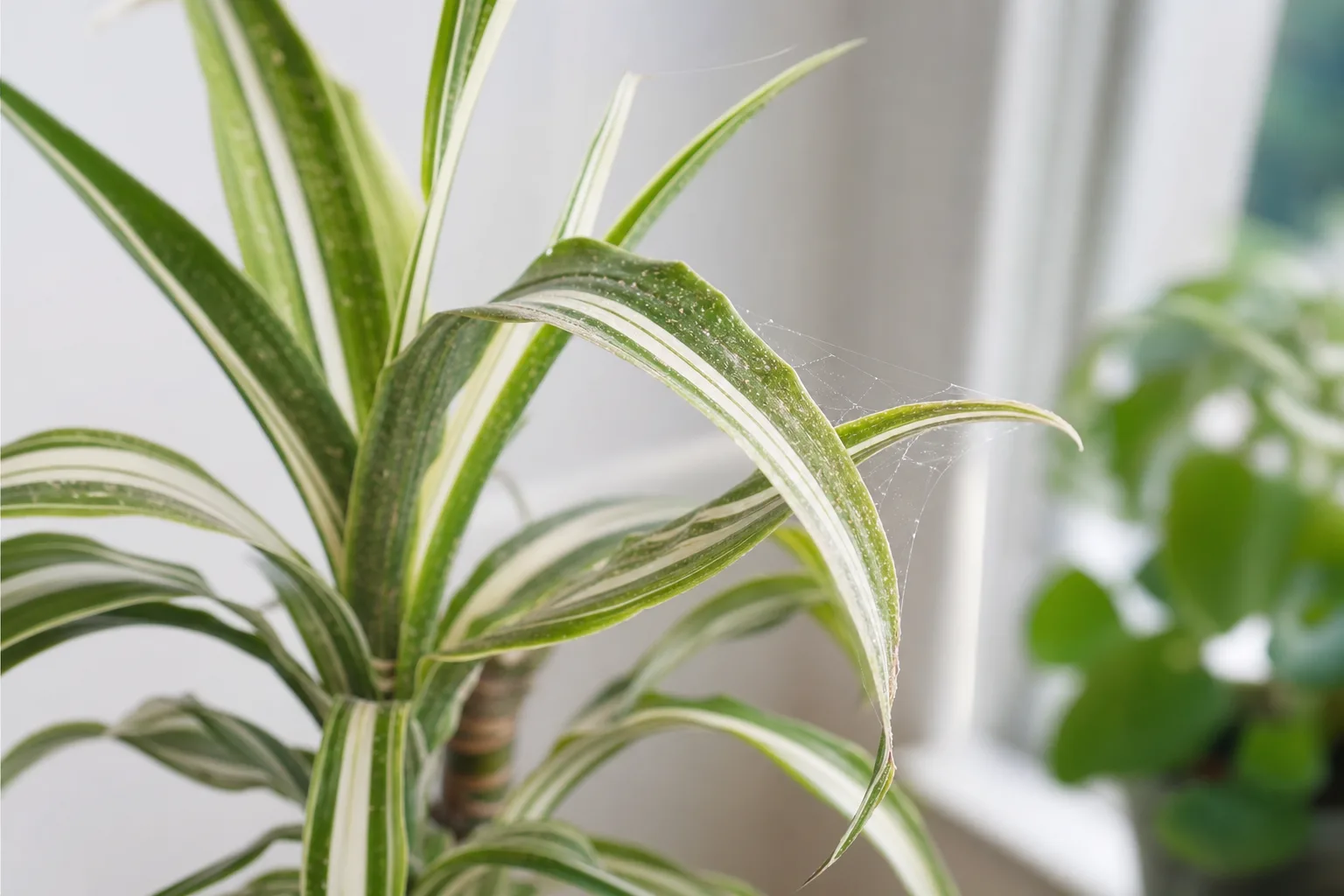
Spider mites on Dracaena cause fine stippling and webbing on strap leaves in warm, dry indoor air-often beside heat vents in winter. First step: isolate the plant, tap a leaf over white paper to confirm moving specks, then rinse leaf undersides without soaking the crown. Treat with a product labeled for spider mites on five- to seven-day intervals; stippled leaves stay marked, but new crown growth should emerge clean.
Spider Mites on Dracaena: Causes, Checks & Fixes
This guide covers spider mites on Dracaena. See also the general Spider Mites guide, watering, and light pages for this plant.
Spider Mites on Dracaena: Causes, Checks & Fixes
Quick answer
Spider mites on Dracaena - corn plant (Dracaena fragrans), dragon tree (Dracaena marginata), Janet Craig, Warneckii, and related cane cultivars - show up as fine yellow or bronze stippling and delicate webbing on long strap leaves when indoor air runs warm and dry. Office dracaenas beside forced-air vents, sunny window glass, and radiator lines are high-risk zones in winter, especially when humidity drops below 35% and leaf undersides go uninspected for weeks.
First step: isolate the plant and confirm active mites before spraying anything. Hold white paper under a suspect leaf, tap firmly, and look for slow-moving specks. If they crawl, mites are confirmed-not fluoride tip burn or wet-soil yellowing. Rinse leaf undersides thoroughly in a sink or shower while keeping the pot tilted so water drains; then apply horticultural oil or insecticidal soap labeled for spider mites on repeat intervals until webbing stops. Stippled tissue does not heal; judge recovery by clean new leaves from the crown. For genus-wide care context, see the Dracaena overview.
Why Dracaena gets spider mites
Spider mites are not a watering mistake-they are a separate pest that exploits stressed foliage. Twospotted spider mites thrive in warm, dry conditions and pierce individual leaf cells from the underside, causing the stippled look owners notice from above. Dracaena’s broad or narrow strap leaves offer plenty of feeding surface, and slow vertical growth means damage persists on the same leaf for months.
Common Dracaena-specific triggers:
Winter heating and floor vents. Furnaces drop room humidity toward 25–35% for months. A corn plant that looked fine in September can host a mite colony by February even when your watering rhythm is unchanged. Plants under heating vents and in warm locations are especially susceptible to spider mites.
Sunny glass plus dry air. South- or west-facing windows raise leaf temperature without raising humidity. Mites multiply faster in heat; the outer canopy beside glass often shows stippling first.
Dusty, stagnant air on floor specimens. Large D. fragrans leaves collect dust that mites use as cover. Undersides on a five-foot floor plant are easy to miss during casual watering.
Dry air overlap with low humidity stress. Dry indoor air increases pest pressure on foliage-the same winter conditions that crisp Dracaena margins in the low-humidity guide also favor mites. Fixing humidity alone does not cure an active infestation, but chronically dry placement keeps reinfestation likely.
Do not overwater in response. Mites are not cured by soggy soil. Increasing water to “raise humidity” invites root problems that yellow lower leaves-a different pattern from mite stippling. See overwatering on Dracaena if soil stays wet and the cane softens.
What spider mites look like on Dracaena
On Dracaena strap foliage, spider mite damage has recognizable patterns once you separate pest feeding from water-quality or root stress.
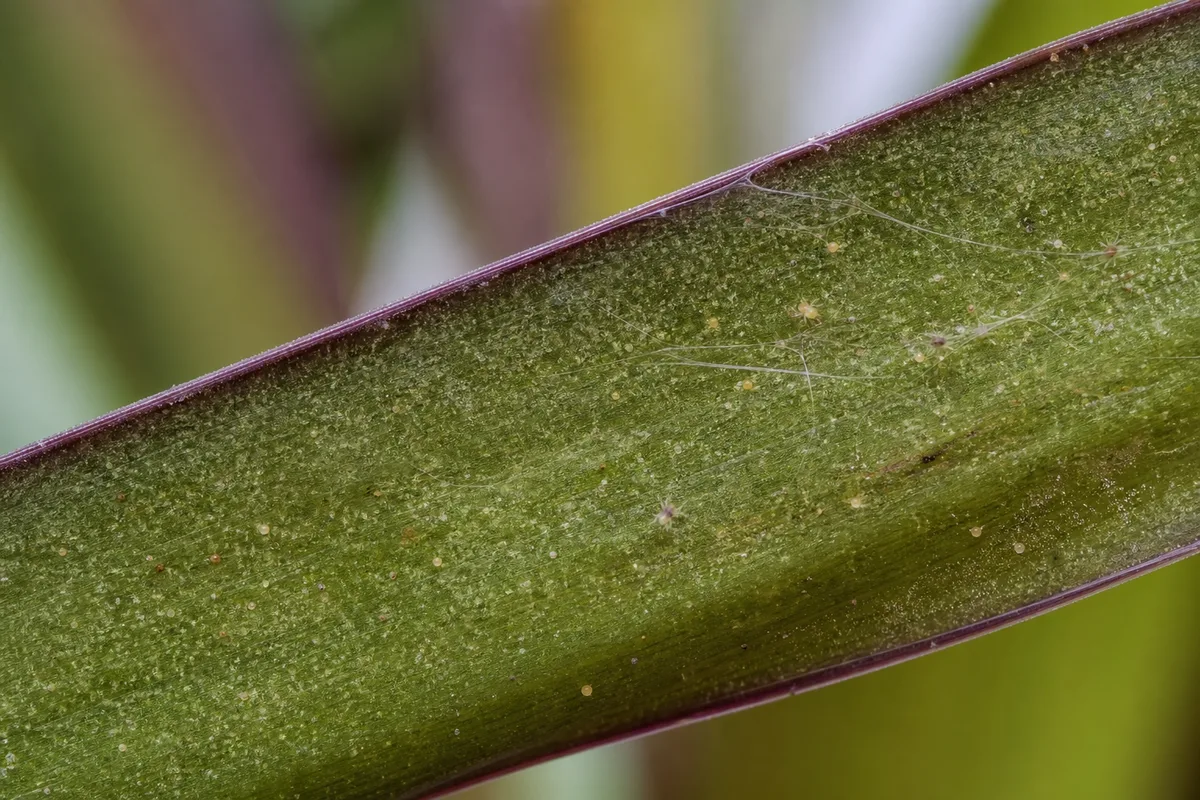
Spider Mites symptoms on Dracaena - compare with healthy tissue on the same plant.
Classic mite signature:
- Fine yellow or white speckles (stippling) scattered across the upper leaf surface-each dot is a dead cell from underside feeding
- Bronze or dull cast on older outer leaves as feeding intensifies
- Silk webbing at leaf bases, axils, and crown-delicate threads, not thick cobwebs
- Tiny moving dots on leaf undersides visible with a hand lens or white-paper tap test
- Progression from one side of the plant-often the warmest, driest exposure first
On dragon tree (D. marginata): stippling shows on narrow blades; webbing collects where leaves meet the cane. On corn plant and Janet Craig types: wide leaves hide large mite colonies on undersides until stippling covers half the blade.
What mite damage is not: uniform brown tips only at leaf margins without stippling or webbing (fluoride-see brown tips); lower yellow leaves with wet soil and no moving specks (overwatering); silver scarring without webbing (thrips). Mites and fluoride can coexist on the same plant-webbing and the paper test separate them.
Lookalikes to rule out on Dracaena
Dracaena owners often search “spider mites” when the real problem is water quality or soil moisture. Run this check before buying miticide.
| Pattern | Likely cause | First direction |
|---|---|---|
| Stippling + webbing + moving specks on paper | Spider mites | Isolate, rinse, treat on schedule |
| Crispy tips/margins only; no webbing; tap water | Fluoride toxicity | Brown tips guide |
| Lower yellow leaves; wet soil; soft cane base | Overwatering / root stress | Overwatering guide |
| Margin crisp in winter; RH below 35%; no specks | Low humidity | Low-humidity guide |
| Silvery streaks; no fine webbing; thrips visible | Thrips | Inspect with lens; different treatment |
Fluoride vs. mites on the same leaf: Fluoride concentrates at margins as an accumulative foliar poison, producing crisp tip or edge necrosis without crawling specks. Mite stippling is scattered across the blade and paired with webbing at the leaf base. If tips brown on municipal tap water and the paper test is clean, fix water before spraying for pests.
Overwatering vs. mites: Yellow lower leaves on a Dracaena with saturated soil and a firm or softening cane point to root-zone problems-not stippling with webbing on green upper foliage. Stick a finger two inches into the mix before treating; see the watering guide for species-specific dry-down rules.
How to confirm the cause
Work through these checks in order-each step narrows the diagnosis before you commit to sprays.
- White-paper tap test. Hold a sheet under a stippled leaf and tap the blade firmly. Slow-moving specks confirm spider mites; stationary debris does not.
- Inspect undersides with a hand lens. Mites and eggs show as tiny dots along midribs and leaf bases; webbing appears at axils.
- Check the warm side. Compare outer leaves beside the window or vent to shaded inner foliage-mites usually start where air is hottest and driest.
- Rule out fluoride. If tips are crispy, water is tap, and there is no webbing or moving specks, suspect fluoride toxicity instead.
- Rule out wet soil. If lower leaves yellow and soil feels wet several inches down, inspect drainage and cane firmness before pesticide use.
- Scan neighboring plants. Mites spread on air currents and hands; check other floor plants within six feet.
Confirmed mites require treatment. Clean paper with no specks but ongoing tip burn means a water-quality fix, not miticide.
First fix for Dracaena
Isolate the plant first-move it away from other houseplants and avoid brushing infested leaves against clean foliage on the way out.
Rinse thoroughly before spraying. Take the Dracaena to a sink or shower and wash both sides of every strap leaf with lukewarm water, focusing on undersides where mites feed. Tilt the pot so water runs off without pooling on the soil surface or sitting in the crown-Dracaena crowns rot if the mix stays saturated after repeated rinses. Let the pot drain completely; do not return it to a saucer full of runoff. For post-rinse watering rhythm, see the Dracaena watering guide.
Apply a product labeled for spider mites. Horticultural oil or insecticidal soap are common homeowner options with lower toxicity than broad insecticides-insecticidal soaps and oils are effective against mites when coverage reaches undersides. Do not use generic houseplant spray unless “mite” or “spider mite” appears on the label-many insecticides miss mites entirely.
Repeat on schedule. Most miticides do not kill eggs; plan two or more applications at five-day intervals in warm months or seven-day intervals in winter until webbing stops and two consecutive tap tests show no movement. One spray rarely finishes the job.
Improve airflow and placement after the first rinse-move the plant off the direct vent line and add steady humidity in the 40–50% range if a hygrometer reads below 35%, without overwatering the pot.
For cultivar-specific mite detail on Janet Craig, see the Janet Craig spider mites page-this genus guide covers all Dracaena species grown indoors.
Recovery timeline
Stippled and bronzed leaf tissue is permanent. Damaged strap leaves will not re-green; success means stopped spread and clean new growth from the crown.
- After first rinse and treatment: Active mite movement should drop within one to two weeks if you maintain repeat sprays on schedule.
- New crown leaves: Dracaena grows slowly-a clean replacement leaf may take four to twelve weeks depending on light, species, and season. Corn plant and Janet Craig types often push one leaf at a time from the crown.
- Older stippled leaves: Can stay on the plant indefinitely for photosynthesis or be trimmed for appearance once new growth looks healthy.
- Heavy defoliation: A bare cane with only a few top leaves may need several months to look full again-early treatment prevents this outcome.
If two consecutive new leaves open without stippling and tap tests stay clean, consider the infestation controlled. Keep weekly underside checks through the rest of heating season.
What not to do
- Do not increase watering to fight mites or raise humidity-soggy soil causes yellow lower leaves and crown rot on Dracaena while mites persist on dry upper foliage.
- Do not use insect-only pesticides without mite on the label-mites need miticides, horticultural oil, or insecticidal soap labeled for spider mites.
- Do not let the pot sit in runoff after shower rinses-empty saucers and confirm the mix drains per species rules in the watering guide.
- Do not skip repeat treatments because visible webbing faded-eggs hatch on a cycle; one missed interval restarts the colony.
- Do not assume stippling alone means mites without the paper test-fluoride and dry air damage millions of Dracaena leaves without any pest present.
- Do not ignore pet safety-Dracaena is toxic to cats and dogs; discard rinsed leaves and wash hands after handling infested foliage.
How to prevent spider mites on Dracaena
- Inspect leaf undersides weekly in winter-especially outer leaves beside vents and sunny glass.
- Keep plants off direct heat-vent lines and add a humidifier or grouping when RH chronically reads below 35% (see low humidity).
- Occasional foliage rinse in warm months knocks down early colonies before webbing spreads-always drain the pot afterward.
- Quarantine new purchases for two weeks and tap-test before placing beside existing floor dracaenas.
- Dust strap leaves gently on large specimens so undersides stay visible during routine care.
- Treat dry-air and mite risk together-humidity helps prevention but does not replace miticide once stippling and webbing confirm an active infestation.
When to worry
Treat as urgent when webbing covers most of the canopy, new crown leaves emerge already stippled, mites appear on multiple plants in the same room, or heavy leaf drop exposes a bare cane-mites multiply quickly in dry heat and slow-growing Dracaena recovers slowly from defoliation.
Lower urgency: stippling on a few outer leaves on one warm side while the crown still pushes clean growth, paper test shows sparse mites, and soil moisture and cane firmness are normal. Isolate, rinse, and start the repeat-treatment schedule before the colony spreads.
Cultivar notes
Dragon tree (Dracaena marginata) has thinner leaves that show stippling early; inspect narrow blades at the crown first. Corn plant (Dracaena fragrans) and Janet Craig types (D. deremensis) hide large underside colonies on wide strap leaves-check the warm outer canopy on floor specimens. Watering rhythm differs by species after rinse treatments; corn plant tolerates more dry-down than Janet Craig-match the watering guide to your cultivar so post-rinse soil does not stay wet.
Related Dracaena problems
- Dracaena overview - species differences, fluoride sensitivity, and placement basics
- Brown tips - primary lookalike for stippling and bronzing confusion
- Low humidity - shared dry-air cause and winter vent placement
- Overwatering - yellow-leaf lookalike with wet soil
- Watering - post-rinse drainage and species dry-down rules
- Yellow leaves - wet-soil pattern vs. mite stippling
Conclusion
Spider mites on Dracaena are manageable when you confirm crawling specks, rinse without waterlogging the crown, and repeat treatment until eggs stop hatching-but they are easy to misdiagnose because this genus also shows tip burn from fluoride and margin crisp from dry air. Stippled strap leaves stay marked; slow crown growth means early action saves months of bare cane. Keep the plant off the vent line, quarantine new arrivals, and cross-check lookalikes in the linked guides before you treat the wrong problem.
When to use this page vs other Dracaena guides
- Dracaena watering guide - Use for routine moisture checks before assuming spider mites is the main issue.
- Dracaena problems hub - Browse all 16 common issues on this species.
- Low Humidity on Dracaena - Different entry point when symptoms overlap with spider mites.
- Slow Growth on Dracaena - Different entry point when symptoms overlap with spider mites.