Slow Growth on Dracaena: Causes, Checks & Fixes
Quick answer
Dracaena is a slow-to-moderate grower-occasional new crown leaves in bright indirect light are normal, and winter near-dormancy is expected. Worry when no new leaves appear through a warm bright season, the cane softens, or soil stays wet for weeks. First step: confirm light at the crown and whether the top 2 inches of mix dry on a normal rhythm before fertilizing or repotting.
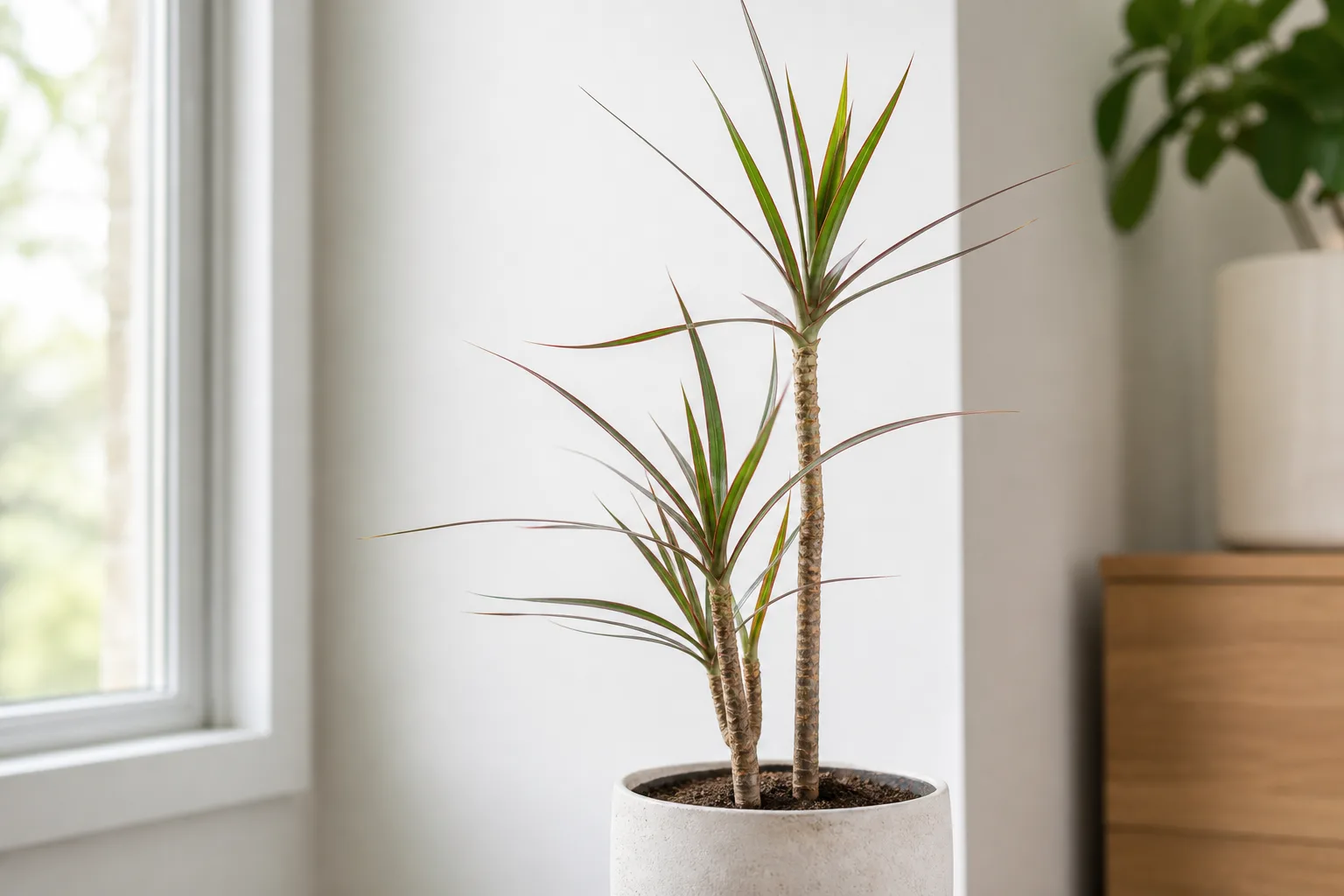
Slow Growth on Dracaena: Causes, Checks & Fixes
This guide covers slow growth on Dracaena. See also the general Slow Growth guide, watering, and light pages for this plant.
Slow Growth on Dracaena: Causes, Checks & Fixes
Quick answer
Dracaena is built for patience. Corn plants, dragon trees, and Janet Craig types grow as slow-to-moderate upright canes topped by a terminal rosette-not like a pothos that adds length every week. Corn plant is a slow-growing broadleaf evergreen; in bright indirect light, many indoor specimens add a new crown leaf cluster every several weeks during the warm months, with cane elongation measured in inches per year rather than inches per month. A quiet winter with little visible growth is also normal.
Slow growth becomes a problem when the crown produces no new leaves through a full spring and summer in a reasonably bright room, when lower leaves yellow in clusters while soil stays wet, or when the cane feels soft at the base. Those patterns point to root stress, chronic low light, fluoride buildup, or salt damage-not healthy slowness.
First step: check light at the crown and soil dry-down speed. Hold your hand between the plant and the nearest window at midday-a faint or absent shadow means growth will stall no matter how often you water. Push your finger 2 inches into the mix; soil that stays damp for two weeks in a dim corner often means the plant is surviving, not growing. Fix placement and watering rhythm before fertilizer or repotting.
Is slow growth normal on Dracaena?
Yes-in most cases, slow is the default setting for this genus. Dracaena evolved as a woody understory plant in tropical Africa with storage in its cane. Indoors it typically reaches 4 to 6 feet on bare stems topped by arching strap leaves, losing lower foliage over time to reveal the trunk-a pattern Missouri Botanical Garden describes as normal aging, not failure.
Expected indoor pace by species
Dracaena fragrans (corn plant, Massangeana, Janet Craig on thick cane) - Prefers bright indirect light and shows the steadiest crown flushes there. In a good east or filtered west window, expect a new rosette every several weeks from spring through early fall when light and water stay balanced. Variegated Massangeana often grows slower than solid-green Janet Craig because stripe contrast needs brighter light to sustain-medium-bright corners that suit Janet Craig may leave Massangeana nearly static while leaves stay green.
Dracaena marginata (dragon tree, Colorama, Tricolor) - Tolerates lower light than fragrans and may sit nearly static in an office corner for months while staying alive. That tolerance is survival, not vigor. In medium-bright light, slim canes still elongate slowly but should produce occasional new crown leaves in warm months.
Dracaena deremensis types (Warneckii, Compacta) - Compact rosettes on shorter stems; growth looks bushy rather than cane-dominant. Flush rhythm is slow but leaves should look firm and evenly spaced when light and water are balanced.
Seasonal rhythm and winter slowdown
Dracaena does not go fully dormant indoors, but growth throttles when days shorten and rooms cool. It is normal for a healthy corn plant to add zero to one crown flush from late November through February in a temperate climate, even near a window. Resume counting growth pace from March onward when judging whether a stall is pathological.
If the plant pushes no new leaves while furnace heat runs and days lengthen, treat that as abnormal-not winter rest.
What problematic slow growth looks like on Dracaena
Learn the difference between healthy slowness and a true stall.
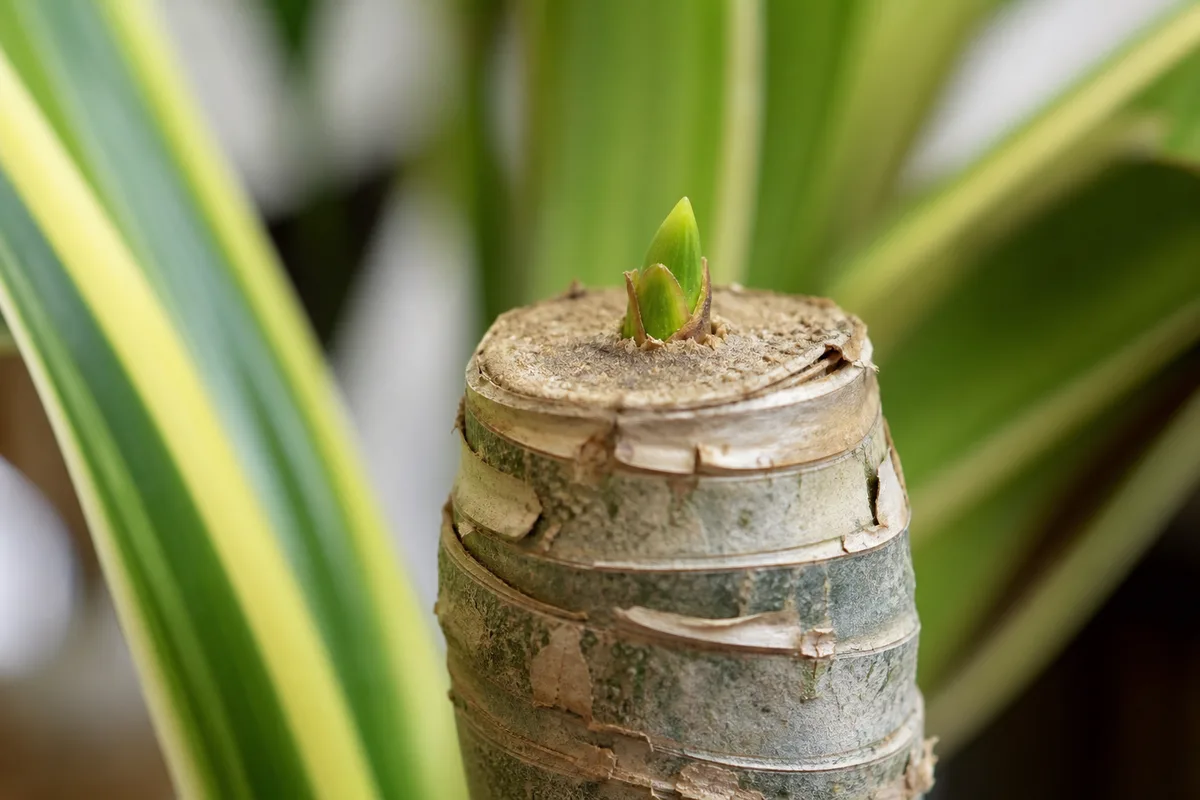
Slow Growth symptoms on Dracaena - compare with healthy tissue on the same plant.
Healthy slow growth:
- Firm, woody cane from soil line to crown
- One new leaf cluster every several weeks in bright months-or a quiet winter pause
- Older lower leaves drop occasionally while the crown stays full
- Soil dries on a predictable rhythm (often 10–21 days between thorough waterings, depending on pot size and light)
- Leaf color stable; only tip browning from fluoride or dry air, not widespread yellowing
Problematic stall or decline:
- No crown activity for three or more months during spring and summer in a spot that should be bright enough
- Yellowing of multiple lower leaves while mix stays wet and heavy
- Soft, squishy, or darkening cane at the soil line-storage tissue is failing, often from root rot
- New leaves emerge small, twisted, or pale and then stop-nutrient lockout, fluoride injury, or root damage
- Soil surface stays green with algae and never dries-chronic oversaturation in low light
- Pest coating on new growth-spider mites and scale target weak, stagnant crowns in dim dry heat
Stretched cane with sparse top growth is usually low light, not generic slow growth. Long internodes and a leaning crown belong on the not-enough-light and leggy-growth pages. This guide covers stalled pace, not etiolation.
Common causes of abnormally slow growth
Not enough light at the leaf crown
Dracaena is marketed as low-light tolerant, and many species survive dim corners-but photosynthesis at the crown sets the growth clock. Clemson HGIC notes that plants moved from dim light to brighter spots produce thicker leaves and an increased growth rate. In deep interior rooms, north-facing winter windows, or offices with only ceiling fixtures, Dracaena may live for years with minimal cane elongation.
Low light also slows soil dry-down, which turns routine watering into root stress-a common reason owners see “no growth” alongside wet mix. Cross-check the light guide and not-enough-light page if stretch or lean accompanies the stall.
Watering and root stress
Dracaena stores water in its cane, so it tolerates missed drinks-but chronic overwatering kills fine roots first. A plant with rotting roots cannot support new leaves even when the pot feels moist. Root rot usually results from mix that drains too slowly or watering too often.
The stall pattern: growth stopped months ago, soil stays damp, lower leaves yellow, crown may still look green until the cane softens. See overwatering and root rot if those signs appear.
Underwatering causes slower growth too, but the pot feels light, leaf tips may crisp, and the cane stays firm. Recovery after a proper soak is faster than rot recovery.
Fluoride and tap-water chemistry
Dracaena is very sensitive to fluoride. Municipal water often contains fluoride that accumulates in leaf margins, inhibiting photosynthesis and producing brown tips before growth stalls entirely. Pacific Northwest Pest Management Handbooks document fluoride toxicity on Dracaena deremensis and D. fragrans, with symptoms progressing from necrotic tips to broader leaf injury when exposure continues.
If growth slowed while tips and margins keep browning despite careful watering, fluoride or fertilizer salts are prime suspects-not “lazy” genetics. The brown-tips guide walks through water-quality fixes.
Root-bound pot
After years in the same container, roots can fill the pot and limit new uptake even when you water correctly. Signs include water running straight through dry mix, roots visible at drain holes, and the plant drying out within two to three days every time. Dracaena tolerates moderate root binding; repot only when these patterns are clear and other stresses are ruled out. See the repotting guide for timing.
Salt buildup from overfertilization
Heavy liquid feed on a plant that is already stressed by low light or wet soil deposits salts that burn roots and lock out nutrients. Leaf margins brown, new growth aborts, and flushing the soil may be necessary before growth resumes. Hold fertilizer until light and moisture are corrected and new crown leaves look normal.
Pests on new growth
Spider mites and scale attack stagnant crowns in warm, dry, dim conditions. Inspect leaf undersides and stem joints with a white cloth wipe. Pests alone rarely stop growth on an otherwise vigorous Dracaena, but they compound light and water stress.
How to confirm the cause
Work through these checks in order so you do not fertilize a rotting plant or repot one that only needs brighter light.
- Season and light - Is it winter dormancy or a warm-month stall? Note window distance and shadow at midday. Faint shadow means too dim for active growth.
- Crown activity - When did the last new leaf unfurl? Photograph the crown today and compare in four weeks after any move.
- Cane firmness - Press the lower trunk gently. Firm wood is reassuring; soft, spongy tissue near soil is urgent-see root rot the same day.
- Soil moisture rhythm - Allow the soil surface to dry before the next drink is the usual rule for most cane Dracaena. Soil wet for 14+ days with yellow lower leaves suggests overwatering habitat.
- Water quality history - Persistent tip burn on tap water points to fluoride. Switch water type before diagnosing nutrient deficiency.
- Pot and roots - Slide the plant partly out. Healthy roots are firm and pale; brown mushy roots confirm rot-see root rot. Dense root mat with little soil may mean repot timing.
- Pest pass - Stippling, webbing, or waxy bumps on new growth need treatment after environment is corrected.
Normal vs. abnormal checklist
| Signal | Healthy slow growth | Problem stall |
|---|---|---|
| Crown flushes | Every several weeks in bright months; quiet winter | None through spring–summer in adequate light |
| Cane | Firm, tan or woody | Soft, dark, or collapsing at base |
| Soil dry-down | Predictable; dries before next watering | Stays wet weeks; sour smell |
| Lower leaves | Occasional single yellow drop | Cluster yellowing on wet soil |
| New leaves | Smaller but regular; good color | Twisted, pale, or absent for months |
| Season | Slow in winter | No response when days lengthen |
Diagnosis is likely correct if: after moving to bright indirect light and correcting watering, the next crown leaf emerges wider and on schedule within several weeks-without stacking repot, feed, and pesticide on the same day.
First fix for Dracaena
Move the crown into real bright indirect light and match watering to how fast the mix actually dries-before any other intervention.
For most homes:
- Place within 3–6 feet of an east- or west-facing window, or several feet back from a filtered south window
- Water only when the top 2 inches of mix are dry-but expect that interval to shorten after brightening and lengthen in dim winter corners
- Use filtered, distilled, or rainwater if fluoride tip burn is already present
Increase light gradually over one to two weeks if the plant lived in a very dark spot for years-sudden harsh direct sun scorches wide fragrans leaves.
Do not fertilize, repot, or prune heavily on day one. A stalled Dracaena cannot use nutrients until roots and light support new tissue. One correction at a time lets you read the plant’s response.
First fixes by confirmed cause
| Confirmed cause | First action |
|---|---|
| Low light | Brighter filtered placement or supplemental LED grow light 12–16 inches above the crown for 12–16 hours daily |
| Overwatering / rot | Stop watering; inspect roots; repot only if mushy roots confirmed |
| Fluoride / salts | Flush soil slowly with non-fluoridated water until runoff runs clear; switch water source ongoing |
| Root-bound | Repot one size up in spring with gritty, well-draining mix |
| Pests | Wipe and isolate; treat after light and moisture are stable |
Recovery timeline
Dracaena will not jump like a pothos after you fix care. Realistic expectations:
| Phase | What to expect |
|---|---|
| Week 1–2 | Soil dry-down may change; cane stays firm; no visible new leaf yet |
| Week 3–6 | First new crown leaf after light or water correction-primary success signal |
| Month 2–3 | Steadier flush rhythm if environment stays stable |
| Month 4+ | Cane elongation becomes visible on fragrans; marginata remains slower |
| Winter | Growth may pause again-normal if crown stays firm and green |
Old damaged leaf tips do not green up after fluoride correction; judge recovery by unfurling crown leaves with cleaner margins. Stretched bare cane from past low light does not shorten-only new internodes improve.
If no new crown leaf appears after six weeks in a clearly brighter spot with correct watering, roots, pests, or water chemistry still need investigation.
What not to do
- Do not fertilize a plant that has not grown in months without checking roots, light, and water quality first-salts worsen stall.
- Do not repot on day one for simple slow growth; unnecessary disturbance adds shock.
- Do not stack repotting, pruning, pesticide, and feed the same week.
- Do not assume “low-light tolerant” means growth should be fast in a hallway-tolerance is survival.
- Do not increase watering because growth is slow in a dim spot-wet soil in low light invites rot.
- Do not ignore a soft cane-that is urgent root or stem failure, not patience.
How to prevent slow growth problems next time
- Place for light first - Match the spot to the growth pace you want; see the Dracaena overview and light guide.
- Water by dry-down, not calendar - Follow the watering guide; shorten checks after brightening, lengthen in winter dim corners.
- Use fluoride-safe water on marginata and fragrans if your municipality fluoridates-prevention beats tip trimming.
- Rotate the pot weekly - Even growth prevents permanent lean and keeps all crown leaves in usable light.
- Feed lightly in active months only - Monthly dilute feed in spring and summer after new growth looks normal; skip feed in winter and during stall recovery.
- Re-check after room changes - New furniture, blinds, or outdoor tree shade can drop light below growth threshold without moving the pot.
Lookalike symptoms
| What you see | More likely cause | Urgency | Where to read |
|---|---|---|---|
| Long bare cane, small top rosette, leaning | Not enough light / leggy stretch | Routine-correct light over 1–2 weeks | Not enough light, Leggy growth |
| Brown tips only, firm cane, slow but steady | Fluoride or low humidity | Routine-switch water source | Brown tips |
| Wilting with dry soil | Underwatering | Moderate-soak within days | Underwatering |
| Yellow leaves + wet soil + soft cane | Root rot | Urgent-inspect roots same day | Root rot |
| Winter pause, firm cane, stable color | Normal seasonal slowdown | Wait-recheck in March | This page |
Related Dracaena problems
- Dracaena overview - genus growth habit and species differences
- Light requirements - brightness thresholds for steady growth
- Not enough light - stretch and fade vs. stall
- Overwatering - wet-soil stall
- Root rot - soft cane emergency
- Brown tips - fluoride and water quality
- Watering - dry-down rhythm
- Leggy growth - elongated internodes, not just slow pace
When to use this page vs other Dracaena guides
- Dracaena watering guide - Use for routine moisture checks before assuming slow growth is the main issue.
- Dracaena problems hub - Browse all 16 common issues on this species.
- Not Enough Light on Dracaena - Different entry point when symptoms overlap with slow growth.
- Leggy Growth on Dracaena - Different entry point when symptoms overlap with slow growth.
- Yellow Leaves on Dracaena - Different entry point when symptoms overlap with slow growth.