Overwatering on Dracaena: Causes, Checks & Fixes
Quick answer
Overwatered Dracaena shows limp strap leaves on wet, heavy soil-often with yellow lower leaves and a firm-to-soft cane at the soil line. First step: stop watering, empty saucers and cachepots, and let the top half of the mix dry before the next soak.
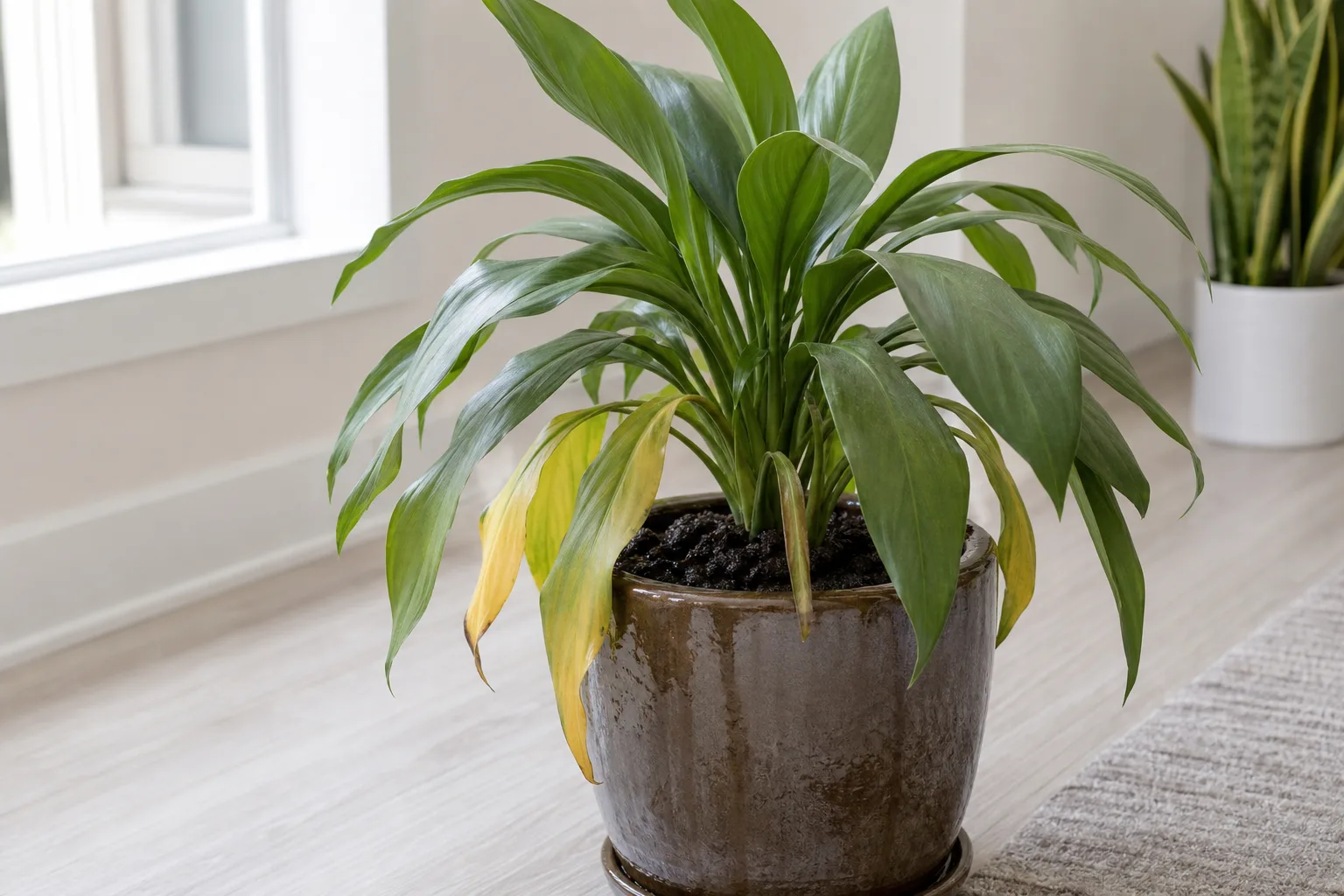
Overwatering on Dracaena: Causes, Checks & Fixes
This guide covers overwatering on Dracaena. See also the general Overwatering guide, watering, and light pages for this plant.
Overwatering on Dracaena: Causes, Checks & Fixes
Quick answer
Overwatering on Dracaena - corn plant (Dracaena fragrans), dragon tree (Dracaena marginata), Janet Craig, Warneckii, and related cane cultivars - is the most common way these plants decline indoors. The confusing signal is limp strap leaves on soil that stays wet for days. Dracaena’s woody cane stores moisture, so the plant can look thirsty while roots are actually suffocating in oxygen-poor mix. That wet-soil wilt is root failure, not drought - and watering again makes it worse.
First step: stop watering and empty every saucer, cachepot, and decorative sleeve. Let the top half of the potting mix dry before the next thorough soak. Do not mist drooping leaves, fertilize, or repot into a larger pot on day one. If the cane base still feels firm like wood when you press it, this pause often stops decline before rot advances. For the full top-half dry rhythm and seasonal schedule, see the watering guide.
Wet-soil wilt paradox: Limp arching leaves usually mean add water on a light, dry pot - but on a heavy, wet pot they mean stop water and check roots. Dracaena’s cane stores water, so the plant can wilt while surrounded by moisture. Reaching for the watering can on saturated mix deepens root suffocation.
This page is the canonical genus overwatering hub for cane Dracaena. The corn plant overwatering guide covers the same D. fragrans biology with mass-cane wording; start here for dragon tree, Janet Craig, Warneckii, and multi-cane specimens unless you specifically want the corn-plant URL.
Wet-soil wilt vs. drought vs. fluoride on Dracaena
Three different problems send Dracaena owners toward the watering can - and only one of them wants more water:
| Pattern | Pot / soil | Cane base | Urgency | First path |
|---|---|---|---|---|
| Limp leaves, heavy wet pot, yellow lowers | Saturated mix days after watering | Usually firm early | Routine–monitor | Stop water; dry top half; see below |
| Limp leaves, light dry pot, dusty mix 2 in. down | Bone-dry throughout | Firm | Not overwatering | Underwatering - soak and drain |
| Brown tips/margins only, otherwise upright cane | Moisture reasonable at depth | Firm | Low | Brown tips - fluoride or salts, not excess water |
| Limp leaves, sour smell, soft cane at soil line | Wet, anaerobic mix | Soft or spongy | Same-day urgent | Root rot - unpot and trim decay |
Dracaena is very sensitive to fluoride - and city-water fluoride causes tip and margin burn that owners often misread as underwatering during a wet-soil decline. Fix watering first when soil is genuinely saturated; switch water source only when tips keep browning on correct dry-down timing.
What overwatering looks like on Dracaena
Dracaena gives contradictory signals because both drought and saturation wilt the long arching leaves. Overwatering has a distinct pattern once you read the pot and cane, not just the foliage.
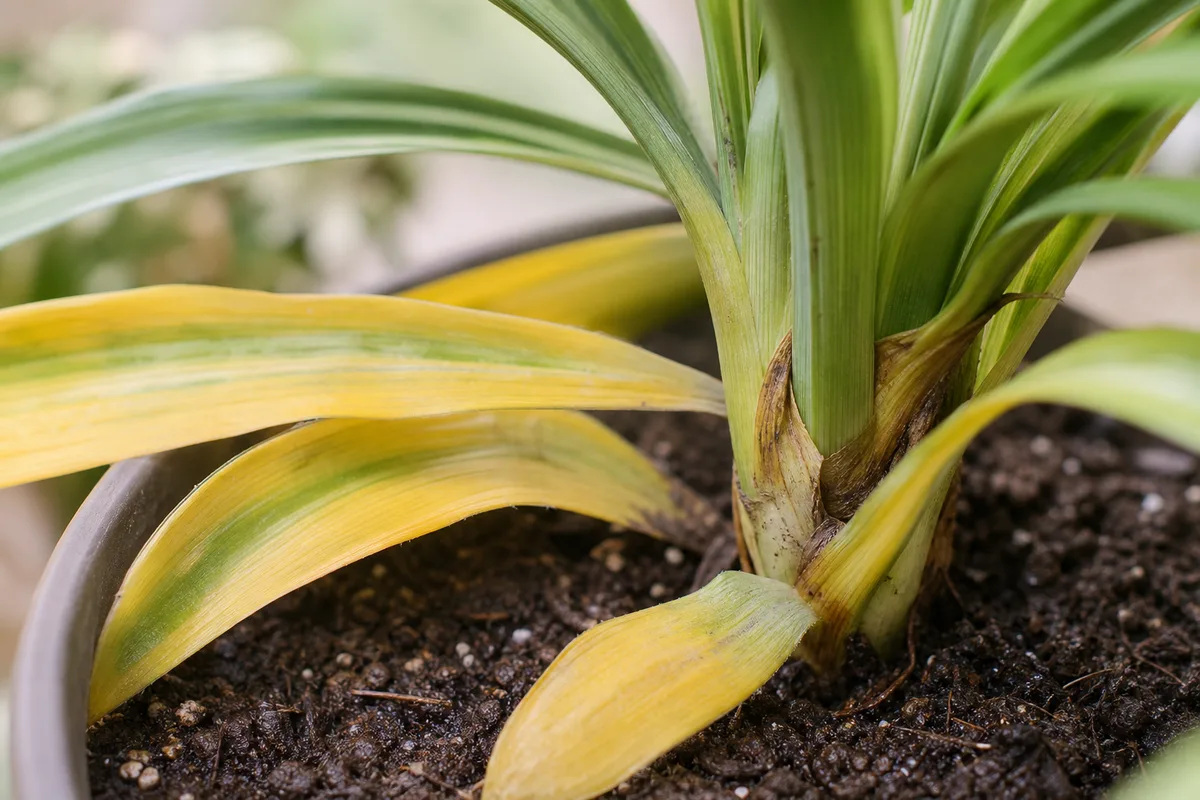
Overwatering symptoms on Dracaena - compare with healthy tissue on the same plant.
Above the soil line, watch for:
- Limp, drooping strap leaves while the pot still feels heavy - not light and dry
- Yellow lower leaves appearing in clusters on several canes at once, not one aging bottom leaf every few weeks
- Dull olive or pale green foliage on wet mix, without the crisp brown edges drought often adds
- Edema or soft translucent patches on leaf blades where cells take up excess water
- Stalled new growth from the cane crown while existing leaves decline
- Fungus gnats hovering near the soil surface when mix stays wet too long
At the pot and cane base:
- Mix that stays dark and cool at the surface for many days without the upper half drying
- A container that feels noticeably heavier when lifted, even as leaves droop - a saturated nursery pot often weighs substantially more than the same plant after the top half has dried
- Standing water in saucers, cachepots, or decorative outer pots
- A sour, fermented, or ammonia-like odor from drainage holes - early rot warning
- Soft, squishy cane tissue at or just above the soil line when pressed - stem rot may follow root failure
Healthy overwatered roots, when you spot-check early, are often still firm and pale to tan. That is the window this page targets. Once most roots turn brown and slimy, you have crossed into root rot territory.
Why Dracaena gets overwatered
Dracaena evolved as drought-adapted tropical cane plants with water storage in woody stems and roots. That storage buys forgiveness after a missed watering - which tricks growers into thinking more water fixes limp leaves. In reality, Dracaena roots need air between drinks. When soil stays wet for days, fine roots suffocate, pathogens wake up, and the cane can rot at the soil line even while upper stems still feel firm briefly.
Root rot usually results from a soil mix that does not drain quickly or overly frequent watering - and Dracaena fragrans (corn plant) is easily overwatered and should dry out between waterings, per Pacific Northwest guidance. Dragon tree and Janet Craig types share the same wet-feet intolerance even when their watering intervals differ slightly.
Common Dracaena-specific triggers:
- Calendar watering - “Every Sunday” ignores that soil dries faster in bright summer light than in a cool January corner
- Fear of underwatering after past mistakes, leading to shallow top-ups that keep the surface damp without refreshing air deeper in the mix
- Cachepots and decorative sleeves that trap runoff so the nursery pot reabsorbs standing water overnight
- Oversized pots where a small root ball sits in a vast ring of wet soil that never dries at the center - see the repotting guide for correct pot sizing
- Heavy peat-only mix that crusts dry on top while staying saturated several inches down - the soil guide covers perlite-and-bark blends that drain faster
- Winter overwatering when growth slows but owners keep a summer rhythm - intervals that took 10 days in July may need 3–6 weeks in low-light winter rooms
- Cool rooms below 65°F (18°C) where evaporation stalls and wet soil persists far longer than expected
- Low light in deep shade that slows transpiration and dry-down without reducing how much water you pour
The paradox that sends most Dracaena owners to the wrong fix: the cane stores water, so the plant wilts on wet soil. Damaged roots cannot move moisture upward even when the mix is saturated. Reaching for the watering can deepens suffocation - the opposite of what limp leaves seem to demand.
Lookalike symptoms to rule out
| What you see | More likely cause | Urgency | Quick check |
|---|---|---|---|
| Limp leaves + light dry pot, dusty mix 2 in. down | Underwatering | Not overwatering | Pot feels light; no sour smell; firm cane |
| Limp leaves + heavy wet pot, sour smell, mushy roots | Overwatering / root rot | Same-day | Confirmed on unpotting; soft cane at base |
| Brown tips/margins only, otherwise firm upright cane | Fluoride in tap water | Low | Soil moisture reasonable; tip scorch pattern |
| Pale upper leaves, long bare cane, slow dry-down | Not enough light | Monitor | Dim placement; soil wet because plant uses little water |
| One yellow bottom leaf, firm cane, normal soil | Normal aging on woody cane | None | Single spent strap; green crown growth continues |
| Widespread yellow lowers on moist mix | Overwatering or yellow leaves cluster | Routine–monitor | Multiple blades yellowing; heavy pot |
How to confirm overwatering
Work through this cane + soil + pot checklist before changing multiple variables:
- Cane firmness - Press the base where the cane enters the soil. Firm wood-like tissue supports early overwatering you can dry down. Squishy tissue with wet mix escalates toward rot.
- Pot weight - Lift one corner. A saturated container feels noticeably heavier than the same plant after the top half has dried - heavy and wet with limp leaves supports overwatering; light and dry rules it out in favor of underwatering.
- Moisture at depth - Push a finger or dry skewer 2–3 inches into the mix. Cool, clinging soil at that depth after many days without watering confirms chronic wetness. Allow dracaenas to dry slightly between waterings, then soak thoroughly - the target is dry upper half, not bone-dry throughout.
- Cachepot and saucer audit - Remove decorative outer pots. Pour out standing water. If runoff returns within hours of watering, drainage is failing somewhere.
- Drainage holes - Confirm holes are open, not sealed by roots, pebbles, or a pressed-flat liner.
- Smell test - Sour odor at the drainage hole suggests anaerobic conditions. No smell with heavy wet mix may still be overwatering, but sour smell escalates urgency.
- Leaf pattern - Cluster yellowing on multiple lower leaves plus moist mix fits overwatering better than one aging bottom strap or isolated tip burn.
- Root spot-check - If symptoms persist after a proper dry-down, slide the plant out gently. Firm pale roots mean you caught overwatering early; brown mushy roots mean rot - switch to the root-rot guide.
If the pot is light, mix is dusty dry throughout, and leaves look thin and crisp at edges, do not stop watering further - that is drought. Bottom-water per the underwatering page instead.
Wet-vs-dry urgency decision table
Use this after the eight checks above when pot weight and cane firmness still feel ambiguous:
| Pot weight | Top half moisture | Cane base | Smell | Urgency | First path |
|---|---|---|---|---|---|
| Heavy, cool | Damp or wet | Firm | Neutral | Routine | Pause water; drain vessels; recheck in 7–14 days |
| Heavy, cool | Damp or wet | Firm | Musty | Monitor | Pause water; skewer at depth; watch yellow spread |
| Heavy, cool | Damp or wet | Softening | Sour | Same-day | Unpot and inspect roots; see root rot |
| Light | Dry | Firm | Neutral | Not overwatering | See underwatering |
| Heavy, cool | Damp | Collapsed limp | Sour | Urgent | Unpot today; trim mushy roots; consider cane propagation |
| Heavy, cool | Dry after pause | Firm | Neutral | Recovering | One thorough soak-and-drain; resume top-half dry rhythm |
First fix for Dracaena
Stop watering and eliminate standing water everywhere.
Remove cachepots and decorative sleeves. Empty saucers. Move the plant to bright indirect light if it sat in deep shade where evaporation stalled - brighter indirect helps the upper mix dry without direct sun scorching strap leaves. Do not mist, fertilize, or repot on day one.
That single pause is the first fix. Dracaena roots need oxygen back in the mix before they can resume moving water to the foliage. Many growers see limp arching leaves and reach for the watering can - exactly the wrong response when the pot is already heavy.
After drainage is clear, wait until the top half of the potting mix is dry - typically the upper 2–3 inches in an 8–10 inch container feel crumbly and cool-dry to the touch - before one thorough soak at the sink. Let water run through until it drains freely, then let the pot finish dripping before returning it to its spot. Discard saucer water within 30 minutes.
When to unpot and inspect roots
Not every overwatered Dracaena needs repotting on day one. Use this escalation ladder:
Mild wet cycle - firm cane, no sour smell
- Complete the dry-down above
- Resume watering on the top-half dry rule from the watering guide
- Judge improvement by firm new leaves from the cane crown within one to two weeks, not by old yellow straps greening up
Chronic saturation - spreading yellow lowers, heavy pot, firm cane
- After the top half dries, inspect roots by sliding the root ball out gently
- If roots are firm and pale, return to the pot without repotting - repotting adds stress when rot is not confirmed
- If peat is compacted and smells stale but roots are still firm, plan a light repot into fresh well-draining mix with perlite and bark after the plant stabilizes - follow the repotting guide for same-size or smaller containers, not on day one
- Trim fully yellow lower leaves only if they are clearly spent; partially green straps may still photosynthesize during recovery
Mushy cane or slimy roots - escalate to root rot
If the cane base feels soft, most roots are brown and slimy, or the sour smell is strong, stop here and follow the root-rot guide for trimming, repotting, and salvage assessment. Overwatering intervention alone will not reverse advanced decay.
When upper cane sections remain firm but roots failed, cane propagation from a healthy stem above the rot may salvage the plant - cut a firm section, let the cut callus, and root in fresh mix. That is a backup path when the base is lost, not the first fix.
Recovery timeline
Early overwatering with firm roots - Leaves may stay limp for several days after you stop watering while roots regain function. Expect the first signs of recovery when the top half has dried and you have given one proper soak-and-drain cycle. New crown leaves firming within one to two weeks is a realistic success marker.
Moderate saturation with yellowing lower straps - Old yellow leaves will not turn green again. Recovery is measured by new top growth and stable foliage that stops declining. Allow two to four weeks of consistent top-half dry rhythm before judging failure - Dracaena grows slowly indoors.
Cool-room winter overwatering - Dry-down takes longer when evaporation is slow. A corn plant in a 60°F (16°C) dim room may need one to three weeks before the upper half shifts - do not interpret slow surface drying as permission to water again while the pot still feels heavy.
Warning signs recovery is failing: leaves keep collapsing after a confirmed dry-down and proper soak, cane tissue softens at the base, or new crown growth blackens. Those patterns mean root damage is advancing - inspect roots and read the root-rot page.
What not to do
- Do not water because leaves look limp when the pot is heavy and soil is wet - that deepens root suffocation
- Do not mist strap leaves as a substitute for fixing stagnant mix; brief humidity does not restore root oxygen
- Do not fertilize a waterlogged Dracaena; salts on stressed roots worsen tip and margin burn
- Do not repot into a larger pot “to help drying” - extra volume holds moisture longer and worsens the problem
- Do not place a recovering plant in direct sun to speed dry-down; use bright indirect light only
- Do not assume all drooping leaves mean overwatering - confirm with pot weight and moisture at depth before stopping water on a dry plant
- Do not let the pot sit in standing water after bottom-watering; drain within 30 minutes
How to prevent overwatering on Dracaena
Build a check habit tied to this cane in your home, not a generic calendar:
- Test the top half of the pot every few days with finger, skewer, or pot weight - water only when that upper zone is dry, then soak until runoff drains freely
- Empty cachepots and saucers within 30 minutes of every watering - never let the nursery pot sit in runoff overnight
- Use well-draining houseplant mix with perlite and coarse bark per the soil guide in a pot sized to the root ball, with open drainage holes
- In winter low light, stretch intervals toward 3–6 weeks rather than keeping a summer 10-day schedule - see the watering guide for season-by-season rhythm
- Keep bright indirect light so the plant uses water steadily without extreme swings - dim corners dry slowly and hide wet-soil problems
- Use filtered, distilled, or rainwater if brown tips persist despite correct dry-down timing - fluoride damage is separate from overwatering but shares the same confused owner response
- Read the full watering guide for cachepot technique, species differences between corn plant and dragon tree, and fluoride-safe irrigation
Prevention is far easier than recovery once cane tissue softens. Act at the first wilt-with-wet-soil signal before rot advances.
When to worry - mushy cane and root rot escalation
Overwatering becomes urgent when the cane base softens or squishes, the mix smells sour or swampy, or a spot-check reveals brown mushy roots. At that stage, pausing water is not enough - you need root inspection, decay removal, and likely repotting per the root-rot guide.
Conversely, if the pot lightens appropriately during dry-down, one thorough soak drains freely, and a new crown leaf firms within two weeks, the crisis is past. Stay on the top-half dry rhythm; Dracaena rewards consistent checks more than rescue flooding.
Lower urgency: one yellow bottom leaf every few weeks on a firm cane, appropriate soil moisture, and green new growth from the center. That pattern is often normal senescence on woody canes - see yellow leaves for the full cane-firmness checklist.
If decline continues after root trim, repot into fresh mix per the soil guide, and two full dry-down cycles on the top-half rule, contact your local cooperative extension office or master gardener helpline for hands-on diagnosis before you water again.
Escalation summary: which path to take
Use this fork after pot weight, top-half moisture, and cane firmness checks:
- Pause and drain - Heavy wet pot, firm cane, no sour smell, yellowing limited to lower leaves. Stop watering, empty all vessels, let the top half dry, recheck in 7–14 days (longer in cool winter rooms).
- Monitor with skewer test - Heavy pot, firm cane, musty smell or fungus gnats, but no cane softening. Pause water, confirm damp core with a skewer, improve airflow, watch for yellow spread up the plant.
- Same-day unpot - Softening cane base, sour saturated mix, or limp leaves that stay limp after the mix has dried appropriately once. Inspect roots, trim mushy tissue, repot smaller - see root rot numbered recovery.
- Cane propagation salvage - Entire base mushy with no firm roots, but firm cane sections remain above the rot. Cut healthy sections, callus, and root in fresh mix - backup when the base is lost.
- Not overwatering - Light dry pot, crisp dry edges, mix pulling from the wall. Do not pause water; see underwatering.
Permanent cosmetic note: Yellow or limp lower straps will not re-green. Judge success by firm new crown growth and predictable pot weight between drinks - not by old damaged foliage.
Related Dracaena guides
- Overview - genus care hub and toxicity
- Watering - top-half dry rhythm and seasonal adjustment
- Underwatering - light dry pot vs. heavy wet pot
- Root rot - mushy roots and repot escalation
- Yellow leaves - lower-leaf progression on wet mix
- Drooping leaves - symptom entry points
- Brown tips - fluoride lookalike on firm cane
- Fungus gnats - wet-soil secondary pest
- Soil - airy mix for recovery repot
- Repotting - same-size containers after chronic saturation
FAQs
Is my Dracaena overwatered or underwatered?
Both cause limp leaves, but the pot tells the story. Overwatering shows a heavy pot, cool damp mix for many days, yellow lower leaves in clusters, and sometimes a sour smell. Underwatering shows a light pot and dusty dry mix two inches down. Dracaena stores water in its woody cane, so wet-soil wilt is root damage-not thirst. Never soak a heavy wet pot because the fronds droop.
Is Dracaena overwatering the same as root rot?
Not always. Early overwatering means wet soil suffocating healthy roots-you can often recover with a dry-down pause when the cane base still feels firm. Root rot is the advanced stage where roots turn brown and mushy and the cane softens at the soil line. This page covers early wet-soil intervention; open the root-rot guide when unpotting confirms decay.
How long should I wait before watering again?
Wait until the top half of the pot feels dry-often one to three weeks in a cool dim room, or roughly 10–21 days in moderate indoor light during active growth. Judge by pot weight and a finger or skewer at depth, not a calendar. After the dry-down, give one thorough soak-and-drain cycle, then resume the top-half dry rhythm from the watering guide.
Should I use the corn plant overwatering page instead?
Stay here for genus-wide wet-soil wilt logic, dragon tree and Janet Craig checks, and escalation to root rot on any cane Dracaena. Open the corn plant overwatering page only when you grow Dracaena fragrans mass cane specifically and want cultivar-focused wording-the diagnosis and first fix are the same.
How do I prevent overwatering on Dracaena next time?
Water only when the top half of the pot is dry-typically every 10–21 days in moderate light, stretching to 3–6 weeks in cool winter slowdown. Check soil at depth with finger or skewer; never water on a calendar alone. Use pots with drainage holes, empty saucers within 30 minutes, and avoid cachepots that trap runoff. See the watering guide for seasonal rhythm and fluoride-safe water choices.