Overwatering on Corn Plant: Causes, Checks & Fixes
Quick answer
Overwatering on Corn Plant shows as a heavy wet pot, limp strap leaves on damp mix, yellowing lower leaves, and sometimes a soft mushy cane base-not a light dry container. First step: stop all watering, empty saucers and cachepots, and let the top inch or top half of mix dry before you assess roots.
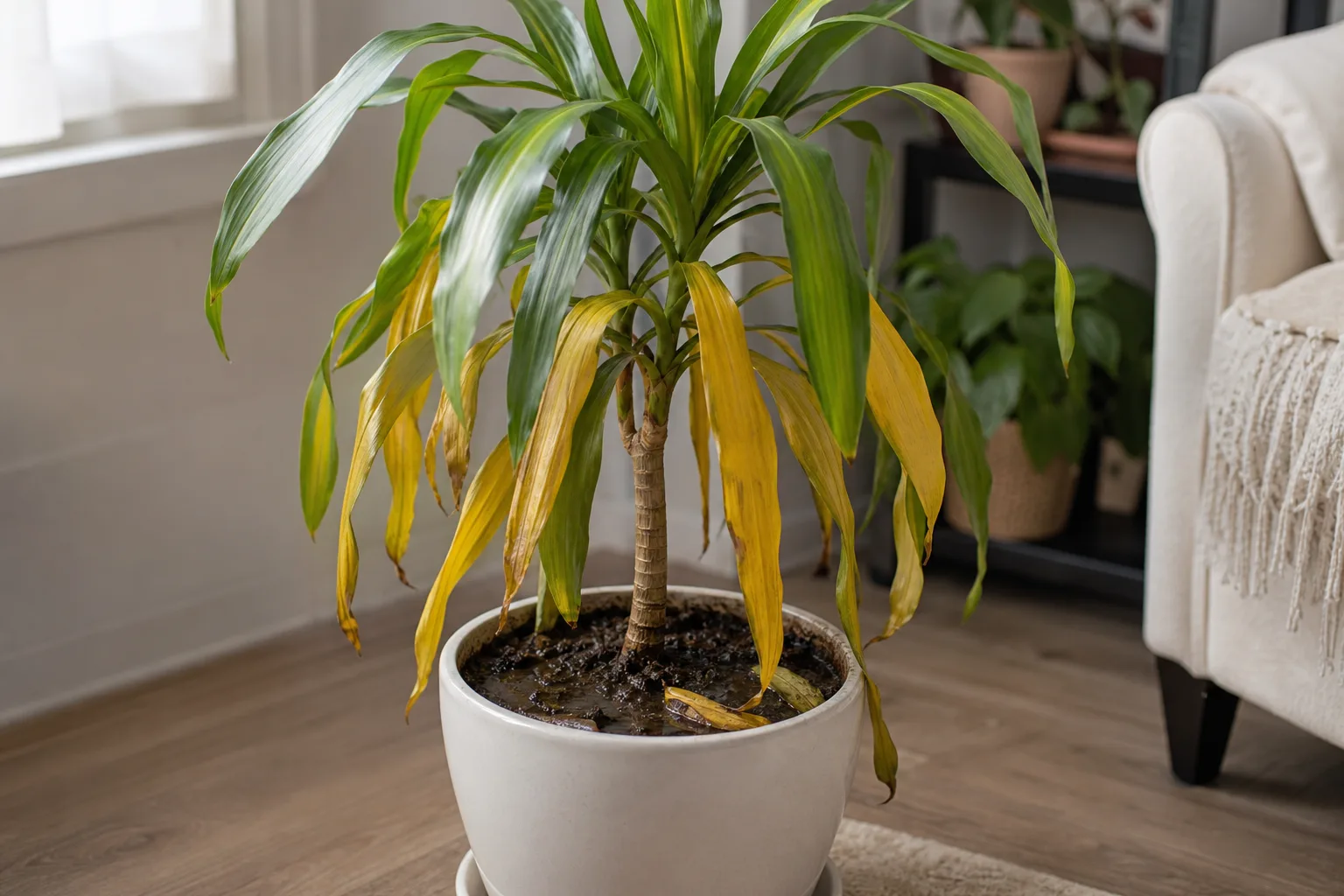
Overwatering on Corn Plant: Causes, Checks & Fixes
This guide covers overwatering on Corn Plant. See also the general Overwatering guide, watering, and light pages for this plant.
Overwatering on Corn Plant: Causes, Checks & Fixes
Quick answer
Overwatering on Corn Plant (Dracaena fragrans, also sold as mass cane) is not one generous drink-it is soil that stays wet too long, standing water in saucers or cachepots, or watering on a calendar while winter light and cool rooms slow evaporation. The classic trap: strap leaves go limp and lower leaves yellow, so owners add more water when roots are already suffocating in saturated mix.
First step: stop all watering, empty every saucer and decorative outer pot, and let the top inch of mix dry on smaller pots-or the top half on large mass-cane containers-before you touch the plant again. Do not fertilize, repot into a bigger pot, or mist leaves the same day.
Corn Plant tolerates brief dry spells better than weeks of soggy anaerobic soil, so confirm wet soil at depth before assuming thirst. For baseline watering rhythm and fluoride-safe water choices, see the Corn Plant watering guide. If the cane base feels soft or roots are mushy during inspection, escalate to the root rot guide-this page covers early wet-soil intervention before decay is confirmed.
What overwatering looks like on Corn Plant
The pattern starts at the root zone and lower cane, not at random leaf tips. Learn these signs together and you avoid soaking a plant that is already drowning-or mistaking fluoride burn for excess moisture.
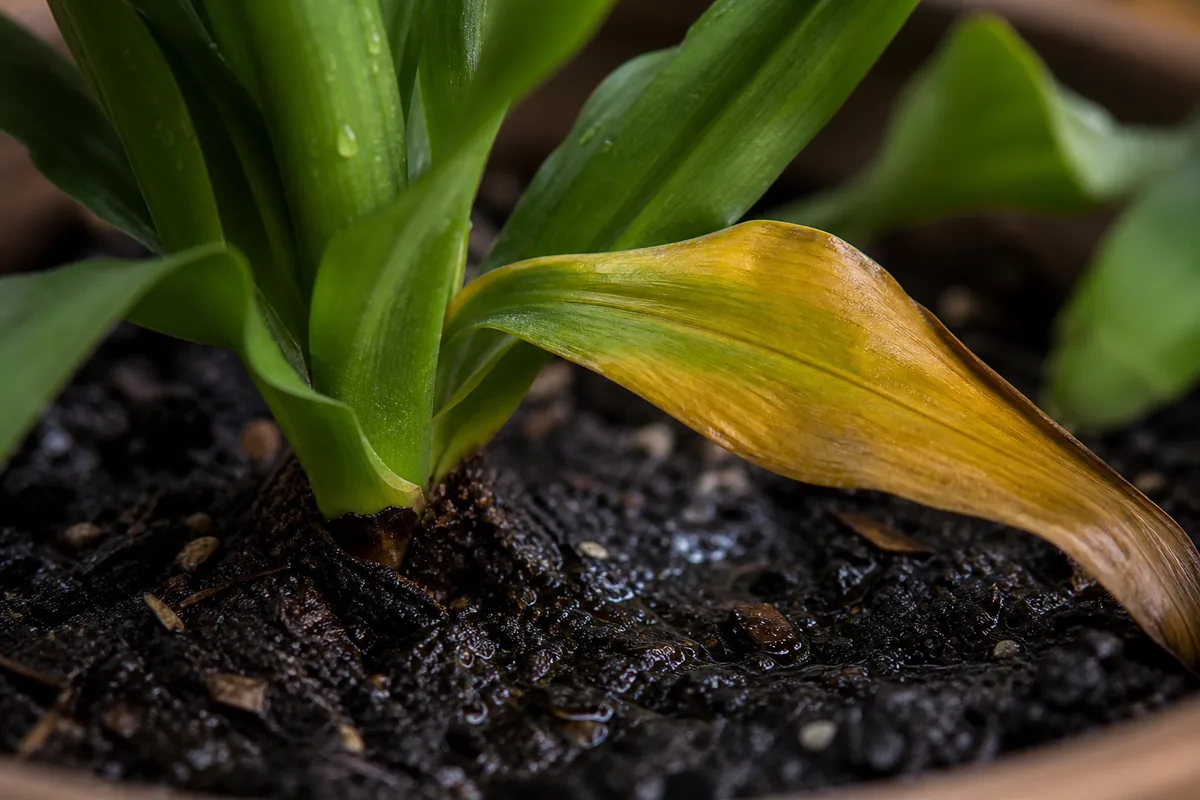
Overwatering symptoms on Corn Plant - compare with healthy tissue on the same plant.
Leaves and canes:
- Limp, heavy-sagging strap leaves while soil is wet-not the papery crisp of drought
- Yellowing lower leaves spreading up the stem, beyond a single aging bottom leaf
- Soft, spongy, or darkening cane tissue at the soil line on heavy wet mix
- Stalled or pale new growth at cane tips during warm months when the plant should be active
- Edema or water-soaked patches on leaf margins after repeated saturation
Soil and pot:
- Pot stays heavy and cool several days after you thought you watered
- Surface mix looks dark and clings to a finger or skewer for many days
- Sour or musty smell from the drainage hole or saucer
- Small fungus gnats hover near the pot when soil never dries
- White mold fuzz or green algae on the soil surface in indoor light
What overwatering does not look like:
- Brown tips only on otherwise firm leaves with evenly moist soil-often fluoride, low humidity, or salt buildup, not excess water
- Very light pot, dusty dry mix, and papery limp leaves with a firm cane base-that is underwatering
- A single yellow lower leaf dropping on an otherwise healthy plant with appropriate dry-down-often normal senescence, not rot
Unlike thirst, overwatered Corn Plant often shows wilting with wet soil because damaged roots cannot move water upward efficiently-a paradox that sends many owners back to the watering can.
Why Corn Plant gets overwatered
Dracaena fragrans is marketed as a tropical foliage plant that wants moisture, which is only half the story. Missouri Botanical Garden notes it performs best in organically rich, well-drained soil with a real dry-down between drinks-not permanently damp peat. Clemson HGIC advises allowing dracaenas to dry slightly between waterings and watering thoroughly only when the soil surface is dry. The species is drought-tolerant relative to many tropical houseplants; over-watering is the main cause of death for potted plants indoors, and Corn Plant decline from excess moisture is more common than death from drought.
The yellow-leaves-plus-wet-soil trap
When lower strap leaves yellow and the whole plant looks tired, the instinct is to water. On Corn Plant that reflex often worsens root damage because the soil was already saturated. Yellow leaves on wet mix mean roots are struggling-not that the plant is thirsty.
Calendar watering and seasonal mismatch
Watering every Tuesday works in a bright summer window and fails in a dim January office. Reduce watering from fall to late winter as growth slows, but many owners keep summer frequency while roots absorb slowly in cooler soil. Unused water lingers, oxygen is displaced, and lower leaves yellow.
Oversized pots and heavy peat mix
Freshly repotted into a container two sizes larger, the same plant may go weeks between needed drinks while roots explore new mix-and owners water on memory of the old tight pot. Dense peat in a glazed cachepot holds water at the core even when the surface looks matte.
Cachepots and standing water
Bottom-watering into a decorative sleeve without emptying runoff leaves the cane base sitting in stale liquid. That is overwatering even when the top inch felt dry at the last check.
Low light slowing evaporation
Corn Plant tolerates low light, which slows photosynthesis and water use. The same volume of soil stays wet longer in a dim corner; calendar watering that worked near a bright window swamps roots in the office.
The pattern is almost always: heavy pot + wet depth + limp leaves + yellowing on damp mix-with a firm vs. mushy cane base as the rot divider.
Lookalike symptoms to rule out
| Signal | Overwatering | Underwatering | Fluoride brown tips | Low humidity |
|---|---|---|---|---|
| Pot weight | Heavy, cool | Very light | Normal to heavy | Normal |
| Soil at depth | Wet, clammy | Dusty dry | Often evenly moist | Moisture OK |
| Cane base | Soft/spongy if rot advanced | Firm | Firm | Firm |
| Leaf pattern | Yellow whole leaves, limp on wet mix | Limp, papery, crisp edges | Brown tips only, firm leaves | Brown edges, firm canes |
| Smell | Sour from drain | Neutral | Neutral | Neutral |
| First fix | Stop water, dry down | Deep soak once | Filtered water | Humidity boost |
Root rot escalation - Soft brown cane on wet soil with foul smell overlaps overwatering but needs the root rot protocol, not another dry-down week alone.
Wilting overlap - Limp leaves appear in both drought and rot. Cane firmness and soil moisture at depth separate them; see wilting and drooping leaves if the pattern is unclear.
Yellow leaves alone - Widespread yellow on wet soil points here; isolated lower-leaf shed may be normal aging or overlap with the yellow leaves guide.
How to confirm overwatering
Work through checks in order so you do not repot healthy roots or add water to saturated mix.
- Soil at depth - Finger or wooden skewer halfway into the pot on large mass-cane containers, or two inches on smaller pots. Clammy, cool, clinging soil at depth confirms wet roots. Dusty dry at depth rules overwatering out-check underwatering instead.
- Pot weight - Lift the container. Heavy and cold days after watering supports excess moisture; very light suggests drought.
- Cane base feel - Press the lowest woody segment. Firm on wet mix = early overwatering candidate. Soft, spongy, or darkening = stop and inspect for rot.
- Drain smell - Sour odor from the saucer or hole strengthens rot suspicion.
- Leaf pattern - Yellow spreading lower leaves on damp mix support overwatering. Brown tips only on moist mix with firm canes suggests fluoride first.
- Gnat check - Persistent fungus gnats near the pot mean soil rarely dries-secondary evidence, not proof alone.
- Dry-down test - After stopping water, the top target depth should dry within a reasonable window. Soil still wet two weeks later in a warm room suggests poor drainage or an oversized pot.
Confirmed diagnosis: Wet mix throughout, heavy pot, limp or yellowing strap leaves, no bone-dry depth, optionally sour smell or gnats.
Suspected but verify: One yellow lower leaf on otherwise firm plant with appropriate RHS-style dry-down (top 5 cm dry)-may be normal aging, not emergency.
First fix for Corn Plant
Stop all watering immediately. Empty saucers, cachepots, and any decorative outer sleeve so the cane base is not sitting in runoff. Move the plant to Corn Plant light guide if it was in very dim shade-not direct sun-so the mix can dry at a realistic pace.
That pause and drainage correction is the entire first fix. Do not fertilize, prune heavily, repot into a larger container, or add water because leaves still look limp while soil is wet.
After the top inch (small pots) or top half (large pots) dries:
- Resume checking with finger, skewer, and pot weight-not a calendar
- When you water again, water thoroughly until a small amount drains, then empty pooled liquid within thirty minutes
- Use filtered or rainwater if brown tips confused your diagnosis-fluoride stress is separate from rot but common on Corn Plant overview
If leaves keep declining after the mix has dried appropriately, proceed to root inspection below-dry-down alone is no longer enough.
Root inspection and repot branch
Escalate when the cane base feels soft, smell is strongly sour, or yellowing spreads while soil stays wet despite a full dry-down cycle.
- Slip the plant from the pot on a tarp or newspaper. Healthy roots are firm and tan or white; rotten roots are dark, slimy, or hollow.
- Trim mushy roots with clean scissors. Keep all firm tissue.
- If more than half the root mass is healthy, repot into fresh well-draining mix with perlite in a pot with drainage holes-similar size or slightly smaller, never a huge upgrade “to help drying.”
- Water lightly once to settle mix, then wait until the top two inches dry before the next drink.
- If the cane base is soft through multiple segments, salvage may require cutting firm cane above the rot line and propagating-see the root rot guide for full escalation.
Clemson HGIC notes root rot usually results from soil that does not drain quickly or overly frequent watering-fixing the schedule without fixing drainage rarely works.
Recovery timeline
Mild overwatering (heavy pot, one yellow lower leaf, firm cane, no sour smell): often one to two weeks of corrected dry-down before new growth at cane tips looks normal. Limp leaves may firm slightly once soil oxygen returns, but yellowed tissue rarely re-greens.
Moderate stress (multiple yellow leaves, wet mix for weeks, early root damage): two to six weeks of stable dry-down before judging success by new strap leaves emerging firm at the tips-not by old foliage.
Advanced rot (soft cane, mushy roots): recovery takes months if salvageable; some plants cannot be saved once crown tissue collapses.
Worsening signs after dry-down started: spreading yellow on newly drying mix, cane softening further, collapse at the base-shift to root rot protocol immediately.
Cosmetic damage on mature leaves stays; success means firm canes, predictable soil cycle, and clean new growth.
What not to do
Do not add water because leaves look limp while soil is wet-that deepens root damage. Do not fertilize a waterlogged plant; salts on compromised roots burn. Do not repot into a larger pot to “help drying”-extra mix holds more moisture. Do not mist leaves instead of fixing soil moisture. Do not assume every brown tip means overwatering-fluoride and dry air are frequent on Dracaena. Do not ignore a heavy pot because top leaves still look green-roots can fail before the canopy collapses.
How to prevent overwatering on Corn Plant
Prevention is reading the pot and soil depth, not memorizing a weekday schedule. The Corn Plant watering guide covers seasonal intervals, fluoride-safe water, and cachepot traps in full; keep these species-specific habits here:
- Water when the top 1–2 inches dry on medium pots, or the top half on large mass-cane containers-the RHS dry-down target
- Lift the pot before every drink; weight change beats a calendar
- Empty saucers and cachepots within thirty minutes of every watering
- Reduce frequency in fall and winter when growth slows-do not maintain summer rhythm in a dim office
- Match pot size to root fill after Corn Plant repotting guide; extra soil without roots is a sponge
- Use well-drained loamy mix and pots with holes-see the soil guide
Healthy Corn Plant care pairs thorough drinks after a real dry-down with drainage that never traps stale water-the same pairing that prevents both chronic drought and soggy-root rot.
When to worry
Treat as urgent when the lowest cane segment feels soft under light pressure, soil smells strongly sour, or unpotting shows brown mushy roots throughout. Those signs mean wet soil has progressed into decay.
Not urgent: One yellow lower leaf on firm cane with soil approaching appropriate dryness; adjust schedule and monitor.
Give up when: Crown tissue collapses, all roots are mush, or no new growth appears for months after corrected care and repot-propagation from firm cane above rot may be the only salvage.
Conclusion
On Corn Plant, overwatering announces itself through a heavy wet pot, limp strap leaves on damp mix, and yellowing lower leaves-often with owners adding water because wilt looks like thirst. Confirm moisture at depth, stop watering and empty standing water first, then let the top inch or top half dry before the next drink. Firm canes and new growth at the tips mean recovery; soft tissue on soggy mix is a different emergency. Match water to how fast your pot dries in its light, and let pot weight-not the day of the week-tell you when the root zone is ready.
When to use this page vs other Corn Plant guides
- Corn Plant watering guide - Use for routine moisture checks before assuming overwatering is the main issue.
- Corn Plant problems hub - Browse all 16 common issues on this species.
- Root Rot on Corn Plant - Different entry point when symptoms overlap with overwatering.
- Yellow Leaves on Corn Plant - Different entry point when symptoms overlap with overwatering.
- Wilting on Corn Plant - Different entry point when symptoms overlap with overwatering.