Root Rot on Corn Plant: Causes, Checks & Fixes
Quick answer
Root rot on Corn Plant follows chronically wet mix in a Dracaena that stores water in its cane-limp strap leaves on damp soil are the classic trap. First step: stop watering, check cane firmness at the base, and confirm the top 1–2 inches have dried before you unpot.
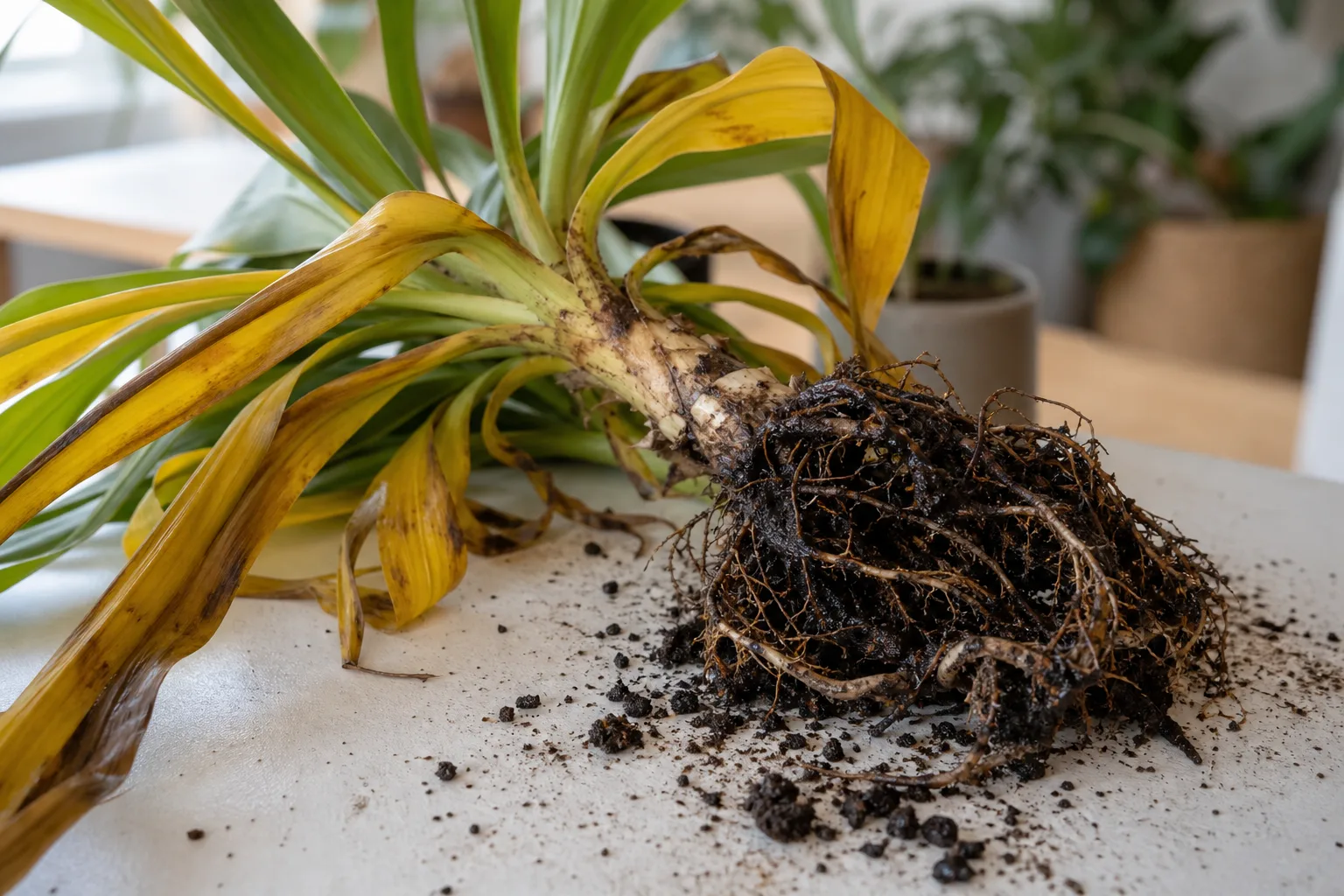
Root Rot on Corn Plant: Causes, Checks & Fixes
This guide covers root rot on Corn Plant. See also the general Root Rot guide, watering, and light pages for this plant.
Root Rot on Corn Plant: Causes, Checks & Fixes
Quick answer
Root rot on Corn Plant (Dracaena fragrans, including Massangeana and Janet Craig cultivars) is almost always a watering and drainage failure-not a mysterious disease. This woody-stemmed Dracaena stores water in its cane, so limp arching strap leaves on damp soil are the signature trap: the canopy still looks thirsty while rotting roots cannot absorb moisture below.
First step: stop watering immediately. Lift the pot. If the mix is wet and heavy, press your finger 1–2 inches deep on medium pots-or check the top half on large mass-cane containers. Wet soil plus yellow lower leaves, sour smell, or a soft cane base means treat root rot as likely.
Visually, suspect rot when the pot feels heavy days after watering, lower leaves yellow on wet mix while the cane above still looks green, and pressing the stem at the soil line gives slightly instead of feeling hard and woody. That inside-out pattern-roots failing before the cane shows obvious collapse-is why many owners water again and accelerate basal decay.
Root rot vs. other Corn Plant problems
The wilt-on-wet-soil paradox separates root rot from thirst on corn plant better than any single leaf symptom. Underwatered D. fragrans wilts on a light, dry pot and often perks after a thorough soak. Root rot produces collapse on heavy wet mix with no rebound-wilting with moist soil often means roots cannot absorb water because they are decaying.
| Pattern | Pot weight | Cane at base | Lower leaves | What it usually means |
|---|---|---|---|---|
| Root rot | Heavy | Soft or blackening | Yellow, limp on wet soil | Basal root failure |
| Underwatering | Light | Firm | Limp on dry soil | Drought stress |
| Fluoride tip burn | Normal | Firm | Brown tips only | Water chemistry |
| Natural aging | Normal | Firm | One old leaf yellows | Senescence |
| Early overwatering | Heavy | Firm (still) | Yellow on wet soil | Wet roots before cane rot |
Brown tips without yellowing or soft cane usually mean fluoride in tap water-not root rot. Root rot is confirmed decay with mushy roots or soft cane; overwatering is the wet-soil stage before rot advances-see overwatering for early intervention when the cane is still firm.
What root rot looks like on Corn Plant
On this cane Dracaena, rot often starts from the inside out at the base-the cane may look acceptable while roots fail below. Thick mass-cane stems mask root failure longer than thin-stem houseplants because the woody cane holds reserves; by the time leaves collapse, basal tissue may already be hollow.
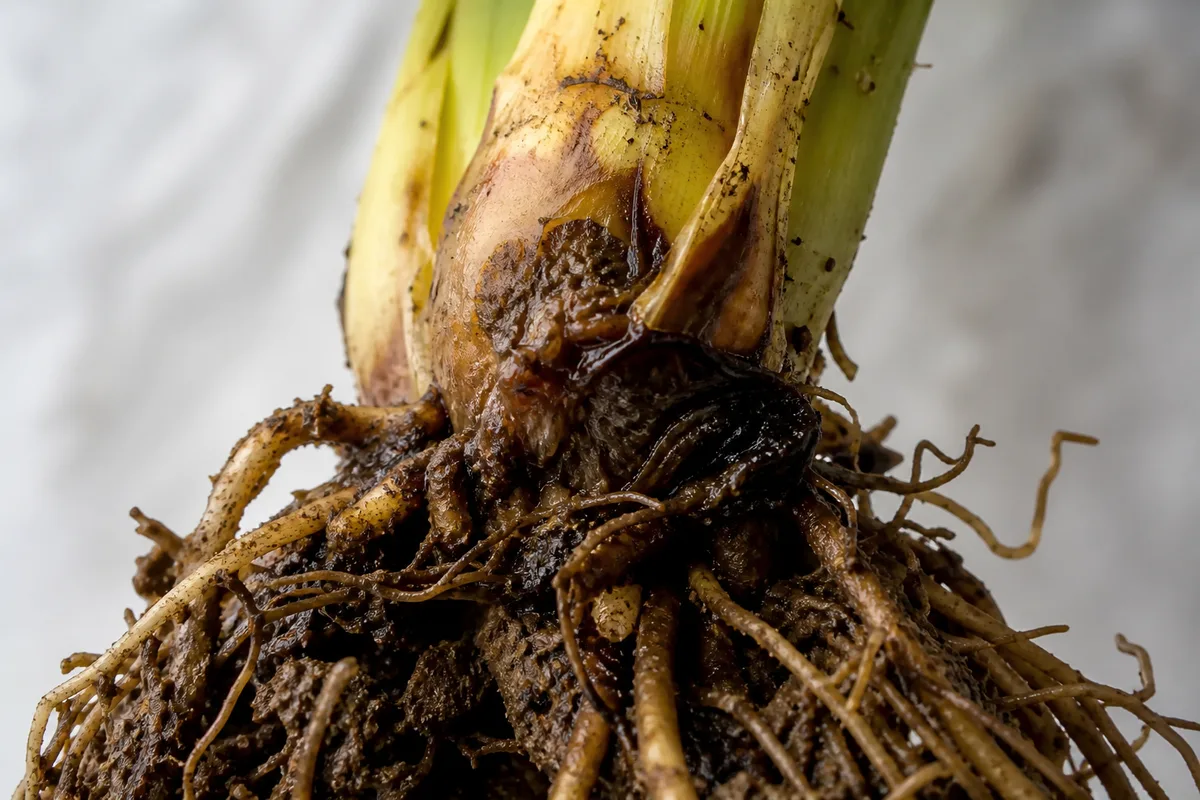
Root Rot symptoms on Corn Plant - compare with healthy tissue on the same plant.
Early signs
- Yellow lower strap leaves while mix stays damp-not one slow-aging leaf
- Limp arching foliage on wet soil with no perk after watering
- Sour or rotten smell when you lift the pot
- Fungus gnats near soil that never dries-secondary evidence of chronic wet mix
- Stalled new growth at the crown
Advanced signs
- Soft, mushy cane at or just above the soil line-rot climbing the stem
- Black or brown tissue on the cane base
- Leaf collapse with brown papery tissue despite moisture
- Hollow or slimy roots when touched-healthy roots stay firm and tan
Why Corn Plant gets root rot
Corn plant evolved in tropical African understory with rainfall followed by drying in well-aerated soil. Indoors, root rot usually results from soil that does not drain quickly or overly frequent watering.
Overwatering on wet mix. Watering while the top 1–2 inches are still damp keeps the root zone oxygen-poor. The cane stores water, so wilting lags behind root damage-owners see limp leaves and add more water, which accelerates inside-out basal collapse.
Oversized pots and heavy mix. Excess wet soil around a small root ball stays anaerobic for weeks. Dense peat without perlite compounds the problem, especially in glazed cachepots.
Low light and cool winter rooms. Reduced transpiration means the same summer schedule leaves mix wet for weeks. Reduce watering from fall through winter as growth slows; a dim office in January can hold moisture at the pot core for three weeks while the surface looks matte.
Standing water in saucers and cachepots. Runoff trapped at the bottom keeps basal roots saturated even when the top inch felt dry at the last check.
Cultivar and container size. Nursery Massangeana pots often carry two to three rooted canes in one container-more leaf mass sharing one wet root zone. Large floor specimens need the top half of mix dry before the next drink, not just the top inch. Compact Janet Craig cultivars transpire less in dim rooms, so the same weekly schedule can swamp roots faster than on a tall Massangeana near a bright window.
How to confirm the cause
Five-step confirmation checklist
- Cane firmness - Press the stem at the soil line. Firm and woody is hopeful; soft or hollow means basal rot.
- Pot weight and smell - Heavy days after watering plus sour odor supports rot.
- Finger test - Wet clinging soil at 1–2 inches (or wet top half on large pots) with multiple yellow lower leaves.
- Unpot and rinse roots - Trim assessment: firm tan roots vs. brown mush.
- Drainage audit - Blocked holes, no drainage, or standing saucer water.
Root rot is confirmed when wet heavy mix, sour smell, mushy roots, and cane softening align.
Mild vs. moderate vs. severe urgency
| Severity | Cane at soil line | Root condition | Leaf pattern | Fix path | Urgency |
|---|---|---|---|---|---|
| Mild | Firm, woody | Mostly tan; minor brown tips | One to two yellow lower leaves on wet mix | Stop water; dry-down 7–10 days | Monitor 2–3 weeks |
| Moderate | Slightly soft or spongy | Mixed tan and brown mush | Multiple yellow leaves; limp on wet soil | Unpot, trim rot, repot same day | Act within 48 hours |
| Severe | Soft, blackening, climbing | Mostly mush; sour smell | Crown collapse on soggy mix | Salvage firm cane cuttings; discard base | Same day |
If signs sit between mild and moderate-firm cane but sour smell-unpot within 24 hours rather than waiting another dry-down week.
First fix for Corn Plant
Stop watering immediately. Do not add water because leaves look limp on already-wet soil.
That pause is the entire first fix. Do not fertilize, mist heavily, or repot on day one unless you have confirmed mushy roots or a clearly failing cane base.
After you stop water, choose the recovery path below based on the urgency table-not every symptom at once.
Step-by-step recovery
Mild case: dry-down path (firm cane, mostly tan roots)
Use when the cane is firm, roots show minor brown tips but are mostly tan, and yellowing is limited to lower leaves on wet mix.
- Stop all watering and move the plant to bright indirect light-not direct sun-so the root zone can dry at a realistic pace.
- Empty saucers and cachepots so the cane base is not sitting in runoff.
- Let the root ball dry 7–10 days. Probe the top 1–2 inches on medium pots or the top half on large mass-cane containers daily.
- Resume when dry-down tests pass-one moderate drink until a small amount drains, then empty pooled liquid within thirty minutes.
- Monitor new crown growth for two to three weeks. Firm new strap leaves mean recovery; spreading yellow on drying mix means escalate to moderate path.
Moderate case: trim, repot, and hold water (soft base or clear root mush)
Use when the cane base is slightly soft, roots are clearly brown and slimy, or mild dry-down failed after ten days.
- Unpot on a tarp and rinse roots under lukewarm water so you can see firm tan tissue vs. mush.
- Trim all brown, slimy roots with clean scissors back to firm white or tan tissue. Sterilize blades between cuts if rot is extensive.
- Cut away any soft cane tissue at the soil line until you reach firm woody stem.
- Repot into fresh airy well-drained mix in an appropriately sized pot with drainage holes-similar size or slightly smaller, never a huge upgrade. See the soil guide and repotting guide.
- Hold water 10–14 days after repot, then test when the top inch is dry. One light settling drink is enough; do not soak a freshly trimmed root ball.
- Do not fertilize until new growth resumes at the crown.
Severe case: stem-cutting salvage (basal cane rotted, upper cane firm)
Use when the base is soft through multiple segments but green firm cane remains above the rot line-or when more than half the root mass is mush and the original base cannot be saved.
- Identify the highest firm node above all soft tissue. Mark a cut ½ inch above healthy green cane.
- Cut the healthy top section with sterile shears. Remove lower leaves that would sit below the water line if rooting in a jar.
- Let the cut callus 24–48 hours on a paper towel in bright indirect light-callusing reduces rot when the cutting contacts water or damp mix.
- Root in distilled or filtered water (tap fluoride harms dracaenas) or moist airy mix. NC State Extension notes corn plant is propagated by stem cuttings with roots developing over several weeks.
- Change water weekly if water-rooting; keep mix barely moist-not wet-if soil-rooting.
- Pot up when roots reach 2 inches, then follow normal dry-down per the watering guide.
For full propagation detail, see the propagation guide.
Recovery timeline
Mild cases may stabilize within two to three weeks after dry-down and trim. New strap leaves from the crown confirm recovery; yellowed lower leaves rarely re-green.
Moderate trim-and-repot cases often need three to six weeks before crown growth looks normal. Judge success by firm cane and new leaves-not old yellow tissue.
Cane cuttings root in four to eight weeks in water or mix-watch for firm green cane and root nubs at nodes before potting up.
Severe basal rot with soft cane to the crown is usually fatal on the original root system-propagation salvage is the realistic path.
Worsening signs after rescue started: spreading yellow on newly drying mix, cane softening further, or collapse at the base within days-reassess severity and move to the next recovery branch immediately.
What not to do
Do not keep watering wilted leaves on wet soil-that is the fastest way to turn moderate rot severe. Do not repot into a larger pot or dense garden soil. Do not confuse fluoride brown tips with rot when cane is firm and only leaf margins are damaged. Do not stake a leaning mass cane when the base wobbles with mushy roots on one side-support masks advancing basal failure. Do not fertilize stressed or freshly trimmed plants.
How to prevent root rot next time
Water once the top 5 cm (2 in) feels dry on medium pots, or the top half on large mass-cane floor containers. Use low-fluoride water when possible-D. fragrans is sensitive to fluorides and built-up salts-plus well-drained mix per the soil guide, and empty saucers within 30 minutes.
Match frequency to season per the watering guide. After repotting, use the repotting guide dry-down rhythm rather than calendar watering. When symptoms overlap before rot is confirmed, start with overwatering and wilting checks.
When to worry
Treat as urgent when the cane base feels soft under light pressure, a sour smell persists after dry-down, or several leaves collapse on wet mix within a few days. Unpot the same day when moderate or severe signs appear-waiting another week on soggy mix rarely reverses basal decay.
Not urgent: One yellow lower leaf on firm cane with soil approaching appropriate dryness; follow mild dry-down and monitor crown growth.
Multi-cane Massangeana salvage order: When one of three canes shows basal mush while others stay firm, isolate and salvage firm canes first-do not wait for all stems to soften.
- Unpot the entire container and rinse each cane’s roots separately.
- Discard any cane with soft tissue below firm wood-do not leave a rotting segment sharing mix with healthy canes.
- Repot firm canes together only if every remaining stem has clean tan roots; otherwise pot salvaged cuttings individually.
- If two canes are firm and one is rotting, remove the failed cane immediately and trim shared root mass back to healthy tissue before repotting survivors.
If rot reaches the crown or all roots are mushy, the original base is usually not recoverable. Move to salvage cuttings from any firm cane sections above the rot line.
Related corn plant guides
- Overview - baseline species and cultivar context
- Watering - dry-down rhythm and water quality
- Overwatering - early wet-soil intervention before rot
- Wilting - dry vs wet wilt pattern checks
- Yellow leaves - multi-cause yellowing diagnosis
- Fungus gnats - persistent wet-soil follow-up
- Brown tips - fluoride and salt lookalike symptoms
- Dracaena root rot - genus-wide guidance for mixed Dracaena collections
FAQs
Why does my Corn Plant wilt when the soil is still wet?
Wilt on wet soil means roots are failing, not that the plant needs more water. Dracaena fragrans stores moisture in its woody cane, so arching leaves can look thirsty while rotting roots cannot absorb. Check cane firmness at the soil line before adding more water.
How can I confirm root rot on Corn Plant?
Confirm when the pot feels heavy, mix smells sour, roots are brown and mushy when rinsed, and lower strap leaves yellow on damp soil. Healthy corn plant roots are firm and tan. A light dry pot with limp leaves usually points to underwatering instead.
Can I save a Corn Plant with stem cuttings if roots are gone?
Yes, if firm cane sections remain above the rot. Cut the healthy top section with clean shears, let the cut callus 24 hours, and root in water or fresh airy mix. Salvage works when the cane above rot is still green and solid even though basal roots have decayed.
When is root rot urgent on Corn Plant?
Act within days when the cane base softens, black mush climbs the stem, or multiple leaves collapse on soggy mix. Mild yellowing of one lower leaf with firm cane and mostly tan roots can wait for dry-down and careful repot.
How do I prevent root rot on Corn Plant next time?
Water when the top 1–2 inches or top half of large pots feel dry, use well-drained mix, empty saucers within 30 minutes, and reduce frequency in winter. See the corn plant watering guide for fluoride-safe water and seasonal rhythm.