Brown Tips on Corn Plant: Causes, Checks & Fixes
Quick answer
Brown tips on Corn Plant (*Dracaena fragrans*) are most often fluoride or salt buildup from tap water-not a slightly early watering. First step: switch irrigation to distilled, rainwater, or reverse-osmosis water and stop fertilizing until new crown leaves emerge clean.
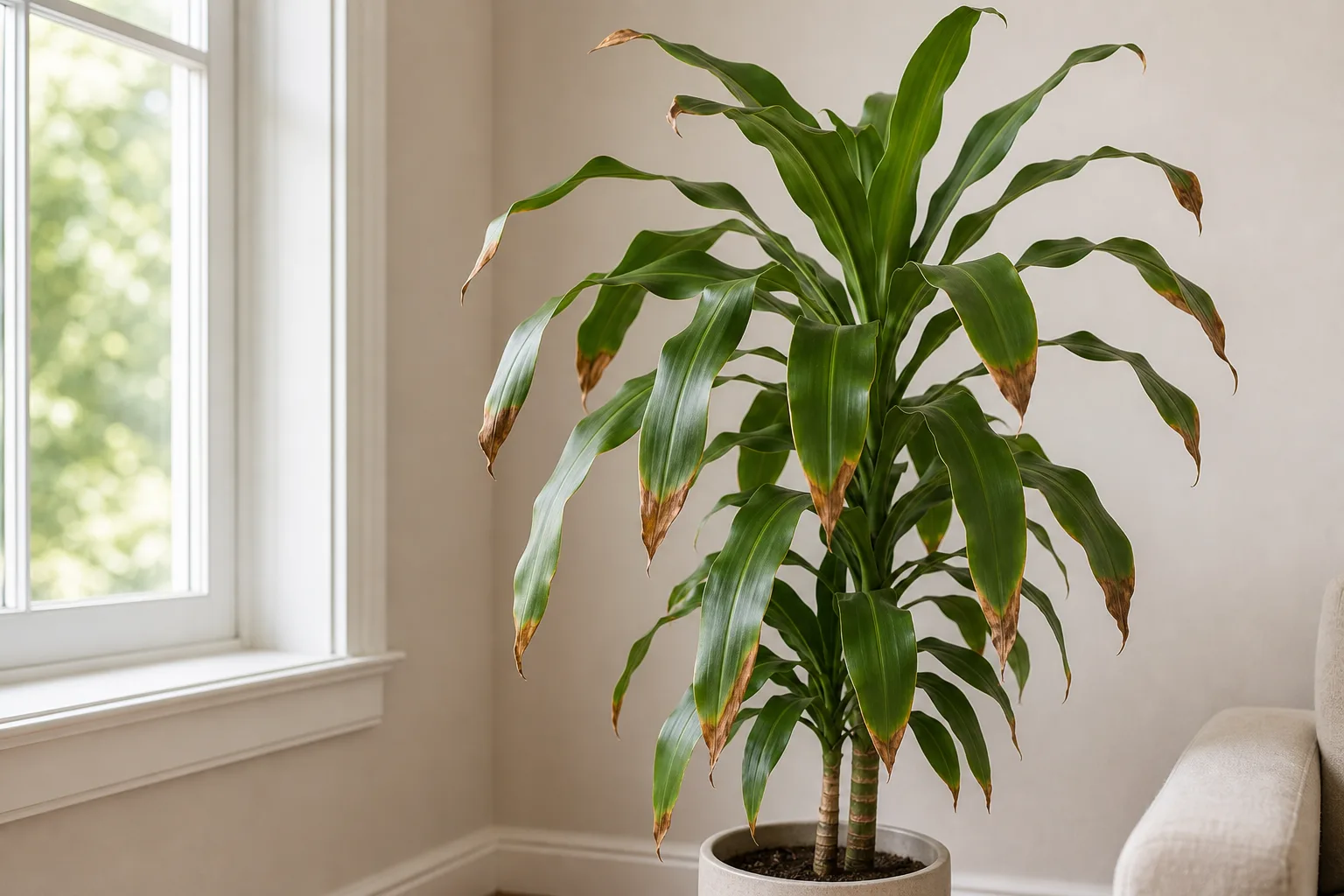
Brown Tips on Corn Plant: Causes, Checks & Fixes
This guide covers brown tips on Corn Plant. See also the general Brown Tips guide, watering, and light pages for this plant.
Brown Tips on Corn Plant: Causes, Checks & Fixes
Quick answer
Brown tips on corn plant (Dracaena fragrans, sold as mass cane, Lisa, and related cultivars) usually mean fluoride or soluble salts in irrigation water have accumulated in strap-leaf margins-not that you missed watering by a day. D. fragrans is very sensitive to fluoride toxicity; municipal tap water in many cities carries fluoride at roughly 1 ppm, and fluoride does not evaporate when water sits overnight the way chlorine in water additives can contribute to tip browning. Low indoor humidity below roughly 30–40% can worsen marginal drying once injury starts, and fertilizer salts accelerate the same burn pattern.
First step: switch irrigation to distilled water, rainwater, or reverse-osmosis water-not vague “filtered” tap unless your filter removes fluoride-and hold fertilizer until you see one or two new crown leaves open without fresh marginal necrosis. Full watering rhythm, flush protocol, and seasonal schedule live in the Corn Plant watering guide. If soil stays soggy, canes feel soft, or whole leaves yellow-not tips only-see overwatering before you change water chemistry.
What brown tips look like on Dracaena fragrans
Corn plant carries long, arching strap leaves in a whorl at the top of each woody cane. Tip burn on this species has a recognizable pattern that differs from whole-leaf yellowing or sudden wilt.
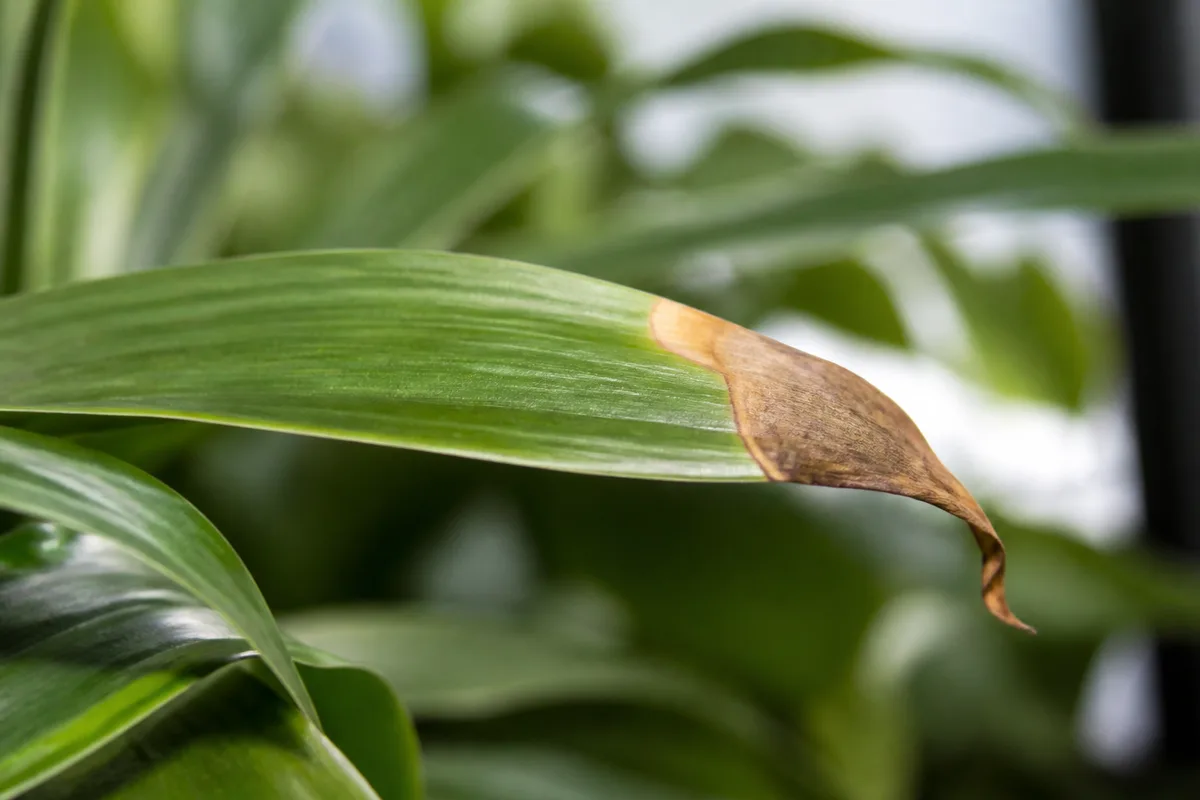
Brown Tips symptoms on Corn Plant - compare with healthy tissue on the same plant.
Classic fluoride or salt tip burn (most common):
- Tan to dark brown necrosis confined to the leaf tip or a narrow band along the margin, sometimes with a thin yellow halo between dead tissue and green blade
- Papery, dry texture on an otherwise firm, upright leaf-the cane and petiole base feel hard when you press lightly
- Damage often appears on older strap leaves lower on the cane first, because fluoride accumulates gradually in leaf margins through the transpiration stream
- New crown leaves may still open green while older tips keep browning-until salt or fluoride concentrations rise high enough to injure fresh growth
Low-humidity marginal crisping (often secondary):
- Wider brown edges across several leaves in winter when a hygrometer reads below 30–40% near the foliage
- Often worse on leaves nearest heat vents, radiators, or single-pane windows while soil moisture stays normal
- See the dedicated low humidity guide when RH and placement align with this pattern
Underwatering crisp (less common on tips alone):
- Light pot, dusty dry soil several inches down, and limp strap leaves-not firm foliage with moist mix
- Margins may crisp, but the primary signal is drought at the root zone; see underwatering
Unlike overwatering, fluoride tip burn rarely yellows whole leaves while soil stays heavy and wet. Unlike normal aging, widespread tip necrosis on multiple canes in a fluoridated city usually traces to water chemistry, not one old leaf senescing at the bottom.
Why corn plant gets brown tips
Corn plant evolved in tropical African understory with rainfall low in concentrated minerals. Indoors, two chemistry problems dominate tip burn on Dracaena fragrans.
Fluoride and boron sensitivity. The Missouri Botanical Garden notes that corn plant is sensitive to fluoride and boron in water and that filtered or rain water may help reduce leaf tip browning. Fluoride moves with transpiration and concentrates at leaf tips and margins-the last tissue fine veins supply. UF/IFAS production guidance lists high boron, fluoride, or soluble salts among causes of chlorotic or necrotic leaf tips on dracaenas, with damaged leaves that will not recover until new growth replaces them.
Salt and fertilizer buildup. Hard tap water, excess fertilizer, and months without leaching leave soluble salts in the root zone. Clemson HGIC describes dracaenas as highly sensitive to fluoride in water and notes that dry tips and edges are also associated with too little humidity below 30–40%. Fertilizer applied to stressed foliage adds another salt layer on a species already prone to marginal burn-see fertilizer when you suspect salt injury from recent feeding.
Low humidity as an accelerator, not the usual root cause. Average household humidity of 40–50% is often adequate for corn plant. Very dry winter air-especially near a heat source such as a radiator-dries margins faster once fluoride or salt injury has started. Chronic drought between waterings can also produce brown tips and margins, particularly if the plant was fertilized heavily while soil dried-PNW Handbooks note that excessive drying between waterings can lead to brown tips on sensitive dracaenas.
Why tips show before whole-leaf collapse. Strap leaves lose water from margins last in the vascular supply chain. Fluoride and salts deposit where transpiration ends-at the tip-before the entire blade yellows. That is why owners see brown tips on firm leaves while the cane still feels woody and soil moisture looks normal: the stress is often chemical accumulation in foliage, not immediate root failure.
Lookalike symptoms to rule out
| Signal | Fluoride / salt tip burn (this page) | Low humidity | Overwatering | Underwatering | Fertilizer salt burn |
|---|---|---|---|---|---|
| Soil moisture | Normal dry-down; pot moderate weight | Normal; often winter heating | Heavy, wet days after watering | Dry, light pot | Normal or recently fed |
| Cane feel | Firm, woody | Firm | May soften at base if advanced | Firm until severe drought | Firm |
| Leaf pattern | Brown tips/margins only | Crisp wider edges, several leaves | Yellow whole leaves on wet mix | Limp, papery, wilt | Tip/margin burn after recent feed |
| New growth | Clean until salts rise; then crown tips burn | New leaves may open with crisp edges in dry heat | Stalled or limp on wet soil | Small, curled if chronic drought | Burn on newest leaves after heavy dose |
| First fix | Distilled/rain/RO water; flush salts | Move from vent; raise RH | Stop watering; dry down | Deep soak when dry | Flush; hold fertilizer |
When moist soil, firm cane, tap water, and tips-only burn align, start on water chemistry-not a humidity hardware shopping trip. When wet heavy pot and yellow lower leaves align, read overwatering first.
How to confirm the cause (5-step inspection)
Work through these checks in order. One wrong assumption-soaking a plant that only needs better water-wastes weeks on corn plant.
-
Soil moisture and pot weight - Push a finger or skewer two inches into the mix near the stem and at the pot edge. A moderate or heavy pot on evenly moist soil with firm canes and tips-only burn points to fluoride or humidity, not drought. A light, dusty-dry pot with limp leaves means fix watering before water chemistry.
-
Water source and habits - Note whether you use municipal tap water in a fluoridated area, whether water sits overnight (chlorine reduction only), and whether you use distilled, rainwater, or RO water intermittently. NC State Extension lists corn plant as sensitive to fluorides and built-up salts-chronic tap irrigation without flushing is the leading tip-burn setup indoors.
-
Hygrometer reading at foliage height - Place a digital hygrometer beside the crown for 24 hours. Sustained below 30–40% supports low humidity as a contributor or primary driver when winter heat is involved. Mid-range household RH with tap-water tips still points to fluoride first.
-
Newest growth condition - Inspect the top whorl. Clean new leaves with only older lower tips brown fits progressive fluoride accumulation. Every new leaf opening with burn means water chemistry and possibly humidity need immediate change. Limp new growth on wet soil is not tip burn-check roots and drainage.
-
Fertilizer and flush history - Recall the last feed date and whether you have leached the pot with low-mineral water in the past three months. Recent heavy feeding plus dry spells can compound salt-related marginal necrosis. If you flushed but kept fluoridated tap water, tips often return within weeks.
Confirmed fluoride or salt tip burn: Firm cane, appropriate soil moisture, tips or margins necrotic on strap leaves, tap or hard water in use, new crown growth starting to show burn or older tips worsening.
Suspected but verify: Brown tips only in a heated room at 25% RH-address placement and humidity per the low humidity guide while switching water, because both stresses commonly overlap on D. fragrans.
First fix for corn plant
Switch irrigation to distilled water, rainwater, or reverse-osmosis water starting with the next watering-and do not fertilize until you see stable clean new growth. Standard carbon pitcher filters improve taste but typically do not remove fluoride; relying on them alone often fails in fluoridated cities.
That single change stops new fluoride from entering the root zone. It does not instantly heal old margins. Empty saucers after every drink, use room-temperature water, and follow the dry-down targets in the watering guide so you do not simultaneously underwater or overwater while fixing chemistry.
If tips have spread to new crown leaves or you have used tap water for years without leaching, flush the soil during the same week: slowly run several pot volumes of low-mineral water through the mix until it drains freely, discard saucer water, and let the soil return to your normal dry-down before the next irrigation. PNW Handbooks recommend avoiding fluoridated water and treating water by reverse osmosis or charcoal for sensitive dracaenas.
Secondary steps after the water switch (not day one):
- Move the pot away from heat vents and radiators if a hygrometer reads below 30–40% at the foliage
- Group plants or use a humidifier targeting 45–55% RH when winter air stays dry-see low humidity for ranked tactics
- Trim only dead brown tissue with clean scissors if cosmetic damage bothers you; leave a thin margin rather than cutting into green blade
Do not repot, prune heavily, and change water on the same day-corn plant handles one stress correction at a time more predictably.
Step-by-step recovery by confirmed cause
Fluoride or salt tip burn (most indoor cases)
- Switch to distilled, rainwater, or RO water immediately; label the watering can so household members do not refill with tap.
- Flush salts with low-mineral water if burn is spreading or tap use was long-term.
- Hold fertilizer until two new crown leaves open without marginal necrosis.
- Optionally trim dead tip tissue for appearance; damaged cells will not re-green.
- Flush again every two to three months if any tap or hard water remains in the rotation.
Low humidity contributing
- Confirm RH below 30–40% at foliage height for several days.
- Move away from registers and radiators first-cheaper than a humidifier and often sufficient.
- Raise local RH through grouping, pebble trays, or a room humidifier; misting alone offers minutes of relief.
- Keep low-fluoride water in place; dry air alone rarely explains tips on moist soil in average homes, but it worsens fluoride margins.
Underwatering overlap
- If soil is dusty dry and the pot is light, deep-soak until drainage runs, then resume dry-down checks.
- Reduce fertilizer until the plant rehydrates; drought plus salts burns margins faster on sensitive dracaenas.
- After soil moisture stabilizes, maintain the water-source switch if tips persist-drought was not the only driver.
Overwatering lookalike (yellow leaves, not tips only)
- Stop watering; empty saucers; let mix dry per the overwatering guide.
- Do not switch to distilled water as a “rescue soak” on saturated soil-fix drainage and dry-down first.
- Reassess tips after the pot weight normalizes; fluoride burn and rot can coexist but need different first actions.
Recovery timeline
Week 1–2 after a water switch: Existing brown tips stay brown; the goal is no new spread on the youngest leaves. Older lower strap leaves may look unchanged-that is normal.
Week 3–5: The next one or two crown leaves should open with clean margins if fluoride was the primary driver and humidity is adequate. If every new leaf still emerges burned, confirm you are not still using fluoridated tap, verify RH, and flush again.
Month 2+: Cosmetic old tips remain unless trimmed. A stable whorl of green new growth means the fix worked; lower cane leaves with historic burn can stay on the plant indefinitely without harming health.
Severe or combined stress: Plants that were overwatered, heavily salted, and irrigated with fluoridated tap for years may need a full growing season before the canopy looks uniformly clean-judge by crown growth, not by rehabilitating every old strap leaf.
What not to do
Do not fertilize a tip-burned corn plant hoping to push green tissue-salts compound marginal injury on fluoride-sensitive dracaenas. Do not overwater because leaf edges look “dry”; soggy soil kills this species faster than crisp margins in dry air. Do not assume overwatering when only tips are brown, soil is appropriately dry, and canes are firm-yellow leaves on wet mix tell a different story. Do not rely on overnight tap-water sitting to fix fluoride burn. Do not stack repotting, heavy pruning, pesticide, and water changes on the same day. Do not trim large sections of strap leaf into living green tissue-you create a bigger wound than the thin brown margin you removed. Do not buy a humidifier before checking water chemistry when tips persist at 45% RH on municipal tap.
How to prevent brown tips next time
Prevention on corn plant is mostly water chemistry plus predictable dry-down, not a rigid calendar.
- Use distilled, rainwater, or RO water year-round if your municipality fluoridates-alternating with tap usually allows marginal accumulation to return.
- Flush the soil every two to three months with low-mineral water when any tap or hard water is used.
- Water when the top one to two inches of mix dry on smaller pots-or the top half on large mass-cane containers-per the RHS dry-down guidance for dracaenas and the watering guide.
- Fertilize sparingly during active growth only; skip feed on stressed foliage. MOBOT and extension sources recommend light feeding for dracaenas prone to salt injury.
- Keep RH near 40–50% or higher in heated winters; move pots off radiator ledges before margins crisp.
- Inspect crown leaves monthly-early tip discoloration on new growth is cheaper to fix than waiting until every cane shows burn.
Full species context, cultivar notes, and pet-toxicity information live on the corn plant overview.
When to worry
Brown tips alone on firm canes are a comfort and water-quality fix, not a rescue emergency.
Treat as urgent if the cane base softens on wet soil, multiple leaves yellow within days, spider mites coat new growth, or roots are dark and mushy when you unpot-escalate to root rot, spider mites, or overwatering protocols.
Treat as worth fixing soon when every emerging strap leaf opens with marginal burn through an entire winter-chronic fluoride plus dry air will keep stripping the crown until water and placement change together.
Related corn plant guides
- Watering - fluoride section, flush protocol, and dry-down rhythm
- Low humidity - when dry winter air worsens marginal burn
- Overwatering and yellow leaves - whole-leaf yellowing lookalikes
- Underwatering - light pot and drought crisping
- Fertilizer - salt burn accelerator
- Overview - species baseline and cultivar context
Conclusion
Brown tips on corn plant announce fluoride or salt accumulation in strap-leaf margins far more often than a bad watering day. Confirm with soil moisture, water source, RH at the crown, newest growth, and fertilizer history-then switch to distilled, rainwater, or RO water first, flush if burn is spreading, and hold feed until clean crown leaves prove the chemistry is right. Old browned edges do not heal; success is stable new growth at the top of each cane. When humidity, soggy soil, or yellow whole leaves join the picture, use the linked guides so you fix the primary driver before stacking treatments.