Low Humidity on Corn Plant: Causes, Checks & Fixes
Quick answer
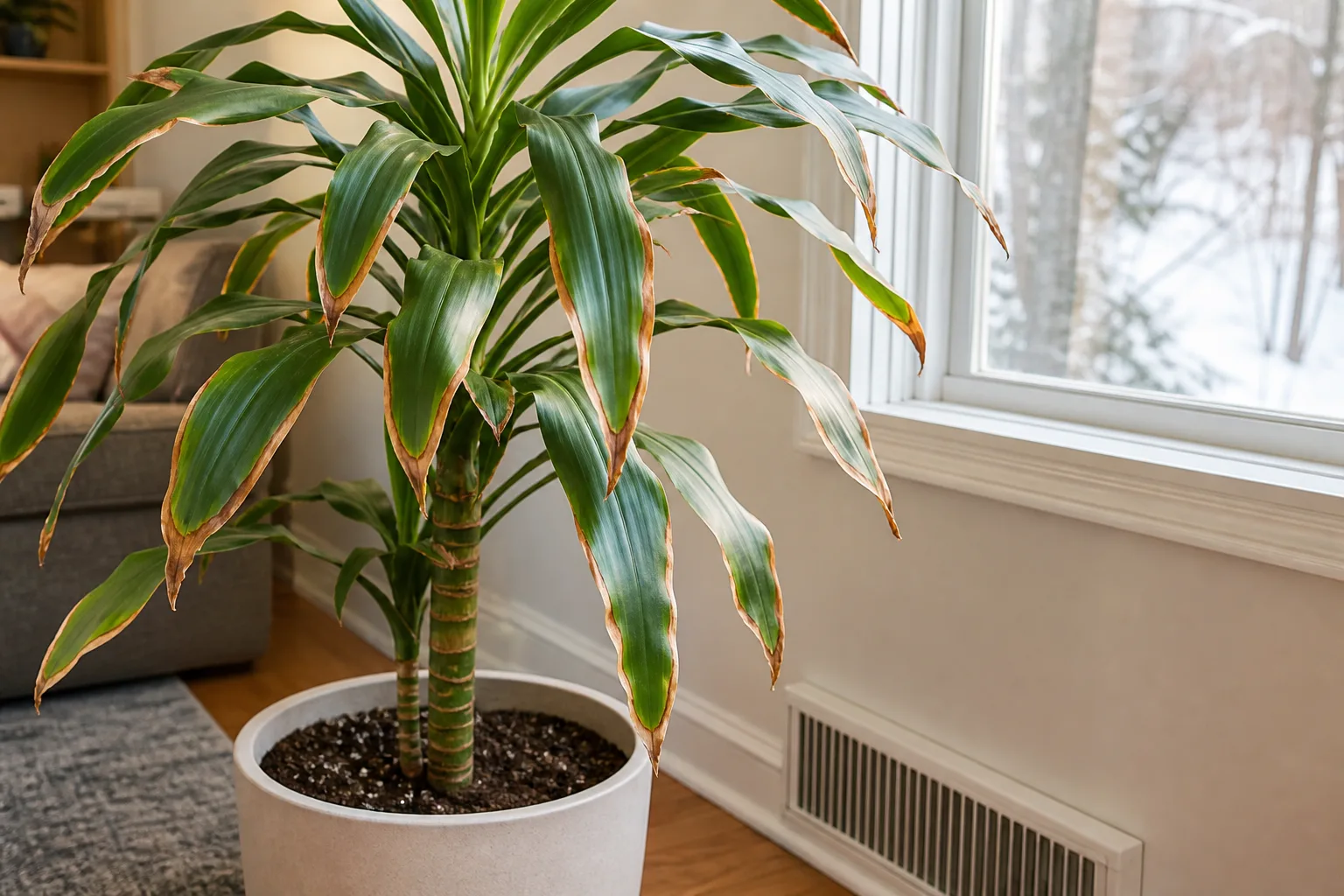
Low humidity on Corn Plant shows as dry brown margins and tips on strap leaves when indoor RH drops below roughly 30–40%-often near heaters in winter-while the cane stays firm and soil moisture is normal. First step: check a hygrometer beside the pot and move the plant away from the nearest heat vent or radiator before buying a humidifier.
Low Humidity on Corn Plant: Causes, Checks & Fixes
This guide covers low humidity on Corn Plant. See also the general Low Humidity guide, watering, and light pages for this plant.
Low Humidity on Corn Plant: Causes, Checks & Fixes
Quick answer
Low humidity on Corn Plant (Dracaena fragrans-the same species sold as mass cane and cornstalk dracaena) means the air around the foliage is too dry for what the leaves are losing through transpiration. On this upright cane plant, dry air rarely collapses the whole plant overnight. Instead, brown or tan crispy margins and tips appear on arching strap leaves-often on older foliage first-while the cane base stays firm and soil moisture looks normal.
First step: place a hygrometer beside the pot for a day and move the plant away from the nearest forced-air vent, radiator, or fireplace. Corn plant tolerates average indoor humidity better than many fussy tropical houseplants, but dry tips and edges are usually caused by too little humidity when house RH drops below roughly 30–40% during winter heating. Only after placement is corrected, add grouping, a pebble tray, or a humidifier targeting 45–55% RH.
Do not soak the soil on day one. Low humidity is an air problem. Brown margins on moist mix with a heavy pot often mean fluoride or salt stress from tap water-a more common primary cause on D. fragrans than humidity alone. Work through the decision table below before stacking fixes.
This guide covers corn plant (D. fragrans). The same species is sometimes listed under the dracaena slug on other sites; one species, one humidity protocol-canonical care for this plant lives under the corn plant hub on LeafyPixels.
What low humidity looks like on Corn Plant
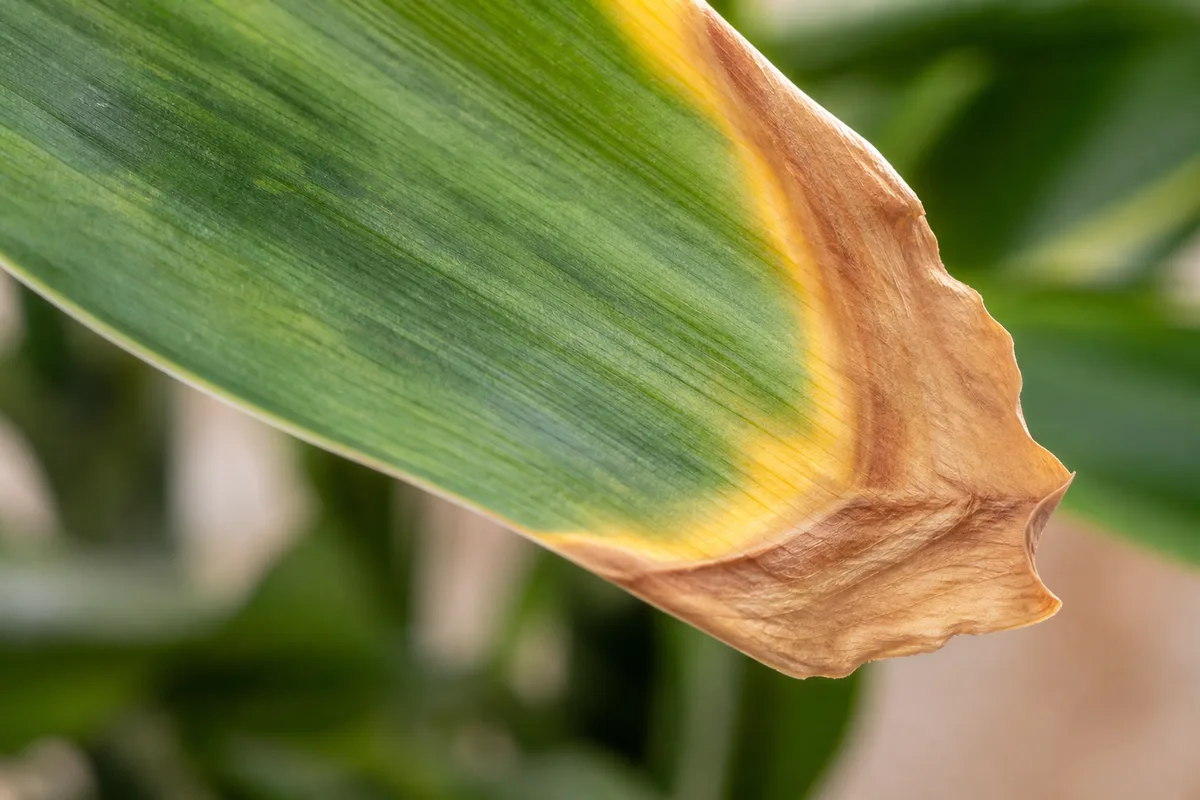
Crispy brown or tan margins on arching Dracaena strap leaves with firm green mid-blade tissue - often worsens each winter near heat vents when RH drops below 30–40%.
Corn plant signals dry air through leaf-edge texture and seasonal pattern, not through soft canes or sour soil. Learn that pattern and you avoid overwatering “tired” leaves or misting without measuring RH.
Leaf signs:
- Crispy brown or tan margins along strap leaf edges-the parallel-veined blades arching from each cane crown
- Dry brown tips that feel papery, sometimes with a narrow yellow band between green tissue and dead margin
- Damage often on older lower strap leaves in the whorl before the crown, because they transpire longest in dry air
- On ‘Massangeana’ and other variegated cultivars, brown bands show sharply against the yellow central stripe-edge burn looks more dramatic than on solid-green Janet Craig types
- Leaves remain otherwise firm and green in the mid-blade; the plant does not wilt like an underwatered specimen
Environmental clues:
- Symptoms worsen or appear each winter when heating runs
- Plant sits within a few feet of a radiator, heat register, fireplace, or space heater
- Hygrometer reads below 30–40% beside the foliage for days
- Only plants in the dry microclimate show margin burn; neighbors across the room look clean
What low humidity does not look like:
- Soft, mushy cane base on wet, heavy soil-that is overwatering or rot, not dry air
- Limp, papery leaves on dust-dry, light pot-see underwatering
- Brown tips only on otherwise turgid leaves with moist soil year-round and no winter RH drop-often fluoride toxicity from tap water first
- Bleached patches on leaves facing a sunny window-sun scorch, not humidity
Missouri Botanical Garden notes leaf tips turning brown can be a symptom of low humidity, incorrect lighting, or high levels of water additives such as chlorine on Dracaena fragrans. Pattern and placement tell you which driver dominates.
Why Corn Plant is more tolerant-and when dry air still matters
Dracaena fragrans is native to tropical Africa and grows in filtered understory light with seasonal rainfall-not the saturated humidity of a steamy greenhouse floor. Indoors, that heritage makes corn plant one of the more humidity-forgiving large foliage plants. Average household RH of 40–50% is usually adequate for firm growth and clean new leaves when water chemistry is also sound.
Dry air becomes a real problem when winter heating pulls RH below 30–40% for weeks. Forced-air systems, radiators, and fireplace drafts create localized deserts around floor specimens while a thermostat three feet away still reads comfortable. Arching strap leaves transpire steadily; when air is dry, margins lose water faster than the vascular system can supply from roots-tissue dies at the edges.
Low humidity rarely acts alone on corn plant. Fluoride in municipal tap water accumulates in leaf margins and is the primary tip-burn driver on D. fragrans and related dracaenas. Dry air accelerates marginal drying once fluoride or salt injury starts, and excessive drying between waterings can also lead to brown tips and margins-so chronic drought stress and low RH can overlap. Placement near a heat vent dries both air and soil unevenly, compounding the symptom picture.
Corn plant is not a calathea. Chasing 70% RH is unnecessary for most homes. The goal is stable moderate humidity and removing hot dry drafts, not turning a living room into a fog chamber.
Low humidity vs. fluoride tip burn vs. underwatering
Use this table before you buy equipment or change watering. Corn plant owners often treat the wrong variable because all three problems brown leaf edges.
| Signal | Low humidity (this page) | Fluoride / salt tip burn | Underwatering |
|---|---|---|---|
| Soil moisture | Normal; top half dries on schedule | Often moist; pot feels moderate weight | Dust-dry deep in pot; very light container |
| Cane base | Firm | Firm | Firm until advanced drought |
| Leaf texture | Crispy margins on multiple leaves | Brown tips; margins on sensitive cultivars | Limp, papery, or curled before crisping |
| Season / placement | Worsens in winter near heat | Year-round with tap water | Any season; missed watering cycles |
| Hygrometer | Below 30–40% near plant | RH may be normal | RH irrelevant; soil is dry |
| First fix | Move from vent; raise RH | Filtered or rainwater; flush salts | Deep soak when soil is dry |
When moist soil, firm cane, low RH, and winter heat align, humidity is confirmed. When moist soil, firm cane, normal RH, and chronic tap-water tips align, start on the brown tips and watering fluoride protocol before humidifier shopping.
How to confirm low humidity
Work through these checks in order. One care correction at a time lets you read the plant’s response over the next two weeks.
- Hygrometer reading - Place a digital hygrometer at foliage height beside the pot for 24 hours. Sustained readings below 30–40% support low humidity; mid-range household RH points you toward fluoride or watering lookalikes.
- Placement audit - Note distance to heat registers, radiators, fireplaces, and cold drafty windows that pair dry air with temperature swings. RHS guidance lists very dry air and proximity to a heat source such as a radiator among causes of brown leaf tips on dracaenas.
- Soil moisture at depth - Finger or skewer halfway into the mix. Evenly moist, cool soil rules out thirst; dust-dry throughout points to underwatering instead.
- Pot weight - A moderate or heavy pot on moist soil with crispy margins fits air stress or fluoride more than drought.
- Cane firmness - Press the lowest segment. Firm and hard supports environmental margin burn; soft on wet mix is rot protocol.
- Seasonal pattern - Margins that appear or spread each November–March in heated homes strongly implicate dry indoor air.
- New growth check - Inspect the crown whorl. Clean new strap leaves after winter ends suggest last season’s damage was environmental, not ongoing rot.
Confirmed diagnosis: RH below target near the plant, crispy margins on strap leaves, firm cane, appropriate soil moisture, worsening pattern near heat.
Suspected but verify: Brown tips only, normal RH, tap water in a fluoridated city-address water chemistry first per the watering guide.
First fix for Corn Plant
Move the pot away from the nearest heat source and measure RH at the new spot for 48 hours.
Drag the container at least three to six feet from active heat registers, radiators, and fireplace blowers. Rotate so arching leaves are not in the direct path of forced air. If the only bright spot is above a radiator, raise the pot on a stand so foliage sits above the heat plume-not on the floor where hot air pools.
That single placement change is the entire first fix. Do not mist, humidify, repot, or fertilize the same day. Corn plant leaves are large; a relocated plant needs one to two weeks to show whether margins stabilize on new tissue.
If RH at the new spot stays below 35% through a heated week, proceed to ranked humidity boosts in the recovery section-not before you have a baseline reading.
Ranked fixes for low humidity (after placement)
Apply these in order after the vent-distance move. Stacking all methods on day one makes it hard to know what helped.
- Correct placement (first fix above) - free, immediate, often sufficient when the plant was directly in a heat plume.
- Group plants - RHS recommends grouping several plants to create a humid microclimate around tropical foliage. A cluster of dracaenas and other leafy plants raises local RH modestly without equipment.
- Pebble tray - Set the pot on pebbles in a saucer with water below the pot base so roots never sit in liquid. MOBOT suggests containers on beds of wet pebbles with regular misting to increase humidity for D. fragrans. The tray helps the immediate canopy more than the whole room.
- Cool-mist humidifier - Run near the plant to target 45–55% RH at foliage height. Empty and clean weekly to avoid mineral dust on leaves. More reliable than misting for sustained winter relief.
- Occasional misting - Clemson HGIC notes plants benefit from occasional foliage misting when house humidity is below 30–40%. Treat misting as a supplement, not the primary fix-it raises RH for minutes and can leave wet spots on strap leaves in cool rooms.
If margins persist after RH is stable, switch irrigation to filtered or rainwater and flush accumulated salts-humidity alone will not reverse fluoride-driven tip burn on this species.
Recovery timeline
Mild margin burn on a few older strap leaves after one dry winter week: placement correction and modest RH improvement often stop new damage within two to three weeks. Existing brown edges stay cosmetic.
Moderate winter stress with widespread margin crisping on lower whorl leaves: expect four to eight weeks of stable humidity before the next crown leaf opens without marginal burn-corn plant grows slowly indoors.
Worsening signs despite normal RH and good placement: soft cane on wet soil, spreading yellow leaves, or sour drain smell-shift to overwatering or root inspection, not more humidity.
Judge success by clean new growth at the cane tips, not by old browned margins greening up. Trim dead edges with clean scissors once two new strap leaves look intact.
Lookalike symptoms
Fluoride tip burn - Brown tips on otherwise firm leaves with moist soil year-round. Primary driver on D. fragrans; see brown tips and the watering guide fluoride section.
Underwatering - Light pot, dusty dry mix throughout, limp papery leaves. Dry air may coexist, but roots need water first.
Overwatering / root rot - Soft cane base, yellow spreading leaves, wet heavy soil, foul smell. More water or misting worsens collapse.
Spider mites - Fine stippling and webbing in hot dry air; margins alone without stippling point to humidity or fluoride, not mites. See spider mites if webbing appears.
Sun scorch - Bleached or tan patches on the leaf side facing direct sun, not uniform margin burn on all leaves.
Normal aging - A single lower strap leaf yellowing and dropping on bare cane below the whorl is common maturity, not humidity stress.
What not to do
Do not overwater because leaf edges look “dry”-soggy soil on corn plant kills faster than dry air. Do not mist heavily every hour as a substitute for a humidifier; wet foliage in cool rooms invites fungal spotting. Do not buy a humidifier before checking RH-you may be fighting fluoride with the wrong tool. Do not fertilize stressed foliage hoping to push green tips; salts compound margin burn on fluoride-sensitive dracaenas. Do not confuse this species with high-humidity tropicals and chase 70% RH in an overheated apartment-fix heat placement first. Do not ignore tap water when tips persist at 45% RH; filtered or rain water may help reduce leaf tip browning on indoor D. fragrans.
How to prevent low humidity stress next winter
Prevention is measuring RH where the plant actually sits, not where the thermostat hangs on the wall.
- Run a hygrometer near floor specimens from November through March in heated homes.
- Keep corn plant off the floor path of heat registers; use a stand if the only bright spot is near a radiator.
- Group plants or run a humidifier before margins crisp, not after every leaf edge has browned.
- Pair humidity care with low-fluoride water year-round-the overview and watering guide cover the chemistry that makes margins vulnerable in dry air.
- Acclimate plants slowly when moving from humid summer outdoors to dry heated indoors; sudden RH drops shock margins on the outer whorl.
- Avoid sealing the plant behind furniture that traps heat from electronics or baseboard units.
Healthy corn plant care combines moderate stable humidity, bright indirect light, and well-drained soil with a real dry-down-humidity fixes air stress; it does not replace sound watering rhythm.
When to worry
Low humidity on corn plant is rarely an emergency. Cosmetic margin burn on firm canes is a comfort adjustment, not a rescue.
Treat as urgent if the cane base softens on wet soil, multiple leaves yellow within days, or pests coat new crown growth-those patterns exceed dry air. Escalate to rot, pest, or watering protocols.
Treat as worth fixing soon when every new strap leaf opens with marginal burn through an entire winter-chronic low RH plus possible fluoride will keep stripping the whorl until environment and water change.
Related corn plant guides
- Watering - fluoride sensitivity, dry-down rhythm, and how humidity interacts with tip burn
- Brown tips - overlapping symptom page when tap water is the primary driver
- Underwatering - light pot and dusty soil lookalike
- Overview - species tolerance, cultivar notes, and baseline humidity expectations
Conclusion
Low humidity on corn plant announces itself through crispy brown margins on firm strap leaves when indoor RH drops below roughly 30–40%-usually near winter heat-while soil moisture stays normal. Confirm with a hygrometer, move away from vents first, then raise local RH through grouping, pebble trays, or a humidifier targeting 45–55%. Fluoride in tap water often starts tip burn before dry air worsens it; switch water and fix placement together when both may apply. Old browned edges do not heal; watch the next crown leaves for proof that air and water chemistry are finally aligned.