How to Propagate Corn Plant: Stem Cuttings & Air Layering
How to Propagate Corn Plant: Stem Cuttings & Air Layering
How to Propagate Corn Plant: Stem Cuttings & Air Layering
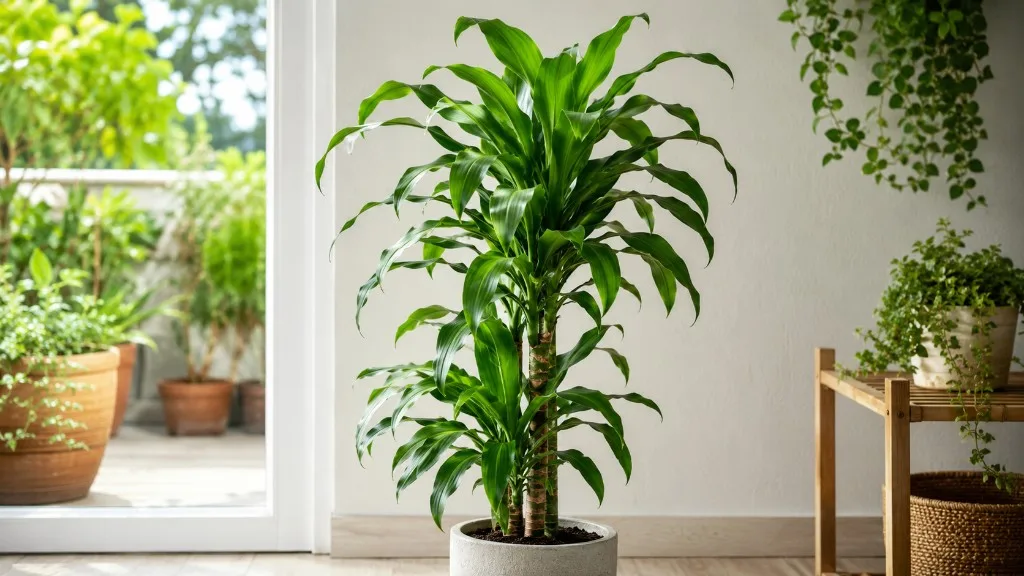
Corn plant propagation is one of the more forgiving projects in indoor gardening - once you understand what kind of tissue actually has the power to restart. Dracaena fragrans, the species sold as corn plant, happy plant, or Massangeana cane, is not a pothos. You cannot drop a single leaf in water and wait for a new plant. Dracaena fragrans propagates by stem cuttings or air layering, and every successful piece must include stem tissue with at least one node or dormant bud. That distinction saves months of frustration.
Most corn plants in homes grow as upright canes: a woody trunk topped with a rosette of strap-shaped leaves. When the plant gets too tall, loses its lower foliage, or you simply want a second plant, you have three reliable paths. Top crown cuttings (sometimes called beheading) give you a leafy new plant fastest. Cane stem sections let you multiply a pruned trunk into several starts. Air layering roots a tall stem while it is still attached to the parent, which reduces stress on large specimens. Leaf cuttings belong on none of those lists.
This guide walks through the anatomy that makes propagation work, when to cut, exactly how to execute each method, what rooting conditions corn plants need, how long to wait, and what happens to the stump you leave behind.
Understanding Corn Plant Stem Structure
Corn plant is a woody-stemmed tropical shrub that behaves more like a thin tree trunk than a soft herbaceous houseplant. In its native range across tropical Africa, Dracaena fragrans can reach tree size outdoors. Indoors it is usually kept as a single or multi-headed cane between 90 cm and 2 m tall, with leaves clustered at the top and bare trunk below as older foliage drops.
Propagation success hinges on nodes - the slightly swollen points along the stem where leaves once attached and where dormant buds sit beneath the bark. Adventitious roots emerge from nodal tissue when moisture, warmth, and oxygen are available. The leafy crown at the tip is simply the newest extension of that same stem; it roots because it carries living stem tissue and nodes, not because the leaves themselves are magical.
Nodes, Buds, and Why Leaves Alone Fail
A corn plant leaf is a blade on a short petiole. Severing a leaf without an attached section of stem and node gives you decoration, not a propagule. The leaf may stay green for weeks in water, but it cannot initiate roots or shoot growth because it lacks the meristematic tissue stored at nodes and in the central pith of the cane.
When you examine a pruned cane, look for rings or slight bumps on the trunk - former leaf scars. Each scar marks a bud that can wake up after the top is removed. A crown cutting taken just below the lowest living leaf includes multiple nodes. A 5 cm cane section needs only one visible bud to produce both roots and a new shoot, though rooting is slower without the photosynthetic advantage of upper leaves.
Why Leaf Cuttings Do Not Work on Dracaena fragrans
If you searched “corn plant propagation” and found advice about rooting individual leaves in water, that guidance does not apply to Dracaena fragrans. Leaf propagation works on plants like African violets, succulents with detachable leaves, and some begonias where a single leaf blade carries enough regenerative capacity. Dracaena species root from stem sections, not isolated foliage (NC State Extension - Dracaena fragrans).
The practical test is simple: if your cutting has no cylinder of stem and no node, it will not become a plant. Social media posts showing a corn plant leaf “rooting” in a jar usually document the leaf staying alive on stored water, not forming a shoot. Eventually the leaf yellows and decays. Meanwhile, a 10 cm stem piece with one node and no leaves at all can still root and push a new rosette - slowly, but reliably.
This matters because beginners often snap off a yellowing lower leaf and treat it like a pothos cutting. Save your effort for stem material. If the only thing you have is a fallen leaf, you do not have a propagation candidate.
Stem Cuttings vs Air Layering: Which to Choose
Both stem cuttings and air layering are legitimate corn plant propagation methods. The right choice depends on plant size, your patience, and how much risk you want to carry.
Stem cuttings - including crown cuttings and cane sections - are the default for most home growers. They are straightforward, need minimal supplies, and let you turn one tall cane into several pieces in a single session. A leafy crown cutting roots fastest because the leaves fuel the process. Bare cane sections work well when you are recycling trunk pieces after a hard prune and you are willing to wait longer for shoots to appear.
Air layering suits tall, leggy plants where you want roots before severing. Because the stem stays attached to the parent plant’s root system while it calluses and roots, the wounded section receives water and sugars from below. That reduces the wilt-and-rot risk that bare cane cuttings face. Air layering is more fiddly - you need moss, plastic wrap, and six to twelve weeks of patience - but it is the safest way to salvage a handsome top from a 1.5 m cane that has gone bald on the lower trunk.
| Situation | Best method |
|---|---|
| Moderate height, healthy top rosette | Top crown cutting |
| Just pruned a long trunk into pieces | Cane stem sections in soil |
| Very tall, mostly bare cane, valuable top | Air layering |
| Weak or pest-stressed parent | Stabilize parent first; take only firm material |
Water propagation and soil propagation are variations within stem cutting - not separate methods on par with air layering. Both are covered below.
Best Timing for Corn Plant Propagation
Timing is less about a calendar date and more about whether the plant is actively growing. Dracaena fragrans roots fastest when temperatures are warm, days are longer, and the parent is pushing visible new leaves from the crown.
Spring and Early Summer Active Growth Window
Spring through early summer is the best window for corn plant propagation in most homes. As light intensity rises and room temperatures settle above 18°C (65°F), metabolic activity increases. The Missouri Botanical Garden notes that Dracaena fragrans grows best in warm conditions and bright indirect light - the same combination that speeds callus formation and root emergence on cuttings.
You can propagate in late summer if the plant is still growing. Avoid taking cuttings in late fall and winter unless you can supply supplemental warmth (ideally 21–27°C / 70–80°F) and bright indirect light. Cuttings taken in a cold, dim room often sit dormant for months or rot before rooting. If your only opportunity is winter, use a soil-based setup with a humidity cover, a heat mat set to low, and distilled or filtered water to avoid fluoride stress on fresh tissue.
Do not propagate a plant that was just shipped, repotted, or recovered from root rot on Corn Plant. Let it sit for two to four weeks and show firm new growth first. Propagation multiplies strength; it does not rescue weakness.
Tools and Rooting Supplies Checklist
Clean tools and the right media matter more than expensive gadgets. Gather these before you cut:
- Sharp bypass pruners or a sterilized knife - wipe blades with rubbing alcohol or a 10% bleach solution between cuts to limit bacterial infection on woody stems.
- Rooting hormone powder or gel (optional but helpful) - indole-3-butyric acid (IBA) products speed root initiation on cane sections; less critical on leafy crown cuttings but still useful.
- Containers with drainage holes - small plastic pots or propagation trays for soil method; a clear glass jar for water method.
- Well-draining rooting medium - equal parts perlite and peat-free seedling mix, or coarse sand blended with potting soil; avoid heavy, water-retentive indoor mix straight from a moisture-retaining bag.
- Clear plastic bag or humidity dome - maintains humidity around soil cuttings without keeping the medium soggy.
- For air layering: moist long-fiber sphagnum moss, clear plastic wrap, twist ties or grafting tape.
- Distilled, rainwater, or filtered water - corn plants are fluoride-sensitive; young cuttings show brown tips faster than established plants when tap water is high in fluoride.
Label each cutting with the date and method. You will forget which jar is which long before roots appear.
How to Take a Top Crown Cutting
The top crown cutting is the fastest way to propagate corn plant because you keep the full rosette of leaves. Growers use this when a plant is slightly too tall, when they want a fresh bushy specimen, or when reshaping a multi-cane pot.
Choose a healthy stem with no pest damage, no soft brown patches, and firm green leaves. Count down from the tip to the lowest healthy leaf. Make a clean horizontal cut 2–5 cm below the lowest leaf, ensuring the cutting includes at least one node below the leaf attachment point. A typical crown cutting ends up 10–15 cm long with several leaves at the top.
Strip the lowest one or two leaves if they would sit below the soil or water line - buried leaves rot. Dip the cut end in rooting hormone if you are using it. If the remaining leaf span is very large relative to the stem, you may roll the longest leaves loosely or trim the tips slightly to reduce water loss; most healthy crown cuttings do fine without trimming.
Preparing and Rooting the Crown Section
For soil rooting, fill a small pot with moist (not wet) perlite-heavy mix. Insert the cutting so the lowest node is buried 2–3 cm deep. Firm the mix lightly around the stem. Water once to settle, then cover with a clear plastic bag supported by stakes so it does not touch leaves. Place in bright indirect light - an east window or a few feet from a south window is ideal.
For water rooting, use a jar tall enough that leaves stay above the rim. Add 2–3 cm of water and suspend the stem so the node sits submerged but leaves stay dry. Change water every five to seven days. Move to soil once roots are 3–5 cm long; water-rooted cuttings transition better when roots are young and white rather than old and brittle.
Expect the first sign of success as new root initials at the node (water method) or resistance when you give a gentle tug (soil method, after several weeks). A new leaf unfurling from the center confirms the cutting is established.
How to Propagate From Cane Stem Sections
When you shorten a tall corn plant, the removed trunk pieces are not waste - each section with a node can become a new plant. This is how nurseries produce multiple canes from one stock plant.
Cut the bare trunk into sections 5–8 cm long, making sure each piece has at least one node or visible bud scar. Use a horizontal cut at the top and bottom of each section so you can tell orientation later; upside-down cane pieces root poorly. Remove any dried leaf remnants.
Lay sections horizontally on moist rooting mix with the node pressed into the medium, or insert vertically with the bottom third buried - both work, though horizontal placement is common in propagation trays because it exposes more nodal surface. Dust the contact point with rooting hormone. Cover with a humidity dome and keep at 21–27°C (70–80°F).
Cane sections without leaves root more slowly than crown cuttings because they have no photosynthesis. Three to eight weeks is typical in warm, bright conditions; bare winter cuttings may take longer. The first visible sign is often a small green bump at a node - a new shoot, sometimes before roots are obvious. Once a shoot appears and roots hold the section when tugged gently, pot individually.
Water Propagation vs Soil Propagation
Both approaches work for corn plant stem cuttings that include nodes. The trade-off is visibility versus stability.
Water propagation lets you watch roots form, which is satisfying and helps you time the move to soil. It suits crown cuttings with a few leaves and growers who want to catch rot early. Downsides: water lacks oxygen compared to a airy mix, so transition shock can occur when you pot up; fluoride and chlorine in tap water can brown leaf tips on sensitive Dracaena cuttings. Use distilled or filtered water and change it weekly.
Soil propagation (or a perlite-heavy mix) skips the transplant step and usually produces sturdier roots adapted to soil from the start. It is the better default for leafless cane sections and for growers who tend to over-handle cuttings in jars. Keep the medium lightly moist, never waterlogged, and vent the humidity cover daily for a minute to prevent mold.
A practical hybrid: start crown cuttings in water until roots are 2 cm, then move to a small pot of loose mix under humidity cover for two weeks before treating as a normal plant. For cane sections, go straight to soil.
Air Layering Step by Step on a Leggy Corn Plant
Air layering encourages roots on a stem that is still attached to the parent plant. Use it when you have a tall, mostly bare cane with a healthy leafy top you do not want to gamble on a bare cutting.
Select a point on the trunk 30–60 cm below the lowest leaves - or wherever you want the new root ball to form. Make an upward-angled cut one-third of the way through the stem, just below a node, or remove a 2–3 cm ring of bark (girdling) at that node. Insert a toothpick or small twig to hold the wound open if you used a slit cut. Dust the exposed inner wood with rooting hormone.
Wrapping, Waiting, and Severing the New Plant
Soak long-fiber sphagnum moss in water, squeeze out excess so it is moist but not dripping, and wrap a generous handful around the wounded node. Cover the moss with clear plastic wrap, sealing above and below the moss ball with twist ties or tape so moisture stays in and you can see root progress without unwrapping.
Keep the parent plant in its normal bright indirect light location and maintain ordinary watering - the existing root system supports the layered section. Check the moss monthly; if it dries out, inject a little water with a syringe through the plastic.
Roots typically appear in six to twelve weeks in warm conditions. When you see a solid root mass through the plastic, sever the stem 2–3 cm below the moss ball with a clean cut. Remove the wrap, plant the new top in a pot sized to the root ball with well-draining loamy mix and perlite, and water once. The parent stump below the cut will usually sprout new buds within weeks.
Creating the Right Rooting Environment
Corn plant cuttings are not demanding, but they are consistent. Four variables control outcomes: light, temperature, humidity, and oxygen at the root zone.
Light: Bright indirect light is the target. Direct sun through glass scorches leaves and overheats humidity tents. A dim corner slows rooting enough that rot wins before roots form. If you use a grow light, keep it at low intensity and 30–45 cm above the cutting.
Temperature: Rooting proceeds fastest at 21–27°C (70–80°F). Bottom heat from a propagation mat set to ~24°C helps cane sections in spring. Avoid drafts from air conditioners directly on the setup.
Humidity: High humidity around the leaves reduces water loss while roots are absent. A clear cover achieves this; vent daily to prevent fungal growth. Humidity around leaves does not mean saturated soil - the medium should feel like a wrung-out sponge.
Oxygen: For soil and moss setups, perlite, coarse sand, or bark chunks keep air pockets open. Soggy, compacted mix is the main cause of stem rot on Dracaena cuttings.
How Long Rooting Takes and What to Expect
There is no single answer, but realistic ranges prevent premature discarding of slow cuttings.
Leafy crown cuttings in warm, bright conditions: first roots in 3–6 weeks in water; similar in soil with humidity cover. Establishment - enough root mass to pot normally - often takes 6–10 weeks.
Leafless cane sections: 4–8 weeks to root and push a shoot in good conditions; longer in cool rooms.
Air layering: 6–12 weeks until you see a moss ball full of white roots worth severing.
Winter adds weeks or months. A cutting that looks idle may still be callusing - the wound seals before roots emerge. Patience combined with firm, non-mushy stem tissue is a good sign. Mushy stem, sour smell, or black nodes mean failure, not slowness.
Potting Up and Aftercare for New Corn Plants
Move a cutting to its own pot when roots are at least 3–5 cm long and preferably pale, firm, and branching. Choose a pot only slightly larger than the root mass - corn plants prefer stable, moderately tight conditions early on. Use well-draining loamy potting mix with perlite, the same philosophy as mature corn plant care.
Water thoroughly once after potting, then let the top half of the mix dry before watering again. Do not fertilize for the first six to eight weeks; new roots are easily burned. Keep the plant in bright indirect light and average household humidity (40–50%). Watch for brown leaf tips, which often signal fluoride or low humidity stress on young Dracaena plants - switch to distilled or filtered water if tips brown despite correct watering.
The first month is about boring stability. Resist Corn Plant repotting guide again, moving between rooms, or overwatering on Corn Plant because the pot looks small. New center growth is the milestone that tells you propagation succeeded.
Parent Plant Recovery After You Cut
Propagating corn plant is a two-part story: the cutting above and the stump below. After you remove the crown or air-layer a section, the remaining cane is not dead. Dormant buds along the trunk wake up when apical dominance from the top is removed.
Within two to eight weeks in active growth season, you should see one or more new shoots emerging from nodes below the cut - sometimes a single dominant shoot, sometimes two or three smaller heads that you can leave for a bushier look or thin later. Keep the parent in the same light it had before pruning. Water when the top half of the soil is dry, as you would for any established corn plant.
If no shoots appear after two months during warm weather, the stump may lack viable buds on the remaining section, or the plant may be too stressed. A healthy cane rarely refuses to branch; give it time and consistent care before assuming failure.
Troubleshooting Failed or Slow Propagation
Most propagation failures trace to wrong tissue, wrong moisture, or wrong season - not bad luck.
Stem turning mushy at the base: Medium too wet or insufficient airflow. Discard the cutting; start fresh with drier mix and a vented humidity cover. Cane sections are especially vulnerable.
Cutting shriveling with dry medium: Too little humidity around leaves (crown cuttings) or excessive heat without water replacement. Increase humidity cover effectiveness; check that nodes in water remain submerged.
No roots, no rot, months passing: Often cool temperatures or a dormant season. Add gentle bottom heat and confirm bright indirect light. If the stem stays firm, waiting is reasonable.
Roots in water but plant collapses after potting: Roots were too few or transplant shock was severe. Pot earlier while roots are white and tender; maintain humidity cover for two weeks after transfer.
Blackened nodes on cane sections: Bacterial or fungal infection from unsterilized tools or buried rotten leaf bases. Cut back to clean tissue or discard.
Leaf tips browning on otherwise rooted cutting: Frequently fluoride in tap water - documented sensitivity in Dracaena species. Switch water source; do not increase fertilizer to “fix” it.
When in doubt, compare your setup against a healthy crown cutting in the same room. If one jar roots and another rots, the difference is usually tissue quality or water level, not the plant species.
Conclusion
Propagating corn plant (Dracaena fragrans) is reliable when you work with stem tissue that carries nodes - not individual leaves. Stem cuttings split into fast leafy crown cuttings and slower bare cane sections; air layering protects large tops on leggy specimens until roots are ready. Spring and early summer give the shortest timelines, but warmth, bright indirect light, and a humid yet airy rooting setup matter more than the calendar.
Choose crown cuttings for speed, cane sections to multiply pruned trunks, and air layering when the plant is tall and you want roots before you cut. Use distilled or filtered water if fluoride browns your leaves. Leave the parent stump in place and watch for new shoots below the cut. With clean tools, realistic timelines of three to twelve weeks depending on method, and patience through the boring middle phase, one corn plant becomes two - or more - without buying another pot.
When to use this page vs other Corn Plant guides
- Corn Plant overview - Start here for whole-plant context before deep-diving this topic.
- Corn Plant problems hub - Jump to symptom-specific fix guides when this care topic does not resolve the issue.
Related Corn Plant guides
- Corn Plant overview
- Corn Plant watering
- Corn Plant light
- Corn Plant soil
- Corn Plant fertilizer
- Corn Plant repotting
- Corn Plant problems
Related tool
Try the Propagation Success Calculator with corn-plant pre-selected to estimate needs for your setup.