Corn Plant Repotting: When, How, and Mistakes to Avoid
Corn Plant Repotting: When, How, and Mistakes to Avoid
Corn Plant Repotting: When, How, and Mistakes to Avoid
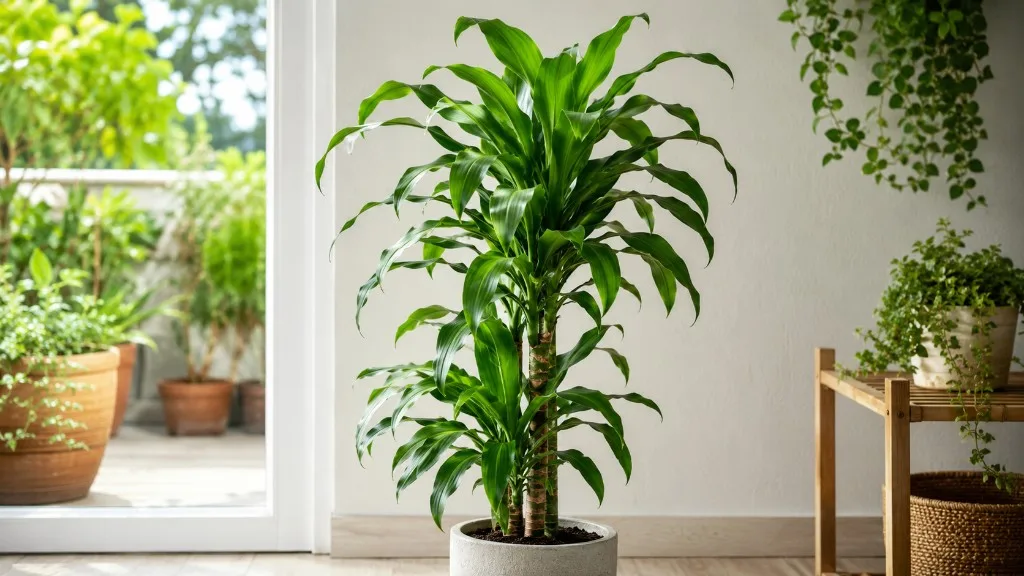
A mass cane corn plant in a five-foot office lobby looks like it needs a mansion of a pot - three woody canes, broad strap leaves, and a trunk diameter that suggests deep roots. In practice, Dracaena fragrans keeps a modest root mass relative to its height, grows on a slow timetable compared with pothos or spider plants, and punishes repotting mistakes through brittle roots, fluoride-sensitive leaf tips, and weeks of stalled growth when fresh mix stays wet too long. This page is the species repotting hub for corn plant and its cultivars - including ‘Massangeana’, ‘Warneckii’, and ‘Lemon Lime’ - with workflows tuned to cane architecture, not generic houseplant templates. For day-to-day watering rhythm and soil basics, start with the corn plant watering guide and soil guide; this article covers when the root zone - not the calendar - demands a move.
Quick Answer
Repot corn plant (Dracaena fragrans) every two to three years when roots circle the pot, water runs straight through without soaking in, growth stalls in active season, or the plant lifts out of its container - not on autopilot every spring. NC State Extension advises repotting into a larger pot when the plant starts to lift out or sends roots through drainage holes. Choose a container only 1 to 2 inches (2.5 to 5 cm) wider than the current one, with drainage holes. Repot in mid-spring through early summer when new leaves are unfurling. Use fresh loamy indoor mix with perlite, disturb brittle roots minimally, water conservatively for two to three weeks afterward, and withhold fertilizer for four to six weeks. Multi-cane specimens need extra attention to tilting and staking during the move. Size the pot to root mass, not cane height.
Why Dracaena fragrans Repotting Differs From Faster Houseplants
Corn plant belongs to Asparagaceae and is native to tropical Africa, where it grows as an understory shrub with an unbranched woody stem and spirally arranged strap leaves. Indoors it typically reaches 4 to 6 feet in a container - sometimes taller on mature mass-cane specimens - while the root system stays comparatively compact. NC State lists slow growth as a defining trait, which means repotting intervals stretch longer than for fast herbs or trailing vines.
That biology drives three repotting rules other houseplants do not share as strongly. First, cane height deceives: a 6-foot plant may still fit a 10- or 12-inch pot if roots are healthy, and jumping to a 16-inch decorative planter because the canes look tall is the fastest route to post-repot rot. Second, roots are brittle - bare-rooting or aggressive washing removes fine hairs that handle uptake, and cracked canes during careless tilting are a real risk on large specimens. Third, fluoride and salt sensitivity means repotting is sometimes a soil-quality intervention: fresh mix plus better water addresses tip browning that pot diameter alone cannot fix. If you own a different dracaena species - marginata dragon tree, for example - use the genus Dracaena repotting guide for species-level differences in root depth and cane structure.
How Often Corn Plant Needs Repotting (Signal-Based, Not Calendar)
Most healthy indoor corn plants need a full repot every two to three years, not annually. Young plants pushing steady new leaves in bright indirect light may reach the edge of a nursery pot closer to two years. Large slow-growing mass-cane plants with stable watering rhythm can go three years or longer if mix still drains and roots are not circling. The interval is a check-in, not a command - slide the plant partway out in spring and inspect the root ball before committing.
Between full repots, a top-dress - scraping the top 2 to 3 cm of degraded mix and replacing it with fresh perlite-amended soil - can refresh structure without disturbing roots when only the surface has crusted or salts have built up. Reserve full repots for when two or more signal-cluster signs appear together (see below) or when you find rot during inspection. Repotting on a fixed calendar without signals disturbs slow-growing plants that were content; waiting too long after clear root-bound signs causes chronic drought stress and salt buildup that mimic watering errors. Cross-check your post-repot watering against the watering guide rather than copying your old schedule onto a larger soil volume.
| Source guidance | Interval | Trigger emphasis |
|---|---|---|
| NC State Extension | When roots lift plant or exit holes | Signal-based, not calendar |
| Missouri Botanical Garden | Refresh when mix compacts | Soil structure + drainage |
| This guide (signal cluster) | 2–3 years typical | Roots + drainage + growth stall |
Signs Your Corn Plant Is Ready - Root Zone vs. Tip Browning
Corn plants tolerate slight root-binding better than many tropicals. Act when multiple root-zone signals cluster, not when a single root tip appears at one drainage hole.
Root-Bound and Drainage Clues
The strongest indicators are practical. Roots circling densely around the bottom and sides when you slide the plant out mean the container is outgrown. Roots emerging from multiple drainage holes or lifting the plant so the root ball sits higher than before are stronger signals. Water running straight through within seconds while the top feels barely damp usually means the root mass has displaced water-holding soil and channels have formed along pot walls. Mix drying unevenly - wet center, dry edges - often indicates compaction plus congestion. A sour smell from the drainage hole suggests anaerobic conditions; white salt crust on the surface that returns after flushing points to mineral buildup, common with fluoridated tap water on dracaenas sensitive to fluorides and built-up salts.
Growth and Stability Signals
Above the soil line, watch for absent new leaf production for six months during spring and summer despite adequate light and feeding. Top-heaviness - a tall cane wobbling because roots no longer anchor firmly - is structural, especially on office specimens with multiple canes in one pot. Lower leaf yellowing combined with any root-zone symptom is more urgent than yellowing alone, which can reflect overwatering on Corn Plant or natural senescence.
Brown leaf tips do not automatically mean repot. Tip browning on D. fragrans frequently ties to fluoride and chlorine in tap water, low humidity, or fertilizer salt - not pot size. Clemson HGIC notes dracaena fluoride injury as yellowing tips or scorched margins; switching to filtered or rainwater may solve the problem without transplanting. Treat tip burn as a separate diagnostic thread unless it appears with root-bound or soil-degradation signals.
Best Time of Year to Repot Corn Plant
Timing matters because corn plant root recovery is slow. Repot during active growth when the plant can repair roots and colonize fresh mix; avoid routine winter moves unless the situation is urgent.
Spring and Early Summer Window
Mid-spring through early summer is ideal in most temperate homes. As daylight lengthens and indoor temperatures stabilize above roughly 65°F (18°C) - within the 60–75°F range Missouri Botanical Garden recommends - Dracaena fragrans shifts into steady vegetative growth. Roots extend more actively, so re-establishment is faster and new leaves appear sooner. March through June works for most Northern Hemisphere growers; the exact month matters less than visible growth - if crown leaves are unfurling, timing is right.
A spring repot gives months of favorable conditions before fall slowdown. That runway reduces rot risk from overwatering in uncolonized mix because transpiration stays high enough to pull moisture through the root zone at a healthy rate.
Winter Emergency Exceptions
Avoid routine winter repotting. From late fall through early winter, growth slows, root activity drops, and disturbed roots sit in moist mix without transpiration demand to dry it - the classic setup for root rot on Corn Plant after repotting. Two exceptions justify winter action: active root rot (mushy roots, sour mix, soft cane at soil line) requiring immediate trim and fresh mix in an appropriately smaller pot; and severe root binding causing chronic drought stress or dangerous tipping on a large plant. In both cases, water sparingly afterward, keep bright indirect light, skip fertilizer, and expect slower recovery than a spring move.
Choosing Pot Size: Match Root Mass, Not Cane Height
Pot selection is the highest-stakes decision in corn plant repotting. Get diameter wrong and perfect soil, careful timing, and gentle handling can still fail.
Pot-Size Reference Table and Worked Example
Choose a new container only 1 to 2 inches (2.5 to 5 cm) wider in diameter than the current pot. Every pot needs drainage holes. If you trimmed significant rot, step down to a smaller pot fitting the reduced root mass.
| Current inner diameter | Recommended next diameter | Notes |
|---|---|---|
| 6 in (15 cm) | 7–8 in (18–20 cm) | Young single-cane plants |
| 8 in (20 cm) | 9–10 in (23–25 cm) | Standard floor specimen |
| 10 in (25 cm) | 11–12 in (28–30 cm) | Common mass-cane office size |
| 12 in (30 cm) | 13–14 in (33–36 cm) | Mature; verify roots warrant jump |
| 14 in (35 cm) | 15–16 in (38–41 cm) | Only if root ball fills current pot |
Worked example: A 5-foot mass cane in a 10-inch nursery pot has roots circling the bottom third but a cane spread of 18 inches above the soil. The correct next pot is 11 or 12 inches wide - not a 14-inch decorative planter matched to cane height. Before buying, slide the plant out: if the root ball is only 7 inches wide, an 11-inch pot is appropriate; if roots are sparse after rot trimming, an 10-inch refresh with new mix may be safer than any upsizing. Depth should match root ball height roughly - excess depth creates a wet lower zone roots cannot colonize quickly. Terra cotta dries faster than plastic; either works with drainage discipline.
Multi-Cane and Mass Cane Repotting
Mass cane plants - typically Dracaena fragrans ‘Massangeana’ with yellow central stripes - are often sold with two to four canes rooted in one shared root ball. Repot the entire cluster as one unit unless you are deliberately dividing propagated cuttings. All canes share one root system; refreshing that zone improves every stem above it.
Multi-cane repotting adds stability risk. Tall grouped canes outweigh a modest root ball, and tilting the pot to slide it out can snap brittle canes at the soil line. Use a second person or support the cane bases with one hand while tipping with the other. Never yank by the stem. For specimens above 4 feet, lay the pot on its side on a tarp, tap the rim, and rotate gently rather than inverting abruptly.
After repotting, stake wobbly canes until new roots grip fresh mix - soft plant ties to a bamboo stake placed among stems, never wire cutting bark. Do not bury canes deeper to stabilize; that invites stem rot. Match pot weight and width to canopy spread: a narrow tall cachepot inside a heavy outer planter often tips; consider a wider base or weighted saucer for lobby specimens. Clemson HGIC describes ‘Massangeana’ as growing 4 to 5 feet on stout tan stems with a 2-foot spread - plan pot stability accordingly.
Best Soil Mix: Fluoride-Aware Refresh
Use well-draining loamy indoor potting mix amended with perlite - not garden soil, not pure peat, not moisture-retention outdoor blends. The Missouri Botanical Garden recommends loamy, peaty, well-drained potting soil for container corn plant. A practical recipe: two parts quality indoor potting mix, one part perlite, with a handful of orchid bark if your home runs humid or you water heavily. Target slightly acidic to neutral pH near 6.0 to 6.5, which standard mixes approximate; Clemson advises keeping soil pH between 6.0 and 6.5 to reduce fluoride injury.
Fresh mix at repot removes accumulated minerals - pair with filtered or rainwater if tip burn has been recurring. Do not reuse old mix. Avoid fertilizers with superphosphate after repot; Clemson HGIC warns they often carry high fluorine levels.
Variegated Cultivar Notes During Root Disturbance
Variegated forms - ‘Massangeana’, ‘Warneckii’, ‘Lemon Lime’, ‘Limelight’ - share D. fragrans repot biology but often carry less chlorophyll per leaf, so they recover slightly slower from root disturbance and need stable bright indirect light after the move without direct sun stress. NC State lists numerous cultivars including ‘Massangeana’ (mass cane) and ‘Compacta’ (Janet Craig). Repot timing and pot-sizing rules are identical; expect longer shock windows on heavily variegated specimens and avoid stacking repot with pruning or fertilizer the same week. Janet Craig (‘Compacta’) has denser, shorter leaf clusters on more compact stems - repot mechanics match this guide; cultivar-specific leaf traits are covered on the Janet Craig repotting page for growers who want compact-form nuance only.
Step-by-Step Corn Plant Repotting Guide
Allow 20 to 40 minutes for a typical indoor corn plant. Work calmly - rushing breaks roots and canes.
Water one to two days before, not the morning of. Moist mix holds the root ball together. Gather a new pot 1 to 2 inches wider with drainage holes, fresh mix, sterilized scissors, a chopstick for settling soil, tarp or newspaper, and optional gloves. For tall plants, prepare post-repot placement in bright indirect light away from drafts.
Remove the plant: Tilt or lay the pot on its side, support cane bases, tap the rim, and slide the root ball out. Run a knife around stuck nursery pots. Do not pull by the stem.
Inspect roots: Healthy tissue is firm, white to tan, and flexible. Trim mushy black rot to healthy tissue with sterilized scissors. Tease circling outer roots gently with fingers; cut only if tightly matted. Do not bare-root or wash all soil away - keep the core root mass intact.
Plant at the same depth - burying the cane deeper invites stem rot. Fill around sides with fresh mix, chopstick-settle gaps without heavy compaction, leave 2 to 3 cm headspace below the rim, water lightly to settle, then hold full soak until the top inch dries unless the root ball was very dry entering the move.
Watering, Light, and Care After Repotting
Post-repot problems almost always trace to overwatering in fresh mix. For two to three weeks, water more conservatively than normal - check the top inch to two inches; water until a small amount exits drainage holes, then empty the saucer. Roots have not colonized outer soil, so it stays wet longer than the surface suggests.
Keep bright indirect light - same as before or slightly less if the plant was in a high-light spot. Avoid direct sun for two weeks. Maintain 65–80°F (18–27°C) away from cold windows and HVAC vents. Do not fertilize for four to six weeks; fresh mix holds starter nutrients, and feeding recovering roots adds salt stress. Resume balanced fertilizer at half strength only after new leaf unfurling - the clearest recovery signal. Align ongoing watering with the corn plant watering guide once the pot dries on its normal rhythm.
Recovery Timeline and Transplant Shock
Mild droop, brief growth pause, or one or two lower leaves yellowing within two weeks is normal transplant shock - energy redirects to root repair. Expect visible recovery in two to four weeks during active season, with full root colonization in four to six weeks. Winter emergency repots take longer. Damaged leaves will not green up; judge success by new crown growth, not old blemishes.
Seek another diagnosis if sustained wilting or widespread yellowing continues beyond three weeks without new growth - check overwatering first, then remaining rot, then pot oversizing. Another move into a smaller appropriately sized container may be needed.
Common Repotting Mistakes on Corn Plant
Jumping to an oversized pot drowns roots in unused wet soil - one size up, every time. Repotting on a calendar without inspecting roots disturbs content slow growers. Bare-rooting brittle roots removes uptake hairs. Garden soil indoors compacts and holds moisture. Fertilizing immediately burns recovering tissue. Overwatering during recovery is the most common post-repot error - finger-test before every drink. Repotting a newly purchased plant on day one stacks acclimation stress; wait four to six weeks unless clearly root-bound or rotting (see overview). Burying canes deeper for stability invites rot - stake instead. Tilting tall mass cane without support cracks stems - use two hands or a helper.
Corn Plant Repotting and Pet Safety
All parts of corn plant (Dracaena fragrans) contain saponins toxic to cats and dogs per the ASPCA cornstalk plant listing. Ingestion can cause vomiting, drooling, weakness, and appetite loss. Repotting temporarily increases exposure - disturbed soil, trimmed roots, and sap from cuts are accessible if pets investigate. Keep pets out of the workspace, clean spills promptly, and contact your veterinarian or ASPCA Poison Control if ingestion is suspected.
Which Repot Guide Should You Use?
| Your plant | Use this guide | Why |
|---|---|---|
| Corn plant, mass cane, Warneckii, Lemon Lime (D. fragrans) | This page | Species hub for D. fragrans repot biology |
| Janet Craig (‘Compacta’) only | Janet Craig repotting | Compact leaf habit deltas |
| Dragon tree, marginata, other dracaena species | Genus Dracaena repotting | Different cane structure and root depth |
Shared D. fragrans advice lives here; cultivar pages link back rather than duplicating full workflows.
Conclusion
Corn plant repotting succeeds when you match pot size to root mass, not cane height - the single species-hub takeaway most office-plant owners miss. Repot every two to three years on signal clusters, not calendar autopilot; move up one pot size with drainage; refresh fluoride-aware mix in spring; handle mass cane specimens with staking and two-handed tilting; and water conservatively until new leaves unfurl. Link the move to the rest of the cluster - overview, soil, watering, light - and Dracaena fragrans will settle into fresh mix without the month-long pause that oversized pots and bare-rooting invite.
When to use this page vs other Corn Plant guides
- Corn Plant overview - Start here for whole-plant context before deep-diving this topic.
- Corn Plant problems hub - Jump to symptom-specific fix guides when this care topic does not resolve the issue.
- Root Rot on Corn Plant - Escalate here when repotting adjustments are not enough.
Related Corn Plant guides
- Corn Plant overview
- Corn Plant watering
- Corn Plant light
- Corn Plant soil
- Corn Plant propagation
- Corn Plant fertilizer
- Root Rot on Corn Plant
- Corn Plant problems
Related tool
Try the Pot Size Calculator with corn-plant pre-selected to estimate needs for your setup.