Best Soil for Corn Plant (Dracaena fragrans): Mix, Drainage
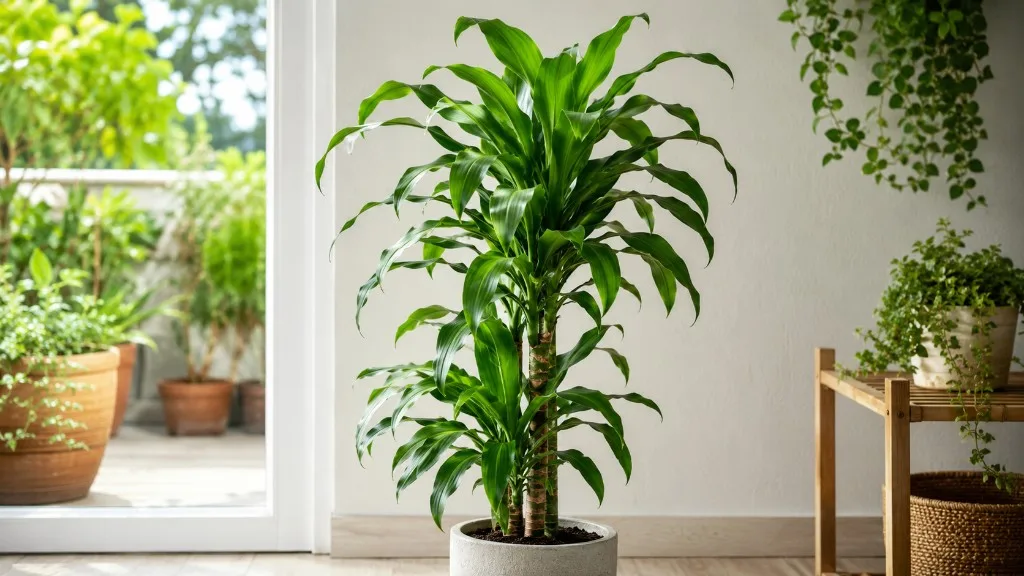
Best Soil for Corn Plant (Dracaena fragrans): Mix, Drainage & Repotting
Best Soil for Corn Plant (Dracaena fragrans): Mix, Drainage & Repotting
The mass cane on your office credenza can look immaculate for months while its root zone quietly fails. Dracaena fragrans - sold as corn plant, striped dracaena, and mass cane - is built for tropical African forest floors, not for dense peat sitting in an oversized decorative pot under fluorescent light. Wide, arching leaves transpire steadily even in dim rooms, but slow photosynthesis means the mix dries far slower than it would beside a sunny window. By the time lower leaves yellow or tips brown, the problem often started in soil structure and pot size, not in a single bad watering.
This guide covers the mix, the pot, and the refresh schedule that keep corn plant roots breathing. For how often to water once the mix is right, see our corn plant watering guide. For fertilizer chemistry that interacts with soil salts and fluoride, see corn plant fertilizer. Full repot timing and stress recovery live on the repotting guide, and species background on the corn plant overview.
Why Dracaena fragrans Roots Fail in the Wrong Mix
Corn plant roots are thick and cane-like, with limited fine root hairs compared to ferns or pothos. They store water in woody stems, which masks underwatering on Corn Plant for weeks - but also hides chronic saturation until stem tissue rots. Clemson University’s Home & Garden Information Center notes that root rot on dracaenas usually traces to a mix that does not drain quickly or to watering before the upper soil has dried.
The failure pattern is predictable indoors. Bagged potting soil straight from the store is often peat-heavy. In a 10-inch plastic pot under office light, that blend can stay damp at the bottom for ten to fourteen days after a single thorough watering. Roots in the lower third lose oxygen first. Leaves may stay green while the root system contracts. When symptoms appear - brown tips, yellow lower leaves, or a soft cane base - growers blame fluoride or humidity. Those matter, but dense, slow-draining mix is the enabler.
Garden soil and topsoil fail faster. They compact in containers, collapse pore space within weeks of repeated watering, and introduce pathogens concentrated in a small root volume. Corn plant needs an engineered container mix - loose, organically rich, and fast-draining - not outdoor dirt.
Mass Cane vs. Single-Stem: Does Pot Size Change the Recipe?
Retail corn plants are often sold as mass cane: three or more canes of different heights rooted in one nursery pot. That multi-stem habit changes how soil behaves even when the recipe stays the same.
Office Light and Slower Dry-Down
A mass cane in a north-facing office uses water slowly. Transpiration drops, so the same 60/20/20 blend that dries in five days beside a bright filtered window may take eighteen to twenty-one days in a cubicle. The risk is not underwatering - corn plant tolerates dry-back - but chronic bottom wetness when someone waters on a calendar instead of checking moisture.
Editorial drying log (one month after repot, 10-inch mass cane, north office): Day 0 - thorough water, pot weight heavy. Day 7 - surface dry, lower half still cool and slightly heavy; no water. Day 12 - top half dry by finger test; light water until runoff. Day 19 - surface dry again; lower mix still moist. Day 24 - full dry-back to halfway; water. No new tip burn; one lower yellow leaf (normal aging). Takeaway: office specimens need more perlite or bark (shift toward 50/30/20) than the same recipe in a bright living room.
Pair soil adjustments with the light guide - dim rooms and dense mix compound each other.
Weight and Stability for Tall Floor Specimens
Single-stem corn plants and tall mass cane floor specimens above five feet can topple in lightweight mix. UF IFAS publication EP149 on interiorscape dracaena production recommends adding 10–20% coarse sand to media for larger container plants to increase weight and resist tipping. Indoors, a modest swap - replacing part of the perlite fraction with pumice or adding a handful of coarse sand per gallon of mix - lowers center of gravity without turning the pot into a waterlogged brick.
Do not solve stability by oversizing the pot. A root ball in a pot two sizes too large sits in unused wet mix for weeks. Stabilize with pot weight and a heavy ceramic outer pot, not extra soil volume.
How Corn Plant Grows in Tropical Africa
Dracaena fragrans is native to tropical Africa, where it grows as an understory shrub with unbranched woody stems and spirally arranged, corn-like leaves (NC State Extension Gardener Plant Toolbox - Dracaena fragrans). Roots spread through decomposed leaf litter and loose organic material over well-drained forest soil. Rain is regular, but the substrate drains quickly because of structure - not because the plant stands in standing water.
Missouri Botanical Garden recommends organically rich, consistently moist, well-drained potting soil in bright indirect light for container culture - a direct translation of that forest-floor texture. Indoor growers should mimic lightness and steady moisture, not heavy garden earth.
Cultivar Notes: Massangeana, Janet Craig, and Lemon Lime
Mix ratios do not change dramatically by cultivar, but leaf width and density affect drying speed. ‘Massangeana’ (mass cane) carries broad leaves with yellow central stripes - more transpiring surface in bright light, but often slower dry-down in dim offices. ‘Compacta’ (Janet Craig) has shorter, denser leaf clusters on shorter stems; slightly less water demand, but the same drainage requirements. ‘Lemon Lime’ and other variegated forms need brighter light to maintain color; in low light they use less water, which makes aeration even more critical.
None of these cultivars tolerate boggy mix. Variegation does not grant extra moisture tolerance.
The Three Jobs Your Mix Must Perform
Every corn plant soil must balance three properties simultaneously:
- Drainage - excess water exits within minutes of watering, not hours.
- Aeration - pore spaces stay open so roots respire when the mix is moist.
- Moisture retention - the root ball does not go bone-dry between waterings.
Weak performance in any one area produces problems fertilizer and better lighting cannot fix. A mix that drains the top inch but stays saturated at the bottom is worse than evenly drying loam, because the top-half-dry rule encourages you to water while the lower roots still suffocate.
Perlite, pumice, and orchid bark create stable pores. Peat and coco coir hold water in those pores without eliminating them. Over time, organic matter decomposes and roots fill the pot - refresh before structure collapses.
Best DIY Soil Mix for Corn Plant
The best starting point for most homes is 60% quality indoor potting soil, 20% perlite or pumice, and 20% peat moss or coco coir. The result is a loose loam that holds moisture for one to two weeks in a typical 8–10 inch pot under average indoor light, drains within two to three minutes, and stays slightly acidic.
Base recipe (one repot):
- 60% indoor potting mix - labeled for houseplants or tropicals. Skip moisture-control gels and heavy compost-only bags.
- 20% perlite or pumice - opens structure. Pumice adds weight for tall specimens.
- 20% peat or coco coir - moisture buffer without brick-like compaction.
Optional amendments:
- 10–15% orchid bark (¼–½ inch) - slows compaction in pots kept two or more years.
- Small handful of worm castings - gentle organic matter; do not exceed 10% of total volume.
- Slow-release granules - only at repot, only if free of superphosphate; see fertilizer guide for fluoride interaction.
UF IFAS EP149 notes that dracaena media should have good moisture capacity and aeration with pH 6.0 to 6.5 - the same range that supports healthy nutrient uptake and limits fluoride availability in production settings.
Fast-Draining and Moisture-Retentive Variants
| Situation | Ratio (soil : perlite/pumice : peat/coir) | When to use |
|---|---|---|
| Standard home | 60 : 20 : 20 | Bright filtered light, attentive dry-back checks |
| Office / low light | 50 : 30 : 20 (+ optional 10% bark) | Slow dry-down, risk of bottom wetness |
| Very dry winter air, bright window | 50 : 15 : 35 | Frequent wilting between waterings despite healthy roots |
| Post–root rot recovery | 50 : 35 : 15 | After trimming rot; see root rot guide |
Shift one component at a time and log pot weight for two weeks before changing again.
Ready-Made Mixes Worth Buying (and What to Amend)
Not everyone batches mix on the patio. Commercial indoor potting soil works if you amend it - most bagged blends drain too slowly for D. fragrans alone. Mix one part perlite or bark to every two parts bagged soil before potting.
NC State Extension recommends growing corn plant in commercial potting soil in a pot with drainage holes - the same baseline applies at repotting. If you buy without amending, a cactus/succulent blend mixed 1:2 with standard potting soil improves drainage; pure cactus mix alone dries too fast for most indoor corn plants unless you water frequently.
Avoid as standalone corn plant soil: topsoil, garden soil, seed-starting mix, and moisture-control polymers. Each either compacts, stays wet too long, or dries unevenly.
Drainage, Aeration, and the Top-Half-Dry Rule
Drainage is non-negotiable. Corn plant prefers watering when the top 50% of the mix has dried - deeper dry-back than many houseplants. That habit is only safe if the lower half is not still saturated from the last pour. Match this rhythm with our watering guide.
Clemson HGIC advises allowing dracaenas to dry slightly between waterings - wait until the soil surface is dry, then water thoroughly. In large pots, surface dryness can lag behind the root zone; probe deeper or lift the pot.
One-Minute Drainage Test After Watering
Run this after every repot and whenever you suspect overwatering:
- Water until runoff flows freely from drainage holes.
- Surface check - water should not pool on top for more than a few seconds.
- Exit timing - in a 6–10 inch pot, runoff should begin within two to three minutes (larger pots slightly longer).
- Thirty-minute weight - pot feels heavier but not dripping; saucer stays mostly dry when lifted.
If water still drips after thirty minutes, the mix is too dense, the pot is too large for the root ball, or both. Fix soil before adjusting fertilizer.
pH, Fluoride, and the Perlite Trade-Off
Corn plant prefers slightly acidic soil, pH 6.0 to 6.5. Clemson HGIC specifically recommends that range to reduce fluoride uptake. Most quality potting mixes fall near this range without adjustment.
Fluoride sensitivity is the signature corn plant soil–water problem. Sources include municipal tap water, superphosphate fertilizers, and some mix components. Penn State Extension lists fluoride injury among dracaena diseases and notes perlite among materials that can contribute fluoride when used in high proportions.
This creates a real tension: perlite is excellent for drainage - exactly what roots need - yet extension sources caution against very high perlite percentages. Practical resolution:
- Keep perlite at 15–25% of total mix, not higher.
- Water with rainwater, distilled, or reverse-osmosis water when tips brown.
- Avoid superphosphate in any fertilizer or slow-release product at repotting.
- Maintain pH 6.0–6.5; flush salts monthly if using tap water.
Letting tap water sit overnight removes chlorine but not fluoride or chloramines. Trim existing brown tips for appearance; new growth stays clean once water and soil chemistry align.
Choosing the Right Pot (Size, Material, Cachepots)
Soil and pot are a matched set. A drainage hole is mandatory - it is the recovery path when you misjudge watering. Without it, even ideal mix saturates from the bottom up.
Size: repot one step up - roughly 2–5 cm (1–2 inches) wider in diameter. Oversized pots hold unused wet mix for weeks; corn plant roots occupy a small central zone while outer soil stays damp - classic root rot setup.
Material: unglazed terracotta pulls moisture through walls and dries faster (helpful for overwaterers). Plastic and glazed ceramic retain moisture longer (better for attentive underwaterers). Match material to habits.
Cachepots: lift the nursery pot out to water, drain completely, then return to the decorative shell. Standing water in a cover pot causes stem rot on tall canes.
Skip gravel drainage layers. Water does not move easily from fine potting mix into coarse stone until the upper layer is saturated - creating a perched water table at the bottom where roots sit. Fill the entire pot with blended mix.
When to Refresh or Replace the Mix
Organic components decompose; salts accumulate. Most corn plants need full repot with fresh mix every two to three years; vigorous floor specimens may need annual top-layer refresh. Small tabletop pots in 4–6 inch containers can go three years if drainage tests still pass.
Signs the mix needs replacing:
- Water runs through without absorbing, or channels down the root-ball edge
- Pot takes noticeably longer to dry than six months ago
- Roots circle the bottom or emerge from holes
- Sour, musty smell when probing near the bottom
- White salt crust on the surface
- Stalled growth despite adequate light and correct watering
Top-dressing - replacing the top 2–3 cm in spring - refreshes the upper root zone where salts collect. It does not fix a root-bound plant with circling roots at the bottom; see repotting guide for full transplant timing.
Repot in spring or early summer when possible. Winter repot is justified only for clear root distress - rot, severe compaction, or a pot that will not drain.
Step-by-Step Repotting Into Fresh Soil
- Water one day before so the root ball holds together.
- Remove the plant - tip the pot; run a knife around the edge if stuck. Never pull the cane.
- Inspect roots - firm and white to tan is healthy; mushy brown roots indicate rot. Trim to healthy tissue with clean scissors.
- Prepare the new pot - drainage hole, fresh mix in the bottom so the root ball sits ~2 cm below the rim. No gravel layer.
- Position and fill - same planting depth as before; burying the cane base invites stem rot.
- Water lightly until runoff; empty the saucer. Bright indirect light, no direct sun for one to two weeks. Hold fertilizer four weeks - UF IFAS production guidance advises against repotting and fertilizing simultaneously during interior establishment.
Teasing the Root Ball Without Over-Disturbing Roots
Preserve most of the old root ball. Bare-rooting strips fine hairs and can stall growth for weeks. Gently tease circling roots at the bottom and sides - loosen the outer quarter while leaving the center intact. For dense mats, make two or three vertical scores through the bottom third with a clean knife. Trim the bottom inch of matted roots if water runs around the outside while the center stays dry.
Common Soil Mistakes and Leaf Symptoms
| Mistake | What happens | Fix |
|---|---|---|
| Garden soil or topsoil | Compaction, uneven moisture, pests | Container mix only |
| Overpotting | Outer mix stays wet; roots rot | One size up per repot |
| Calendar watering | Wet mix in low light | Check top half dry; see overwatering |
| Cachepot with standing water | Stem rot from below | Drain before returning to cover pot |
| Gravel bottom layer | Perched saturation at root zone | Full depth of blended mix |
| Heavy vermiculite or moisture gels | Slow dry-down | Perlite or pumice instead |
| Fertilizing immediately after repot | Salt stress on recovering roots | Wait four weeks |
| Superphosphate slow-release at repot | Fluoride tip burn | Fluoride-free balanced liquid later |
Brown tips with otherwise healthy growth - usually fluoride or salt, not drainage alone. Flush, switch water, check fertilizer. Yellow lower leaves - may be normal aging or overwatering in slow-draining mix; check moisture at the bottom. Soft cane base - stem rot; trim, repot into faster mix, reduce water. Wilting despite wet soil - root rot destroyed uptake; inspect and repot. White crust - salt; scrape, flush, reduce feed. Mold on surface - often overwatering in cool dim conditions; see mold on soil.
Corn Plant vs. Dragon Tree: Soil Differences
Both are dracaenas and share fluoride sensitivity and a preference for well-drained loam. They are not interchangeable in practice.
| Factor | Corn plant (D. fragrans) | Dragon tree (D. marginata) |
|---|---|---|
| Native habitat | Tropical African understory | Madagascar scrub, thinner leaves |
| Typical retail form | Mass cane, wide arching leaves | Single or branched thin leaves |
| Default DIY ratio | 60 : 20 : 20 (soil : perlite : coir/peat) | Often 60 : 30 : 10 - slightly more drainage |
| Dry-down in office | Slower; wider leaves, dim light | Somewhat faster; narrower leaves |
| Floor-specimen weight | May need pumice/sand for stability | Lighter stems; less topple risk |
| Fluoride / pH | pH 6.0–6.5; limit perlite to 15–25% | Same fluoride rules apply |
If you grow both, do not copy the dragon tree page recipe blindly for a mass cane in a dim office - shift toward more perlite or bark for D. fragrans in low light. Shared fluoride advice applies to both; drying rhythm does not.
Conclusion
Corn plant soil succeeds when it mimics tropical forest litter: loose, organically rich, and fast-draining, in a holed pot one size up, refreshed before compaction wins. Start with 60/20/20, add bark or perlite for office slow dry-down, and add pumice or sand only for topple-prone floor specimens - not extra pot volume. Keep pH near 6.0–6.5, limit perlite while still aerating, pair the mix with low-fluoride water, and run the drainage test after every repot.
Soil is a living system that decomposes and salts up. Match the recipe to your room’s light - not to a generic chart - and link watering, fertilizer, and repotting decisions to how the pot actually dries. Corn plant rewards that boring consistency with clean new leaf tips for years. Keep the plant out of reach of pets when repotting - ASPCA lists corn plant as toxic to cats and dogs, causing vomiting and drooling if ingested.
When to use this page vs other Corn Plant guides
- Corn Plant overview - Start here for whole-plant context before deep-diving this topic.
- Corn Plant problems hub - Jump to symptom-specific fix guides when this care topic does not resolve the issue.
- Root Rot on Corn Plant - Escalate here when soil adjustments are not enough.
- Mold on Soil on Corn Plant - Escalate here when soil adjustments are not enough.