Underwatering on Corn Plant: Causes, Checks & Fixes
Quick answer
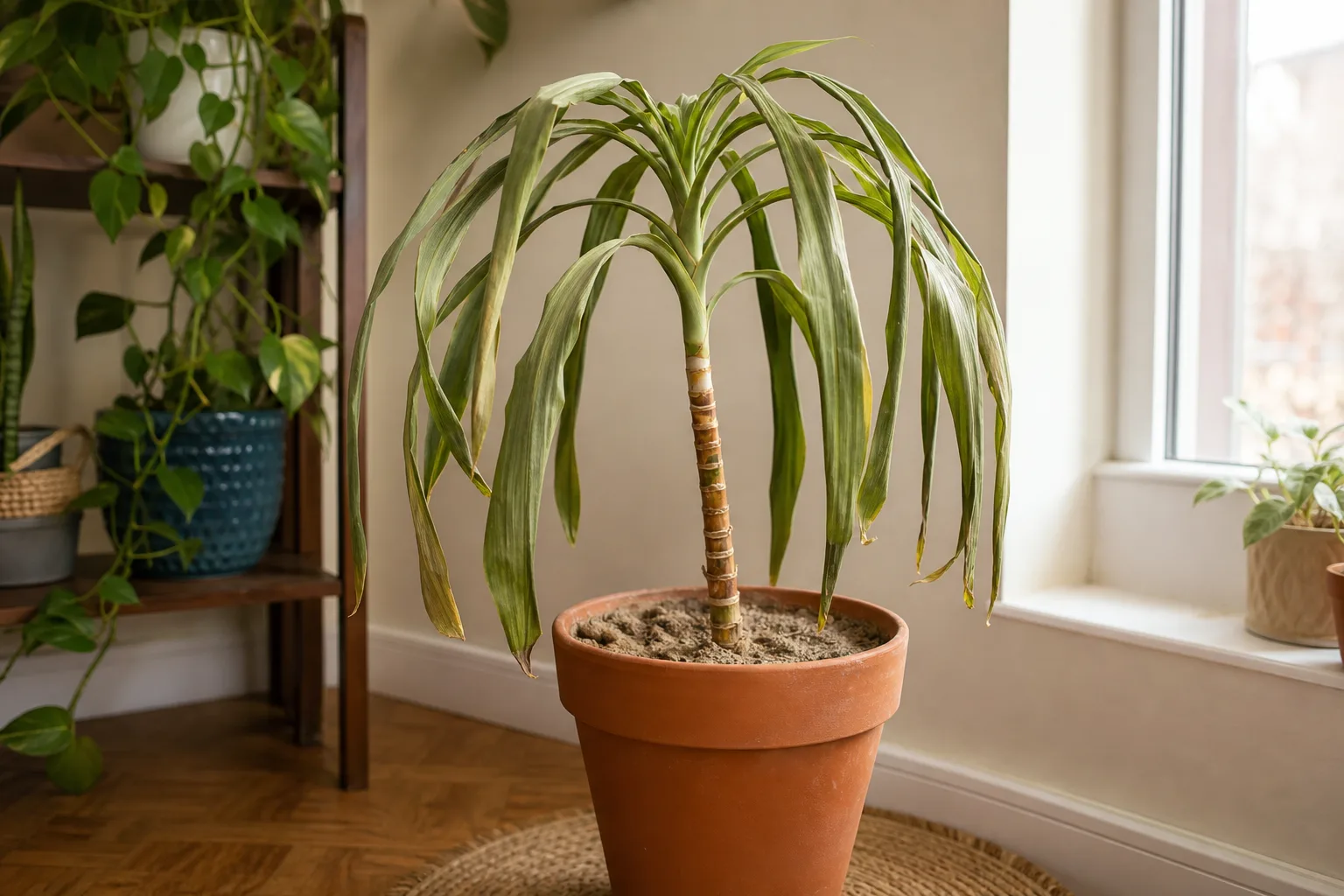
Underwatering on Corn Plant shows as a very light pot, dusty dry mix well below the surface, and limp or papery strap leaves-not a soft mushy cane base. First step: soak the root ball thoroughly until water drains, then resume watering when the top half of soil dries.
Underwatering on Corn Plant: Causes, Checks & Fixes
This guide covers underwatering on Corn Plant. See also the general Underwatering guide, watering, and light pages for this plant.
Underwatering on Corn Plant: Causes, Checks & Fixes
Quick answer
Underwatering on Corn Plant (Dracaena fragrans) means the root zone stayed dry too long for what the plant was using-often in bright light, near heating vents, or after weeks of skipped checks. The cane base stays firm, but strap leaves go limp, papery, or crisp at the margins, and the pot feels noticeably light.
First step: water thoroughly until excess runs from the drain holes, then let the pot drain completely. Do not fertilize, repot, or mist the same day. If water ran straight through on the first pass, soak the pot in a tray for 30–60 minutes so the shrunken mix rewets evenly.
Corn Plant is more often killed by overwatering on Corn Plant than drought, so confirm dryness at depth before you soak. Brown tips alone are not proof of thirst-Corn Plant overview is very sensitive to fluoride in tap water, and dry soil is only one cause of leaf-edge browning.
What underwatering looks like on Corn Plant
Corn Plant signals drought through soil dryness and leaf texture more than dramatic collapse. Learn that pattern and you avoid soaking a rotting plant or misting leaves that need root moisture.
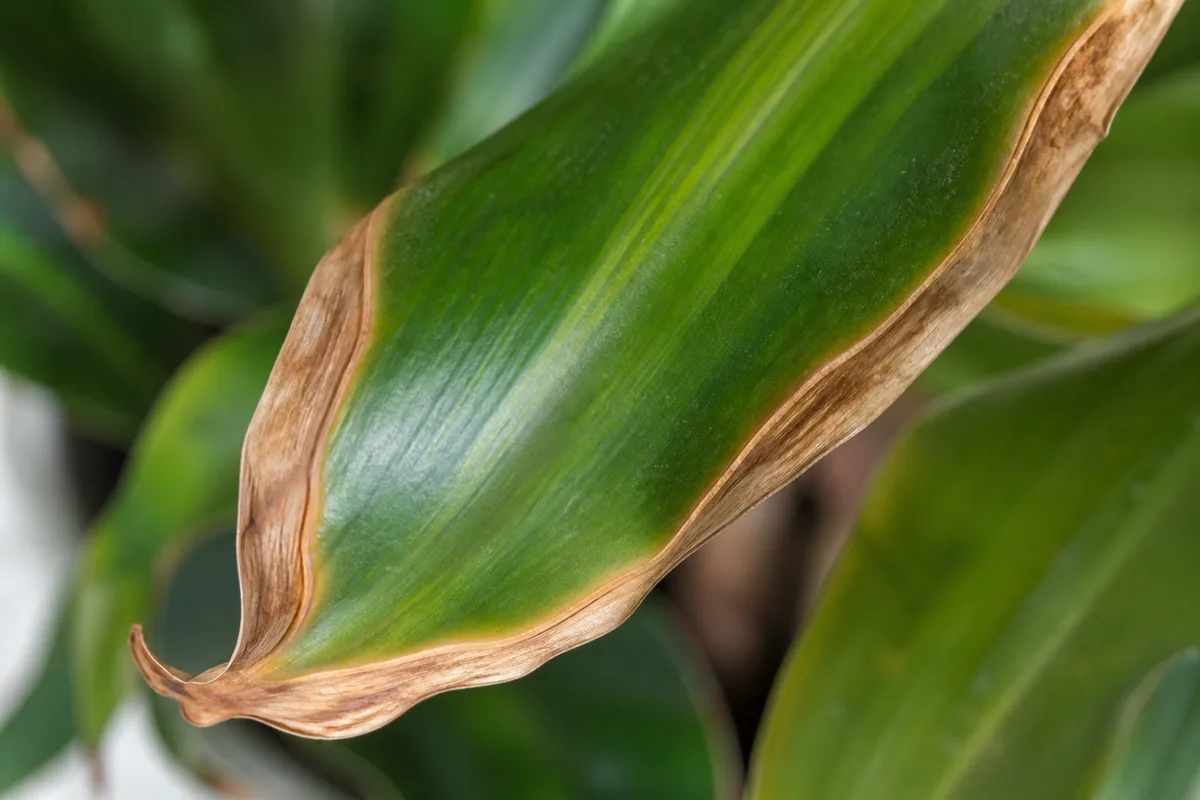
Limp papery strap leaves with crispy brown margins on an underwatered Corn Plant - compare with firm cane tissue at the base.
Leaves and canes:
- Limp, drooping strap leaves that feel thin or papery-not the heavy sag of wet rot
- Crispy brown margins or tips, especially on older lower leaves after repeated dry cycles
- Inward curling along leaf edges before tissue browns fully
- Slow or stalled new growth at cane tips during warm months
- Lower leaves yellowing and dropping after chronic drought-not the occasional single lower leaf shed of a healthy plant
- Cane may feel slightly less turgid when squeezed, but the base stays hard, not mushy
Soil and pot:
- Mix dusty dry well below the surface; a pale crust on top can hide dry soil underneath
- Soil pulls away from the pot wall, sometimes with visible cracks
- Pot feels very light when lifted compared with a freshly watered container
- Water channels through on the first pour if peat mix went hydrophobic from long dryness
What underwatering does not look like:
- Soft, brown, spongy cane base on wet soil-that points to overwatering or rot
- Uniform yellow leaves on Corn Plant with sour-smelling, dark, heavy mix
- Brown tips only on Corn Plant on otherwise firm leaves while soil is evenly moist-often fluoride, low humidity, or salt buildup, not thirst
- Wilting despite wet soil on Corn Plant-roots may be damaged or suffocating; more water worsens collapse
Unlike some ferns, Corn Plant rarely shows extreme wilt until dryness is advanced. By the time leaves look obviously limp, the mix has often been dry for longer than owners realize.
Why Corn Plant gets underwatering
Dracaena fragrans is a tropical cane plant that prefers uniformly moist soil during the growing season with a slight dry-down between drinks-but not weeks of bone-dry neglect. Its thick canes store some moisture, yet arching leaves in bright rooms transpire steadily. Underwatering usually traces to routine mismatch, not a mysterious disease.
Common causes on Corn Plant:
Fear of overwatering - After one rot scare, many owners let the top half stay dry too long. Corn Plant tolerates brief dry spells but leaves brown when soils become too dry as well as too wet.
Calendar watering in variable light - Watering every two weeks in a dim corner may work; the same schedule in a bright window leaves the pot dust-dry in days. Light level changes how fast soil dries more than the day of the week.
Light soilless mix in small pots - Perlite-heavy blends dry out quickly and need frequent checks. A root-bound Corn Plant in a tight pot can go from moist to parched fast in summer heat.
Hydrophobic dry-out - Peat that stayed dry too long repels water. The surface looks briefly damp while the root ball inside stays dry; owners think they watered when roots never drank.
Heating vents and summer sun - Warm drafts and brighter seasonal light increase water use without anyone adjusting the routine.
Winter neglect - Watering should slow in fall and winter, but soils should never totally dry out. Months of zero drinks in a heated dry room still starves roots.
Surface-only checks - A crusty top layer often masks dry soil deeper down. Corn Plant care targets the top half of the mix drying-not just a dry fingertip on the surface.
The pattern is almost always: light pot + dry depth + firm cane + limp or crisp leaves.
How to confirm the cause
Work through checks in order so you do not soak rotting roots or chase fluoride burn with more water.
- Soil at depth - Finger or wooden skewer halfway into the pot. Dusty, cool, and dry confirms underwatering. Clammy or wet at depth rules thirst out.
- Pot weight - Lift the container. Very light versus your memory of a well-watered pot supports dryness; heavy and cold suggests wet soil.
- Cane base feel - Press the lowest cane segment. Firm and dry = thirst candidate. Soft, spongy, or darkening on wet mix = stop and inspect for rot.
- Drain smell - Sour odor from the saucer or drain hole points to rot, not drought.
- Leaf pattern - Limp leaves on dry mix support underwatering. Brown tips on moist mix with firm canes suggests fluoride or humidity stress first.
- Water channel test - Pour slowly. If water runs straight through and the pot still feels light, the soil ball likely shrunk away from the pot sides and needs soaking, not another splash on top.
- Response test - After one confirmed deep soak, leaves should show some recovery within 24–48 hours if roots are intact. No change on already wet soil means look elsewhere.
Confirmed diagnosis: Dry mix throughout, light pot, firm cane, limp or papery strap leaves, no sour smell.
Suspected but verify: Brown tips only with evenly moist soil-switch to filtered water and check humidity before assuming underwatering.
First fix for Corn Plant
Water thoroughly once, slowly, with room-temperature filtered or rainwater until water runs freely from the bottom and the mix is evenly moist-not a quick cup on the surface.
- If water ran through too fast on the first pass, bottom-water or soak the pot in a tray for 30–60 minutes, then let it drain completely.
- Empty the saucer within 30 minutes so the cane base is not sitting in runoff.
- Use enough volume that the entire root zone rewets; light soilless mixes that went very dry often need a second pass ten minutes after the first.
That single thorough soak is the entire first fix. Do not fertilize, repot, prune heavily, or move the plant into harsh new sun the same day.
After draining, wait and watch: strap leaves should begin to firm within a day or two if roots are sound. Resume normal rhythm-water when the top half of soil dries-and adjust frequency to how fast your pot actually dries in its current light, not a fixed calendar.
Step-by-step recovery
- Confirm firm cane and dry depth-not wet rot.
- Deep soak with filtered water until runoff; repeat staged watering or tray-soak if mix repelled the first pass.
- Drain fully and return the plant to its usual Corn Plant light guide-avoid sudden moves to harsh direct sun while stressed.
- Wait until the top half dries before the next full drink; in winter that may take two to three weeks, in bright summer perhaps weekly.
- Trim only fully crisp, dead leaf tips or yellowed lower leaves if they bother you-optional; living green tissue stays as-is.
- Repot only if mix is collapsed, hydrophobic after repeated failed soaks, or the root ball dries out within a day in an undersized pot-otherwise one fix at a time.
Recovery timeline
Mild dehydration (slight droop, few crispy edges, one missed watering cycle): often 24–48 hours to visible leaf turgor after one good soak.
Moderate stress (heavy limp leaves, soil shrunk from pot wall, weeks of neglect in bright heat): 3–7 days of corrected watering before new cane growth looks normal.
Worsening signs after you watered on already wet mix: soft cane base, spreading yellow leaves, sour smell-shift to root rot on Corn Plant protocol, not more water.
Cosmetic brown leaf edges do not green up; success means firm canes, stable soil cycle, and clean new strap leaves emerging at the tips.
Lookalike symptoms
Overwatering / root rot - Soft brown cane base, yellow lower leaves, wet heavy mix, foul drain smell. Corn Plant decline from excess moisture is more common than death from drought. Adding water worsens collapse.
Fluoride or salt brown tips - Brown margins on otherwise firm leaves while soil is moist. Filtered or rainwater reduces tip browning on this species; soaking dry roots will not fix fluoride damage alone.
Low humidity - Dry indoor air browns leaf edges even when soil moisture is fine. Pair humidity checks with soil probes, not either alone.
Normal lower-leaf yellowing - A single aging lower leaf yellowing and dropping on an otherwise healthy cane is common; widespread yellowing on wet soil is not.
Spider mites - Fine stippling and webbing on strap leaves; soil may be dry because stressed plants in hot dry air attract mites-treat pests after confirming them, not only water.
Cold drafts - Darkening or limp leaves after a chill near a window; often follows a cold night, not weeks of dryness.
What not to do
Do not panic-soak daily after one dry spell-saturated mix with no dry-down invites the rot Corn Plant is already prone to. Do not mist leaves instead of soaking roots; foliage misting does not replace soil moisture and can encourage leaf spot in stagnant air. Do not fertilize a drought-stressed plant before hydration stabilizes-salts on dry roots burn. Do not assume every brown tip means underwatering; fluoride and dry air are frequent culprits on Dracaena. Do not ignore a light pot because leaves still look mostly green-Corn Plant can look acceptable until dryness is advanced. Do not use cold tap water on heat-stressed roots when rehydrating; room-temperature filtered water is gentler.
How to prevent underwatering on Corn Plant
Prevention is reading the pot and soil depth, not memorizing a single weekday schedule.
- Check when the top half of soil dries-the rhythm Corn Plant care targets-not only a dry surface crust.
- Lift the pot weekly; weight change beats a calendar, especially when light or season shifts.
- Use filtered or rainwater routinely to avoid confusing fluoride burn with drought stress.
- Adjust for placement-bright indirect rooms dry faster than dim corners; pots near heating vents need more frequent checks in winter.
- Staged watering after vacations-plan a tray soak for shrunken mix, not a daily trickle that never reaches the root ball.
- Refresh hydrophobic peat if water repeatedly channels through dry pots; top-dressing or Corn Plant repotting guide may be needed after long neglect.
- Right pot size-extremely small pots dry in days; slightly snug is fine, but a ball that goes dust-dry every 48 hours in summer needs either more volume or more frequent attention.
Healthy Corn Plant care pairs well-drained loamy mix with thorough drinks when the top half dries-the same pairing that prevents both chronic drought and soggy-root rot.
Conclusion
On Corn Plant, underwatering announces itself through a light pot, dusty dry mix at depth, and limp or papery strap leaves on a firm cane-not through a soft base on wet soil. Confirm dryness halfway down, soak thoroughly once with filtered water, drain well, then resume watering when the top half dries. Leaves regain turgor when roots are sound; mushy tissue on soggy mix is a different emergency. Match water to how fast your pot dries in its light, and let pot weight tell you when the root zone needs another drink.
When to use this page vs other Corn Plant guides
- Corn Plant watering guide - Use for routine moisture checks before assuming underwatering is the main issue.
- Corn Plant problems hub - Browse all 16 common issues on this species.
- Wilting on Corn Plant - Different entry point when symptoms overlap with underwatering.
- Brown Tips on Corn Plant - Different entry point when symptoms overlap with underwatering.
- Yellow Leaves on Corn Plant - Different entry point when symptoms overlap with underwatering.