Yellow Leaves on Corn Plant: Causes, Checks & Fixes
Quick answer
Yellow leaves on corn plant (*Dracaena fragrans*) are often normal aging on one bottom strap leaf-or a warning that wet soil, dim light, or fluoride is stressing the cane. First step: probe the top 2 inches of mix, squeeze the cane at the soil line, and note whether new top leaves stay green before you fertilize or repot.
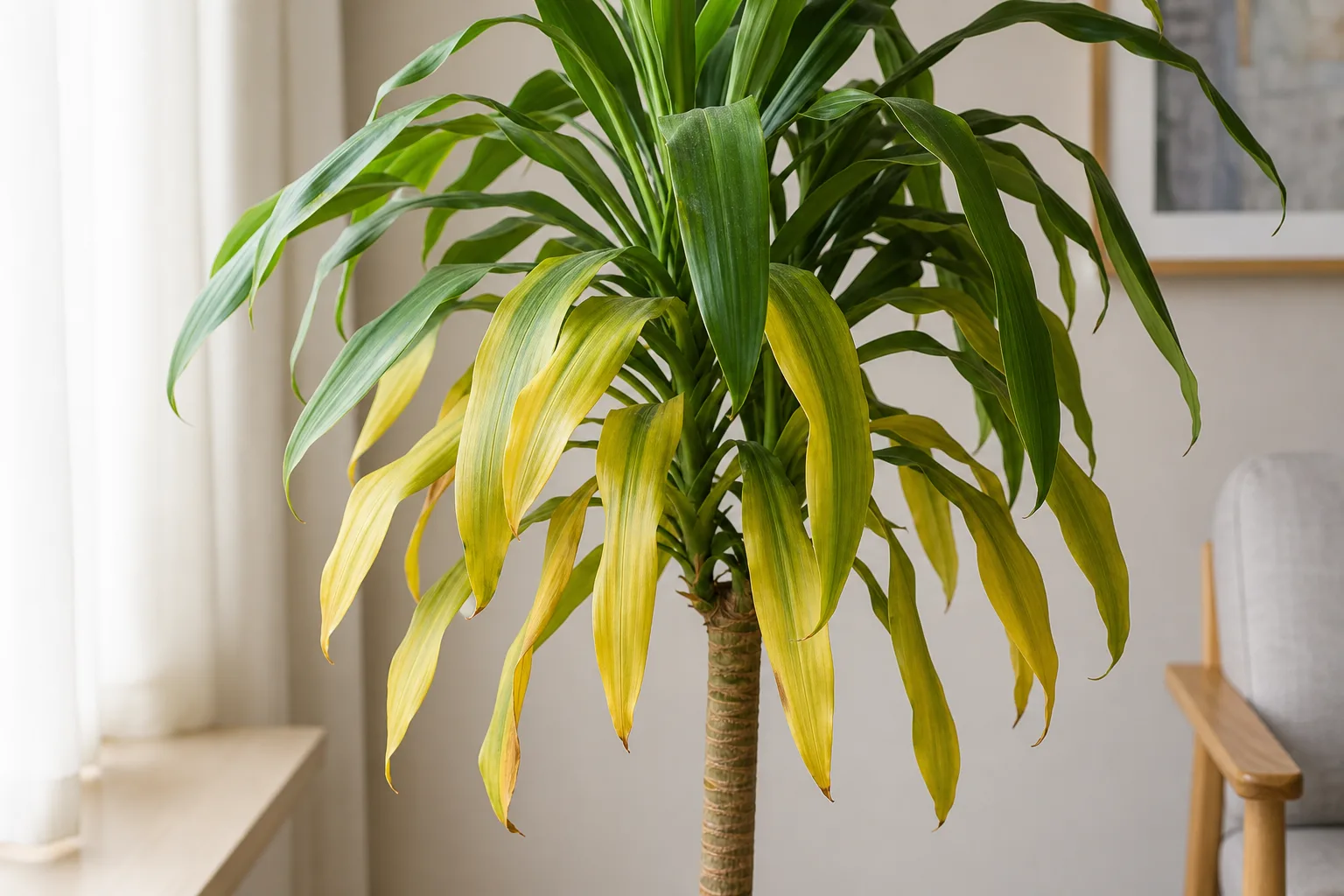
Yellow Leaves on Corn Plant: Causes, Checks & Fixes
This guide covers yellow leaves on Corn Plant. See also the general Yellow Leaves guide, watering, and light pages for this plant.
Yellow Leaves on Corn Plant: Causes, Checks & Fixes
Quick answer
Yellow leaves on corn plant (Dracaena fragrans, sold as mass cane, Janet Craig, and related cultivars) are a symptom, not a diagnosis. On this cane-forming species, strap leaves emerge in a whorl at the top of each upright woody stem while older leaves lower on the same cane yellow and drop over time-plants lose their lower leaves revealing bare stems as part of normal growth. That bottom-to-top senescence pattern is different from a rosette succulent: one fading lower leaf on firm cane often needs only removal, not a care overhaul.
Widespread yellowing with heavy wet soil, limp strap leaves, or a soft mushy cane base points to overwatering and possible root damage-the leading indoor decline driver for potted plants per Clemson HGIC watering guidance. Pale yellow new growth in a dim office may mean too little light or depleted soil. Sudden yellowing after a move is often acclimation stress. Scattered pinprick yellow speckles with fine webbing at the crown whorl suggest spider mites on stressed foliage-not whole-leaf uniform yellow from rot. Yellow margins with brown tips on firm leaves more often belong on the brown tips guide-fluoride and salt stress on D. fragrans.
First step: probe the top 2 inches of mix, lift the pot to judge weight, and press the cane lightly at the soil line before you fertilize, repot, or add water. If soil is soggy, stop watering and empty saucers-see overwatering. If only one bottom leaf is yellow on dry mix and firm cane, remove the spent leaf and resume normal dry-down per the watering guide. Full species context lives on the corn plant overview.
What yellow leaves look like on Dracaena fragrans
Corn plant carries long arching strap leaves in a cluster at the tip of each tan woody cane. Yellowing on this species follows recognizable patterns tied to cane architecture and water storage in the stem.
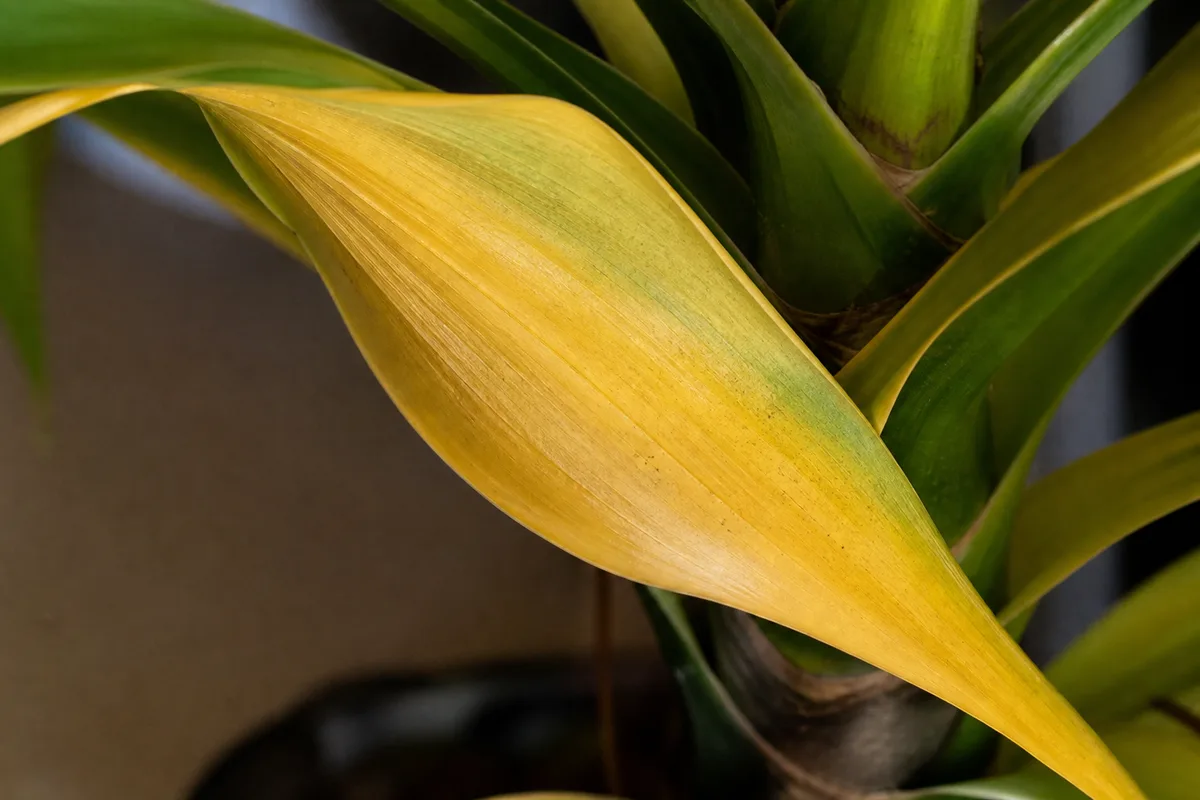
Yellow Leaves symptoms on Corn Plant - compare with healthy tissue on the same plant.
Normal aging (most common on mature canes):
- One lower strap leaf turns evenly yellow, then tan, over weeks or months
- Cane feels hard and woody from soil line through the affected leaf
- New top whorl leaves stay green and firm; internodes are not dramatically stretched
- A bare cane segment may appear below the living foliage after old leaves drop-expected on tall mass cane specimens
Overwatering and root stress:
- Multiple lower leaves yellow while soil stays damp and the pot feels heavy
- Limp, sagging strap leaves on wet mix-not the papery crisp of drought
- Soft, spongy, or darkening cane tissue at the soil line
- Stalled pale new growth at the crown during warm months
- Small fungus gnats when soil rarely dries between drinks
Low light and variegation fade:
- Pale yellow-green new leaves with longer spaces between leaf nodes on the cane
- Massangeana central stripe dulls toward solid green in dim hallways or far from windows
- Soil may dry slowly; canes often stay firm because the plant is not actively using water
Acclimation and environmental shock:
- Several leaves yellow within days after moving from a store, repotting, or shifting rooms
- Often follows cold drafts, AC blasts, or sharp temperature swings-MOBOT notes plants moved between environments often lose leaves from sudden change
- Cane usually remains firm if soil moisture is appropriate; recovery shows in stable new top growth over two to three weeks
Spider mite stippling (often mistaken for light stress):
- Scattered pinprick yellow or white speckles across strap leaf faces, often worst on Massangeana’s chartreuse central band
- Fine silk webbing at the crown whorl where new leaves clasp the cane-no webbing on normal aging or rot
- Damage concentrates on the top whorl near sunny glass or HVAC vents in dry winter air; see spider mites when stippling and webbing align
Fluoride and salt stress (often tips first):
- Yellow halos or margins with brown necrotic tips on otherwise firm leaves
- Chronic municipal tap irrigation without flushing-NC State lists corn plant as sensitive to fluorides and built-up salts
- Whole-leaf uniform yellow on wet soil is more often rot than fluoride; see brown tips when tips and margins lead the damage
Why corn plant gets yellow leaves
Dracaena fragrans evolved as a tropical African understory plant with thick canes that store water. That storage is why corn plant can look healthy for weeks while roots sit in soggy mix, then collapse suddenly when lower stem tissue rots through-a pattern the overview FAQ describes as masking overwatering until cane softness appears.
Natural senescence along the cane. As new strap leaves unfurl from the top whorl, the oldest leaves on the same stem age out. MOBOT describes rosettes of evergreen leaves on thick stems where over time plants lose lower leaves. Indoor specimens commonly show one yellow bottom leaf every few months on an otherwise vigorous plant-especially on tall multi-cane mass cane displays.
Overwatering and poor drainage. NC State Extension notes yellowing leaves can be caused by overwatering on dracaenas. Clemson HGIC links root rot to soil that does not drain quickly or overly frequent watering. When roots are damaged, they cannot move water upward-so owners see wilting and yellow leaves with wet soil, the reflex that sends many people back to the watering can. Calendar watering in low winter light, cachepots holding runoff, and oversized peat-heavy pots all keep mix saturated longer than corn plant tolerates. A tall mass cane sitting in a decorative cachepot can look dry on top while the bottom third of mix stays wet-always lift the inner pot or probe near the drainage hole, not only the surface.
Insufficient light. In dim offices, corn plant survives but grows slowly. Variegated ‘Massangeana’ loses its bright central stripe first; solid-green ‘Janet Craig’ tolerates lower light longer before whole leaves pale. NC State notes that if light levels are too low, the leaves will narrow-stretched internodes and small new leaves are the tell. See not enough light when placement is the primary driver.
Acclimation and temperature stress. Relocation, repotting, or cold exposure can trigger rapid leaf drop. MOBOT’s indoor yellowing FAQ lists sudden temperature changes and cold near windows among causes of leaf yellowing and loss. Corn plant is best grown in temperatures of 60–75°F; NC State advises keeping temperatures above 50°F with optimal growth at 70–80°F. Sustained chilling below that optimum-cold window glass, winter porch drafts, or AC vents blasting the crown-can produce rapid yellowing and leaf drop even when soil moisture is correct.
Fluoride, salts, and heavy feeding. Clemson HGIC describes dracaenas as very sensitive to fluoride, with symptoms including yellowing of tips or margins. Heavy fertilizer on stressed foliage can also burn leaf tips and margins yellow. These chemistry stresses often present as marginal discoloration before whole leaves yellow-defer to the brown tips and fertilizer guides when margins lead.
Underwatering (less common as whole-leaf yellow). Severe drought produces limp papery leaves and a light dry pot; margins may crisp before uniform yellowing. Confirm with the underwatering guide when soil is dusty several inches down.
One cane yellowing in a multi-cane pot. Triple-stem mass cane displays often lose lower leaves on the tallest cane first while shorter canes stay fully green-that is usually per-cane senescence, not whole-plant failure. Worry when every cane in the same pot shows spreading yellow on wet mix, or when one cane’s base softens while neighbors stay firm-that pattern points to localized rot at one stem’s root zone rather than normal aging.
Lookalike symptoms to rule out
| Signal | Normal aging | Overwatering / rot | Low light | Acclimation shock | Spider mites | Fluoride / salt |
|---|---|---|---|---|---|---|
| Leaf pattern | One bottom leaf yellowing slowly | Multiple yellow leaves on wet mix | Pale new growth; faded Massangeana stripe | Several leaves yellow after move | Pinprick stippling + webbing at crown | Yellow margins + brown tips |
| Soil moisture | Normal dry-down | Heavy, wet days after watering | Slow dry-down; moderate weight | Usually normal | Usually normal | Normal; tap water history |
| Cane feel | Firm, woody | May soften at base | Firm | Firm | Firm | Firm |
| New top growth | Green and firm | Limp or stalled on wet soil | Small, pale, stretched | May pause briefly then resume | Stippled or bronzed whorl | Clean until salts rise |
| First fix | Remove spent leaf | Stop watering; dry down | Move to brighter indirect light | Stabilize placement; wait | Isolate; rinse undersides | Switch water; see brown tips |
When wet heavy pot and yellow lower leaves align, read overwatering before assuming thirst. When tips-only burn on firm cane aligns, read brown tips first. When stippling and fine webbing appear at the crown whorl, read spider mites before changing water chemistry.
How to confirm the cause (numbered cane + soil checklist)
Work through these checks in order. Corn plant’s water-storing cane can hide root trouble until multiple leaves yellow-so pot weight and cane firmness matter as much as leaf color.
-
Which leaves are yellow? Note position on the cane. One old bottom strap leaf on an otherwise green plant points to aging. Spreading yellow from bottom upward on the same cane suggests root or moisture stress. Pale new crown leaves only suggests light or nutrient depletion. Pinprick speckles across leaf faces with webbing at the whorl points to mites, not moisture.
-
Soil moisture at depth - Push a finger or wooden skewer two inches into the mix near the stem and at the pot edge. On large mass-cane containers, check whether the top half of mix has dried per the watering guide. If the plant sits in a cachepot, lift the inner container and probe the bottom drainage zone-cool, clinging soil many days after watering supports overwatering. Dusty dry soil and a light pot support drought.
-
Pot weight - Lift the container after your normal watering interval. A heavy, cool pot days later on a plant that looks thirsty is a red flag for saturated roots-not a cue to add more water.
-
Cane firmness at the soil line - Press the lowest visible cane segment lightly with a thumb. Hard woody tissue fits aging, light stress, or fluoride margins. Soft spongy tissue on wet mix means escalate toward root rot after you stop watering.
-
Newest top growth - Inspect the crown whorl. Firm green new leaves while one bottom leaf yellows usually confirms senescence. Limp new growth on wet soil is not aging-inspect roots. Small pale leaves with long internodes points to not enough light. Stippling and silk at the whorl points to spider mites.
-
Recent changes - Recall repotting, relocation, heating vent exposure, or a cold window night within the past two weeks. Sudden multi-leaf yellowing after change often clears once placement stabilizes.
-
Water source and feeding - Municipal tap in a fluoridated city, recent heavy fertilizer, or months without flushing salts shifts suspicion toward brown tips when margins yellow before whole blades.
-
Multi-cane context - In pots with two or three canes, note whether yellowing is isolated to one stem’s lower leaves or spreading across all canes on wet mix.
Confirmed normal aging: One bottom leaf yellowing over weeks, firm cane, appropriate dry-down, green firm new top leaves.
Confirmed overwatering stress: Wet heavy mix, multiple yellow lower leaves, limp foliage, possible soft cane base or sour smell.
Suspected but verify: Pale Massangeana stripe in a dim hallway-address light while keeping correct watering; both stresses can overlap.
First fix for corn plant
Match the first action to what you confirmed-not a bundle of treatments on day one.
If soil is wet and the pot is heavy (most urgent indoor case): Stop all watering, empty every saucer and cachepot, and let the top inch dry on smaller pots-or the top half on large containers-before assessing again. Do not fertilize, repot, or mist leaves the same day. Follow the dry-down protocol in the overwatering guide. If the cane base is already soft, move to root rot inspection after the initial dry-down.
If only one bottom leaf is yellow on firm cane with normal dry-down: Gently pull or snip the fully yellow spent leaf at the base. Resume checking moisture before each drink. Do not increase watering because one leaf aged out. If you have pets, bag discarded leaves promptly-corn plant is toxic to cats and dogs if chewed.
If new growth is pale and internodes stretch in a dim room: Move the pot to medium or bright indirect light-east window or several feet back from south or west glass-per the light guide. Wait two weeks before repotting or feeding; light correction alone often greens the next crown leaf on variegated forms.
If several leaves yellowed right after a move: Hold placement steady away from AC vents and cold glass. Maintain normal dry-down without extra water or fertilizer. Judge recovery by new top leaves over the next two to three weeks.
If stippling and webbing appear at the crown whorl: Isolate the pot and rinse every strap leaf underside with lukewarm water before any spray-see spider mites for the full treatment rhythm.
If yellow margins and brown tips dominate on firm cane: Switch to low-fluoride water per the brown tips guide-that is a chemistry fix, not a watering increase.
Do not remove all bottom leaves at once on a long bare cane segment unless you are deliberately pruning for height-stripping every senescing leaf in one session stresses an already struggling plant.
Step-by-step recovery by confirmed cause
Normal aging
- Remove the yellow strap leaf once it is mostly dry and pulls away cleanly.
- Continue top-50% dry-down checks per the watering guide.
- Expect another bottom leaf to age out every few months on tall canes-bare stem below the whorl is normal.
Overwatering (firm cane, wet soil, early yellowing)
- Stop watering; empty saucers; probe daily until the top half of mix dries.
- Remove fully yellow leaves that are mushy or pest magnets.
- Resume watering only when weight and skewer tests show real dry-down-Clemson advises allowing dracaenas to dry slightly between waterings.
- If yellowing spreads or cane softens after ten days of corrected rhythm, unpot and inspect per root rot.
Low light
- Relocate to brighter indirect exposure; rotate the pot a quarter turn weekly.
- Hold fertilizer until new crown leaves open with appropriate color for your cultivar.
- On Massangeana, expect the central stripe to sharpen over one to two new leaves-not on old faded blades.
Acclimation shock
- Stabilize temperature and airflow; avoid moving again for three weeks.
- Water on dry-down only; skip feed until new growth looks firm.
- Remove yellow leaves that are fully dry; leave partially green tissue unless fungal spotting appears.
Fluoride overlap
- Switch to distilled, rainwater, or RO water; flush if margins worsen on new growth.
- Hold fertilizer until two clean crown leaves prove the chemistry is right-details on brown tips.
Recovery timeline
Week 1–2 after correcting overwatering: Existing yellow leaves stay yellow or drop; the goal is no new yellowing on the crown and a firm cane base. Pot weight should normalize as mix dries.
Week 2–4: The next one or two top whorl leaves should emerge green and firm if roots were only stressed, not rotted. Bare cane below the living rosette may lengthen as lower leaves senesce-that is expected architecture, not failure.
Month 2+: Old yellow tissue does not re-green. A stable crown on firm canes means the fix worked even if lower stem segments look sparse. Severe rot cases may need a season to regrow a clean whorl from a salvaged cane cutting-see propagation if salvage is required.
Acclimation: Sudden post-move yellowing often stabilizes within two to three weeks once light and temperature stay consistent-judge by new top growth, not old leaf color.
Editor observation (March 2026): A 5-foot triple-cane Massangeana in a lobby cachepot showed three yellow lower leaves on the tallest cane only, with firm wood and a pot that felt deceptively light on top but heavy at the base. After stopping irrigation, emptying the cachepot, and waiting until the top half of mix dried (about 12 days in cool office light), the next crown leaf opened fully green with a sharp central stripe-no repot or fertilizer required. That timeline matches what extension dry-down guidance predicts for early overwatering stress before cane rot sets in.
What not to do
Do not fertilize yellow leaves hoping to green them-salts compound stress on fluoride-sensitive dracaenas and can burn margins yellow. Do not add water when soil is already wet and leaves are limp-that deepens root damage. Do not assume every yellow leaf needs repotting; repotting wet rotting roots without trimming and drying makes collapse faster. Do not confuse fluoride tip burn with overwatering when only margins yellow on firm cane and soil moisture is normal-see brown tips. Do not mistake mite stippling for thirst when webbing appears at the crown whorl-see spider mites. Do not strip every bottom leaf on a tall bare cane in one session. Do not stack repotting, heavy pruning, and water-source changes the same week. Do not leave dropped yellow leaves on the floor if you have pets-ASPCA lists Dracaena fragrans as toxic to cats and dogs.
How to prevent yellow leaves on corn plant
Prevention is mostly correct dry-down, appropriate light, and low-fluoride water-not a rigid calendar.
- Water when the top 50% of mix is dry-about the top 2 inches in a standard pot-using finger, skewer, and pot-weight checks per the watering guide.
- Empty saucers and cachepots after every drink so cane bases never sit in stale water.
- Use distilled, rainwater, or RO water in fluoridated municipalities to reduce marginal yellowing and tip burn-see brown tips.
- Place Massangeana in medium to bright indirect light so variegation stays vivid; Janet Craig tolerates dimmer rooms longer.
- Reduce watering frequency in winter when growth slows in cool, low-light rooms.
- Remove spent lower leaves promptly to reduce pest hiding spots and keep displays tidy.
- Inspect crown leaves monthly-early pale new growth is cheaper to fix with a move toward the window than waiting for whole-cane yellowing.
- Rinse dust from strap leaf undersides in dry heated rooms to reduce spider mite pressure before stippling spreads.
Full cultivar notes, repot timing, and pet-safety context live on the corn plant overview.
When to worry
Routine: One yellow bottom leaf every few months on firm cane with green new top growth.
Worth fixing soon: Pale Massangeana stripes in a dim office, fungus gnats over persistently damp soil, yellow margins spreading on new crown leaves despite tap water, or mite stippling at the crown whorl.
Urgent: Soft mushy cane at the soil line, sour-smelling mix, multiple leaves yellowing within days on wet soil, or mushy roots when you unpot-move to root rot and overwatering protocols immediately.
Corn plant care cross-check
| Care factor | Target for healthy foliage | Yellow-leaf risk when wrong |
|---|---|---|
| Water | Top 50% dry before watering; low-fluoride water | Wet soil → lower leaf yellowing, soft cane |
| Light | Medium to bright indirect; rotate pot | Dim rooms → pale new growth, faded variegation |
| Soil | Well-draining loam + perlite; drainage hole | Heavy peat + cachepot → masked overwatering |
| Temperature | 60–75°F optimum; above 50°F minimum | Cold drafts below optimum → rapid yellowing |
| Feed | Light feed in active growth only | Heavy salts on stressed leaves → marginal yellow |
Related corn plant guides
- Overwatering - wet soil, limp leaves, and fungus gnats
- Root rot - soft cane and mushy roots
- Brown tips - fluoride and salt marginal yellowing
- Not enough light - pale stretched new growth
- Spider mites - stippling and webbing at the crown whorl
- Watering - top-2-inch dry-down and fluoride-safe water
- Overview - species baseline, cultivars, and pet safety
Conclusion
Use the numbered cane-and-soil checklist to match yellow leaves to one cause, apply a single first fix, and judge recovery by green new top leaves-not by old yellow blades re-greening.